
- Release Year: 2024
- Platforms: Nintendo Switch, PlayStation 4, PlayStation 5, Windows, Xbox One, Xbox Series
- Publisher: Digital Eclipse Entertainment Partners Co.
- Developer: Digital Eclipse Entertainment Partners Co.
- Genre: Action
- Perspective: Side view
- Game Mode: Co-op, Online Co-op, Single-player
- Gameplay: Arcade, Beat ’em up, brawler
- Setting: Superhero
Description
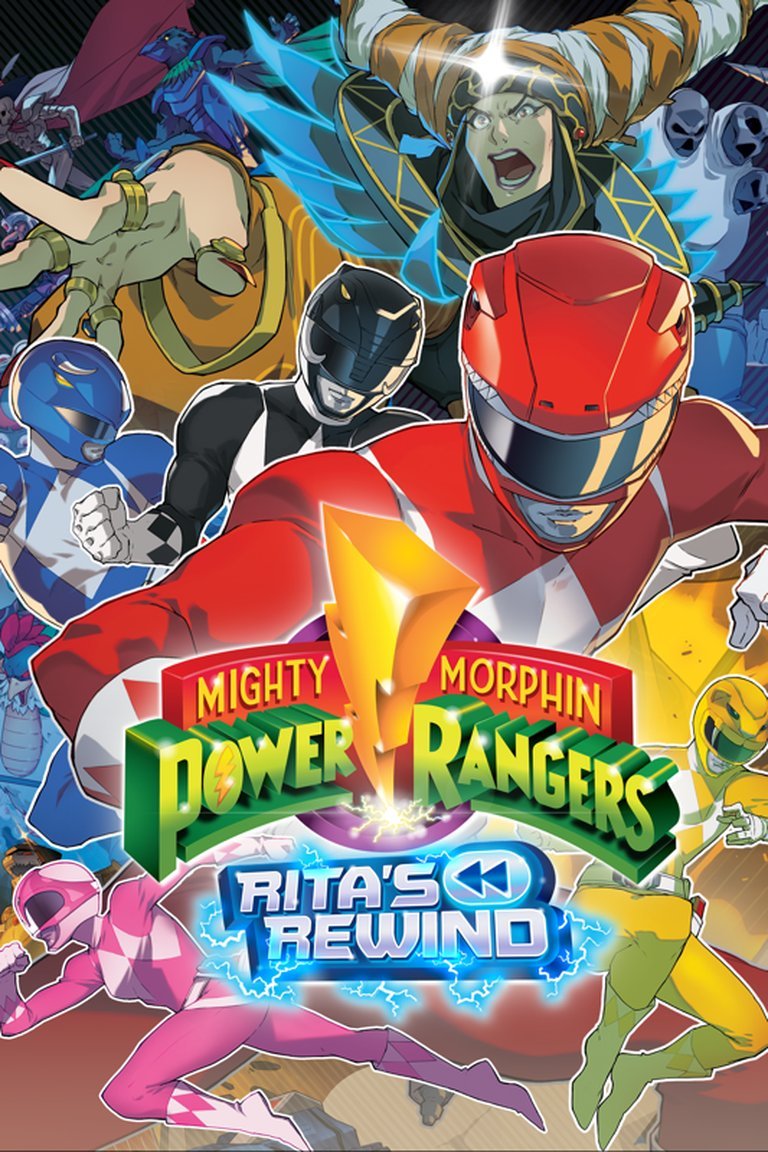
Mighty Morphin Power Rangers: Rita’s Rewind is a 2D side-scrolling beat ’em up game set in the iconic 1990s universe of the Power Rangers TV series, where players take control of the original team of teenage heroes—Jason, Tommy, Kimberly, Billy, Trini, and Zack—as they morph into their colorful suits to combat the evil sorceress Rita Repulsa and her monstrous minions across dynamic levels filled with arcade-style action and cooperative gameplay.
Gameplay Videos
Where to Get Mighty Morphin Power Rangers: Rita’s Rewind
Guides & Walkthroughs
Reviews & Reception
ign.com : A pretty great beat ’em up that’ll make you want to suit up and take a trip back through time.
gamerant.com : First and foremost, Mighty Morphin Power Rangers: Rita’s Rewind is a love letter to MMPR.
Mighty Morphin Power Rangers: Rita’s Rewind: Review
Introduction
Imagine a time portal ripping open in the pixelated haze of a ’90s arcade cabinet, where spandex-clad teenagers with attitude morph into digital warriors, battling rubber-suited monsters amid a symphony of chiptune guitars and triumphant fanfares. That’s the nostalgic rush Mighty Morphin Power Rangers: Rita’s Rewind delivers—a game that feels like it was forged in the afterglow of Saturday morning cartoons and quarter-munching cabinets, yet arrives three decades late to the party. As a franchise, Mighty Morphin Power Rangers exploded onto American screens in 1993, adapting Japan’s Super Sentai with a fresh coat of California cool, martial arts flair, and moral lessons wrapped in explosive spectacle. It spawned toys, comics, and middling tie-in games on SNES and Genesis, but never the glorious multi-player beat ’em up it deserved—one akin to Teenage Mutant Ninja Turtles: Turtles in Time. Enter Digital Eclipse’s Rita’s Rewind, a 2024 love letter to that era, blending retro aesthetics with modern co-op chaos. This is no mere cash-grab licensed title; it’s a spirited revival that honors the Rangers’ legacy while exposing the pitfalls of playing it too safe. My thesis: Rita’s Rewind excels as a joyful, fan-service-packed brawler that recaptures the campy essence of early ’90s Power Rangers, but its repetitive combat and uneven pacing prevent it from morphing into a genre-defining classic.
Development History & Context
Digital Eclipse, a studio renowned for resurrecting gaming’s past through meticulous ports and collections like TMNT: The Cowabunga Collection (2022) and Atari 50: The Anniversary Celebration (2022), stepped into original development with Rita’s Rewind as part of Hasbro’s Retro Arcade initiative. Founded in 1992 as Palladium Interactive, the studio has evolved into a preservation powerhouse under Atari’s ownership since 2022, blending archival expertise with fresh creativity. Led by figures like studio head Mike Mika and technical director Kevin Wilson, the team—88 strong, including art lead Mae Livingston and composer Sean Bialo—drew from their playbook of emulating arcade authenticity. The vision was clear: craft a ’90s-style beat ’em up that could have headlined Konami or Capcom cabinets, complete with hand-drawn pixel art and Super Scaler effects reminiscent of Space Harrier (1985) or OutRun (1986). As Dan Amrich, the story writer and content editor, noted in credits and interviews, the goal was to “remix” the show’s first season, condensing its episodic monster-of-the-week structure into a cohesive arcade odyssey.
Released on December 10, 2024, across PC (Steam), PlayStation 4/5, Xbox One/Series X|S, and Nintendo Switch, Rita’s Rewind navigated the technological constraints of its retro homage. Modern hardware allowed for lush 2D sprites and pseudo-3D scaling without the pixelation limits of ’90s consoles—think SNES Mode 7 effects elevated by Unity’s Bakesale Engine. Yet, the team imposed self-restrictions: no deep RPG progression, limited voice acting (recorded amid the 2024 SAG-AFTRA strike via an interim agreement), and a three-hour runtime to mimic arcade brevity. This was the gaming landscape of the beat ’em up revival, post-Streets of Rage 4 (2020) and especially TMNT: Shredder’s Revenge (2022), which Digital Eclipse themselves ported. Licensed games were resurging—Hasbro’s push for Power Rangers’ 30th anniversary built on successes like Battle for the Grid (2019)—but skepticism lingered after decades of subpar tie-ins. Priced at $34.99, Rita’s Rewind launched digitally, with physical editions (co-published by Atari) slated for May 2025 on PS5 and Switch, including deluxe perks like steelbooks and trading cards. Delays in online co-op (initially two-player, expanding post-launch) and patches addressing collision detection underscored the challenges of balancing nostalgia with accessibility in a multi-platform era dominated by live-service giants.
Narrative & Thematic Deep Dive
At its core, Rita’s Rewind is a time-travel romp that mashes up Mighty Morphin Power Rangers‘ inaugural season with a “what-if” twist from the 2023 Netflix special Once & Always. The plot kicks off in 2023, where Robo-Rita—a cybernetic reincarnation of the cackling sorceress—overwhelms the modern Rangers and portals back to 1993 to ally with her fleshy past self. Their goal: “rewind, rewrite, and remix” history by thwarting the original team’s formation, deploying an army of monsters from across the MMPR timeline. Divided into five “episodes” spanning 15 stages, the story condenses the show’s formula: Zordon recruits Jason (Red), Zack (Black), Billy (Blue), Trini (Yellow), and Kimberly (Pink) amid space-time anomalies, leading to morphed battles against Putties, Tengas, and bosses like Goldar, Bones, and Chunky Chicken. The climax pivots to Tommy Oliver’s early brainwashing as the Green Ranger, culminating in a moon palace siege where the Rangers dismantle Robo-Rita’s schemes.
Characters shine through episodic remixes, blending fidelity with fanservice. The core Rangers embody ’90s archetypes: Jason’s stoic leadership, Kimberly’s bubbly archery flair, Billy’s tech-savvy awkwardness—voiced by talents like AJ LoCascio (Red Ranger) and Cristina Vee (Pink). Dialogue crackles with show-accurate quips (“It’s morphin’ time!”), but elevates via Rita duo’s bickering: Ally Dixon’s dual performance as both Ritas captures the original’s theatrical menace clashing with Robo-Rita’s cold efficiency, yielding lines like “You haven’t seen the last of me!” in ironic defiance. Allies like Bulk and Skull provide comic relief at the Juice Bar hub, spinning tall tales of “saving” Angel Grove, while rescued civilians (e.g., Mr. Caplan) add heartfelt callbacks. Tommy’s arc, unlocked post-game, nods to his redemption without spoiling deeper lore, emphasizing teamwork’s triumph over Rita’s hubris.
Thematically, Rita’s Rewind delves into legacy and time’s fragility, themes resonant in Power Rangers’ evolution from kid’s show to cultural icon. Robo-Rita’s desperation to erase her failures mirrors the franchise’s own uneven history—decades of reboots, cancellations, and fan yearning for ’93 purity. It critiques nostalgia’s double edge: the Ritas’ meddling creates “in spite of a nail” ironies, like accelerating Tommy’s evil turn only for the Rangers to adapt stronger. Dialogue and cutscenes (sparse but punchy) underscore attitude as power, with Zordon’s (LoCascio again) wisdom tying past victories to future resilience. Yet, the narrative’s brevity—three hours—feels like a highlight reel, skimping on emotional depth for arcade pacing. No profound exploration of loss (e.g., post-credits nod to Jason David Frank and Thuy Trang) or franchise sprawl; it’s pure episodic fun, thematically affirming Power Rangers as timeless escapism amid temporal chaos.
Gameplay Mechanics & Systems
Rita’s Rewind thrives on classic beat ’em up loops, deconstructed into punchy, co-op-friendly encounters that evolve across its 15 stages. Core gameplay is side-scrolling action: select a Ranger (all functionally similar at launch, with post-patch upgrades adding stats like speed or damage), and hack through waves of Putty Patrollers using a basic combo (light/heavy attacks chaining into 5-7 hits), grabs, aerial dives, running kicks, and dodges. Enemies demand adaptation—spiky blue Putties charge blindly (dodge to stun), bomb-throwers enable friendly fire traps—while Time Disrupters introduce rewinds: destroy crystal tanks before they reset the fight, preserving progress but refilling your super meter for tactical loops. Super attacks (Zord summons clearing screens) build via taunts or coin pickups, encouraging aggressive play. Bosses remix show fights: Bones sheds limbs in phases (sword projectiles, then head-only dives), while dual encounters like Chunky Chicken and Turkey Jerk force juggling.
Innovation shines in genre-blending: Super Scaler segments (pseudo-3D rail shooters) pilot Dinozords (T-Rex tanks ground, Pterodactyl flies) against enlarged foes, evoking Space Harrier with power-ups (missiles, double-shot) and checkpoints. Motorcycle chases add vehicular flair, and rollercoaster runs mix first/third-person shooting. Megazord finales are first-person Punch-Out!!-style brawls: dodge projectiles, close gaps for punches charging the Power Sword finisher—no deaths, but hits reset progress, demanding pattern mastery. Co-op supports 1-6 local players (PS capped at 4 initially, online 2-player post-launch), with seamless drop-in and shared continues (3 lives per stage, limited on higher difficulties). Post-game unlocks Tommy (Green Ranger) for a sixth slot, plus S-ranks, no-death runs, and speed mode.
Progression is light: no leveling at launch (added via free update with stat allocation and Morphers modifiers like gravity tweaks), but collectibles unlock Juice Bar arcade minis (e.g., Nanopilot as virus-blasting Asteroids). UI is clean—color-coded health bars, meter gauges—but clunky: no mid-mission Ranger swaps (patched later), and Zord segments’ hit detection feels imprecise amid dense screens. Flaws abound: combat lacks depth (identical movesets make Rangers interchangeable until updates), Zord spikes frustrate with one-hit kills and geometry crushes, and repetition creeps in sans variety. Yet, innovations like rewinds and scaler variety stave off staleness, making loops addictive in co-op. On Switch, performance dips (frame drops in busier fights), but it’s solid elsewhere. Overall, mechanics prioritize chaotic fun over complexity, suiting arcade roots but craving more tools for mastery.
World-Building, Art & Sound
Rita’s Rewind immerses players in a remixed Angel Grove, blending ’90s suburbia with lunar lairs to evoke the show’s low-budget charm elevated to pixel perfection. Settings remix MMPR locales: sun-baked streets morph into toxic dumps (nodding sewer brawls), amusement parks host clown-Putty ambushes, and rooftops chase Goldar amid billboards teasing Reefside (a Dino Thunder wink). The moon palace finale storms Rita’s dumpster sarcophagus origins, with time anomalies warping eras—Season 3 Tengas invade early, creating a “fractured timeline” atmosphere of escalating chaos. Exploration is light but rewarding: hidden parts unlock Juice Bar minis, while civilian rescues (e.g., Ms. Appleby from Eye Guy) tie to hub chats, fostering a lived-in world where Bulk and Skull’s banter grounds the absurdity.
Art direction is a triumph of retraux mastery: hand-drawn 2D sprites burst with ’90s vibrancy, Rangers’ fluid animations (Zack’s axe-smash, Kimberly’s arrow-pose) capturing personalities amid 16-bit sheen. Super Scaler segments pseudo-3D zoom through GBA-esque environments—Mode 7 valleys, rollercoaster twists—blending seamlessly with beat ’em up sidescrollers. CRT filters (customizable: scanlines, curvature) enhance immersion, while bosses like Madame Woe’s electrified braids (X-ray sparks revealing skeletons) add grotesque flair. Drawbacks: some backgrounds (rooftops, industrials) feel generic, lacking the show’s cardboard-city whimsy.
Sound design amplifies the nostalgia: Sean Bialo’s guitar-driven OST remixes the iconic theme with rock riffs for brawls and synth pulses for Zords, peaking in Megazord anthems where full lyrics blast for adrenaline. SFX—morphing zaps, Putty grunts, explosive “booms”—echo arcade crispness, with voice acting (LoCascio’s authoritative Zordon, Dixon’s dual-Rita snarls) sparse but spot-on, using show samples for authenticity. Repetition irks (Rita’s cackle loops), and SAG-strike limits full VO, but it contributes to a campy, empowering vibe—sound and art synergize to make every morph feel epic, turning mundane streets into heroic battlegrounds.
Reception & Legacy
Upon launch, Rita’s Rewind garnered a solid but polarized reception, averaging 72% from 61 critics on MobyGames (7.2/10 overall) and 71/100 on OpenCritic (57% recommend). Outlets like IGN (8/10) and Nintendo Life (8/10) praised its “vibe” and co-op joy, calling it “the Power Rangers beat ’em up we never got” and “morphinomenal” for nailing ’90s arcade spirit. But Why Tho? (9.5/10) hailed it as a “celebration of the franchise,” while GameSpot (6/10) critiqued its “ephemeral” shortness and frustrating vehicles. Common highs: nostalgia (Nintendo Wire: awakens “the inner five-year-old”), visuals/sound (TechRaptor: 8.5/10), and variety (Pure Xbox: 8/10). Lows: repetitive combat (TheSixthAxis: 4/10, “lacking finesse”), Zord difficulty (Video Chums: 3/5), and value (Niche Gamer: 6.5/10, overpriced vs. Shredder’s Revenge). Player scores hit 4/5 on Moby, with forums buzzing over patches fixing physics/UI.
Commercially, it sold steadily via digital ($35 price drew 7 collectors on Moby), boosted by Hasbro’s anniversary push and cross-promo with Once & Always. Physical editions (May 2025) and a Boom! Studios comic tie-in (August 2025) extend reach. Reputation evolved via updates: initial launch bugs (online delays, no Ranger swaps) drew ire, but free patches added leveling, modifiers, and 6-player online, pushing scores up (Game Informer post-update: 7.75/10). Legacy-wise, it influences the beat ’em up renaissance, proving licensed revivals viable post-Shredder’s Revenge—Digital Eclipse’s passion hints at sequels exploring Zedd or later seasons. For Power Rangers, it’s a high-water mark, eclipsing prior games (Battle Racers, Super Legends) and revitalizing the IP amid Hasbro’s reboots. Industrially, it underscores preservation’s power: by emulating arcade eras, it educates on ’90s constraints while inspiring modern takes, cementing Digital Eclipse as stewards of gaming history.
Conclusion
Mighty Morphin Power Rangers: Rita’s Rewind is a pixelated portal to ’93’s spandex-fueled glory, distilling the franchise’s campy heroism into a co-op brawler that’s equal parts tribute and romp. Its development honors arcade roots amid revival trends, narrative remixes MMPR’s timeline with thematic depth on legacy, gameplay blends fundamentals with scaler flair (despite repetition), and art/sound immerse in nostalgic splendor. Reception affirms its charm but highlights flaws like uneven difficulty, evolving via patches to a more polished gem. Ultimately, Rita’s Rewind earns a firm recommendation for fans and genre enthusiasts—8/10. It doesn’t shatter molds like Streets of Rage 4, but as Power Rangers’ best outing since the ’90s, it secures a worthy spot in video game history: a morphin’ testament that some heroes never fade, they just rewind. Go, go play it—it’s time to suit up.