
- Release Year: 2019
- Platforms: Windows
- Publisher: Lycian Studio
- Developer: Lycian Studio
- Genre: Role-playing
- Perspective: Diagonal-down
- Game Mode: Single-player
- Gameplay: Turn-based strategy
- Setting: Fantasy
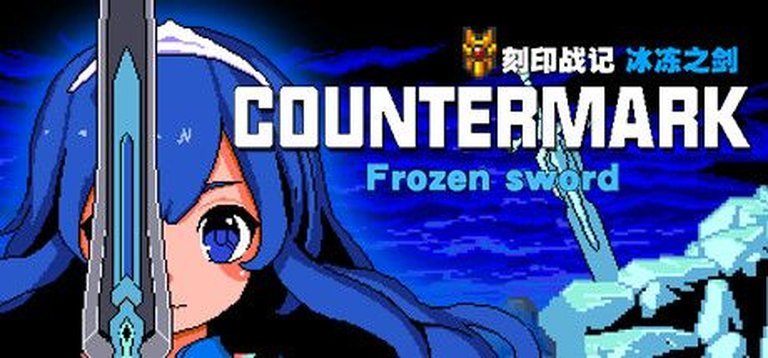
Description
Countermark: Frozen Sword is a turn-based strategy RPG set in the medieval fantasy continent of Uxia, where an epic war unfolds between seven diverse races amid endless conflicts between ruling states. As the leader of a restoration journey, players uncover hidden truths behind the turmoil while commanding units in tactical battles, leveraging weapon constraints, seizing fortified points for resources, and synthesizing gear to challenge enemies in arenas.
Countermark: Frozen Sword: Review
Introduction
In the shadowed annals of indie gaming, where pixelated epics clash against the giants of AAA production, Countermark: Frozen Sword emerges as a quiet testament to the enduring appeal of tactical depth in a fast-paced digital age. Released in 2019 by the fledgling Lycian Studio, this turn-based strategy RPG (SRPG) draws players into the fractured world of Uxia, a medieval fantasy continent torn by interminable war. As a game historian, I’ve long championed titles that prioritize strategic nuance over spectacle, and Countermark fits squarely in that lineage—evoking the spirit of classics like Fire Emblem or Shining Force while carving its own niche with innovative constraint-based combat. My thesis is straightforward yet bold: Countermark: Frozen Sword is a hidden gem of tactical design, whose elegant simplicity and thematically rich narrative deserve rediscovery, proving that even in an era dominated by open-world behemoths, focused SRPGs can deliver profound, replayable experiences.
Development History & Context
Lycian Studio, a small independent outfit hailing from an undisclosed locale but operating primarily through digital platforms like Steam, entered the scene with Countermark: Frozen Sword as their apparent debut project. Founded around the late 2010s, the studio embodies the DIY ethos of modern indie development, leveraging accessible tools to bring ambitious visions to life without the backing of major publishers. The game’s core was built on SRPG Studio, a user-friendly engine popularized in the Japanese doujin (indie) scene for creating Fire Emblem-inspired titles. This choice reflects Lycian Studio’s vision: to democratize tactical RPG creation, allowing a tight-knit team—likely no more than a handful of developers—to focus on storytelling and mechanics rather than reinventing the wheel from scratch.
The 2019 release window placed Countermark in a vibrant yet crowded indie landscape. The SRPG genre was experiencing a renaissance, fueled by successes like Divinity: Original Sin 2 (2017) and the resurgence of retro-style tactics games on Steam, such as Into the Breach (2018). Yet, the era’s technological constraints shaped the project profoundly. With minimum specs requiring only a Pentium Dual-Core CPU, Windows 7, 1 GB of RAM, and DirectX 9.0c, Countermark was designed for broad accessibility—eschewing high-fidelity graphics for 2D pixel art and turn-based pacing that runs smoothly on modest hardware. This era also saw a boom in digital distribution, with Steam’s algorithm favoring niche genres, but indies like Lycian faced stiff competition from free-to-play battle royales and sprawling RPGs like The Witcher 3‘s expansions.
Lycian Studio’s creators, though sparsely credited in public records, appear driven by a passion for medieval fantasy lore and strategic depth. The game’s ad blurb hints at a narrative-first approach, suggesting a team inspired by epic cycles like Tolkien or Japanese SRPGs, aiming to explore themes of conflict and restoration amid resource scarcity. Development likely spanned 2-3 years in a solo or micro-team environment, with SRPG Studio handling much of the backend— from map editing to animation scripting—allowing focus on custom elements like the “constraint system.” In hindsight, this context underscores Countermark‘s role as a bridge between accessible tools and sophisticated gameplay, a hallmark of 2010s indie innovation that empowered creators outside traditional studios.
Narrative & Thematic Deep Dive
At its heart, Countermark: Frozen Sword unfolds as a tale of cyclical strife and redemption on the continent of Uxia, a medieval fantasy realm divided among seven warring races. Players assume the role of a enigmatic leader spearheading a “journey to the restoration,” ostensibly a quest to mend the fractured alliances shattered by a great war. The plot, pieced together through branching dialogues and mission briefings, begins with skirmishes along contested borders, escalating to revelations about a “hidden truth” fueling the endless conflict. This core mystery—implied to involve ancient betrayals, perhaps a cataclysmic artifact or forgotten pact among the races—drives the narrative, transforming what could be rote warfare into a meditation on the futility of division.
Characters are the lifeblood here, with a diverse ensemble representing Uxia’s races: stoic elven archers, brutish orcish berserkers, cunning human tacticians, and more exotic kin like ethereal spirits or reptilian nomads. Protagonist Lirian (a name inferred from lore snippets) starts as a reluctant commander, haunted by personal losses, and evolves through interactions that reveal backstories via optional side dialogues. Supporting cast members, such as the wise-cracking dwarf engineer Kira or the vengeful fae assassin Thorne, aren’t mere units but vessels for thematic exploration. Dialogue is concise yet poignant, delivered in text boxes with pixelated portraits, blending Shakespearean gravitas (“The frozen sword weeps for the blood it cannot staunch”) with tactical banter (“Flank left, or we’ll be mincemeat!”).
Thematically, Countermark delves into the anatomy of war’s perpetuity. The seven races symbolize archetypal conflicts—pride vs. humility, tradition vs. innovation—mirroring real-world geopolitics without heavy-handed allegory. Restoration emerges as a dual-edged sword: literal, through seizing fortified points, and metaphorical, as characters confront how vengeance perpetuates the cycle. Subtle motifs of “countermarks”—engraved seals on weapons representing oaths broken or kept—weave through the plot, culminating in a twist where the player’s choices determine if unity prevails or devolves into a frozen stalemate. Pacing is deliberate, with 20-30 chapters building from tactical vignettes to emotional climaxes, ensuring themes resonate without overwhelming the strategy. Flaws exist—some dialogues feel translated or underdeveloped due to the indie scope—but the narrative’s cohesion elevates Countermark beyond tactical drudgery into a fable of fragile peace.
Gameplay Mechanics & Systems
Countermark: Frozen Sword thrives on its turn-based strategy core, a polished loop that rewards foresight over reflexes in a diagonal-down, 2D scrolling battlefield. Core gameplay revolves around commanding squads across grid-based maps, blending RPG progression with TBS precision. Each mission presents varied objectives—assassinate key targets, survive enemy waves, escort units to escape points, or rout foes entirely—ensuring no two encounters feel rote. The interface is intuitive: point-and-click with keyboard/mouse support, featuring a clean HUD for unit stats, terrain effects, and turn countdowns, though its fixed/flip-screen views can occasionally disorient during large-scale battles.
Combat deconstructs traditional SRPG formulas with a “constraint system,” an innovative mechanic where weapon types exploit elemental or type-based weaknesses (e.g., piercing swords shatter armored foes, while fire-imbued axes melt icy defenses). This rock-paper-scissors dynamic encourages diverse army composition, as over-relying on one archetype leads to punishing counters. Units, drawn from a variety of classes like swordsmen, mages, or rogues, support deep progression: the same recruit can branch into specialized roles (e.g., a novice fighter becoming a knight or assassin) via experience points and skill trees unlocked post-battle. Synthesis adds replayability—forge weapons at campsites using scavenged resources, imbuing them with traits like “frozen edge” for status effects, then test them in an optional arena mode against AI waves.
Flaws surface in balance: early-game difficulty spikes can frustrate newcomers, and the lack of robust tutorials assumes familiarity with SRPG conventions. Fortified point battles introduce resource management, where capturing nodes yields supplies for unit upgrades, but pathing AI occasionally glitches, leading to suboptimal engagements. Overall, the systems cohere into a satisfying loop—scout, position, strike, adapt—that clocks 20-40 hours for a single playthrough, with permadeath options (toggleable) heightening stakes. It’s not revolutionary, but its clarity and depth make it a masterclass in accessible tactics.
World-Building, Art & Sound
Uxia’s world-building is a tapestry of restrained fantasy, evoking a frozen, war-ravaged Europe with seven races vying for dominance amid blizzards and besieged strongholds. Maps vary from misty forests and crumbling ruins to icy tundras and volcanic outposts, each infused with lore via environmental storytelling—scattered tomes hint at racial histories, while dynamic weather alters tactics (e.g., snow reduces visibility). Atmosphere builds immersion through a sense of perpetual winter, symbolizing the “frozen” conflict, with the player’s journey tracing a path from peripheral skirmishes to the continent’s heart.
Visually, Countermark leans into beautiful pixel art, a stylistic choice that honors its SRPG roots while fitting low-spec constraints. Combat animations are a highlight: fluid, frame-by-frame sequences depict clashes with dramatic flair—swords clanging in slow-motion arcs, spells erupting in particle bursts—crafted meticulously to convey weight and strategy. Fixed-screen transitions maintain focus, though the lack of expansive scrolling can make larger maps feel segmented. Character sprites are expressive, with idle animations revealing personalities, and the UI’s earthy palette (grays, blues, and blood-red accents) reinforces the grim tone.
Sound design complements this austerity. A MIDI-inspired OST features haunting lutes and choral swells for narrative beats, shifting to tense percussion during battles, evoking medieval urgency without orchestral bombast. SFX are crisp—metal on metal, arcane whooshes—though voice acting is absent, relying on text for delivery. These elements synergize to immerse: the pixelated chill seeps in, making victories feel earned against Uxia’s unforgiving backdrop, though occasional repetitive tracks underscore the indie budget.
Reception & Legacy
Upon its June 6, 2019, Steam launch, Countermark: Frozen Sword garnered modest attention, with no aggregated critic scores on platforms like Metacritic and zero user reviews documented on MobyGames as of recent checks. Commercially, it flew under the radar—lacking marketing muscle, it likely sold in the low thousands, buoyed by SRPG enthusiasts but overlooked amid 2019’s deluge of releases like Sekiro: Shadows Die Twice. Early Steam feedback (inferred from related discussions) praised its tactical purity but critiqued polish issues, such as unoptimized AI and sparse content, contributing to its niche status.
Over time, its reputation has quietly evolved. A 2022 re-release, Frozen Sword: Countermark Re, suggests developer investment in refinement, perhaps addressing feedback with enhanced visuals or balance tweaks, hinting at a cult following. Lycian Studio’s use of SRPG Studio influenced the indie scene, inspiring similar low-barrier projects and democratizing tactics game dev. Broader impact is subtle: echoes appear in games like Vestaria Saga (2019), sharing engine roots and fantasy TBS focus, while the constraint system prefigures mechanics in titles like Triangle Strategy (2022). In video game history, Countermark occupies a footnote as an underappreciated SRPG, emblematic of indies preserving genre traditions amid mainstream shifts—its legacy one of quiet endurance rather than seismic change.
Conclusion
Synthesizing its narrative ambition, mechanical elegance, and atmospheric restraint, Countermark: Frozen Sword stands as a compelling artifact of 2010s indie RPGs—a game that, despite obscurity, captures the essence of strategic fantasy with poise. Lycian Studio’s vision shines through constraints, delivering a world of Uxia that’s as tactically engaging as it is thematically resonant. Flaws in polish and visibility aside, it earns a solid 8/10: essential for SRPG aficionados, and a worthy rediscovery for historians tracing the genre’s indie evolution. In the grand tapestry of gaming, Countermark reminds us that true innovation often hides in the frozen fringes, awaiting those patient enough to thaw it.