
- Release Year: 2010
- Platforms: Windows, Xbox 360
- Publisher: City Interactive S.A., Noviy Disk, ak tronic Software & Services GmbH, rondomedia Marketing & Vertriebs GmbH
- Developer: City Interactive S.A.
- Genre: Action
- Perspective: First-person
- Game Mode: LAN, Online PVP, Single-player
- Gameplay: Shooter, Stealth
- Setting: Jungle, Military, Modern
- Average Score: 48/100
Description
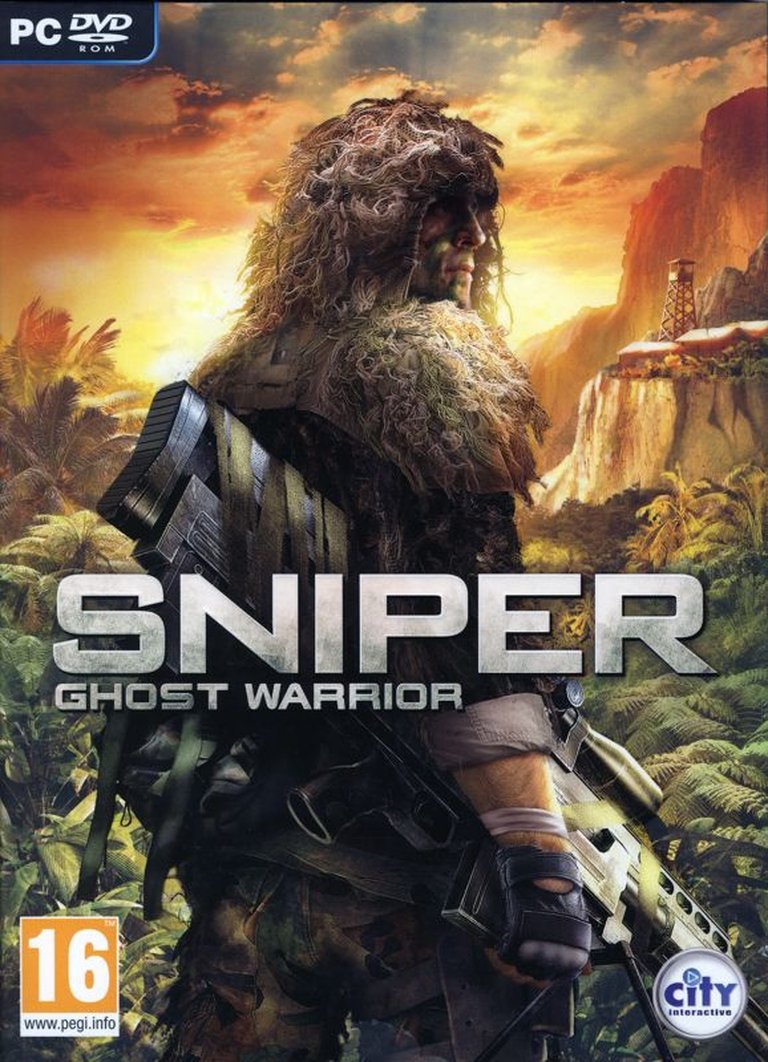
Sniper: Ghost Warrior is a first-person shooter set on the fictional island of Isla Trueno in Colombia, a lush paradise harboring ultra-rare uranium known as Black 235, which funds the tyrannical regime of General Manuel Vasquez after he overthrew a US-backed government. Players assume the role of Gunnery Sergeant Tyler Wells, a elite scout sniper, leading a special ops team on a mission to assassinate Vasquez through 16 realistic missions that blend stealth sniping—accounting for factors like distance, wind, heartbeat, and bullet trajectory—with intense action sequences using assault rifles and close-quarters combat, all while uncovering the island’s dark secrets via hidden laptops and emails.
Gameplay Videos
Where to Buy Sniper: Ghost Warrior
Sniper: Ghost Warrior Free Download
Crack, Patches & Mods
Guides & Walkthroughs
Reviews & Reception
ign.com : Sniper: Ghost Warrior makes a rough but sort of charming first impression… falls into a tired bed of cliches and limitations that sabotage a great deal of its strengths.
metacritic.com (45/100): Generally Unfavorable.
gamesreviews2010.com (45/100): A unique blend of stealth, tactical shooting, and realistic ballistics, providing an immersive gaming experience.
theregister.com : The game ended up firmly in mediocreville.
gamespot.com (55/100): Poor AI and insane difficulty get between you and the sniping in Sniper: Ghost Warrior.
Sniper: Ghost Warrior: Review
Introduction
Imagine the humid stillness of a Colombian jungle at dusk, your heartbeat syncing with the sway of palm fronds, as you peer through a scope at a distant patrol—wind whispering secrets of deflection, gravity pulling your shot inexorably earthward. One breath held, one trigger pull, and the world slows to a crimson bloom of consequence. This is the intoxicating promise of Sniper: Ghost Warrior, a 2010 tactical shooter that dared to elevate the sniper’s art from peripheral gimmick to core philosophy. As the second entry in City Interactive’s budding franchise—following the obscure Sniper: Art of Victory (2007)—it arrived amid a deluge of blockbuster military shooters like Call of Duty: Modern Warfare 2 and Battlefield: Bad Company 2, yet carved a niche for budget-conscious realism in sniping. Though burdened by technical shortcomings and uneven execution, Sniper: Ghost Warrior stands as a bold, if imperfect, testament to the sniper’s solitary vigil, blending tense stealth with visceral ballistics in a way that foreshadowed the series’ evolution into a multimillion-dollar staple. My thesis: While its flaws relegate it to cult status, the game’s innovative sniping mechanics and thematic focus on asymmetric warfare mark it as a pivotal, underappreciated bridge between arcade shooters and simulation-driven tactics.
Development History & Context
City Interactive, a Polish studio founded in 2002 as a publisher before pivoting to development, helmed Sniper: Ghost Warrior under the leadership of CEO and Executive Producer Marek Tymiński. With a modest budget—evident in its $20-30 launch price and limited marketing—the team, including Director of Development Michał Sokolski and Art Director Damian Zieliński, aimed to capitalize on the sniper archetype’s rising popularity, fueled by real-world media like History Channel documentaries and films such as American Sniper (though predating the latter). The vision was clear: create an accessible yet realistic sniper sim that contrasted the bombastic, run-and-gun ethos of contemporaries like Modern Warfare 2, drawing inspiration from Sniper Elite‘s bullet cams but emphasizing environmental realism over World War II spectacle.
Technologically, the game leveraged Techland’s Chrome Engine 4, previously powering Call of Juarez: Bound in Blood (2009). This engine excelled at rendering dense jungles with long draw distances, dynamic weather, and foliage interactions, but strained under optimization demands—resulting in frame-rate dips, aliasing, and invisible walls that plagued the PC and console ports. Released first on Windows (June 24, 2010 EU, June 29 NA), followed by Xbox 360 (same dates) and PlayStation 3 (June 2011), it targeted a post-financial crisis market where budget titles thrived amid AAA dominance. The 2010 landscape was saturated with linear, cinematic shooters (Medal of Honor reboot that year echoed Modern Warfare), but Sniper differentiated by prioritizing patience over reflexes, echoing sims like ARMA II (2009) while avoiding their steep learning curves. Development credits list 106 contributors, heavy on programmers like Lead Krzysztof Jakubowski and level designers such as Paweł Pieńkowski, reflecting a small team’s ambitious push into tactical depth. Regional tweaks, like blood removal in the German version, underscored global publishing challenges via partners like ak tronic and rondomedia. Ultimately, Sniper embodied Eastern European dev ingenuity—resourceful but rough-hewn—launching a series that would later attract AAA budgets.
Narrative & Thematic Deep Dive
At its core, Sniper: Ghost Warrior unfolds as a taut tale of interventionist intrigue on Isla Trueno, a fictional Colombian island rich in Black 235 uranium and cocaine fields, where General Manuel Vasquez—a cartel-backed dictator—has toppled a U.S.-supported democracy through purges and death squads. The 16-mission campaign, divided into four acts, follows a U.S. special ops team aiding rebels in regime change, blending Tom Clancy-esque geopolitics with pulp thriller tropes. Players embody Gunnery Sergeant Tyler “Razor Six-Four” Wells, a Scout Sniper (MOS 0317), for stealthy long-range ops, but switch perspectives to Delta Force’s Private Anderson for assaults and spotter Sgt. O’Neil for reconnaissance, creating a multifaceted view of warfare’s layers.
The plot kicks off with Alpha Nine’s botched assassination of Vasquez at an oil refinery, compromised by CIA infiltrator Mike Rodriguez (voiced with gravelly intensity), who later betrays the team over nuclear warhead plans—a twist revealing themes of espionage duplicity. Act One builds tension through Wells’ solo infiltration; Act Two escalates with Rodriguez’s rescue amid camp assaults; Act Three targets cocaine plantations and uranium mines, underscoring resource-driven imperialism; and Act Four culminates in Vasquez’s demise, sans fanfare—just “THE END” and credits, emphasizing abrupt, unglamorous victory.
Thematically, the game probes asymmetric warfare’s moral ambiguities: snipers as “ghosts” embodying precision justice against brute regimes, yet reliant on U.S. interventionism that mirrors real-world ops in Latin America (e.g., 1980s contra aid). Vasquez symbolizes the “Banana Republic” dictator, his “Reinado de la Sangre” evoking Noriega or Pinochet, while rebels like El Tejon represent grassroots resistance. Characters are archetypes—Wells the stoic marksman, O’Neil the banter-prone spotter, Anderson the everyman grunt—but dialogue shines in radio chatter: terse commands like “One shot, one kill” humanize the isolation, though voice acting veers wooden, with grammatical glitches (e.g., “clean out whole neighborhoods”) betraying budget constraints. Laptops scattered for collectibles unlock emails fleshing out lore, like cartel-FARC ties, adding depth to themes of corruption and proxy wars. Subtle motifs of betrayal (Rodriguez’s heel turn) and environmental peril (crocodiles, rain-slicked shots) elevate it beyond rote military fiction, critiquing how superpowers exploit “nice little islands” for resources. Yet, the narrative’s linearity and lack of branching paths limit emotional investment, making it a serviceable scaffold for gameplay rather than a literary triumph.
Gameplay Mechanics & Systems
Sniper: Ghost Warrior‘s core loop revolves around the sniper’s triad: stalk, scope, strike—demanding environmental mastery over button-mashing chaos. As Wells, players crawl through grass (AI simulates human vision, ignoring swayed foliage), grapple to vantage points, and line up shots with rifles like the SR-25, SVD Dragunov, MSG-90, or AS50. Ballistics simulate realism via wind (left-right drift), gravity (drop-off), breath (hold Shift for slow-mo stability), and pulse sway (post-sprint jitter), with bullet flight time requiring lead on moving targets. Innovations shine here: lower difficulties aid with red enemy highlights and impact circles; headshots trigger a gory, deactivate-able bullet cam tracing the round’s path, even through multiple foes (one-hit polykill). Silenced pistols (MK23) and throwing knives enable silent CQC, while materials like thin walls allow penetrative shots.
Non-sniper segments disrupt this purity, shifting to “run-and-gun” as Anderson with M4A1 or AK-74M, escorting AI allies through camps—picking up enemy weapons mid-fight adds dynamism but exposes clunky cover mechanics and collision bugs (snagging on pebbles). Spotting missions, marking targets for AI snipers, feel passive yet tense, like a rail shooter. Progression is minimal: no skill trees, just mission unlocks and collectible laptops for backstory emails. UI is functional—waypoint overlays guide linear paths, but invisible walls and checkpoint reliance frustrate exploration. Health mixes regen (to 30% if sheltered) and medkits (carry five), punishing exposure.
Multiplayer supports 2-12 players across six maps in Deathmatch, Team Deathmatch, and VIP (King of the Hill with status transfers), with four classes varying sniper access, health, and speed—pistols/knives standard, but small arenas favor grenades over long-range duels. Flaws abound: AI swings from oblivious to omniscient (spotting through brush at 200m), difficulty spikes (insane enemy accuracy), and bugs (broken triggers, non-responsive grass). Yet, the sniping system’s innovation—rewarding patience with euphoric kills—elevates it, though uneven pacing (stealth purity diluted by assaults) and lack of polish hinder replayability.
World-Building, Art & Sound
Isla Trueno’s verdant sprawl—a tapestry of beaches, jungles, Aztec ruins, oil rigs, and cocaine plantations—immerses via Chrome Engine’s prowess, rendering lush canopies with god rays piercing rain-swept canopies and long sightlines (up to 100m+ shots). Atmosphere thrives on isolation: night missions cloak in shadow, storms blur scopes, wildlife (crocodiles, cows) adds peril. Visual direction favors exoticism—dense foliage sways realistically (barring touch insensitivity)—but falters up close: low-res textures, popping polygons, and aliasing mar the idyll, especially on PS3 (tearing, worse performance). Environments feel alive yet scripted, with linear paths enforced by obstacles, evoking a diorama of Latin American turmoil.
Art style blends photorealism with stylized grit: ghillie-suited protagonists against khaki-uniformed foes, Vasquez’s opulent compounds contrasting rebel squalor. Dynamic elements like airstrikes on fields or mine explosions contribute to spectacle, heightening tension in stealth breaches.
Sound design amplifies immersion—rustling leaves, distant patrols, suppressed cracks echoing into silence—but disappoints overall. Weaponry lacks punch (muffled shots), and jungle ambiance (bird calls, thunder) feels undercooked. Score by Max Lade et al. opts for moody orchestration, tense strings underscoring scopes, but voicework is wooden (stilted accents, errors like “send by the cartel”). Bullet cams’ whooshes provide visceral feedback, yet multiplayer lacks robust audio cues. Collectively, these elements forge a humid, oppressive vibe—jungle as both ally and foe—bolstering the sniper’s predatory ethos, though technical limits dilute the sensory punch.
Reception & Legacy
Upon release, Sniper: Ghost Warrior garnered middling acclaim, a budget title punching above its weight yet felled by execution. MobyGames aggregates a 5.9/10 (59% critics, 2.8/5 players), Metacritic scores 55/100 (PC), 45/100 (Xbox 360), and 53/100 (PS3)—”mixed or average” at best, “generally unfavorable” on consoles. Critics lauded sniping’s realism (Games.cz: 80%, “unexpected bomb from Poland”) and visuals (GameStar: 72%, “nailed to the monitor”), but lambasted AI inconsistencies (Eurogamer: 20%, “mercy kill”), bugs, and generic assaults (IGN: 5/10, “bargain bin”). GameSpot (5.5/10 PC, 6/10 Xbox) highlighted “frustrating rumbles in the jungle,” while players echoed frustrations with linearity (411mania: 56%, “invisible walls!”).
Commercially, it sold modestly—bundled in Gold Editions with DLC like Map Pack (2010) and Second Strike (2011, expansion focusing on pure sniping)—but spawned a franchise. Reputation evolved: initial derision as “budget fodder” softened with sequels (Sniper: Ghost Warrior 2, 2013, on CryEngine, hit 68 Metacritic) refining mechanics, leading to Sniper Ghost Warrior 3 (2017, open-world AAA) and Contracts series (2019-2021, bounty-hunting sims). Its influence ripples in sniper subgenre—bullet cams inspired Sniper Elite evolutions, realism echoed ARMA—and Eastern Euro devs (CI Games’ growth to 300+ staff). Cult following persists on Steam ($0.79 sales), valued for co-op mods and nostalgia, cementing its role as a flawed pioneer democratizing tactical sniping.
Conclusion
Sniper: Ghost Warrior is a double-edged round: its groundbreaking ballistics and jungle immersion deliver sniper highs unmatched in 2010’s shooter glut, yet AI woes, design flaws, and abrupt storytelling blunt its impact, yielding a 6.5/10 verdict—serviceable for stealth enthusiasts, skippable for purists. As a historian, I see it as a crucial artifact: City Interactive’s scrappy bid elevated the sniper from sidearm to star, birthing a series that sold millions and influenced tactical design. In video game history, it occupies a liminal space—budget bridge to AAA ambition—reminding us that even misses can chart the path to bullseyes. For genre fans, it’s worth a discounted scope; for the pantheon, a cautionary scope on potential unrealized.