
- Release Year: 2019
- Platforms: Windows
- Publisher: Raptor Claw Games
- Developer: Raptor Claw Games
- Genre: Simulation, Sports
- Perspective: Side view
- Game Mode: Single-player
- Gameplay: Business simulation, Management
- Average Score: 90/100
Description
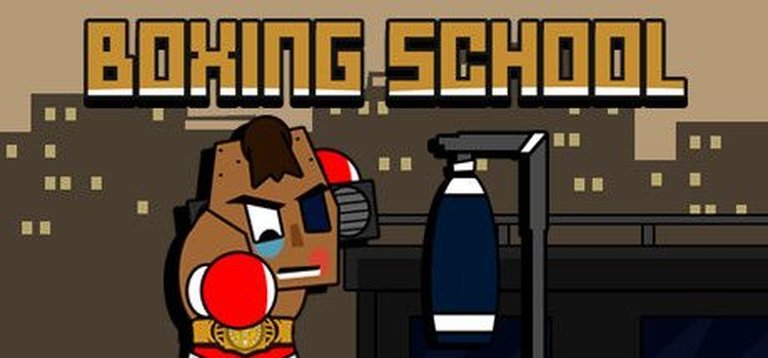
Boxing School is a managerial simulation game set in the 1980s, where players take control of a boxing gym, hiring aspiring fighters, training them in the art of pugilism, and guiding their careers through intense matches to climb the ranks of the boxing world. Developed by Raptor Claw Games, the creators of Gladiator School, it features a side-view perspective with fixed screens, emphasizing strategic business decisions, boxer development, and the gritty atmosphere of professional boxing.
Gameplay Videos
Where to Buy Boxing School
PC
Guides & Walkthroughs
Reviews & Reception
steambase.io (90/100): Very Positive rating from 524 total reviews.
store.steampowered.com (90/100): Very Positive (90% of 510 user reviews are positive).
Boxing School: A Ring-Side Seat to 80s Ambition and Grit
Introduction
Imagine stepping into a smoke-filled gym in the heart of 1980s America, where the thud of gloves on heavy bags echoes like a heartbeat, and every underdog story feels one training montage away from glory. Boxing School, released in 2019 by indie developer Raptor Claw Games, captures that raw essence of boxing’s golden era—not through flashy arcade punches, but via the meticulous management of sweat, strategy, and stardom. As a spiritual successor to the studio’s earlier Gladiator School, this simulation game transforms players into a fledgling gym owner, building a roster of fighters from nobodies to champions. While it lacks the blockbuster narrative of modern sports titles like Fight Night or Undisputed, its legacy lies in distilling the tycoon genre into a punchy, addictive loop that rewards patience and tactical savvy. My thesis: Boxing School is a masterful indie simulation that punches above its weight, offering depth in management and progression that elevates it to a cult favorite, though its repetitive rhythms and modest production values occasionally leave it winded.
Development History & Context
Raptor Claw Games, a diminutive Swedish indie studio founded by a core team of just two to three developers, entered the scene with Gladiator School in 2017—a tycoon sim where players managed ancient Roman fighters. Buoyed by positive reception for its blend of resource management and spectacle, the team pivoted to Boxing School as a modern analog, swapping coliseums for 1980s boxing rings. Released on January 10, 2019, exclusively for PC via Steam (and co-published by Millendream), the game was built on the Unity engine, allowing for accessible 2D visuals and low system requirements that democratized play on modest hardware—needing only a 1.2 GHz processor and 2 GB RAM to run smoothly.
The 2019 gaming landscape was ripe for this niche: the indie boom had popularized management sims like Game Dev Tycoon and Prison Architect, where players reveled in the “behind-the-scenes” grind rather than direct action. Technological constraints were minimal thanks to Unity’s versatility, but Raptor’s small size meant a lean scope—no sprawling open world, just focused menus and side-view combat arenas. The vision, as articulated in dev blogs and Steam updates, was to evoke 80s boxing nostalgia (think Rocky montages and Mike Tyson hype) while innovating on scouting and tactical depth. Budget limitations showed in the absence of voice acting or high-fidelity animations, but post-launch support was robust: patches addressed bugs, a 2024 DLC added a solo career mode, and a sequel (Boxing School 2) launched in 2025, proving the formula’s enduring appeal. In an era dominated by battle royales and live-service giants, Boxing School carved a quiet corner for thoughtful sim enthusiasts, much like how Football Manager sustains soccer diehards.
Narrative & Thematic Deep Dive
At its core, Boxing School eschews a linear plot for an emergent narrative driven by player choices, framing your journey as an ambitious manager rising from a rundown gym to challenging world champions. There’s no cinematic cutscenes or branching dialogue trees; instead, the “story” unfolds through procedural events—scouting a promising kid from the streets, negotiating sponsorships amid rival promoters’ sabotage, or watching a boxer crumble under pressure in a title bout. This mirrors real 80s boxing tales of rags-to-riches strife, with themes of perseverance and moral ambiguity woven in subtly: do you push an injured fighter for glory, risking their health for fame? Or nurture talent ethically, potentially stalling your empire?
Characters are the narrative’s pulse, though rendered in simple 2D portraits. Boxers hail from diverse backgrounds—slender out-boxers with precise jabs, burly swarmers who overwhelm with volume punching—each with randomized traits like aggression levels or stamina quirks that evolve through training. Staff members, from veteran trainers to slick promoters, add flavor via unlockable perks; hiring a “master coach” might unlock advanced counter techniques, symbolizing mentorship’s role in boxing lore. Rivals emerge organically, trash-talking via event pop-ups, fostering feuds that boost hype and fan clubs. Dialogue is sparse but punchy—think terse ring announcements or post-fight quips—evoking the era’s bravado without overcomplicating the sim.
Thematically, Boxing School delves into capitalism’s underbelly: boxing as a business, where sponsorship deals and promotional events (photo shoots, TV spots) commodify athletes. It critiques exploitation subtly—overtrained boxers tire faster, echoing real scandals like those surrounding Don King—while celebrating underdog triumph. The 80s setting amplifies this, with nods to cultural icons (neon gym aesthetics, synth-heavy soundtracks) underscoring ambition’s allure amid economic grit. Though lacking the emotional depth of narrative-heavy sports games like Madden NFL‘s story modes, the game’s themes resonate through replayability, turning each career arc into a personal Rocky saga.
Gameplay Mechanics & Systems
Boxing School‘s core loop is a finely tuned rhythm of build, train, fight, and promote, blending tycoon management with light tactical combat for an engaging 20-30 hour campaign (extendable via DLC). As manager, you start with a bare-bones gym, scouting global talent via an active potential rating system—scans reveal hidden gems with stats like punch power (up to “hits like a truck”) or endurance, but risks like attitude issues add gamble. Hiring is menu-driven: browse candidates, negotiate contracts, then assign them to four classes (Swarmer, Boxer, Slugger, Counter-Puncher), each with unique skill trees. Training is the meaty progression system—buy and upgrade equipment (heavy bags for power, speed ropes for agility) while hiring staff tiers (veteran to master) to boost efficiency. Sessions build attributes, but overdo it and fatigue sets in, forcing rest days that simulate real recovery.
Combat shifts to side-view arenas, a departure from pure menus, where fights play out semi-automated but demand your input between rounds. Adjust tactics via a ringside interface: amp aggression for early KOs (risking stamina drain) or play defensive to exploit opponent fatigue. Mechanics like blocking, feinting, and style matchups (a swarmer vs. out-boxer favors the aggressor) add layers—innovative for a sim, rewarding style experimentation. Progression ties it together: level up your manager for perks like better scouting or hype bonuses, while boxers’ careers span from local bouts to title defenses, unlocking belts and fan clubs for revenue.
UI is clean and intuitive—point-and-click menus with tooltips—but flaws emerge in repetition: grinding minor fights for XP can feel rote, and the lack of mid-fight micromanagement might frustrate action fans. The scouting system’s randomness shines as innovation, preventing predictability, though early-game balance tilts toward luck over skill. DLC expansions refine this with rivalry events and manager hiring (as the boxer), adding RPG flair without bloating the core. Overall, it’s flawed yet addictive, with systems that deconstruct boxing’s strategy better than many direct-control fighters.
World-Building, Art & Sound
The game’s world is a nostalgic diorama of 1980s boxing subculture, confined to gym interiors, seedy venues, and glitzy arenas that flip-screen during fights. Atmosphere builds immersion through progression: your starting dive bar brawl hub evolves into a championship coliseum, symbolizing upward mobility. World events—like rival scandals or sponsor bids—pepper the calendar, creating a lived-in ecosystem where fame ripples outward, spawning fan clubs and media buzz. It’s not expansive like The Sims‘ open worlds, but the focus amplifies tension: every equipment upgrade feels like claiming territory in a cutthroat industry.
Art direction is charmingly retro, embracing fixed 2D visuals with hand-drawn boxers (diverse faces, customizable outfits/nicknames) that animate fluidly in the ring—punches land with satisfying impact, sweat flies, crowds cheer via simple sprites. Gyms use pixel-lite aesthetics, evoking 80s arcade cabinets, though static backgrounds can feel sparse. No AAA polish here; animations loop predictably, and character portraits lack expressiveness, but the cohesion suits the sim’s tone—gritty, unpretentious, like a VHS boxing tape.
Sound design punches hard: a synthwave soundtrack channels 80s flair, with upbeat tracks for training (imagine Eye of the Tiger vibes) and tense builds for bouts. SFX are spot-on—thwacks of gloves, grunts, bell rings—while ambient gym noise (clanging weights, chatter) fosters immersion. No voice work limits drama, but the audio elevates mundane tasks, making a 10-round grind feel epic. Together, these elements craft an intimate, atmospheric experience that glorifies boxing’s blue-collar soul.
Reception & Legacy
Upon launch, Boxing School flew under mainstream radar—no Metacritic aggregate or critic reviews materialized, typical for niche indies—but Steam users embraced it, amassing a “Very Positive” 90% approval from over 510 reviews. Players praised its addictive depth and replayability (“scratches the management itch,” per one), though gripes about repetition and opaque tutorials surfaced (e.g., “could explain scouting better”). Commercially, it succeeded modestly: bundled sales and a $9.99 price point yielded an estimated 12,000+ units (per VG Insights), bolstered by 30% discounts and cross-promos with Gladiator School. The 2024 Solo Career DLC (shifting to boxer perspective) and 2025 sequel announcement cemented its viability, with dev updates fostering community loyalty—Steam forums buzz with strategy shares.
Its legacy endures in the indie sim space, influencing titles like Boxing Champs (2019) by emphasizing tactical management over spectacle. Raptor’s formula—affordable, expandable tycoons—paved for sequels and bundles, impacting the sports management genre amid a surge in retro sims (Football Manager echoes). While not revolutionary like Out of the Park Baseball, it preserved 80s boxing’s cultural grit, earning a spot as a hidden gem for genre historians. Evolving reputation? From overlooked launch to cult staple, thanks to patches and word-of-mouth.
Conclusion
Boxing School masterfully simulates the grind and glory of 80s boxing management, blending scouting savvy, tactical tweaks, and tycoon progression into a compact, engaging package that outshines its modest origins. Strengths in mechanical depth and thematic resonance outweigh flaws like repetition and visual simplicity, delivering 20+ hours of satisfying underdog narratives. As an indie triumph from Raptor Claw Games, it secures a worthy place in video game history—not as a heavyweight contender, but a clever counter-puncher in the simulation ring. Verdict: 8.5/10. Essential for management sim fans; a knockout for boxing nostalgics. Lace up—your gym awaits.