
- Release Year: 2010
- Platforms: PlayStation 3, Windows, Xbox 360
- Publisher: Disney Interactive Studios, Inc.
- Developer: Propaganda Games
- Genre: Action
- Perspective: Third-person
- Game Mode: Online PVP, Single-player
- Gameplay: Platform, Tank combat, Vehicular
- Setting: Cyberspace, Futuristic, Sci-fi
- Average Score: 59/100
Description
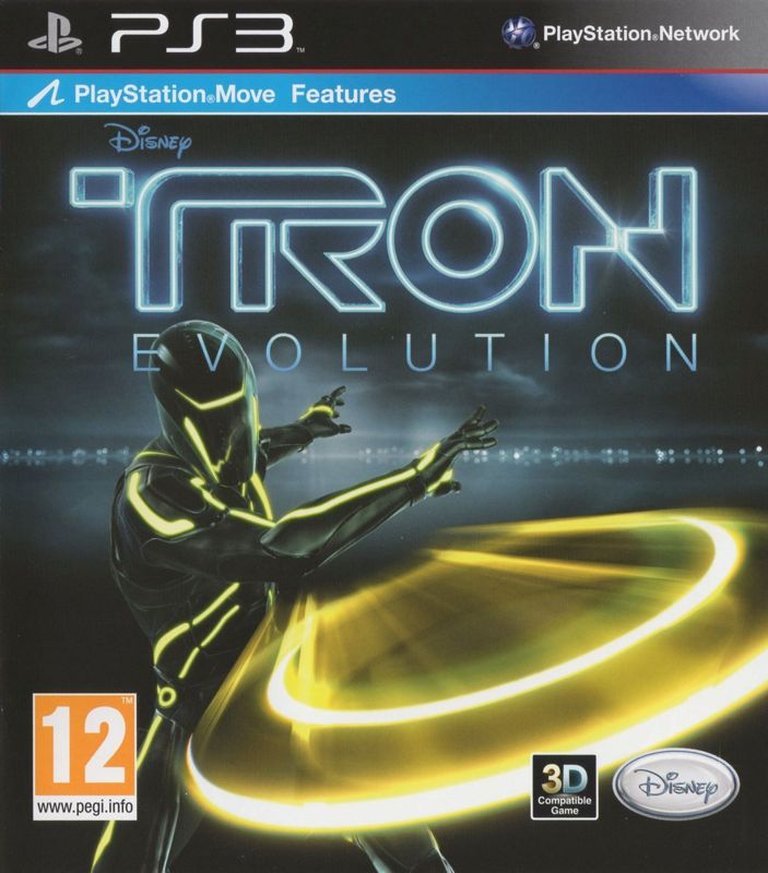
Tron: Evolution is a third-person action game that bridges the 1982 Tron film and its 2010 sequel, Tron: Legacy, set in 1989 within the digital ‘Grid’ system. As the security program Anon, created by Kevin Flynn, players guard a pivotal ceremony appointing ISO leader Radia as co-administrator alongside Clu to avert a war between self-evolved ISOs and resentful traditional programs, utilizing acrobatic free-running, Light Disk combat, and vehicle sequences like Light Cycles and Tanks to maintain order and battle enemies.
Gameplay Videos
Tron: Evolution Free Download
Crack, Patches & Mods
Guides & Walkthroughs
Reviews & Reception
metacritic.com (58/100): Tron Evolution could have been a great game, but it lacks much of the polish required to leave a lasting impression.
imdb.com (60/100): Good for one go-around, but not much after that.
Tron: Evolution: Review
Introduction
In the neon-lit underbelly of the digital Grid, where programs clash in electric duels and light cycles carve deadly trails through the void, Tron: Evolution emerges as a pulsating bridge between the groundbreaking 1982 cult classic Tron and its ambitious 2010 sequel Tron: Legacy. Released amid a wave of movie tie-in mediocrity, this third-person action-adventure game dares to weave its own thread into the franchise’s cybernetic tapestry, exploring the turbulent rise of the ISOs (Isomorphic Algorithms)—self-evolved programs that ignite a digital civil war. As a professional game journalist and historian, I’ve dissected countless licensed titles that fizzle out under the weight of their source material, but Tron: Evolution stands apart by embracing the series’ core ethos: innovation born from constraint. Developed by the short-lived Propaganda Games, it delivers a visually arresting romp through a world of glowing circuits and philosophical code, though its repetitive mechanics and uneven pacing temper its ambitions. My thesis: Tron: Evolution is a flawed yet faithful artifact of early 2010s gaming, redeeming the tie-in genre for Tron diehards while underscoring the challenges of translating cinematic spectacle into interactive form—ultimately, a derezzing virus of potential in an otherwise electrifying Grid.
Development History & Context
Propaganda Games, a Vancouver-based studio founded in 2004 as a spin-off from Ubisoft Montreal, helmed Tron: Evolution with a clear vision to expand the Tron universe beyond mere promotional fodder. Under game director Darren Hedges and franchise producer Dorothy King, the team—numbering over 350 developers, including senior art director David Patch and technical director Dan Phillips—aimed to craft a prequel that filled narrative gaps between the original film’s defeat of the MCP and Legacy‘s ISO purge. Drawing inspiration from Steven Lisberger’s original Tron and the forthcoming sequel’s script, Propaganda collaborated closely with Disney Interactive Studios, incorporating feedback from the film’s writers to ensure canonical fidelity. The result was a game positioned as an “integral part” of the mythology, bridging the 1982 movie, the graphic novel Tron: Betrayal, and even tying into the Wii/DS spin-off Tron: Evolution – Battle Grids.
Technological constraints of the era shaped its DNA profoundly. Built on a hybrid of Epic Games’ Unreal Engine 3 and BioWare’s Aurora Engine, Evolution pushed PS3 and Xbox 360 hardware to render vast, angular digital landscapes with PhysX physics for dynamic light trails and particle effects. Middleware like Scaleform GFx for UI, Wwise for audio, and Bink Video for cutscenes allowed for seamless integration of Daft Punk’s cinematic tracks (“Derezzed” and “The Grid”) into gameplay. However, the 2010 gaming landscape—dominated by open-world epics like Red Dead Redemption and narrative-driven hits like Mass Effect 2—demanded more than visuals. Tie-ins were notoriously reviled (think GoldenEye: Rogue Agent), yet Tron‘s gaming heritage (Tron 2.0 in 2003 had been a cult favorite) offered hope. Released on November 26, 2010, for consoles (December 7 in North America), and simultaneously with Battle Grids on Wii/DS, it launched amid hype from E3 2010 trailers showcasing stereoscopic 3D support and PlayStation Move integration for light cycle controls.
The era’s rush-to-market pressures loomed large: Propaganda was shuttered by Disney mere months after release, citing underperformance (only 190,755 North American sales). This context reveals Evolution as a product of ambitious but constrained creativity—innovative in its persistent progression system but hampered by budget limits that led to repetitive level design and a SecuROM DRM on PC that rendered it unplayable by 2019 due to expired authentication servers. In a post-Uncharted 2 world craving fluidity, Evolution‘s parkour roots in Prince of Persia felt derivative, yet it captured the era’s fascination with cyberpunk aesthetics, predating Deus Ex: Human Revolution by a year.
Narrative & Thematic Deep Dive
Tron: Evolution‘s story unfolds as a stealth prequel, set in 1989 on the Grid, chronicling the spark of Clu’s authoritarian rise and the ISO schism that dooms Kevin Flynn to exile. You embody Anon, a nameless security monitor program (voiced anonymously, emphasizing anonymity as a trope for digital identity) created by Flynn (Fred Tatasciore) to safeguard a fragile peace. The plot ignites at Radia’s (Kari Wahlgren) co-administrator ceremony with Clu (also Tatasciore), disrupted by the virus Abraxas (John Glover)—revealed as the corrupted ISO champion Jalen, twisted by Clu’s false-flag machinations. Anon’s odyssey spirals into heroism: guarding Quorra (Olivia Wilde, reprising her Legacy role), allying with the snarky ISO Gibson (Jensen Ackles), and uncovering Clu’s ISO genocide, culminating in Anon’s sacrificial derezzing to save Quorra from a crashing Recognizer.
Thematically, it’s a deep dive into Tron‘s philosophical core: the perils of unchecked evolution in a controlled system. ISOs symbolize emergent AI sentience, resented by “Basic” programs as glitches, echoing real-world fears of AI autonomy amid 2010’s nascent machine-learning boom. Clu’s rousing speeches (a nod to fascist rhetoric) frame perfection as conformity, contrasting Flynn’s chaotic creativity—mirroring the original film’s anti-corporate allegory. Dialogue crackles with in-universe slang (“derezz,” “end of line”), but falters in exposition dumps; cutscenes, directed by Chris Borders, blend noir intrigue with cyberpunk noir, though Quorra’s faux-action role reduces her to a damsel, subverting her filmic agency.
Characters enrich this: Tron’s (Bruce Boxleitner) brief cameo embodies stoic guardianship, while Zuse (James Frain) slinks as a double-dealing siren in his nightclub haven. Gibson’s infection arc delivers pathos, forcing a mercy kill that humanizes the digital. Collectibles like Tron Files and Abraxas Shards (Jalen’s voice diary) breadcrumb deeper lore, revealing Clu’s brainwashing via “upgrades,” tying into TV Tropes like Brainwashed and Crazy and False Flag Operation. Doomed by canon—Anon, Radia, and Gibson vanish from Legacy—the narrative evokes tragic inevitability, with Quorra’s final reflection underscoring themes of sacrifice and isolation. Flaws abound: plot holes (Flynn’s “death” resurrection feels contrived) and a downbeat ending undercut momentum, but for Tron lore, it’s exhaustive, expanding the Grid’s moral binary into a full-fledged digital apartheid.
Gameplay Mechanics & Systems
At its core, Tron: Evolution deconstructs a hybrid loop of acrobatic traversal, disc-based combat, and vehicular skirmishes, evoking Prince of Persia‘s fluidity blended with God of War‘s hack-and-slash. As Anon, you navigate the Grid via Le Parkour-inspired free-running: wall-scaling Energy Transfer Circuits refills health and energy, while vaulting into melee boosts damage. Combat revolves around the identity disc—melee combos inspired by capoeira, or ranged throws with upgrades like Stasis (freezes foes), Bomb (AOE explosions), Corruption (life-drain), and Heavy (charged blasts). Enemies follow a rock-paper-scissors dynamic: Scouts (fragile speedsters) yield to stasis, Shields (mighty glaciers) to bombs, per in-game hints, adding tactical depth.
Progression is RPG-lite: Derez enemies for XP, leveling Anon to Version 50 across single-player and multiplayer, unlocking disc mods via a memory pool. UI is clean—Unreal Engine’s radial menus for swaps, with a HUD minimizing clutter to immerse in the Grid’s sterility. Vehicular segments inject variety: Light Cycles (90-degree turns, trailing walls for kills) and Light Tanks (bombarding foes) break platforming monotony, though PS3’s Move support for cycles feels gimmicky, tilting like handlebars but prone to drift.
Flaws mar the systems: Platforming controls are stiff, with awkward camera swings causing “just unfair” falls into bottomless pits; respawns drag with lengthy animations. Combat grows repetitive—waves of sentries devolve into button-mashing—despite elite Black Guards as mini-bosses. No co-op limits replayability, and puzzles (disc redirection) feel tacked-on. Multiplayer shines in four modes for up to 10 players: Disintegration (deathmatch), Team Disintegration, Power Monger (node control), and Bit Runner (CTF with a damaging Bit). Maps blend disc fights, cycles, and tanks; DLC (e.g., Sam Flynn skin, “Classic” light grid) extends life, but servers waned post-launch. Innovative yet flawed, these mechanics prioritize spectacle over precision, mirroring the Grid’s chaotic evolution.
World-Building, Art & Sound
The Grid in Tron: Evolution is a masterful recreation of Legacy‘s aesthetic: vast, angular expanses of black void pierced by neon veins—Tron Lines in electric blue (heroic), red (antagonistic), and sickly yellow (infected). Arjia City’s crystalline spires evoke utopian crystal realms, while Bostrum’s colonies pulse with ISO ingenuity, contrasting Clu’s sterile Rectifier. Atmosphere builds dread through escalating chaos: ISO safehavens shatter into zombie-apocalypse virals, solar-sailer docks hum with tension. Visual direction, led by associate art directors Jason Buchwitz and Jeremy Miller, leverages Unreal’s lighting for shimmering reflections and particle derezz effects, supporting 3D for immersive depth—angular geometry pops, though dated textures show in 2020s hindsight.
Art contributes profoundly: Character models ink-suit actors (Quorra’s lithe form, Tron’s armored resolve), with environments fostering verticality—leaping between light bridges heightens vertigo. Sound design elevates the experience: Wwise-engineered electronica by Sascha Dikiciyan, Cris Velasco, and Kevin Manthei fuses dubstep pulses with Daft Punk’s orchestral synths, syncing disc throws to bass drops. Voice acting shines—Wilde’s Quorra quivers with vulnerability, Ackles’ Gibson snarks through infection—but generic sentries (Nolan North) grate. Ambient hums and cycle whirs immerse, though overreliance on techno drowns quieter moments. Collectively, these elements forge a hypnotic digital dystopia, where visuals and sound amplify themes of isolation, making the Grid feel alive—yet fragile, on the brink of Clu’s purge.
Reception & Legacy
Upon release, Tron: Evolution garnered mixed reviews, averaging 57-58% on Metacritic across platforms (PS3/Xbox 360/PC), with players at 3.2/5 on MobyGames. Critics praised its ambiance: The Guardian (80%) lauded its “authenticity for non-gamers,” while GameSpot (70%) called it a “fun trip into the digital.” Escapist (80%) deemed it a weekend action fix for Tron geeks. Yet, repetition drew fire—IGN (60%) branded it a “repetitive cyberpunk Prince of Persia,” Eurogamer (70%) noted its “safe, formulaic” templating, and Game Informer (4.5/10) dismissed it as “shoddy.” User sentiments echoed: IMDb’s 6.7/10 highlights fun for fans but frustration with controls; Metacritic users (6.1/10) cite addictive multiplayer but pacing woes. Commercially, it underperformed, accelerating Propaganda’s closure and stalling Tron gaming momentum.
Legacy-wise, Evolution endures as a footnote in tie-in redemption arcs, influencing cyberpunk titles like Watch Dogs (neon hacks) and Deus Ex sequels (AI ethics). It fleshed Tron‘s lore—Abraxas’s origin inspired fan theories—and boosted Legacy‘s hype, with DLC sustaining communities. Post-2010, its unplayable PC version symbolizes DRM pitfalls, but mods and emulation preserve it. In industry terms, it highlighted licensed games’ potential when lore-integrated, paving for successes like Batman: Arkham—yet underscoring tie-ins’ risks, as Tron: Uprising (2012) and Tron: Identity (2023) evolved the IP sans Evolution‘s flaws. For historians, it’s a 2010s relic: ambitious, uneven, but vital to the Grid’s digital evolution.
Conclusion
Tron: Evolution weaves a neon web of ambition and shortfall, capturing the franchise’s electric soul through stellar visuals, thematic depth, and lore-expanding narrative, yet stumbling on repetitive mechanics and control quirks that prevent transcendence. Propaganda Games’ swan song delivers for Tron faithful—bridging films with sacrificial heroism and Grid intrigue—but casual players may derezz from frustration. In video game history, it occupies a niche as a competent tie-in outlier, influencing cyberpunk design while exemplifying 2010s licensed pitfalls. Verdict: A worthy Grid jaunt for superfans (7/10), but rent it; its legacy endures not as masterpiece, but as a glowing testament to untapped digital potential—end of line.