
- Release Year: 1998
- Platforms: Windows
- Publisher: JC Research Inc., Lomax Software
- Developer: NORA
- Genre: Action, RPG
- Perspective: Third-person
- Game Mode: LAN, Online Co-op, Online PVP, Single-player
- Gameplay: Abilities, Character progression, Inventory management, Mission-based, Real-time combat
- Setting: Futuristic, Sci-fi
- Average Score: 55/100
Description
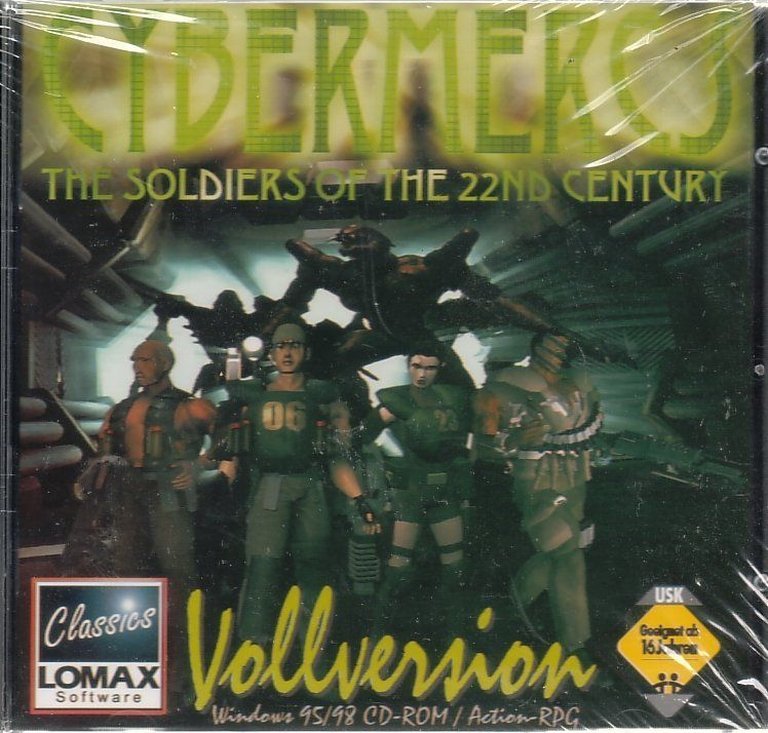
In Cybermercs: The Soldiers of the 22nd Century, players step into a sci-fi future where elite cybernetic soldiers battle waves of evil aliens intent on conquering Earth, navigating underground levels in an isometric, third-person action RPG reminiscent of Diablo. Equipped with an arsenal of weapons, special abilities like invisibility generators and holographic decoys, and even controllable mechs in certain missions, players undertake 15 diverse objectives such as rescuing hostages or repairing energy sources, while managing RPG progression by selling loot to upgrade stats, gear, and skills for enhanced combat effectiveness.
Gameplay Videos
Cybermercs: The Soldiers of the 22nd Century Free Download
Guides & Walkthroughs
Reviews & Reception
obscuritory.com : The grunginess makes the action feel more like an Aliens-adjacent thriller, improving it by couching its frequent shallowness in an atmosphere of creaking, dangerous, half-functional junk.
gamefaqs.gamespot.com : A few major and some minor annoyances nearly sap the fun from the overall experience.
Cybermercs: The Soldiers of the 22nd Century: Review
Introduction
In the dim, flickering glow of a derelict space station, where rusted pipelines snake through shadowed corridors and alien horrors lurk just beyond the next bulkhead, Cybermercs: The Soldiers of the 22nd Century thrusts players into a gritty vision of interstellar warfare that echoes the pulse-pounding tension of Aliens while borrowing the addictive loot-grind of Diablo. Released in November 1998 for Windows, this obscure action-RPG from Korean developer NORA emerged during a pivotal era when isometric dungeon crawlers were redefining PC gaming. Though it never achieved mainstream acclaim, Cybermercs endures as a cult curiosity—a bold, if imperfect, fusion of sci-fi horror and RPG progression that rewards patient explorers with moments of hypnotic intensity. This review argues that, despite its dated mechanics and visual shortcomings, Cybermercs carves a unique niche in gaming history as an early international attempt to localize Western ARPG tropes in a bleak, industrialized future, offering atmospheric thrills that outshine its repetitive grind.
Development History & Context
Developed by NORA, a small Korean studio under the production oversight of Digital Impact, Cybermercs represented an ambitious entry from South Korea’s burgeoning game industry in the late 1990s. Founded amid the rapid growth of PC gaming in Asia, NORA aimed to blend Hollywood-inspired sci-fi with the emergent action-RPG formula popularized by Blizzard’s Diablo (1996). Executive producer Yongsung Choi led a team of 65 developers, many of whom were novices honing their skills on isometric engines, as evidenced by the game’s 92 credited personnel—including testers like Wonyoung Sung and beta participants such as Jihoon Kim, who later contributed to titles like Kingdom Under Fire. The game’s creation was published by JC Research Inc. in the US and Lomax Software domestically, with BAU Design handling manuals and packaging to appeal to Western markets.
Technological constraints of the era heavily shaped Cybermercs. Built for Windows 9x on CD-ROM, it utilized pre-rendered isometric visuals in 16-bit color, a step up from Diablo‘s pixel art but limited by the era’s hardware—no hardware acceleration meant locked resolutions and performance hinging on modest Pentium processors. NORA’s vision, per archived overviews, was to craft a “Diablo variant” with mission-based structure, eschewing endless randomization for linear, objective-driven campaigns. This reflected a deliberate pivot toward narrative depth in RPGs, contrasting Diablo‘s procedural sprawl.
The 1998 gaming landscape was dominated by Diablo‘s loot-driven addiction, fueling a wave of clones amid the rise of online multiplayer via Battle.net. Cybermercs arrived just before Diablo II (2000), positioning itself as a sci-fi alternative in a market flooded with fantasy titles. Korean developers, often overshadowed by Japanese RPG giants, used Cybermercs to showcase global ambitions—translators like Debbie Anne Suh and Ki Hong Kim ensured English accessibility. Yet, limited marketing and distribution meant it flew under the radar, a product of an industry still navigating export challenges. Patches up to version 1.33, released post-launch, added new campaigns and tweaks, hinting at NORA’s commitment despite modest resources.
Narrative & Thematic Deep Dive
At its core, Cybermercs unfolds in 2115, a dystopian future where humanity’s interstellar colonies teeter on collapse under relentless alien incursions and resource wars. The Governor General, facing annihilation, recruits elite “Cybermercs”—heavily armed mercenaries—to reclaim overrun outposts. Players embody one of four archetypal characters (three male, one female named Chris), each a blank-slate operative customizable only via renaming and stat upgrades. No deep backstories or moral dilemmas here; these are faceless soldiers in a war of extermination, emphasizing themes of isolation and survival in a mechanized void.
The plot is delivered through sparse, mechanical briefings narrated by a cold, synthetic female voice, evoking Aliens‘ corporate detachment. Intermissions at the mercenary base—a dilapidated underground hub—reveal snippets of lore: colonies strained by “interplanetary resource wars,” with aliens as opportunistic invaders exploiting human fragility. The 15 missions form a linear arc, escalating from basic infestations on the transporter Sky Lark to high-stakes ops in lava reservoirs and nuclear waste deposits. Objectives vary—eliminate all threats, rescue hostages (ensuring a survival percentage), replace failing energy cores, or evade self-destruct timers—building a narrative of desperate containment. Side details, like holographic logs or environmental storytelling (e.g., bloodied labs hinting at prior massacres), flesh out the conflict, but dialogue is minimal; interactions are limited to shopkeepers’ terse exchanges or mission prompts.
Thematically, Cybermercs delves into militarized decay and the dehumanizing grind of endless war. The aliens—trilobite-like “Zen” creatures, worm larvae, zombie dogs, and gun-wielding brutes—serve as metaphors for uncontrollable infestation, mirroring Aliens‘ xenomorph horde but stripped of psychological horror for rote genocide. Characters’ special abilities (invisibility generators, holographic decoys) underscore themes of technological augmentation as a crutch for human frailty, while the pay-to-upgrade system critiques mercenary capitalism: survival is commodified, with credits earned from carnage funding fleeting advantages. No triumphant heroism emerges; endings warn of “judgment day one year from now,” leaving a nihilistic aftertaste. Critiques note the “thin story,” but this sparsity amplifies the isolation, making each mission feel like a futile skirmish in humanity’s twilight.
Gameplay Mechanics & Systems
Cybermercs distills Diablo‘s click-to-kill frenzy into a mission-based framework, where core loops revolve around infiltration, combat, looting, and progression. Players navigate isometric levels via mouse—click to move, right-click to attack—controlling a single mercenary through multi-level dungeons riddled with locked doors, teleporters, and hidden rooms. The 15 single-player missions (expandable to 30+ via patches) demand objective completion, but optional alien hunts yield extra loot, encouraging thorough exploration.
Combat is frantic yet unforgiving, blending real-time action with RPG depth. No auto-targeting means manual cursor placement, often leading to missed shots amid swarms. Enemies ambush from ceilings or vents (unseen on the motion tracker until impact), forcing trial-and-error tactics: peek around corners, check radar, and unload with weapons like pistols (unlimited ammo starter), flamers, rocket launchers, or grenades. Splash damage risks self-harm, and slow movement speed—your merc strolls like a casual shopper—exacerbates ambushes, demanding strategic positioning over run-and-gun. Special abilities add flair: deploy a holographic twin as bait or go invisible to flank, while occasional mechs offer durable respite with claw attacks (though sluggish against hordes). Bosses, with absurd names like oversized “Zen” variants, test endurance, blending puzzle-like patterns with brute force.
Progression shines in post-mission management at the mercenary base, a clickable hub for shopping and upgrades. Sell scavenged gear for credits (starting at 10,000), then invest in weapons, armor, ammo, healing kits, or stat boosts (strength for carry weight/inventory; dexterity for accuracy/speed; vitality for HP). This paywall system—upgrades cost thousands—rewards risk-taking but punishes minimalism, as early missions yield scant rewards. Inventory management is tense: limited slots and weight force tough choices, with excess items stored in motorized lockers. Patches enhance this with laser sights, extra slots, and new gear.
The UI, however, falters. The toggleable map/scanner is frustrating—the former hides ceiling drops, the latter offers poor navigation in dense layouts. No run key or fluid animations compound slowness, and multiplayer (2-8 players via Internet/LAN/modem for co-op deathmatches) shines in theory for shared tactics but lacks modern matchmaking. Innovations like vehicle sections break monotony, but flaws—repetition, low visibility, steep death penalties (credit loss)—demand constant saves/reloads, turning hypnotic clicking into tedium. Patched content (new campaigns, difficulties) mitigates this, making it a solid co-op crawler for genre fans.
World-Building, Art & Sound
Cybermercs‘ universe is a corroded tapestry of industrialized despair, where humanity clings to battered colonies amid alien blight. Settings span derelict spaceships like the Sky Lark, infested factories, munitions plants, and hazardous sites (lava pools, nuclear dumps), all rendered in isometric pre-rendered tiles that evoke a “beat-up metal fatigue” aesthetic. Claustrophobic corridors, rusted pipes, and bombed-out rooms build a tangible sense of abandonment—teleporters gleam amid debris, emergency beacons spin in derelict halls—crafting an Aliens-esque thriller vibe. The mercenary base, as an explorable menu hub, deepens immersion: dilapidated quarters with flickering lights convey a world where maintenance is a luxury, turning mundane tasks like inventory storage into atmospheric beats.
Visually, the 16-bit isometric style—sprites for characters/aliens, tiled backgrounds—holds up as a pre-Diablo II artifact, with varied enemy designs (wriggling worms, amoeba blobs, zombie variants) adding menace. However, dated graphics manifest in overly dark palettes obscuring foes/items, dense pipelines hiding paths (some needing glowing arrows), and stiff animations. Transparency and lighting effects enhance mood but tank performance; turning them off strips atmosphere. Destructible elements (barrels, lights) and environmental hazards (radioactive spills) enrich exploration, though low visibility often frustrates more than immerses.
Sound design amplifies the grit: metallic clanks, hissing vents, and explosive booms create a tense soundscape, with weapons firing in satisfying cracks and alien screeches piercing the din. Ambient noise—distant alarms, creaking hulls—builds dread, while the score borrows Aliens-like cues for militaristic tension, though it’s unremarkable beyond fitting the horror. The robotic narrator’s briefings add eerie detachment, but no full voice acting limits emotional pull. Overall, these elements forge a dingy, foreboding atmosphere that elevates rote gameplay, making infested sites feel perilously alive despite technical creaks.
Reception & Legacy
Upon release, Cybermercs garnered middling reviews, averaging 55% from nine critics—a reflection of its ambitious but unpolished execution. German outlets like Power Play (69%) praised its Diablo–Aliens fusion and atmospheric levels, noting “passable atmosphere through dark design and fitting music,” but dinged repetitive clicking and outdated graphics. PC Player (68%) appreciated mission variety for fans of alien-slaying, yet critiqued “hakelige” (jerky) controls and unintelligent AI. Harsher scores, like PC Joker‘s 38%, lambasted “altbackene” (stale) iso-graphics and one-dimensional goals, calling it a “motivationskiller.” US site Adrenaline Vault (40%) lauded carnage for action fans but decried “dated graphics, uninspired missions, and ancient AI.” Player ratings averaged 2.6/5 from three votes, with no written reviews, underscoring its obscurity.
Commercially, it flopped—collected by only 17 MobyGames users today—due to poor marketing and competition from Diablo‘s shadow. Yet, post-launch patches (1.25–1.33) added campaigns, weapons, and multiplayer tweaks, extending its life among niche communities. Reputation has warmed nostalgically; Obscuritory (2016) hailed its “corroded aesthetics” as a stylish battering of ARPG ideas, while GOG Dreamlist users (112 votes as of 2025) reminisce about Windows 95 demos, lost CDs, and pleas for re-release, citing its “futuristic take on Diablo.” Korean heritage adds intrigue, with staff like Jihoon Kim influencing later hits (Diablo IV credits overlap).
Influence is subtle: as a “Diablo variant,” it prefigured sci-fi ARPGs like Hellgate: London (2007), emphasizing mission structure over endless dungeons. It spotlighted international dev potential, paving for Korean studios’ global rise (e.g., NCSoft). In history, Cybermercs is a footnote—a flawed pioneer blending horror and loot, cherished by retro enthusiasts for its gritty vibe amid the late-’90s ARPG boom.
Conclusion
Cybermercs: The Soldiers of the 22nd Century is a relic of ambition constrained by era and execution: its bleak sci-fi world and hypnotic combat loops captivate, but slow pacing, visibility woes, and repetition erode the thrill. NORA’s vision—a mercenary’s grim odyssey against alien swarms—delivers thematic punch through grimy immersion, bolstered by RPG customization that rewards tactical depth. Patches redeem much, especially in co-op, yet it pales beside polished successors.
Ultimately, Cybermercs secures a modest place in video game history as an overlooked bridge between Diablo‘s fantasy grind and sci-fi shooters, a testament to Korean innovation in the West’s shadow. For retro RPG aficionados seeking atmospheric alien hunts, it’s a worthwhile dig; casual players, seek modern clones. Verdict: 6/10—a battered gem worth salvaging from obscurity.