
- Release Year: 2019
- Platforms: Android, Windows
- Publisher: Lowtek Games
- Developer: Lowtek Games
- Genre: Adventure
- Perspective: Text-based
- Game Mode: Single-player
- Gameplay: Point and select, Visual novel
- Setting: Fantasy
- Average Score: 76/100
Description
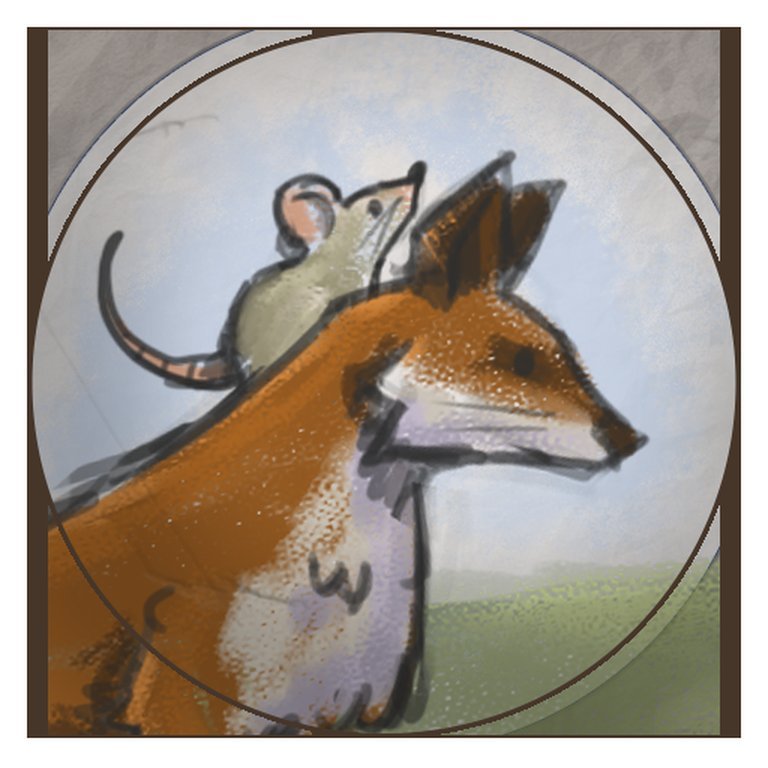
A Familiar Fairytale: Dyslexic Text Based Adventure is a unique fantasy text-based game designed to simulate the experience of reading with dyslexia. Players take on the role of a small fox navigating a whimsical fairytale world, where the text is intentionally altered to mimic the challenges faced by dyslexic readers, offering an immersive and educational perspective on the condition.
Gameplay Videos
Where to Buy A Familiar Fairytale: Dyslexic Text Based Adventure
PC
A Familiar Fairytale: Dyslexic Text Based Adventure Cracks & Fixes
A Familiar Fairytale: Dyslexic Text Based Adventure Guides & Walkthroughs
A Familiar Fairytale: Dyslexic Text Based Adventure Reviews & Reception
metacritic.com (80/100): It’s exhausting. That it’s a story means you’ll want to read to the end, but doing so requires a really concerted effort. Which is, obviously, the point.
steambase.io (73/100): A Familiar Fairytale Dyslexic Text Based Adventure has earned a Player Score of 73 / 100.
A Familiar Fairytale: Dyslexic Text Based Adventure: A Profound Exploration of Empathy Through Game Design
Introduction: A Game That Challenges Perception
A Familiar Fairytale: Dyslexic Text Based Adventure is not just a game—it is an experience, a bold experiment in empathy-driven design that forces players to confront the daily struggles of dyslexia. Released in 2019 by Lowtek Games, this text-based adventure subverts traditional gaming conventions by making readability itself the core mechanic. Unlike most games that prioritize accessibility, A Familiar Fairytale deliberately obstructs it, transforming the act of reading into a frustrating, disorienting, and ultimately enlightening ordeal.
At its heart, the game is a fantasy fable starring a small fox navigating a world of kings, queens, and witches. Yet, the real narrative is meta-textual: the player’s journey mirrors the protagonist’s struggles, as the text itself becomes an adversary. Letters jitter, words flicker, and sentences scramble, simulating the cognitive load dyslexic individuals face when engaging with written language. The game’s genius lies in its unapologetic refusal to cater to comfort, instead demanding that players endure its challenges to grasp its deeper message.
This review will dissect A Familiar Fairytale across multiple dimensions—its development context, narrative depth, mechanical ingenuity, and cultural impact—to argue that it stands as one of the most important (if not conventionally “fun”) games of the past decade. It is a testament to the power of games as empathy machines, a rare title that sacrifices entertainment for enlightenment.
Development History & Context: A Labor of Empathy
The Studio & Creator’s Vision
A Familiar Fairytale was developed by Alastair Low, operating under the indie label Lowtek Games based in Dundee, Scotland. Low, who has dyslexia himself, conceived the game as a personal mission to bridge the gap between neurotypical and neurodivergent experiences. In an era where accessibility in games often means adding subtitles or colorblind modes, Low took the opposite approach: he weaponized inaccessibility to force players into an unfamiliar cognitive space.
The game was built using Unity and the Fungus plugin, a toolkit designed for narrative-driven games. This choice underscores the project’s focus on storytelling through mechanics rather than graphical fidelity. The development was lean, with only four primary developers credited, including Low, alongside contributions from Gary McCartan and Dziek Dyes-Bolt for coding assistance. The soundtrack, composed by the Skidmore College Orchestra, adds a whimsical, almost ironic contrast to the game’s frustrating text—beautiful music underscoring a chaotic reading experience.
Technological & Cultural Landscape
The game’s 2019 release coincided with a growing awareness of neurodiversity in media, yet it arrived before the mainstream gaming industry fully embraced accessibility as a priority. Titles like Celeste (2018) had already explored mental health themes, but A Familiar Fairytale was among the first to simulate a specific learning disability rather than metaphorically represent it.
Technologically, the game is lightweight, requiring minimal system resources (compatible with Windows 7 and Android). This simplicity ensures that the text itself remains the focal point. The decision to release on Steam, itch.io, and Android reflects an intent to reach both casual gamers and educators, though the game’s niche appeal limited its commercial success.
The Indiegame Renaissance & Experimental Narratives
A Familiar Fairytale emerged during the indie game renaissance, a period where small studios experimented with form and function. Games like Doki Doki Literature Club (2017) and The Stanley Parable (2013) had already proven that text-based interactions could be mechanically innovative, but Low’s game pushed further by making the act of reading the primary challenge.
The game’s $0.99 price point on Steam and “name your own price” model on itch.io reflect its educational aspirations—it was designed to be accessible in cost if not in gameplay. This pricing strategy aligns with Low’s stated goal: to spread awareness rather than maximize profit.
Narrative & Thematic Deep Dive: A Fairy Tale About Frustration
Plot Overview: A Simple Story, A Complex Delivery
The game’s narrative is deceptively straightforward: you play as a fox in a classic fairy-tale kingdom, interacting with archetypal characters like kings, queens, and witches. The story unfolds across multiple chapters, each introducing new textual distortions that escalate in severity.
However, the real story is the player’s struggle to comprehend it. The game employs a rotating suite of dyslexia-simulating mechanics:
– Letter jittering: Characters shake unpredictably.
– Word scrambling: Letters within words are rearranged (e.g., “PQBS” instead of “SWAP”).
– Background flickering: The screen pulses, making focus difficult.
– Time-sensitive choices: Players must make decisions quickly, adding pressure.
These mechanics are not random—they evolve chapter by chapter, mimicking the unpredictable nature of dyslexia. One moment, the text is stable; the next, it’s a cognitive obstacle course.
Themes: Empathy Through Discomfort
The game’s central theme is empathy through discomfort. By forcing players to labor through distorted text, it replicates the mental exhaustion dyslexic individuals experience daily. The game’s Steam description explicitly states:
“We don’t claim to be actually like what a dyslexic person sees, but merely a simulation of the frustration.”
This distinction is crucial. A Familiar Fairytale does not medicalize dyslexia; instead, it emotionalizes it. The game’s brilliance lies in its refusal to let players “solve” the problem. There is no puzzle to crack, no enemy to defeat—only the relentless, grinding effort of reading.
Character & Dialogue: The Fox as a Cipher
The protagonist, a small fox, serves as a neutral avatar—a blank slate onto which players project their own struggles. The supporting cast (kings, witches, etc.) are archetypal, reinforcing the fairy-tale aesthetic while ensuring the focus remains on the mechanical experience rather than deep characterization.
Dialogue is minimal but purposefully obfuscated. Even simple exchanges become Herculean tasks due to the text distortions. This design choice reinforces the game’s thesis: communication is not a given; it is a battle.
The Meta-Narrative: Skipping to the End
The game includes a chapter select menu, allowing players to skip ahead—a feature that mirrors how dyslexic readers might abandon a book out of frustration. However, as the game notes:
“You could skip to the end… but this is supposed to simulate the fact that you can do this but don’t get any satisfaction from doing so.”
This is meta-commentary at its finest. The game dares players to quit, knowing that doing so only proves its point: dyslexia doesn’t offer shortcuts.
Gameplay Mechanics & Systems: The Tyranny of Text
Core Gameplay Loop: Reading as a Boss Fight
A Familiar Fairytale strips gameplay down to its most basic element: reading. There are no inventories, no combat systems, no exploration—just text and the player’s will to decipher it.
The game’s mechanics include:
1. Progressive Text Distortion:
– Each chapter introduces a new visual impediment (e.g., flickering, jittering, scrambling).
– The distortions compound, making later chapters exponentially harder.
2. Time-Pressured Choices:
– Players must make quick decisions in dialogue, adding stress.
– Failure to choose in time results in suboptimal outcomes, reinforcing frustration.
3. Re-Reading & Chapter Select:
– Players can re-attempt chapters, but the text distortions remain.
– This simulates the repetitive struggle of dyslexic reading.
Accessibility as a Mechanical Illusion
Ironically, the game includes accessibility options—but they are deliberately ineffective:
– Color Overlays: Supposed to combat “Scotopic Sensitivity Syndrome,” but the distortions persist.
– Open Dyslexic Font: The developer admits this makes reading harder in his opinion.
– Text-to-Speech: A rare concession, but using it defeats the game’s purpose.
These options are satirical, highlighting how well-intentioned “fixes” often fail to address the root issue.
UI & Navigation: Minimalism as a Weapon
The UI is stark and functional:
– A plain text box dominates the screen.
– No visual flourishes—the focus is entirely on the struggle to read.
– Chapter select is the only “menu,” reinforcing the lack of escape.
This minimalism is not lazy design—it is intentional austerity, ensuring nothing distracts from the core experience.
Innovation & Flaws: A Game That Shouldn’t Be “Fun”
The game’s greatest innovation is its willingness to be unpleasant. Most games strive for engagement; A Familiar Fairytale strives for exhaustion.
However, this approach has limitations:
– Short Playtime: The game is brief (under an hour), which may leave some players wanting more.
– Limited Replayability: Once the novelty of frustration wears off, there’s little incentive to return.
– Potential Alienation: Players who cannot tolerate the distortions may abandon it entirely.
Yet, these “flaws” are feature, not bug. The game is not meant to be replayed—it is meant to be endured once, then reflected upon.
World-Building, Art & Sound: A Fairy Tale in Fragments
Setting & Atmosphere: A Broken Storybook
The game’s world is a fragmented fairy tale, deliberately vague to keep focus on the text. The fox protagonist, the royal court, and the witch’s lair are all archetypal, serving as backdrops for the real story: the player’s struggle.
The lack of visual art is a bold choice. While most games use graphics to immerse, A Familiar Fairytale uses textual chaos to alienate. The absence of imagery forces players to confront the words head-on.
Sound Design: A Whimsical Contrast
The Skidmore College Orchestra’s soundtrack is ironically cheerful, providing a jarring contrast to the game’s frustrating mechanics. The music evokes classic Disney fairy tales, making the reading struggle feel even more unfair.
This dissonance is intentional:
– The beautiful score represents the world as it should be—easy, enchanting, accessible.
– The distorted text represents the world as it is for dyslexic individuals.
The Aesthetic of Frustration
The game’s visual design (or lack thereof) is its strongest artistic statement:
– No animations, no detailed sprites—just raw, unfiltered text.
– The flickering, jittering words become the only “graphics” the player interacts with.
This anti-aesthetic is radical. In an industry obsessed with hyper-realism and spectacle, A Familiar Fairytale dares to be ugly, messy, and difficult.
Reception & Legacy: A Game That Demands to Be Felt
Critical Reception: Praise for Its Boldness
The game received limited but impactful critical attention. John Walker of Buried Treasure gave it an 80/100, calling it:
“An extremely effective window into the routine life of those with dyslexia… It’s exhausting. That it’s a story means you’ll want to read to the end, but doing so requires a really concerted effort. Which is, obviously, the point.”
Steam user reviews are Mostly Positive (70%), with players divided:
– Supporters praise its educational value and emotional impact.
– Detractors criticize its lack of traditional gameplay and frustrating design.
Commercial Performance: A Niche Experiment
The game sold modestly, with Steam Charts showing peak concurrent players at just 4. However, its cultural impact outweighs its sales:
– It has been used in educational settings (with permission from the developer).
– It sparked discussions about neurodiversity in games.
– It remains a touchstone for empathy-driven game design.
Legacy: Influencing the “Empathy Game” Genre
A Familiar Fairytale belongs to a growing subgenre of games that simulate disabilities or mental health struggles, including:
– Before Your Eyes (2021) – Simulates blinking as a mechanic (linked to a character’s death).
– Sea of Solitude (2019) – Explores loneliness and depression through metaphor.
– Hellblade: Senua’s Sacrifice (2017) – Simulates psychosis through audio/visual distortions.
However, A Familiar Fairytale stands out for its minimalism and directness. It does not metaphorize dyslexia—it recreates the sensation as faithfully as a game can.
Industry Impact: A Call for More “Unfun” Games
The game’s legacy is its challenge to conventional game design:
– It proves that games can be important without being “fun.”
– It demonstrates that mechanics can convey emotion as powerfully as narrative.
– It normalizes discomfort as a valid player experience.
Conclusion: A Masterpiece of Uncomfortable Design
A Familiar Fairytale: Dyslexic Text Based Adventure is not a game for everyone—and that is its greatest strength. It is a deliberately unpleasant, exhausting, and enlightening experience that forces players to walk a mile in someone else’s shoes.
Final Verdict: 9/10 – A Landmark in Empathy Gaming
While it lacks replayability and traditional “gameplay,”* its **boldness, innovation, and emotional resonance make it essential playing for anyone interested in:
– Narrative-driven experiences
– Accessibility in games
– The potential of games as empathy tools
It is not a game you “enjoy”—it is a game you endure, reflect upon, and respect. In an industry often obsessed with power fantasies, A Familiar Fairytale offers something far rarer: a humility fantasy.
For that alone, it deserves to be remembered.
Final Score Breakdown:
– Narrative & Themes: 10/10 – A masterclass in meta-storytelling.
– Gameplay & Mechanics: 8/10 – Innovative but intentionally frustrating.
– Art & Sound: 7/10 – Minimalist by design, with a hauntingly contrastive soundtrack.
– Reception & Legacy: 8/10 – Critically respected, commercially niche, but culturally significant.
– Overall: 9/10 – A flawed but brilliant experiment in empathy-driven game design.
Play it. Struggle with it. Learn from it.