
- Release Year: 2017
- Platforms: Windows
- Publisher: One Bit Studio
- Developer: One Bit Studio
- Genre: Adventure
- Perspective: Diagonal-down
- Game Mode: Single-player
- Gameplay: Puzzle elements, RPG elements
- Setting: Fantasy
- Average Score: 50/100
Description
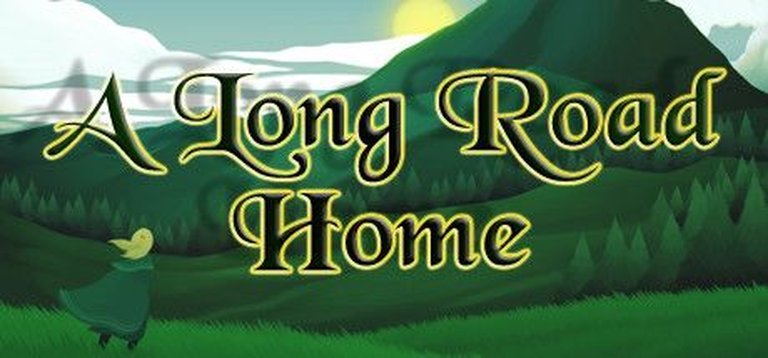
A Long Road Home is a fantasy point-and-click adventure game with RPG and puzzle elements, set in a top-down 2D perspective. Players control a young man who, after being wounded and separated from his family during an attack, must explore catacombs, secret temples, and frozen mountains to reunite with his mother and sister, all while uncovering and evading a secret cult led by a nefarious being that travels between dimensions to conquer worlds.
Gameplay Videos
Where to Buy A Long Road Home
PC
A Long Road Home Free Download
A Long Road Home Guides & Walkthroughs
A Long Road Home Reviews & Reception
metacritic.com (50/100): A Long Road Home won’t be everyone’s cup of tea and may even attract the altogether wrong audience given its JRPG aesthetic, but there are enough positive aspects that a good time shines through from time to time.
store.steampowered.com : the puzzles definitely make up for that [the graphics] and are quite addictive, making you want to finish the game in one go. If you like puzzle games this is one to consider putting on your shelf.
A Long Road Home: Review
Introduction: A Rambling, Flawed, and Ultimately Fascinating Journey
In the vast, often-overlooked corners of digital distribution lies A Long Road Home, a 2017 indie title that stands as a passionate, perplexing, and profoundly awkward testament to the creative possibilities—and pitfalls—of the RPG Maker engine. Developed by the Hungarian one-person studio One Bit Studio (Gabor Domjan), the game announces itself with a bold, almost paradoxical premise: a point-and-click adventure game built inside a toolchain designed for turn-based Japanese role-playing games. It eschews combat, leveling, and party management for inventory puzzles, dialog trees, and environmental exploration, all presented through a familiar 16-bit JRPG lens. This fundamental identity crisis is both its greatest curiosity and its most significant stumbling block. A Long Road Home is not a classic, nor is it a forgotten gem. Instead, it is a compelling case study in ambition constrained by tools and taste, a game where genuine artistic spark is perpetually at war with clunky systems and uneven execution, resulting in an experience that is frequently frustrating yet impossible to dismiss outright. Its legacy is not one of influence, but of documentation—a snapshot of a specific indie developer’s struggle to splice two distinct genres into something new, for better and for worse.
Development History & Context: The One-Man Band and the RPG Maker Paradox
To understand A Long Road Home, one must first understand its creator and its engine. One Bit Studio, as listed in the MobyGames credits, effectively is Gabor Domjan, with a sprawling network of contributors providing graphical resources, music, and writing (notably Darren Curtis for several copyrighted “Fireside Tales” and “Labyrinth” assets). This is the classic model of the solo indie developer leveraging asset stores and community resources to realize a vision far larger than a single person’s skillset. The choice of RPG Maker (likely the then-popular RPG Maker VX Ace, given the 2016-2017 release window) is pivotal. In the mid-2010s, RPG Maker had evolved from a niche, Japan-only tool to a global platform for storytelling, but its visual and structural grammar—tile-based maps, sprite characters, menu-heavy interfaces—was irrevocably tied to the JRPG form.
Domjan’s vision was to subvert this grammar entirely. He sought to make an “adventure game of old,” as the Steam description states, with “detailed descriptions, puzzle solving and item usage.” This meant stripping out the core combat and progression loops of an RPG and trying to graft on the interaction model of a Monkey Island or King’s Quest. The technological constraint was immense: RPG Maker’s event system, designed to trigger battles, shop menus, and character growth, had to be bent to create a flexible point-and-click interface, inventory management, and complex puzzle logic. The result, as we will explore, is a game that feels constantly at war with its own engine. It was released on January 31, 2017, a period saturated with narrative-driven indie games but one where the “RPG Maker aesthetic” was still primarily associated with its namesake genre. It thus faced the dual challenge of explaining itself to adventure game fans put off by the sprites and to RPG Maker fans expecting a different experience. Its distribution was digital-first, appearing on Steam ($1.99) and itch.io ($1.49), with a stated goal of “6+ hours of gameplay” and support for mouse, keyboard, and gamepad.
Narrative & Thematic Deep Dive: Wounded Heroes, Forgotten Gods, and a Cult’s Convenience
The story, as outlined in official descriptions and the Adventure Gamers review, follows an unnamed young man (player-namable) who, along with his mother and sister, is attacked while traveling to a new home. He is left for dead, wounded and separated. This immediate personal goal—reuniting with his family—is the narrative’s emotional through-line. However, the plot rapidly expands into cosmic fantasy. The attack is revealed to be the work of a secret cult serving a “nefarious being” named Amuna, an entity capable of traveling between “infinite numbers of planes (dimensions).” This being has already “conquered numerous worlds” and now targets the protagonist’s world, with a specific, unstated interest in the hero himself.
The narrative structure, as critiqued, is a significant point of friction. The Adventure Gamers review highlights a rocky start: the protagonist’s initial tasks in the village of Monenheim (fetching ingredients, resolving a debt) feel “seemingly senseless,” and the pacing is disrupted by a sudden dive into “the memory flashback of a long-forgotten god.” This god, Nasri Ishta, is described as “benign” and sees the hero as its “last chance at justice” against Amuna. Thematically, the game posits a clash of cosmic scales: a small, personal quest for family set against an interdimensional war between a forgotten deity and a conquering alien-cult-leader. The protagonist is the quintessential “unlikely hero,” a regular person thrust into a mythic conflict.
Where the narrative stumbles, according to the critic, is in cohesion and acclimation. The player is “thrown into an unfamiliar world without preamble,” and the connections between village intrigues, subterranean puzzles, and divine interventions are not clearly drawn, leading to a feeling of disjointed progression. The writing is noted as “fairly well done” but plagued by “spelling and grammatical errors in nearly all text boxes,” which undercuts the gravitas of the fantasy lore. Thematically, there’s potential for exploration of familial duty versus cosmic responsibility, the burden of legacy (being a “last chance” for a god), and invasion/conquest, but the execution is uneven, relying more on exposition (through books, notes, dialog) than on integrated storytelling. The promise of “Multiple Endings” (per Steam tags) suggests some player agency in the final confrontation with Amuna, but the core narrative arc remains largely linear, guiding the hero from the village of Monenheim through catacombs, secret temples, and frozen mountains—the3 distinct environmental zones mentioned in the blurb.
Gameplay Mechanics & Systems: A Point-and-Click Prisoner of RPG Maker
This is the heart of the game’s divisiveness. A Long Road Home is a point-and-click adventure in pure spirit: you move a cursor, examine the environment, collect items, combine them in your inventory, and use them on scenes or characters to solve puzzles and progress. However, its RPG Maker underpinnings create a unique set of behaviors and frustrations.
- Core Loop & Perspective: The game uses a fixed, flip-screen / diagonal-down perspective (MobyGames specs), a common trope in older adventure games and JRPGs. Each “screen” or room is a self-contained puzzle box. The player navigates between these static screens, a process that feels deliberate and old-fashioned.
- Inventory & Interaction Systems (The Major Flaw): The Adventure Gamers review identifies the single biggest pain point: the cumbersome, multi-window inventory system. There is one window for combining and examining items, and a separate one for using them. Furthermore, to use an item, the player character must not only be adjacent to the target but also facing the correct direction. This introduces an unnecessary layer of “trial and error” trial-and-error, as the player must manually orient the sprite (likely with arrow keys or a directional command) to interact with a door, lever, or character. This stands in stark contrast to the streamlined “click on the thing, click on the inventory item” standard of the genre.
- Puzzle Design: The puzzles are the game’s saving grace. The review praises them as “enjoyable” and notes they “keep throwing in new permutations, like a sliding block challenge, locks with number codes.” They are described as the element that makes you “want to finish the game in one go.” They range from classic logic puzzles and dialog trees (talking a guard into paying a debt) to environmental deduction (finding hidden items, decoding a scrambled alphabet code mentioned in the review). The puzzle quality is cited as the primary positive by users and critics alike.
- Progression & UI: Character progression in the RPG sense is absent. There are no stats to increase, no XP, no equipment that alters abilities. “Progression” is purely narrative and puzzle-based. The UI is a direct lift from RPG Maker’s menu systems, which feels jarring for an adventure game. The tutorial is extensive and multi-page, which the critic sees as a “warning sign” of over-complication.
- Control Schemes: The game supports mouse/keyboard and gamepad. Steam community discussions reveal control quirks, such as a specific key (‘W’) to open inventory but no obvious key to close it, highlighting the non-standard interface.
In essence, the gameplay is a fundamental mismatch. The game’s soul is that of a classic adventure game—inventory logic, puzzle hierarchies, textual descriptions—but its body is built from RPG Maker parts, leading to a clunky, finicky, and unintuitive interaction model that creates friction at every turn. The genius of the puzzle design is perpetually hampered by the awkwardness of the interface required to solve them.
World-Building, Art & Sound: A Charming, Chaotic Menagerie
The game’s aesthetic is its most immediately recognizable feature and a point of both praise and criticism.
- Visual Direction & Art: The game is rendered in a stylized, 2D pixel art style typical of RPG Maker, with a top-down, diagonal perspective. The character sprites are noted as “detailed” and hold up well when viewed close-up in fullscreen, a testament to the asset artists (Andinator, BustedEd, Candacis, etc., per credits). The environments are “colorful and diverse,” ranging from “dank mineshafts to lush estate gardens” to “frozen mountains,” directly matching the promotional blurb. However, the Adventure Gamers review delivers a devastating critique: many environments are “so crammed with odds and ends that it looks like the software’s decorator tool threw up all over the place.” This visual clutter is not merely an aesthetic misstep; it has direct gameplay consequences, making it “more of a chore to sift through all visible objects to find the ones that are actually interactive.” The game’s “hover-pointer changes appearance” mechanic for interactive objects is inconsistently implemented, sometimes intentionally hiding key items, which exacerbates the problem. The art is thus a double-edged sword: technically competent for an RPG Maker game, but often compositionally messy and functionally obstructive.
- Sound Design & Music: This is a consistent highlight. The music is “nicely composed” and “setting-appropriate,” using instruments like harps and pianos to evoke a mystical, fantasy atmosphere. It is one of the few universally praised elements. However, its fatal flaw is repetition; tracks are on “such a short loop that their repetition makes them get old very fast.” Sound effects are present but not notably detailed, typical of the engine’s limitations.
- Atmosphere & Setting: The atmosphere is one of mystery and subdued fantasy. The settings—a medieval village, ancient ruins, icy peaks—are familiar archetypes. The cult of Amuna and the memory of Nasri Ishta add a layer of cosmic horror and forgotten mythology, but the delivery through text-heavy dialog and environmental storytelling is uneven. The overall tone is dark fantasy (per Steam tags) but often leavened by the inherently “cute” or “anime-styled” sprite art, creating a tone dissonance that the critic attributes to an inability to “divorce the familiar overhead JRPG pixel art from the unexpected point-and-click puzzle gameplay.”
The world is thus charming in its parts but frustrating in its whole. The individual assets show care, but their assembly lacks directorial cohesion, and the visual noise directly harms the core gameplay loop of object hunting.
Reception & Legacy: The Great Divide Between Critics and Players
A Long Road Home exists in a curious critical and commercial limbo, defined by a stark disparity between aggregated critic scores and Steam user sentiment.
- Critical Reception: The critic reception is sparse and middling. On MobyGames, it holds a MobyScore of n/a with a 50% average from 1 critic (Adventure Gamers). On Metacritic, it similarly has a “tbd” metascore from too few reviews. The sole major critic review (Adventure Gamers, 2.5/5 stars) is a deeply mixed “Uneven” verdict. It acknowledges “enjoyable puzzles” and “nicely composed musical tracks” but is scathing about “finicky gameplay systems,” a “difficult acclimation period,” “tons of minor translation issues,” and visual clutter. Its conclusion is telling: it “won’t be everyone’s cup of tea and may even attract the altogether wrong audience given its JRPG aesthetic.” This critic sees a game perpetually pulling in opposite directions.
- User Reception: Steam user reviews tell a radically different story. As of the latest data from multiple sources (Steambase, SteamDB, PlayTracker), the game boasts an “Overwhelmingly Positive” or 86% positive rating from approximately 30-49 user reviews. PlayTracker estimates ~169,000 total owners and a 4.9-hour average playtime. This suggests a small but devoted cult following. User tags on Steam are revealing: alongside “Adventure,” “Puzzle,” and “Point & Click,” they include “Story Rich,” “Multiple Endings,” “Cute,” “Family Friendly,” and “Dark Fantasy.” Players seem to overlook or forgive the mechanical flaws because they connect with the story, the puzzles, or simply the charm of the RPG Maker aesthetic applied to a different genre.
- Legacy & Influence: The game has no discernible influence on the broader industry. It did not spawn clones, inspire major studios, or become a touchstone in adventure game discourse. Its legacy is that of a curated oddity—a successful proof-of-concept for a very specific sub-niche: “RPG Maker adventure games.” It demonstrated that the engine could be repurposed, but also highlighted the inherent friction in doing so. It remains a footnote in the history of RPG Maker, often cited in discussions about unconventional uses of the tool. Its presence on platforms like itch.io and its inclusion in the “One Bit Studio Catalogue” bundle indicate it serves as a portfolio piece for its creator. The disconnect between its critical pans and user praise makes it a fascinating study in expectation versus reality—players going in with managed expectations (low price, indie, RPG Maker) may be pleasantly surprised by the puzzle depth and story, while a professional critic judging it against genre standards (LucasArts, Telltale) finds it technically and aesthetically deficient.
Conclusion: A Chronicled Curiosity, Not a Canonized Classic
A Long Road Home is not a game that rewrites history. It will not appear on any “Greatest of All Time” lists, and its mechanical innovations are, at best, accidental. Its place in video game history is not one of achievement, but of documentation and demonstration. It is a primary source artifact from the era of democratized game development, showcasing exactly what happens when a passionate creator uses a tool for a purpose its designers never intended.
Its strengths are real but narrow: genuinely clever and varied puzzle design that engages the intellect, a genuinely epic and personal narrative premise that holds interest, a beautiful and melancholic musical score, and a undeniable charm emanating from its homemade, asset-store aesthetic. Its flaws are equally real and often deal-breaking for the uninitiated: an interface at war with its own genre, visually cluttered environments that punish observation, a disjointed narrative introduction, and pervasive technical roughness (typos, short music loops).
The 86% Steam user score is not evidence that the flaws are imagined; it is evidence that a dedicated audience exists for this specific alchemy of JRPG looks, adventure gameplay, and indie passion. They are playing despite the awkwardness, finding value in what the game tries to be. The 50% critic score is not evidence of elitism; it is evidence that when judged by the polished standards of the adventure game canon, its scaffolding is too rickety to support its ambitions.
Ultimately, A Long Road Home is a game worth experiencing precisely because of its contradictions. It is a game that must be analyzed, not just played. It stands as a monument to the perils and promises of genre hybridization using constrained tools. It is a flawed gem—cloudy, roughly cut, and set in a clunky mount—but one that still catches the light in certain facets. For the game historian, it is an essential case study. For the curious player with patience and a tolerance for jank, it can offer 5-6 hours of genuinely engaging puzzle-solving wrapped in a story of cosmic consequence and familial love. For everyone else, it remains a compelling entry in the catalog of “what if,” a reminder that the path to innovation is often paved with good intentions and awkward controls. Its final verdict is not “good” or “bad,” but “notably, persistently, interestingly average.”