
- Release Year: 2017
- Platforms: Macintosh, Windows
- Publisher: Shaman Games Studio
- Developer: Shaman Games Studio
- Genre: Adventure, Puzzle
- Perspective: 1st-person
- Game Mode: Single-player
- Gameplay: Hidden object
- Average Score: 31/100
Description
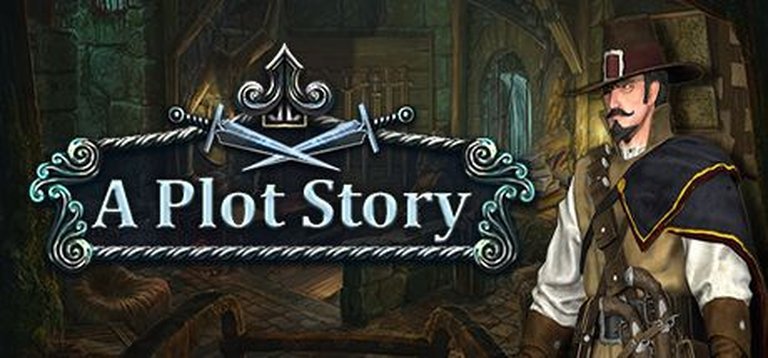
A Plot Story is a first-person adventure puzzle game where players take on the role of Lily, a young woman tasked by a mysterious man named Peter to infiltrate a duchess’s mansion and steal important documents. As Lily explores the mansion, she uncovers a deeper conspiracy involving the duchess, leading to a series of timed puzzles and hidden object challenges that test her wits and agility. The game blends narrative-driven exploration with frequent puzzle-solving, set against a backdrop of intricate artwork and a suspenseful storyline.
Where to Buy A Plot Story
PC
A Plot Story Guides & Walkthroughs
A Plot Story Reviews & Reception
steambase.io (30/100): A Plot Story has earned a Player Score of 30 / 100.
raijin.gg (29.58/100): A Plot Story holds a 29.58% positive rating on Steam, based on 71 player reviews.
completionist.me (35.21/100): Game Rating: 35.21
A Plot Story: A Hidden Object Puzzle with a Plot Too Thin
Introduction
A Plot Story (2017) is a hidden object puzzle game developed and published by Shaman Games Studio. It follows Lily, a young woman tasked with infiltrating a duchess’s mansion to steal incriminating documents, only to uncover a conspiracy involving black magic and a plot against the kingdom. On paper, it promises an intriguing narrative wrapped in classic hidden object gameplay. However, its execution reveals a game where the “plot” in its title is more of an afterthought—a thin veneer stretched over a relentless barrage of puzzles. This review dissects A Plot Story’s ambitions, its mechanical shortcomings, and its place in the crowded hidden object genre.
Development History & Context
Shaman Games Studio, a relatively obscure developer, released A Plot Story in September 2017 for Windows and macOS. The studio’s portfolio includes other casual titles like Dream Walker and Namariel Legends: Iron Lord, suggesting a focus on narrative-driven puzzle experiences. The game’s development likely adhered to the constraints of the hidden object genre, which prioritizes repetitive gameplay loops over deep storytelling.
The late 2010s saw a glut of hidden object games (HOGs) flooding digital storefronts, many of which relied on formulaic designs: static scenes, item hunts, and occasional mini-games. A Plot Story attempts to differentiate itself with a fantasy setting and a linear narrative, but its adherence to genre conventions ultimately undermines its aspirations.
Narrative & Thematic Deep Dive
Plot Summary
Lily, a seemingly ordinary woman, is recruited by a mysterious man named Peter to steal documents from the Duchess’s mansion. Upon infiltration, she discovers the Duchess is a practitioner of black magic plotting to overthrow the king. The stakes escalate as Lily must thwart the Duchess’s schemes to save the kingdom.
Themes and Execution
The game’s premise hints at themes of deception, power, and heroism, but these are barely explored. The narrative unfolds through sparse dialogue and static cutscenes, with little character development or emotional resonance. Lily remains a cipher, her motivations reduced to a series of fetch quests. The Duchess, the primary antagonist, is a one-dimensional villain with no depth beyond her evil ambitions.
The game’s title, A Plot Story, is ironic. While it promises a narrative-driven experience, the story is secondary to the gameplay. The “plot” is a loose framework to justify the puzzles, not a compelling tale in its own right.
Dialogue and Pacing
Dialogue is minimal and functional, serving only to advance the player from one puzzle to the next. The pacing suffers from the game’s insistence on inserting a puzzle after nearly every line of dialogue, disrupting any semblance of narrative flow. As one player review notes, “After just about every dialogue screen there is a puzzle and this very soon becomes tiresome.”
Gameplay Mechanics & Systems
Core Gameplay Loop
A Plot Story follows the classic hidden object formula:
1. Hidden Object Scenes: Players scour cluttered environments for items listed in a inventory.
2. Puzzle Mini-Games: Between hidden object segments, players solve puzzles ranging from jigsaws to logic challenges.
3. Inventory Management: Collected items are used to progress through the story or solve environmental puzzles.
Innovations and Flaws
- Timed Puzzles: Some puzzles are timed, adding a layer of challenge, but the difficulty is inconsistent. Simple puzzles feel padded, while others are arbitrarily punishing.
- Repetition: The game’s 91 levels (as advertised) quickly devolve into a grind. The lack of variety in puzzle design exacerbates the monotony.
- UI and Navigation: The interface is functional but uninspired, with no standout features to elevate the experience.
Progression and Replayability
Progression is linear, with no branching paths or meaningful choices. The game’s 12-hour runtime (per Steam’s description) feels inflated due to the sheer volume of puzzles, not narrative depth. Replayability is negligible—once the puzzles are solved, there’s little incentive to return.
World-Building, Art & Sound
Visual Design
The game’s art style is competent but generic. The Duchess’s mansion and other locations are rendered in a dark fantasy aesthetic, with detailed but static backgrounds. Character designs are simplistic, lacking the polish of higher-budget HOGs.
Atmosphere
The game attempts a gothic tone, but the atmosphere is undermined by the disjointed pacing. The transition from dialogue to puzzle-breaking feels jarring, pulling players out of the world rather than immersing them.
Sound Design
The soundtrack is forgettable, consisting of looped ambient tracks that do little to enhance the mood. Voice acting is absent, with dialogue presented as text, further distancing players from the narrative.
Reception & Legacy
Critical and Commercial Reception
A Plot Story received a Steam user score of 30/100 (Mostly Negative), based on 71 reviews. Players criticized the game’s repetitive gameplay and weak narrative integration. One reviewer summed it up: “I did not enjoy this game. For me it very quickly became tedious.”
Commercially, the game has sold approximately 330 copies (per Raijin.gg), a modest figure even for an indie title. Its $4.99 price point (often discounted to $0.84) reflects its niche appeal.
Legacy and Influence
A Plot Story has had no discernible impact on the hidden object genre. It stands as a cautionary tale about the dangers of prioritizing quantity (91 levels, 500 unique tools) over quality. Its failure to balance narrative and gameplay serves as a reminder that even casual games need a compelling hook beyond sheer volume.
Conclusion: A Plot Without a Story
A Plot Story is a game that misunderstands its own title. It presents a “plot”—a sequence of events—but fails to craft a “story” with emotional weight, character depth, or thematic coherence. The hidden object genre thrives on repetition, but A Plot Story pushes it to the point of exhaustion, burying its narrative under an avalanche of puzzles.
Final Verdict: 4/10 – A forgettable entry in the hidden object genre, saved only by its occasional challenging puzzles. For fans of the genre, there are far better alternatives (Mystery Case Files, Dark Parables). For everyone else, this is one plot best left unresolved.
Additional Notes
- Platforms: Windows, macOS
- Developer/Publisher: Shaman Games Studio
- Release Date: September 21, 2017
- Price: $4.99 (frequently discounted)
- Playtime: ~12 hours (advertised)
A Plot Story is a game that could have been more than the sum of its parts, but its relentless focus on puzzles at the expense of storytelling ensures it remains a footnote in gaming history.