
- Release Year: 2024
- Platforms: PlayStation 5, Windows, Xbox Series
- Publisher: Saber Interactive, Inc.
- Developer: Stormind S.r.l.
- Genre: Action
- Perspective: 1st-person
- Game Mode: Single-player
- Gameplay: Puzzle elements, Stealth, Survival horror
- Setting: Post-apocalyptic
- Average Score: 71/100
Description
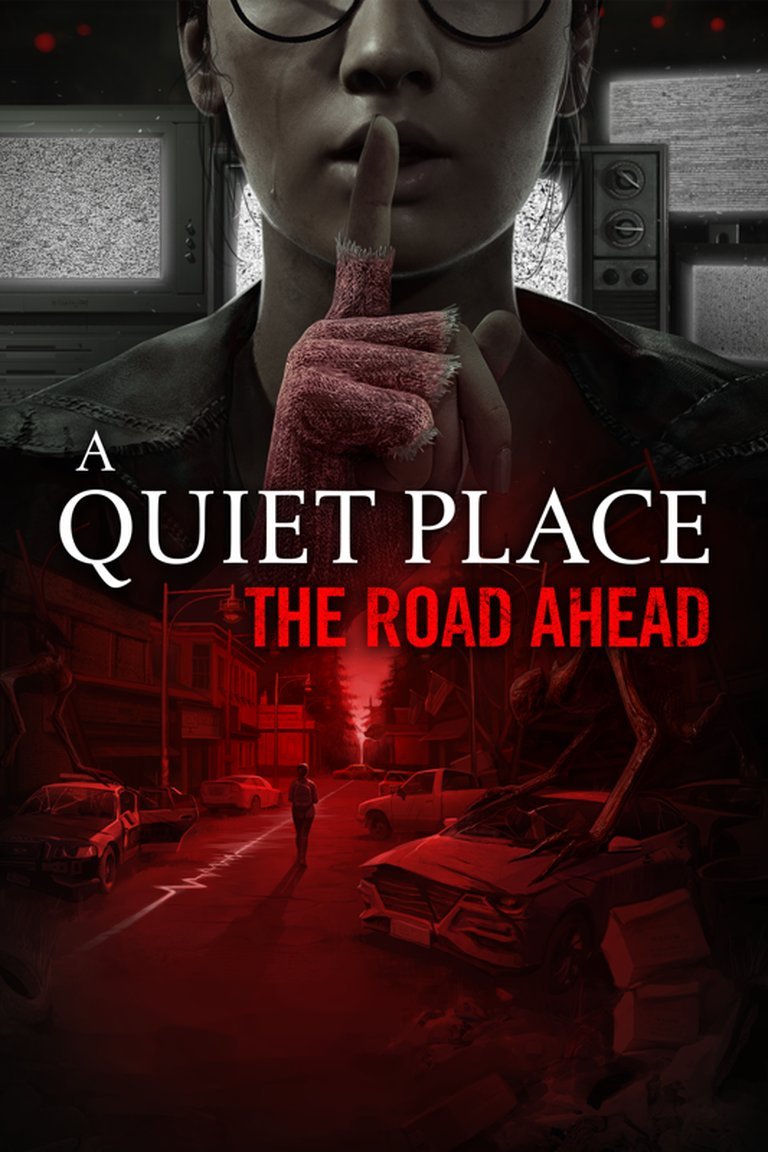
A Quiet Place: The Road Ahead is a first-person survival horror game set in the universe of the A Quiet Place film series, where players must navigate a post-apocalyptic world infested with sound-sensitive alien creatures. Emphasizing stealth, puzzle elements, and careful noise management, the game delivers intense thriller experiences through linear exploration, high-stakes encounters, and a narrative focused on survival amid constant tension.
Gameplay Videos
Where to Buy A Quiet Place: The Road Ahead
PC
A Quiet Place: The Road Ahead Free Download
A Quiet Place: The Road Ahead Cracks & Fixes
A Quiet Place: The Road Ahead Guides & Walkthroughs
A Quiet Place: The Road Ahead Reviews & Reception
metacritic.com (67/100): Mixed or Average Based on 32 Critic Reviews
ign.com : A consistently stressful undertaking from start to finish, even though my careful creep down The Road Ahead moved at a relentlessly glacial pace.
game8.co (76/100): The Road Ahead excels in capturing the tense atmosphere of the A Quiet Place franchise, but it struggles with some notable issues.
adventuregamehotspot.com : A creepy stealth horror experience but no ringing endorsement for this underwhelming movie spinoff.
A Quiet Place: The Road Ahead: Review
Introduction
Imagine creeping through a derelict trainyard at midnight, your flashlight’s feeble beam cutting through inky blackness, every footfall a potential death sentence—not from sight, but from sound. This is the pulse-pounding core of A Quiet Place: The Road Ahead, a 2024 survival horror spin-off from John Krasinski’s acclaimed film franchise, where blind alien “Death Angels” hunt solely by echolocation. Building on the movies’ innovative premise of enforced silence amid familial peril, the game thrusts players into a fresh tale of quiet desperation. As a professional game journalist and historian, I’ve dissected countless horror titles, from Resident Evil‘s survival roots to Alien: Isolation‘s predatory dread. The Road Ahead masterfully evokes the films’ tension but stumbles in innovation, delivering a competent yet repetitive stealth experience that honors its source while rarely transcending it. My thesis: it’s a solid adaptation for franchise fans, blending atmospheric immersion with sound-based mechanics, but pacing woes and unpolished execution prevent it from echoing the revolutionary impact of its cinematic forebears.
Development History & Context
Stormind Games, a small Italian studio founded in 2020, spearheaded The Road Ahead as their breakout title, published by Saber Interactive (known for World War Z and Evil Dead: The Game). Announced in 2021 amid a horror resurgence—fueled by hits like Resident Evil Village and Dead Space Remake—development leveraged Unreal Engine 5 for photorealistic decay and FMOD for hyper-detailed audio, with SpeedTree aiding overgrown ruins. Lead Game Designer Manuel Moavero emphasized strategic stealth without frustration, drawing from Alien: Isolation‘s hunter dynamic, The Last of Us‘ environmental tension, Amnesia‘s vulnerability, and stealth classics like Splinter Cell: Chaos Theory and Thief.
The 2020s gaming landscape was ripe: post-PT and Outlast, sound-as-mechanic experiments (Perception, Superliminal) proliferated, but The Road Ahead tied into the A Quiet Place films’ box-office dominance ($600M+ globally). Constraints included current-gen parity—targeting 4K/30FPS Quality Mode or 1440p/60FPS Performance on PS5/Xbox Series X, with Series S at 1440p/30FPS—amid Unreal 5’s Nanite/Lumen demands. Stormind balanced adventure with horror, rejecting pure survival scarcity for accessibility, yielding an 8-12 hour linear campaign. Released October 17, 2024, for $29.99 on PC (Steam), PS5, and Xbox Series X|S, it marked Italy’s rising horror scene, winning Best Italian Game at the 2025 Italian Video Game Awards.
Narrative & Thematic Deep Dive
The Road Ahead crafts an original story within the franchise universe, set ~120 days post-invasion (Days 105-121, between Day One and the 2018 film), in upstate New York. Protagonist Alex Taylor (voiced by Anairis Quiñones), a music engineering student, embodies human fragility: asthmatic, newly pregnant, and haunted by loss. Flashbacks interweave Day 1 chaos (meteors birthing Death Angels) with present survival, exploring pre-invasion normalcy—family barbecues, college life—contrasting post-apocalyptic isolation.
Plot Breakdown:
– Hospital Shelter (Day 119): Alex, boyfriend Martin Edwards (Aleks Le), his parents Laura (Cathy Cavadini) and Robert (David Kaye), and father Kenneth (Jason Hightower) scavenge amid tensions. Pregnancy reveal heightens stakes; Martin’s ranch sacrifice propels Alex solo.
– Wilderness Exodus: Escaping Laura’s grief-fueled betrayal, Alex repairs radios for island intel (aliens can’t swim), loses Kenneth to tragedy.
– Climactic Trek: Navigating trains, mines, and towns, aided by lore figures like Caleb or Tanjiro (mentioned), Alex reaches a boat, radioing hope at dawn.
Themes mirror films: silence as survival metaphor for stifled communication, amplifying familial fractures (Laura’s rage at Alex’s pregnancy echoes Evelyn’s perils). Pregnancy/Asthma personalize vulnerability—inhaler puffs risk detection, attacks trigger QTEs—probing resilience amid grief. Yet, clichés abound: predictable sacrifices, underdeveloped supporting cast (Martin’s “deep love” feels rote). Dialogue shines in motion-captured cutscenes, but emotional beats lack Day One‘s nuance, prioritizing setup for sequels over profundity. As historian, it extends franchise humanism but recycles tropes without bold risks.
Gameplay Mechanics & Systems
Core loop: stealth-sneak, distract, survive in linear levels (campgrounds, hospitals, forests). No combat—Death Angels are unhittable, emphasizing evasion. Phonometer (noise meter) visualizes risk: green (safe), red (alert). Surfaces vary “sound profiles” (sand quiet, gravel deadly); microphone mode detects real-world noise for immersion (tunable sensitivity).
Key Systems:
– Stealth & Noise Management:
| Mechanic | Description | Innovation/Flaw |
|---|---|---|
| Footsteps/Interactions | Analog stick micro-controls speed; doors squeak if rushed. | Tense, but controller deadzones frustrate. |
| Distractions | Throw bottles/bricks; flares mask/confuse. | Standard (Alien: Isolation), but limited inventory (left/right hand swaps). |
| Sandbags | Muffle paths. | Franchise-faithful, resource-scarce. |
| Asthma | Exertion/dust triggers attacks; pills/inhalers cure. | Unique vulnerability, but over-triggers feel punitive. |
– Progression: No RPG upgrades—evolves via tools (screwdrivers → multi-tools, valves/fuses for puzzles). Puzzles: environmental (bridges from planks), codes from notes.
– UI/Controls: Minimalist HUD (lungs icon, speed indicator); direct control shines on gamepad. Checkpoints generous, but AI quirks (erratic pathing, “heat-seeking”) cause cheap deaths.
– Modes: Difficulties tweak AI/resources; mic optional.
Flaws: Repetitive (crawl-valve-throw-repeat), slow pacing (glacial movement), scripted encounters. Strengths: Evolving threats (mid-game “scans” force stillness). 7-11 hours, replayable for collectibles (toys/mixtapes unlock art).
World-Building, Art & Sound
Upstate New York’s ruins—overgrown trains, flooded mines, derelict hospitals—evoke desolation via Unreal 5’s Lumen lighting (eerie shadows) and Nanite details (cluttered debris). Environments pulse with lore: crayon family portraits, TP-riot notes, evoking The Last of Us‘ pathos. Art direction favors moody realism—cinematic 2.40:1 mode enhances filmic feel—but character models/facial animations lag (stiff expressions).
Sound design (FMOD) is masterful: positional audio cues monster chitters/heartbeats; silence amplifies dread. Ambience (waterfalls mask noise) integrates gameplay. Voice acting conveys raw emotion (Alex’s breakdowns), though flat in spots. Technical hitches (frame drops, pops) mar PS5/Xbox/PC ports, but headphones elevate immersion.
Reception & Legacy
Launch reviews averaged 62-67 (Metacritic/MobyGames): praise for tension (Use a Potion!: 85/100, “edge-of-seat”), sound (Rectify Gaming: 70/100), atmosphere; criticism for repetition (Creative Bloq: 40%, “predictable”), AI/pacing (GamEir: 30%, “misfire”), technical woes (FULLSYNC: 63%). Players: 7.0/10 (172 ratings), lauding mic feature but noting tedium. Sales solid at budget price; 17 MobyGames collectors.
Legacy: Elevates Italian horror (Best Italian Game 2024), influences sound-stealth hybrids (post-Isolation wave). Expands franchise interactively, priming sequels amid Part III hype. Not revolutionary like P.T., but solid tie-in amid 2024’s horror boom (Silent Hill 2 Remake).
Conclusion
A Quiet Place: The Road Ahead distills the films’ silent terror into interactive form, excelling in atmosphere and sound-driven stealth that demands breath-held caution. Stormind’s debut captures franchise essence—vulnerability, ingenuity—via Alex’s poignant arc, but repetition, uneven pacing, and polish issues blunt its edge. At 76/100, it’s recommended for fans (immersive 10-hour trek) and stealth enthusiasts, but casual players may tire of the crawl. In gaming history, it carves a niche as competent adaptation, not landmark—echoing films’ slide from fresh fright to familiar formula—yet proves horror’s enduring allure in silence. Final Verdict: 7.5/10 – Tense, true-to-source survival, held back by monotony.