
- Release Year: 2021
- Platforms: Windows
- Publisher: Alawar Entertainment, Inc.
- Developer: Far Mills LLC
- Genre: Adventure, Puzzle
- Perspective: 3rd-person (Other)
- Game Mode: Single-player
- Gameplay: Point and select, Puzzles
- Setting: Fantasy
- Average Score: 85/100
Description
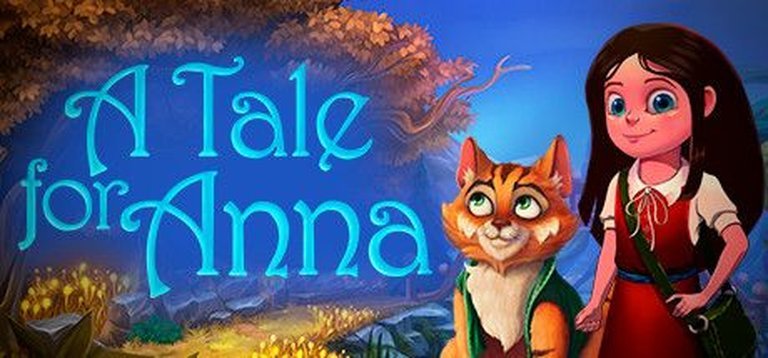
A Tale for Anna is a charming fantasy point-and-click adventure game where a young girl, raised by her talking cat, awakens her hidden magical powers and embarks on a quest to defeat an evil wizard draining the world of magic, who has captured her long-lost family. Players explore vibrant, detailed landscapes, collect items, solve varied puzzles and mini-games, aided by a hint system using glowing blue leaves, in a fairytale-like story inspired by a developer’s tale for their daughter.
Gameplay Videos
Where to Buy A Tale for Anna
PC
A Tale for Anna Guides & Walkthroughs
A Tale for Anna Reviews & Reception
opencritic.com : An excellent game for the genre!
ladiesgamers.com : This game is bright, cheerful, colorful, and fun.
metacritic.com (80/100): A Tale for Anna undoubtedly nails the hidden object aspect and has a charming look, but is slightly hampered by irritating mini-games and a bland narrative.
steambase.io (90/100): Very Positive
A Tale for Anna: Review
Introduction
In a gaming landscape saturated with sprawling epics and hyper-realistic blockbusters, A Tale for Anna emerges like a forgotten Grimm fairytale dusted off and brought to vivid life—a compact, enchanting point-and-click adventure that prioritizes whimsy, wonder, and clever puzzles over bombast. Released in 2021 by indie developer Far Mills and publisher Alawar Entertainment, this hidden object puzzle game draws from a deeply personal well: a bedtime story one creator penned for his daughter, Anna. What results is a six-hour journey through a magical realm that captivates with its childlike charm and handcrafted beauty, even as it occasionally stumbles on execution. My thesis: A Tale for Anna stands as a pinnacle of the casual hidden object genre, blending heartfelt storytelling with innovative mechanics to deliver pure, unadulterated joy, cementing its place as an underappreciated gem for puzzle enthusiasts and fairytale lovers alike.
Development History & Context
Far Mills LLC, a modest studio credited with 35 collaborators on this project, crafted A Tale for Anna using the versatile Unity engine, a choice that enabled its lush 2D visuals and smooth point-and-click interface without the bloat of AAA production. Key figures include game designers Alexander Sebov and Aleksei Gromov, who shaped the puzzle loops; lead artist Viktor Zakharchenko, alongside concept artists like Alex Stoller; and a roster of artists (Anna Metyk, Anna Chuchuk, Yevheniya Osikova) and animators (Anna Motsna, Mykola Melnyk) who infused the world with hand-drawn vibrancy. Igor Galakhov composed the soundtrack, while programmers Alexei Motsny and Roman Buletsa handled the rune-tracing mechanics and hint system. Producers like Tamara Komarova and project manager Alexander Sebov oversaw a team whose prior works included casual titles like Looking for Aliens! and Catana, signaling Far Mills’ niche in lighthearted, family-friendly adventures.
The game’s origin is its most poignant hook: inspired by a father’s tale for his daughter, it embodies indie gaming’s intimate ethos amid 2021’s indie boom. This era saw a resurgence of point-and-click adventures—echoing classics like Machinarium or Daedalic Entertainment’s output—but A Tale for Anna carved a casual lane in the hidden object (HOG) market dominated by Big Fish Games and Alawar’s own catalog. Technological constraints were minimal thanks to Unity, but the focus on 2D art and mini-games reflected budgetary realism for a small team. Launched on Steam at $10.99 amid the COVID-19 pandemic’s digital gold rush, it targeted cozy gamers seeking escapist fare, competing with the likes of Unpacking and early Cozy Grove. A Collector’s Edition followed swiftly, and console ports (PS4/5, Xbox, Switch) arrived in 2023 via Top Hat Studios, expanding its reach. In context, it arrived as hidden object games evolved from list-based drudgery to integrated, narrative-driven experiences, positioning A Tale for Anna as a bridge between old-school casuals and modern indies.
Narrative & Thematic Deep Dive
A Tale for Anna unfolds across five captivating chapters in a classic hero’s journey wrapped in fairytale finery. Protagonist Anna, a wide-eyed girl raised by her talking cat companion Tail (a nod to the developer’s daughter, with Anna Sebova voicing the lead), lives in blissful ignorance until her latent sorcery awakens. This inciting incident draws the gaze of the malevolent Queen (sometimes described as a wizard in reviews, hinting at localization variances), who spies through a magic mirror and dispatches minions to kidnap Tail, the first step in her plot to siphon Anna’s magic and usher in eternal darkness. As the last sorceress in a fading kingdom, Anna embarks to rescue Tail, uncover her origins—revealed as tied to a captured family—and confront the Queen, blending self-discovery with familial reunion.
Thematically, it’s a Grimm-inspired tapestry of destiny versus nurture: Anna’s powers, nurtured by Tail’s guidance, clash with her innate heritage, exploring how found family (the cat) empowers biological roots. Motifs of light versus shadow recur—glowing blue leaves as hints symbolize hope amid encroaching gloom—while magical creatures (cute fish, whimsical beasts) underscore wonder’s triumph over tyranny. Dialogue is sparse but endearing, with Tail’s folksy wisdom (“a cat’s nine lives are for curiosity!”) providing levity; characters lack Daedalic-level depth, remaining archetypal (plucky heroine, scheming villain), yet this flatness enhances the storybook feel.
Plot beats escalate methodically: Chapter 1 awakens powers in an enchanted forest; mid-game delves into mystical castles and hidden nooks revealing family lore; the finale pits Anna against the Queen in a destiny-fulfilling climax. Subtle secrets—like peeking into crannies for lore drops—reward exploration, but the linear structure prioritizes emotional beats over branches. Critics note its “simple, straightforward” narrative as both strength (pure fairytale) and flaw (bland personalities), yet it masterfully evokes childhood wonder, making Anna’s growth—from lost girl to empowered sorceress—a resonant arc in under six hours.
Gameplay Mechanics & Systems
At its core, A Tale for Anna loops through point-and-click exploration → contextual item collection → mini-game resolution → progression, eschewing separate HOG screens for seamless integration. Players scour vibrant scenes for tools (e.g., red/blue strings for puzzles), but items glow only when narratively relevant—preventing hoarding but frustrating foresight (puzzle pieces sit inert until needed). This “just-in-time” system heightens tension, blending hidden object hunting with adventure logic.
Mini-games form the backbone: varied challenges like assembly puzzles, riddles, and rune-tracing spells demand precision. Tracing runes—dragging the mouse along ethereal paths to cast magic—is innovative but flawed; hyper-sensitive bounds reset on a single pixel deviation, turning whimsy into tedium. Hidden nooks (clickable crannies for peeks or items) add discovery but opacity, often requiring exhaustive clicking.
The hint system shines: Scattered glowing blue leaves (respawning over time) tally to six for a “magical hint” highlighting next steps or items. It’s generous yet paced, encouraging experimentation before aid—though quirks persist, like hints redirecting to completed tasks (e.g., ignoring blue strings post-red collection). No character progression exists (no skills/levels), keeping focus on puzzles; UI is intuitive, with an inventory bar and map absent but unnecessary in short scenes.
Innovations elevate it: Objects blend organically (no sparkly outliers), fostering immersion; achievements and unlimited hints (via leaves) suit casual play. Flaws—finicky tracing, wonky hints—mar flow, but loops remain addictive, clocking 6 hours of escalating challenges suited to beginners and veterans.
World-Building, Art & Sound
The game’s fantasy kingdom pulses with lived-in magic: enchanted forests teem with bioluminescent flora, misty castles hide shadowy secrets, and picturesque locales brim with quirky denizens (a “cute fishy friend” steals scenes). World-building is light but evocative—Anna’s journey spans five levels unveiling a realm where magic wanes under the Queen’s shadow, with lore dripped via dialogues and collectibles.
Art direction is dazzling: Viktor Zakharchenko’s team delivers hand-drawn 2D splendor in a “storybook” palette of vibrant greens, purples, and golds. Scenes burst with detail—overgrown vines concealing items, dynamic animations (Anna’s expressive poses, Tail’s tail-flicks)—creating an atmosphere of childlike awe. Third-person perspective immerses without overwhelming, every nook a treasure hunt.
Sound design complements: Igor Galakhov’s gentle orchestral score evokes lullabies, swelling for tension; SFX (leaf rustles, rune hums) delight without intrusion. No voice acting beyond sparse lines, but multilingual support (English, German, Russian, Chinese) broadens appeal. Collectively, these forge a cozy, enchanting bubble—visuals and audio as puzzles’ perfect foil, amplifying emotional stakes.
Reception & Legacy
Launch reception was quietly positive in casual circles: Steam boasts “Very Positive” (90/100 from 147 reviews), praising charm and puzzles; LadiesGamers hailed it “the best hidden object game I’ve ever played” (“I Like it a Lot”); Gametop scored 8/10 for its “magical journey”; TheXboxHub (80/100, 2023 port) lauded HOGs but dinged “irritating mini-games” and “bland narrative.” MobyGames lacks a score (unscored Gameplay Benelux review likened it to “Daedalic but more puzzles”); Metacritic tbd, with modest sales (~4k units est.). No major awards, but player sentiment (90 Generally Favorable) endures.
Commercially niche—$10.99 pricing fit casual bundles—its legacy lies in elevating HOGs: integrated objects influenced later indies like Hidden Through Time; console ports expanded cozy gaming. Far Mills’ team dispersed to similar casuals, but A Tale for Anna endures as a personal triumph, inspiring family-friendly fantasies amid cozy wave (Unpacking, A Short Hike). Its influence: a blueprint for heartfelt, accessible adventures in an industry chasing spectacle.
Conclusion
A Tale for Anna distills fairytale magic into a polished, puzzle-packed package—flawed yet fervent, with breathtaking art, clever mechanics, and a narrative born of love conquering its simplicity. Minor gripes (rune fiddliness, hint quirks) pale against its charms, making it essential for HOG fans and a delightful entry for adventurers. In video game history, it claims a cozy niche: not revolutionary, but a timeless reminder that wonder thrives in small studios and bedtime stories. Verdict: Essential Classic of Casual Adventures (9/10)—play it, collect those leaves, and let Anna’s tale enchant you.