
- Release Year: 2022
- Platforms: Nintendo Switch, PlayStation 5, Windows Apps, Windows, Xbox Series
- Publisher: Digerati Distribution & Marketing LLC
- Developer: Open House Games SL
- Genre: Action
- Perspective: Side view
- Game Mode: Single-player
- Gameplay: Platform, Puzzle elements
- Setting: Fantasy
- Average Score: 70/100
Description
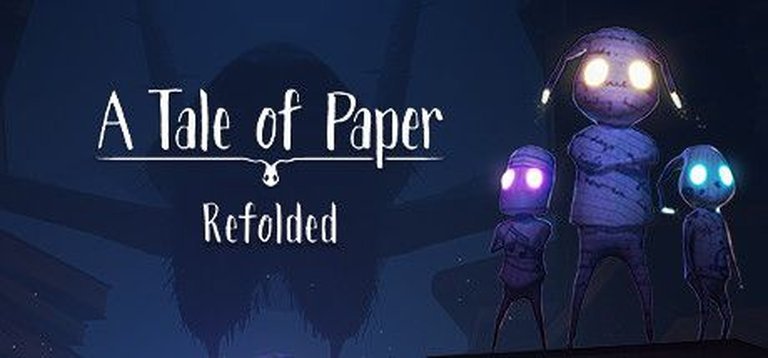
A Tale of Paper: Refolded is a fantasy-themed 2D puzzle platformer that expands on its predecessor by blending cinematic storytelling with intricate gameplay. Players control a paper character navigating side-scrolling environments, solving puzzles and overcoming obstacles through direct controls in a world crafted entirely from paper aesthetics. The game combines platforming challenges with creative mechanics, offering an immersive adventure set in a unique papery universe.
Gameplay Videos
Where to Buy A Tale of Paper: Refolded
A Tale of Paper: Refolded Free Download
A Tale of Paper: Refolded Mods
A Tale of Paper: Refolded Guides & Walkthroughs
A Tale of Paper: Refolded Reviews & Reception
screenrant.com (70/100): A Tale of Paper: Refolded is a mix of clever and mundane, but does enough to be a solid experience.
jumpdashroll.com : A Tale of Paper: Refolded isn’t a bad puzzle platformer, but it’s also far from the best.
gamecritics.com : uneven execution and a general sense of fragmentation prevent it from living up to its potential.
A Tale of Paper: Refolded: Review
Introduction
In the crowded landscape of atmospheric puzzle-platformers—where giants like Limbo, Inside, and Stray have set impossibly high bars—A Tale of Paper: Refolded emerges as a delicate yet conflicted contender. Developed by Spanish studio Open House Games and published by Digerati, this 2022 title is a reimagining of the 2020 original, expanding its origami-inspired narrative with prequel chapters and refined mechanics. At its core, Refolded aspires to be a poignant, wordless journey about dreams, loss, and the fragility of existence, told through the eyes of a sentient paper creature named Line. However, beneath its breathtaking artistry lies a fractured experience, where innovative mechanics are shackled by derivative design, and emotional depth is occasionally drowned by technical and accessibility flaws. This review dissects Refolded’s legacy, dissecting its triumphs and tribulations to determine its place in the genre’s pantheon.
Development History & Context
Open House Games, a small independent studio founded in Barcelona, conceived A Tale of Paper as a passion project blending traditional platforming with the tactile art of origami. The 2020 original, released on PS4, garnered modest attention for its unique aesthetic but was limited by its scope. Refolded (2022) emerged as a definitive edition, bolstered by Unreal Engine 5’s rendering capabilities and a partnership with publisher Digerati for multi-platform releases (PC, Xbox Series, PS5). The Switch and PS5 ports arrived in 2024, broadening its reach. The developers, led by Pau Tarés Pérez (designer/programmer), envisioned a game where “a dream transcend its owner”—a theme visualized through environmental storytelling rather than dialogue. Technically, the engine enabled fluid transformations and dynamic lighting, but also introduced stability issues, particularly on Switch, where “technical issues… bugs that lead to a frustrating amount of resets” plagued the experience (Touch Arcade). The 2022 gaming landscape was saturated with cinematic platformers, making Refolded’s arrival feel both timely and overshadowed. Its niche appeal—prioritizing mood over challenge—mirrored contemporaries like Onde and South of the Circle, yet it lacked their narrative punch or polish.
Narrative & Thematic Deep Dive
Refolded’s narrative unfolds as a triptych of interconnected wordless tales, each centered on a paper protagonist: Line and two unnamed characters from the prequel chapters. The main story follows Line—a yellow-eyed, origami humanoid—on an odyssey to fulfill its creator’s dream, traversing decaying attics, shadowy sewers, and a Mars-like planetarium. The prequels introduce a grieving, human-sized paper figure, deepening the game’s exploration of loss and yearning. Developers at Open House Games embraced ambiguity, using environmental cues and collectibles to unveil a “heartfelt story” (Steam Store). Themes of melancholy permeate every scene: Line’s journey is a metaphor for the ephemeral nature of dreams, with its creator’s absence hinting at grief or abandonment. The three-act structure—with separate credits and abrupt tonal shifts—creates a disjointed yet haunting experience. The second act’s Mars segment offers fleeting lightness, while the final act blends melancholy with musical symbolism, culminating in a bittersweet resolution. Critics like Ryan Nalley (GameCritics) praise the “universality” of its emotional core, noting how “deft visual storytellers” use environments to reinforce loneliness. Yet, the story’s opacity frustrates. As Its Prime Media observes, “much is left to the imagination,” making it “confusingly beautiful” but narratively opaque. The prequel chapters, while enhancing lore, feel tacked-on, and the absence of text or dialogue risks alienating players seeking clarity.
Gameplay Mechanics & Systems
At its heart, Refolded’s gameplay revolves around Line’s origami transformations, which grant traversal abilities: a frog for high jumps, a paper plane for gliding, a ball for rolling, and so on. These mechanics, while “clever” (Screen Rant), suffer from lack of novelty. As Nalley notes, “none of the abilities feel unique or novel,” mapping cleanly onto familiar tropes (e.g., the frog echoes Super Mario’s power-ups). The platforming is serviceable but inconsistent. A fixed camera and depth-perception issues (especially on Switch) lead to frustrating deaths, where “stepping literally inches off the platform” (Movies Games and Tech) triggers instant respawns. Puzzles, primarily switch-flipping and environmental manipulation, rarely integrate transformations creatively, reducing them to traversal tools. The “formulaic” (Jump Dash Roll) level design—room → key → room—exacerbates monotony. Worse, the game culminates in jarring difficulty spikes. A multi-phase boss fight in the prequel chapters requires trial-and-error precision, feeling “completely at odds” (GameCritics) with the otherwise gentle tone. Another puzzle—matching trumpet sounds—relies exclusively on audio, rendering it “impossible” for deaf or hard-of-hearing players (GameCritics). The UI is minimalist but lacks colorblind modes or remappable controls, further limiting accessibility. Progression is linear, with collectibles (hidden paper figures) unlocking story fragments, yet the brevity (3–5 hours) and lack of replayability undermine engagement. As Jump Dash Roll quips, the game is “like a moist piece of paper at worst”—brief, fragile, and easily discarded.
World-Building, Art & Sound
Refolded’s world is a masterclass in atmospheric design, blending fantasy with mundane realism. Environments range from claustrophobic, cobweb-draped attics to cosmic vistas, each dripping with “dark, oppressive” (Its Prime Media) ambiance. The paper aesthetic is central: Line’s transformations animate with satisfying folds and creases, while enemies—giant spiders, Roomba-like vacuums—loom as disproportionate threats, evoking Little Nightmares-scale dread. Lighting is the star: candlelit scenes cast flickering shadows, turning corridors into “wonderfully oppressive” (Movies Games and Tech) stages. Water and rust textures feel tactile, and the varied palettes—from sepia sewers to Mars’ red sands—prevent visual fatigue. Yet, as Matt Cooper (Movies Games and Tech) notes, the game could benefit from “a wider range of colours” to avoid monotony. The sound design amplifies the melancholy. Èric Seró’s score oscillates between quiet piano brooding and triumphant strings, syncing with emotional beats. Sound effects—paper rustles, distant creaks—immerse players, but the trumpet puzzle’s lack of visual cues highlights a critical oversight. Overall, the art and sound forge an “endearing” (Movies Games and Tech), if occasionally sterile, universe where “every candle lighting up the way” (Movies Games and Tech) feels like a narrative revelation.
Reception & Legacy
Refolded’s reception mirrors its duality. Critics lauded its artistry and emotional resonance, with Metacritic aggregating a “Generally Favorable” 76/100 for PS5 based on five reviews. GameGrin awarded it 8.5/10, calling it a “fun, if brief journey through an unsettling world.” However, gameplay critiques were scathing. Jump Dash Roll scored it 4/10, decrying its “derivative” nature and “tedious trial-and-error” mechanics. Player reviews on Steam are mostly positive (74/100), citing brevity and trophies, but Switch users lamented technical issues (e.g., Touch Arcade’s 60% vs. Windows’ 40%). Commercial performance remains unverified, but its inclusion in Digerati bundles suggests modest sales. Legacy-wise, Refolded is a niche footnote. While its origami theme inspired fleeting comparisons to Paper Mario: The Origami King, it lacks that game’s systemic depth. Its true impact lies in its accessibility advocacy: critics like Nalley highlighted the sound puzzle’s flaws, pushing studios to consider inclusive design. Yet, it’s unlikely to revolutionize the genre. As GameCritics summarizes, it’s a “fractured product”—worth experiencing for its “genuine emotional reaction” but ultimately overshadowed by more polished contemporaries.
Conclusion
A Tale of Paper: Refolded is a paradox: a game of profound beauty marred by frustrating execution. Its artistry—from origami animations to haunting soundscapes—crafts an unforgettable emotional journey about fragility and aspiration. Themes of loss resonate, and Line’s silent odyssey lingers long after the credits roll. Yet, the gameplay fails to match this ambition. Derivative mechanics, inconsistent difficulty, and accessibility gaffes transform a promising premise into a exercise in patience. For newcomers, the Refolded edition is a worthwhile, if flawed, detour—a short, pensive experience ideal for trophy hunters. For veterans of the genre, it’s a cautionary tale of ambition outweighing polish. Ultimately, Refolded earns its place not as an innovator, but as a testament to the power of visual storytelling. Like the paper it embodies, it’s a delicate work—easily crumpled, yet capable of unfolding moments of unexpected grace. Final Verdict: A beautifully flawed journey that resonates more in memory than in moment-to-moment play.