
- Release Year: 2012
- Platforms: Linux, Macintosh, PS Vita, Windows
- Publisher: Misfits Attic, LLC
- Developer: Misfits Attic, LLC
- Genre: Puzzle, Strategy
- Perspective: Top-down
- Game Mode: Co-op, Online Co-op, Online PVP, Single-player
- Gameplay: Circuit rotation, Cooperative play, Energy management, Versus multiplayer
- Setting: Futuristic city
- Average Score: 59/100
Description
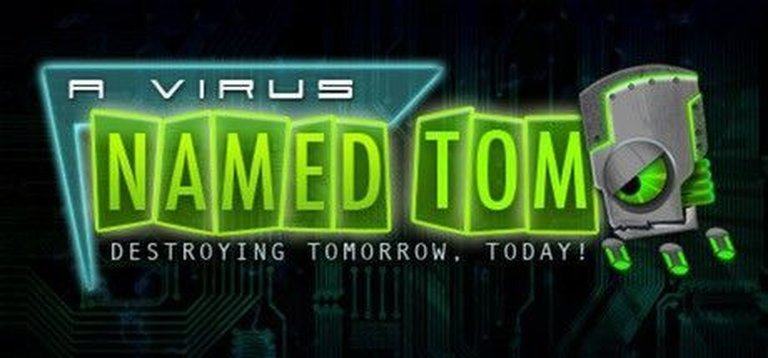
In ‘A Virus Named Tom’, players assume the role of Tom, a virus created by the vengeful inventor Dr. X to sabotage his former employer’s futuristic city. The game challenges players with strategic puzzles where they must spread the virus by manipulating circuit pathways—rotating components, avoiding defensive systems like energy-draining antivirus programs, and completing objectives within a limited time frame. As the virus evolves, players unlock new abilities via email upgrades and tackle encrypted levels with hidden circuits. The game also features cooperative and competitive multiplayer modes, adding layers of replayability to its quirky, tech-themed destruction premise.
Gameplay Videos
Where to Buy A Virus Named Tom
A Virus Named Tom Cracks & Fixes
A Virus Named Tom Patches & Updates
A Virus Named Tom Guides & Walkthroughs
A Virus Named Tom Reviews & Reception
metacritic.com (65/100): A Virus Named TOM is a decent little puzzler. Fans of the genre will enjoy it, and if you can play the co-op, you and a friend can have a really fun time taking on the challenges.
gamefaqs.gamespot.com (60/100): Its a title with hints of nuance, and fairly entertaining gameplay, but absolutely no reason for me to get excited. And that makes reviewing it hard.
slantmagazine.com : A Virus Named TOM mixes and matches the tile rotation of old water-pipe puzzles with Bomberman-like explosives […] it’s a blast to play.
A Virus Named Tom: Review
In the pantheon of indie puzzle games, A Virus Named Tom stands out as a unique and engaging experience that blends strategy, action, and a healthy dose of dark humor. Developed by Misfits Attic, this game is a testament to the creativity and innovation that can emerge from small, independent studios. Released in 2012, A Virus Named Tom has left a lasting impression on the gaming community, earning both critical acclaim and a dedicated fanbase. This review will delve into the game’s development history, narrative, gameplay mechanics, world-building, reception, and legacy, providing a comprehensive analysis of its place in video game history.
Development History & Context
The Studio and Creators’ Vision
Misfits Attic, the indie studio behind A Virus Named Tom, is known for its quirky and innovative approach to game design. The studio’s founders, Tim Keenan and Sean Chang, envisioned a game that would blend the strategic depth of puzzle games with the fast-paced action of arcade-style games. The result is a unique hybrid that challenges players to think quickly and strategically while navigating a complex and ever-changing environment.
The development of A Virus Named Tom began in earnest in 2010, with the studio submitting a playable demo to Indiecade and an alpha build to the Independent Games Festival. The game garnered significant attention at the Game Developers Conference Europe in August 2011, where it was praised for its innovative gameplay and dark humor. By February 2012, the game had entered beta and was available for pre-order, culminating in its official release on August 1, 2012.
Technological Constraints and Gaming Landscape
The gaming landscape in 2012 was dominated by big-budget AAA titles, but there was also a growing appreciation for indie games that offered unique and innovative experiences. A Virus Named Tom was developed using the SlimDX framework, which allowed the studio to create a game that was both visually appealing and technically robust. The game’s top-down perspective and fast-paced action were designed to take advantage of the technological capabilities of the time, while also pushing the boundaries of what was possible in the indie gaming space.
Narrative & Thematic Deep Dive
Plot and Characters
The narrative of A Virus Named Tom is a darkly humorous tale of revenge and redemption. Dr. X, a brilliant but disgruntled inventor, creates a city of the future filled with marvels such as mechanical dogs that never poop and teleporters. However, when he is fired by the corporation he works for, he decides to exact his revenge by creating a virus named Tom. The player takes control of Tom, navigating a series of puzzles and challenges as he infects the city’s infrastructure and brings it to its knees.
The characters in A Virus Named Tom are memorable and well-crafted. Dr. X is a classic mad scientist archetype, driven by a desire for revenge and a twisted sense of justice. Tom, the virus, is a silent protagonist whose actions speak louder than words. The supporting cast of characters, including the sarcastic emails from MegaTech and the various antivirus programs that Tom encounters, add depth and humor to the game’s narrative.
Dialogue and Themes
The dialogue in A Virus Named Tom is sharp and witty, often breaking the fourth wall to comment on the game’s mechanics and the player’s actions. The emails from MegaTech, in particular, are a highlight of the game’s writing, providing a running commentary on the player’s progress and the challenges they face.
The game’s themes are equally compelling. At its core, A Virus Named Tom is a story about the consequences of unchecked ambition and the dangers of playing god. Dr. X’s creations, while impressive, are ultimately flawed and dangerous, and his revenge plot serves as a cautionary tale about the dangers of unbridled power. The game also explores themes of redemption and forgiveness, as Tom’s actions ultimately lead to the downfall of the city and the destruction of Dr. X’s creations.
Gameplay Mechanics & Systems
Core Gameplay Loops
The core gameplay loop of A Virus Named Tom revolves around the player’s ability to rotate circuit parts by 90-degree angles, allowing Tom to spread across the wiring and infect the city’s infrastructure. The game’s puzzles are timed, with Tom’s energy serving as a timer that depletes as he encounters antivirus programs and other obstacles. As the game progresses, Tom’s abilities are upgraded through emails, allowing him to steal energy from defenses and navigate more complex and challenging levels.
The game’s combat mechanics are equally innovative, with Tom able to dodge and evade antivirus programs while also using his abilities to stun and disable them. The game’s cooperative and versus modes add an additional layer of complexity, with players able to work together or compete against each other to infect the city’s infrastructure.
User Interface and Innovative Systems
The user interface of A Virus Named Tom is clean and intuitive, with clear and concise visual cues that guide the player through the game’s various mechanics and challenges. The game’s innovative systems, such as the ability to rotate circuit parts and the use of energy as a timer, are well-integrated into the game’s design, providing a seamless and immersive experience.
However, the game is not without its flaws. Some players have criticized the game’s difficulty spikes, with certain levels becoming increasingly challenging and frustrating. Additionally, the game’s lack of online co-op play has been a point of contention, with some players expressing a desire for a more social and connected gaming experience.
World-Building, Art & Sound
Setting and Atmosphere
The setting of A Virus Named Tom is a futuristic city filled with marvels and wonders, but also dark secrets and hidden dangers. The game’s art direction is a blend of retro-futurism and cyberpunk, with a color palette that is both vibrant and moody. The city’s infrastructure, from the mechanical dogs to the teleporters, is a testament to Dr. X’s genius, but also his hubris.
The game’s atmosphere is equally compelling, with a sense of urgency and danger that permeates every level. The sound design is top-notch, with a soundtrack that is both catchy and immersive. The game’s sound effects, from the hum of the city’s infrastructure to the beeps and boops of Tom’s abilities, add depth and texture to the game’s world.
Visual Direction and Sound Design
The visual direction of A Virus Named Tom is a blend of 2D and 3D elements, with a top-down perspective that allows for a clear and unobstructed view of the game’s puzzles and challenges. The game’s art style is a mix of retro and modern, with a color palette that is both vibrant and moody. The game’s animations are smooth and fluid, with a sense of weight and momentum that adds to the game’s immersion.
The sound design of A Virus Named Tom is equally impressive, with a soundtrack that is both catchy and immersive. The game’s sound effects, from the hum of the city’s infrastructure to the beeps and boops of Tom’s abilities, add depth and texture to the game’s world. The game’s voice acting, particularly the voice of Dr. X, is a highlight of the game’s audio design, providing a sense of personality and depth to the game’s characters.
Reception & Legacy
Critical and Commercial Reception
Upon its release, A Virus Named Tom received a mixed but generally positive reception from critics and players alike. The game was praised for its innovative gameplay mechanics, dark humor, and engaging narrative. However, some critics noted the game’s difficulty spikes and lack of online co-op play as potential drawbacks.
The game’s commercial reception was similarly mixed, with some players expressing a desire for more content and replayability. However, the game’s dedicated fanbase and critical acclaim have ensured its place in video game history.
Influence on Subsequent Games and the Industry
A Virus Named Tom has had a significant influence on subsequent games and the industry as a whole. The game’s blend of puzzle and action mechanics has been emulated by other indie developers, while its dark humor and engaging narrative have become hallmarks of the indie gaming scene. The game’s success has also paved the way for other small, independent studios to create and release their own unique and innovative games.
Conclusion
A Virus Named Tom is a unique and engaging puzzle game that blends strategy, action, and dark humor to create a memorable and immersive experience. The game’s innovative gameplay mechanics, engaging narrative, and impressive world-building have earned it a place in video game history. Despite its flaws, A Virus Named Tom remains a testament to the creativity and innovation of indie game development, and a must-play for fans of the genre. Its legacy continues to inspire and influence the industry, proving that even small, independent studios can create games that leave a lasting impact.