
- Release Year: 2015
- Platforms: Windows
- Publisher: FNGames
- Developer: FNGames
- Genre: Adventure
- Perspective: 3rd-person
- Game Mode: Single-player
- Gameplay: Graphic adventure, Puzzle elements
- Average Score: 83/100
Description
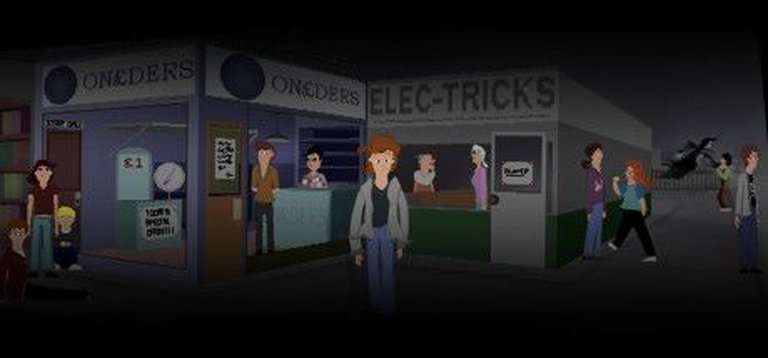
Absent is a free point-and-click adventure game developed by FNGames, set in a mysterious school environment where players progress through a narrative divided into days. Featuring full voice acting and puzzle elements, the game involves interacting with characters, completing tasks like homework, and encountering supernatural aspects such as The Reapers Circle to unravel its story.
Where to Buy Absent
PC
Absent Free Download
Absent Guides & Walkthroughs
Absent Reviews & Reception
gameinformer.com (85/100): Stylish action games have evolved a lot in recent years, and this release skillfully straddles the line between new and old. The extra characters offer more variety and versatility that any fan of the genre should appreciate. They don’t completely mask the other problems, but the inventive twists on the content ultimately outweigh the legacy complaints.
Absent: A Comprehensive Retrospective on an Indie Adventure Game Cult Classic
Introduction: The Whisper in the College Halls
In the vast digital archives of gaming history, certain titles persist not through blockbuster marketing or critical canonization, but through a quiet, steadfast cult resonance. Absent, a 2015 freeware adventure game from the small UK-based studio FNGames, is one such title. For every thousand players who charted the worlds of The Witcher 3 or Bloodborne in its release year, perhaps one ventured into the mysterious, puzzle-strewn corridors of its unnamed college. Yet, that solitary player’s experience—documented in over 400 “Very Positive” Steam reviews—speaks to a unique alchemy: a game born from personal vision, forged in the accessible fires of Adventure Game Studio (AGS), that delivers a densely plotted supernatural mystery with a charm disproportionate to its zero-dollar price tag. This review posits that Absent is more than a curiosity; it is a testament to the narrative potential of the point-and-click genre in the 2010s, a awkward but ambitious bridge between classic adventure design and modern indie storytelling, and a preserved artifact of a specific, passionate do-it-yourself game development ethos. Its legacy is not in sales charts, but in the dedicated walkthroughs, the missable achievement guides, and the quiet appreciation of those who unearthed its secrets.
Development History & Context: The FNGames Vision
The Studio and Its Aims: Absent is the inaugural release from FNGames, a moniker for developer James Fenton. As per the official credits and descriptions, Fenton served as the game’s designer, programmer, and primary composer, embodying the “auteur” model of indie development. The accompanying ModDB and IndieDB profiles explicitly state the game was “in development for three years” before its 2013 initial release (with a Steam debut in 2015). This timeline suggests a labor of love, crafted in a personal capacity before being polished and submitted to the Steam storefront as a free title. The development context is firmly rooted in the global AGS community—a powerful, accessible engine that democratized adventure game creation in the 2000s and 2010s, producing gems like Blackwell and Gemini Rue alongside countless passion projects.
Technological & Design Constraints: AGS, while remarkable for its ease of use, imposed certain aesthetic and technical limitations. The 3rd-person “other” perspective and roughly 40 playable rooms point to a scope manageable for a solo or tiny team. The visual style, glimpsed in sparse screenshots, is characteristic of AGS’s often rustic, pixel-art or low-bit aesthetic—charming but clearly indie. The decision to use AGS was both pragmatic and ideological: it allowed Fenton to focus on writing and puzzle design without building an engine from scratch, directly connecting Absent to a lineage of community-driven adventure games. The “three-sided coin” comment on its genre, while whimsical, hints at a deliberate eclecticism—a blend of horror, comedy, and mystery that was both a strength (tonal variety) and a potential weakness (identity diffusion).
The 2015 Release Landscape: Absent’s Steam launch in August 2015 placed it between titans like The Witcher 3 (May) and Metal Gear Solid V (September). In a year dominated by open-world epics and narrative RPGs, a free, short-form point-and-click was an extreme niche. Yet, this was also a period of burgeoning interest in indie horror and story-driven games, post-Five Nights at Freddy’s and alongside the rising popularity of titles like Undertale (Sept. 2015). Absent’s blend of supernatural horror (“The Reaper”) with college comedy and puzzle-adventure placed it in a unique, scarcely populated intersection.
Narrative & Thematic Deep Dive: The Disappearance at Calder College
Plot Architecture and Structure: The narrative, as meticulously reverse-engineered from the Steam walkthrough, is structured around a six-part, multi-day timeline: Introduction, Monday, Tuesday, The Reapers Circle, Last Friday, and The End. The inciting incident is the disappearance of Crystal, Steve’s girlfriend of three months, after leaving college. Protagonist Murray Schull, with his best friends Eve and Steve, begins an investigation that rapidly escalates from missing-person case to metaphysical horror. The plot is intensely linear in progression but features pivotal branching choices—most notably the puzzle involving swapping keys in the Reaper Circle (Part 4), which requires specific, non-intuitive item manipulation (e.g., using Lloyd’s trainers in muddy water).
Character Dynamics and Dialogue: The cast is small but functional. Murray is the active investigator, Steve the emotional core (driven by love for Crystal), and Eve the seemingly fragile but pivotal figure with a direct connection to the antagonists (“the Reapers”). Supporting characters—Mrs. Fish, the receptionist, Danielle, various students (Lloyd, Grant, the “Eating Guy”)—serve as puzzle nodes and exposition distributors. The dialogue, as sampled in achievement descriptions (“Would you like a Curly Fry?”), suggests a mix of naturalistic teen banter and plot-servicing exposition. The “So Boring!” achievement—requiring the player to read homework to seven specific NPCs—highlights a deliberate, if quirky, engagement with the game’s social fabric, rewarding exhaustive exploration of the college’s interpersonal web.
Themes and Symbolism: Thematically, Absent wrestles with several potent ideas:
1. Absence as Metaphor: The title operates on multiple levels—the physically absent students, the emotional absences in relationships (Murray’s potential loneliness, Steve’s loss), and the metaphysical “absent” state of souls claimed by Reapers.
2. Ritual and Transaction: The Reaper Circle mechanics introduce a dark, ritualistic economy. Lives are currency, friendships are bargains, and the central puzzle involves manipulating a spiritual key system. This frames the horror as a cold, transactional system rather than mere malice.
3. College as Liminal Space: The setting—a college—is a classic liminal zone: a place between childhood and adulthood, of burgeoning independence and latent vulnerability. The disappearances exploit this transitional anxiety, turning a place of learning into a cage.
4. Vision and Haunting: Murray is “haunted by visions of the past and future,” positioning him as an unwilling oracle. This mechanic justifies puzzle-solving as a form of piecing together fractured timelines, a common trope in adventure games but given a personal, psychological horror twist here.
The climax resolves not with a boss fight, but with a narrative and item-based puzzle (“use the gold-plated pen with Crystal’s notepad”), underscoring that the victory is intellectual and restorative, not violent. The final act of giving the pen to Crystal to write her own story is a poignant thematic payoff about reclaiming agency from absence.
Gameplay Mechanics & Systems: Point, Click, and Puzzle
Core Loop and Interface: Absent is a pure graphic adventure: a third-person perspective where players navigate between ~40 rooms via a simple point-and-click interface. Context-sensitive cursor actions (Examine, Use, Talk to) are standard. The UI is minimalist; inventory is a accessible list. The “point and select” descriptor is accurate, with no action-based mechanics whatsoever. This places it firmly in the tradition of LucasArts and Sierra adventures, prioritizing dialogue trees and inventory combinations over reflexes.
Puzzle Design and Logic: The game’s heart is its puzzle network, which is at once its greatest strength and most frustrating element. Puzzles are almost exclusively inventory-based and environment-interaction, often requiring multi-step chains with no explicit hints. The Steam walkthrough is littered with precise, sequential commands: “Use magnifying glass with credit card,” “Use the battery with Crystal’s phone,” “Use the keys in the lift call button to let Lloyd out.” This indicates a design philosophy of “hard” logic puzzles where the solution is logical but obscure. The missable achievements reveal a non-linear element within this linear story: players can fail to show the homework to all seven characters before using hot sauce, or offer curly fries to all five available NPCs before one is consumed in the story. This creates a pressure for completionist players to track subtle state flags, a hallmark of older adventure games but potentially frustrating for modern audiences.
Progression and Systems: There is no traditional character progression (stats, levels). “Progression” is entirely plot-driven and inventory-based. The “job interview” puzzle in Part 3 is a standout example of a game-within-a-game, where the player must apply advice from a library book (“101 Job Interview Tips”) to succeed in a dialogue choice. This is clever, diegetic puzzle design. The “Reaper Circle” system in Part 4 is the closest thing to a unique mechanic: a hub where player choices (which key to take, which cell to visit first) have narrative consequences, simulating a puzzle-box morality.
Flaws and Innovations: The primary flaw is the obscurity. Without the community-produced walkthroughs, many puzzles would be insurmountable due to a lack of in-game hints or logical next-step prompts. The “cut the tile” puzzle in the kitchen, where players comment on being stuck, exemplifies this. However, the innovation lies in the integration of puzzles into the horror mystery. Every item collected (a phone battery, a CV, a notepad) feeds directly into uncovering the supernatural conspiracy. There is no filler; every object has narrative purpose. This creates a taut, focused experience, even if the focus is sometimes too narrow for the player to perceive.
World-Building, Art & Sound: The Penumbra of Calder College
Setting and Atmosphere: The world is the eponymous college and its adjoining town. It is a masterclass in economical environmental storytelling. The “forty playable rooms” include mundane spaces (canteen, foyer, library, “On£ders” shop) and eerie locales (the forest clearing, the swamp, the Reaper Circle cells). The juxtaposition is key: the horror does not lurk in a monster-filled dungeon, but in the fluorescent-lit hallways and damp alleyways of a familiar educational institution. The walkthrough’s note about graffiti reading “Reapers are Coming” (a potential Mass Effect 3 reference, intriguingly) suggests a world with its own lore, hinted at but never fully exposited. This “show, don’t tell” approach, limited by scope, builds unease through familiarity corrupted.
Visual Direction: As an AGS title, the art is 2D, pre-rendered or hand-drawn. It lacks the polish of larger studio adventures but possesses a distinct, cohesive style. The limited color palette and character designs reflect a small team’s consistent vision. The screenshots on MobyGames and Steam show a detailed, isometric-in-spirit environment with clear navigable spaces. The strength is in environmental clarity—players can always discern interactive elements, even if the logic for interacting is unclear.
Sound Design and Music: This is a highlighted feature. The game boasts “Full MP3 Soundtrack composed by Adam Haynes” and full voice acting. The credits list a cast of about a dozen voice actors (Esme Brand, James Fenton, Shannon Hayes, etc.), with many playing multiple roles—a budget necessity but also a common indie convention. The music, composed by James Fenton and orchestrated/produced by Adam Haynes, is described as original and likely a significant atmospheric contributor. In a genre often reliant on stock sounds, a dedicated, orchestrated soundtrack (even if MIDI-based) elevates Absent’s production value. It provides the emotional scaffolding for the horror, mystery, and occasional comedy, preventing the experience from feeling as sparse as the graphical limitations might suggest.
Reception & Legacy: The Quiet Triumph of the Free
Critical and Commercial Reception at Launch: Official critical reception is virtually non-existent. The game has no critic reviews on MobyGames and was not covered by major outlets in 2015, lost entirely in the deluge of that year’s AAA titles. Its commercial model was freeware, so “sales” are irrelevant. However, the Steam community tells a different story. As aggregated by Steambase, Absent holds a “Very Positive” rating (81/100) from 402 user reviews as of early 2026. This is a significant number for a decade-old, obscure free game, indicating sustained discovery and positive word-of-mouth. The contrast with MobyGames’ “1 player” and “23 collected” stats is stark, suggesting its primary audience and discussion happen on Steam, not in historical archives. The average MobyGames player score of 3.0/5 (from 1 rating) is useless statistically but hints at a polarizing or niche experience.
Evolving Reputation and Influence: Absent’s reputation has likely grown retrospectively through the curation of the Steam community guides. The existence of multiple full walkthroughs (including a Russian one) and an official guide from the developer (FNGames) points to an active, if small, player base still engaging with the game years later. Its influence is microcosmic and community-specific. It exists as a proud entry in the catalog of Adventure Game Studio successes, demonstrating that the engine could still produce compelling, original narrative experiences post-2010. It likely influences few mainstream developers but may inspire other AGS hobbyists. Its model—a free, complete, voice-acted adventure—is a benchmark for indie scope and generosity.
Comparison to 2015 Peers: Placed next to Game Informer’s top-scoring games of 2015 (The Witcher 3, Bloodborne, Undertale), Absent is an ant beside a titan. Yet, it shares with Undertale a certain “indie feistiness,” a focus on narrative subversion (though far less pronounced), and aDIY charm. Its horror-tinged college mystery is tonally closer to niche indie darlings like The Cat and the Coup or early PuzzleScript experiments than to Until Dawn. Its legacy is that of a deep cut, a game discovered through algorithmic recommendations (“If you liked point-and-click adventures…”) or forum recommendations, then cherished for its sheer audacity in telling a complete, weird story for free.
Conclusion: A Ghost in the Machine of Gaming History
Absent is not a lost masterpiece. Its puzzles are often maddeningly obtuse, its visuals are dated, and its voice acting, while heartfelt, bears the cadence of non-professionals. Its narrative, while coherent, does not reach the philosophical heights of Undertale or the emotional devastation of Her Story. Yet, to dismiss it on these grounds is to miss its fundamental significance. It is a perfect artifact of a specific moment in indie game development: when tools like AGS allowed a single devoted creator to produce a complete, voice-acted, multi-hour adventure and release it to the world for free, relying on passion rather than profit.
Its place in video game history is not on a pedestal, but in a curated cabinet of curiosities—next to Cave Story, Yume Nikki, and other free-form, personal projects that bypassed commercial pressures. It proves that compelling mysteries, supernatural stakes, and emotional character arcs can be built from simple mechanics and limited resources. The fervor of its Steam community, producing guides years after release, is its true critical reception: a testament to a game that, for a dedicated few, worked. Its ghosts—the Reapers, the absent students—are literalized in its own status: a game absent from mainstream discourse but haunting the periphery, awaiting discovery by the next curious player willing to click on its icon. For that reason alone, Absent deserves preservation, play, and appreciation as a humble, haunting, and defiantly present piece of interactive storytelling.
Final Verdict: 7.5/10 – A flawed, fascinating, and deeply sincere adventure that overcomes its technical limitations with sheer narrative momentum and a palpable love for its own mystery. Essential for genre historians and AGS enthusiasts; a rewarding, if challenging, gem for any patient point-and-click fan.