
- Release Year: 2020
- Platforms: Windows
- Publisher: Big Fish Games, Inc, HH Games
- Developer: e-FunSoft Games
- Genre: Puzzle
- Perspective: Fixed / flip-screen
- Game Mode: Single-player
- Gameplay: Tile matching puzzle, Turn-based
- Setting: Fantasy
- Average Score: 70/100
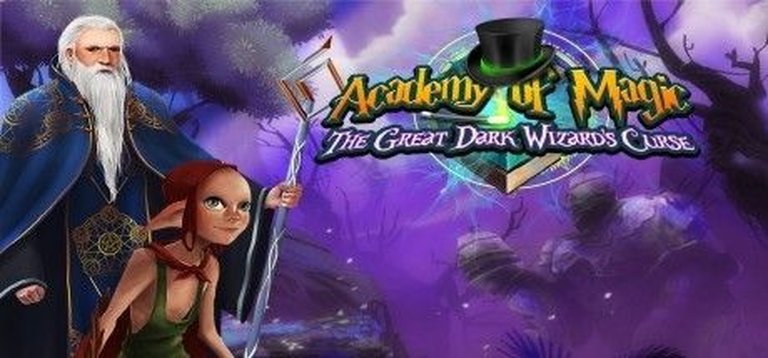
Description
In ‘Academy of Magic: The Great Dark Wizard’s Curse’, players embark on a magical adventure to help Dennis break a dark sorcerer’s curse and save the Academy of Magic. This turn-based tile-matching puzzle game, set in a fantasy world, challenges players with enchanting match-3 gameplay as they navigate through a school of magic to restore peace and lift the ominous spell.
Gameplay Videos
Where to Buy Academy of Magic: The Great Dark Wizard’s Curse
PC
Academy of Magic: The Great Dark Wizard’s Curse Guides & Walkthroughs
Academy of Magic: The Great Dark Wizard’s Curse Reviews & Reception
christcenteredgamer.com (70/100): Competent and no stability issues with Windows 10 like other games by the same developer.
gadgetspeak.com : Providing Match-3 action, this next game involves breaking a curse that is affecting the world of magic.
Academy of Magic: The Great Dark Wizard’s Curse: A Comprehensive Review
Introduction: A Portal to the Past and the Fantastical
Academy of Magic: The Great Dark Wizard’s Curse is a game that invites players into a world where the mundane collides with the magical, where the streets of London give way to the halls of a cursed academy, and where a young orphan’s quest for identity becomes a battle against ancient evil. Released in 2020 by e-FunSoft Games and published by Big Fish Games and HH Games, this title is the third installment in the Academy of Magic series, a franchise that has carved out a niche in the casual gaming market by blending the addictive mechanics of match-3 puzzles with the allure of fantasy storytelling.
At its core, The Great Dark Wizard’s Curse is a game about transformation—both literal and metaphorical. Dennis, the protagonist, begins his journey as a street magician, a performer of sleight-of-hand tricks in a world that has no idea real magic exists. His life changes when he stumbles through a portal into a hidden realm of magic, where he learns that his parents were powerful wizards and that he is destined to break a curse plaguing the Academy of Magic. This premise, while familiar to fans of fantasy tropes, is executed with a charm that makes it feel fresh within the context of the match-3 genre.
The game’s thesis is simple yet ambitious: can a match-3 puzzle game, a genre often dismissed as repetitive or shallow, carry the weight of a narrative-driven adventure? The Great Dark Wizard’s Curse attempts to answer this question by weaving its gameplay mechanics tightly into its storytelling, creating an experience that is as much about progression and discovery as it is about clearing tiles from a board. Whether it succeeds in this endeavor is a question worth exploring in depth.
Development History & Context: The Alchemy of Casual Gaming
The Studio and Its Vision
e-FunSoft Games, the developer behind Academy of Magic: The Great Dark Wizard’s Curse, is a studio that has built its reputation on creating accessible, family-friendly games with a focus on puzzle and casual genres. The studio’s portfolio includes titles like Allura: Curse of the Mermaid and The Chronicles of Robin Hood: The King of Thieves, games that share a similar blend of narrative-driven gameplay and puzzle mechanics. This background suggests a studio that understands the importance of storytelling in casual games, even when the core gameplay is rooted in simplicity.
The Academy of Magic series itself is part of a larger trend in casual gaming: the fusion of match-3 mechanics with fantasy settings. This trend can be traced back to games like Puzzle Quest (2007), which revolutionized the genre by introducing RPG elements into a match-3 framework. While Academy of Magic does not go as far as Puzzle Quest in terms of depth, it does attempt to elevate the match-3 experience by tying it to a cohesive narrative and a sense of progression.
Technological Constraints and Design Choices
Released in 2020, The Great Dark Wizard’s Curse was developed with the technological constraints of the casual gaming market in mind. The game’s system requirements are modest—compatible with Windows ME/Vista/7/8/10, a 1.0GHz CPU, and 128MB of RAM—reflecting its design as a lightweight, accessible title. This approach is typical of games distributed through platforms like Big Fish Games and Steam, where the audience often includes players with older or less powerful hardware.
The game’s visual style is a mix of hand-drawn and digital art, a choice that allows for a whimsical, storybook aesthetic without demanding high-end graphics. The art direction, led by Ryan Wisnu Ardhie, Francisca Dian Palupi, and Yohanes Dony Wicaksana, leans into a Western fantasy aesthetic, with characters and environments that evoke classic fairy tales. However, as noted in some reviews, the art style can feel inconsistent, with Dennis’s design resembling a Pixar character while other elements feel more like illustrations from a children’s book.
The Gaming Landscape at Release
The release of The Great Dark Wizard’s Curse in 2020 (with a Steam release in 2021) placed it in a crowded market of match-3 and casual puzzle games. The genre has long been dominated by franchises like Bejeweled, Candy Crush Saga, and Jewel Quest, games that prioritize addictive gameplay loops over narrative depth. In this context, Academy of Magic stands out by attempting to offer a more story-driven experience, albeit within the constraints of the genre.
The game’s release on platforms like Steam, WildTangent, and GameHouse also reflects a shift in the distribution of casual games. While titles like this were once primarily sold through dedicated casual gaming portals, the rise of digital storefronts like Steam has allowed them to reach a broader audience. This shift has also led to increased competition, as indie developers and larger studios alike vie for the attention of players looking for quick, engaging experiences.
Narrative & Thematic Deep Dive: A Tale of Magic, Identity, and Redemption
Plot Summary and Structure
The Great Dark Wizard’s Curse follows Dennis Griffin, a young orphan who has spent his life performing magic tricks on the streets of London. His life takes a dramatic turn when he is saved from an accident by a mysterious man who resembles his long-lost father. This encounter leads Dennis through a portal into a hidden world of magic, where he learns that his parents were powerful wizards and that he is the key to breaking a curse that has plagued the Academy of Magic for years.
The game’s narrative is divided into five chapters, each of which advances the story while introducing new characters, challenges, and upgrades to the Academy. The plot is linear, with Dennis’s journey unfolding through a series of match-3 puzzles that must be completed to progress. Along the way, he encounters a cast of characters including Nasir, an elf who serves as his guide, and a variety of magical beings who either aid or hinder his quest.
Themes: Identity, Destiny, and the Power of Choice
At its heart, The Great Dark Wizard’s Curse is a story about identity and destiny. Dennis begins the game as an orphan with no knowledge of his true heritage, performing magic tricks that are mere illusions. His journey into the magical world forces him to confront his past, discover his true lineage, and embrace his role as a wizard. This theme of self-discovery is a common trope in fantasy narratives, but it is executed here with a simplicity that makes it accessible to a casual gaming audience.
The game also explores the theme of redemption, particularly through the character of the Great Dark Wizard, whose curse has trapped the spirits of the Academy’s inhabitants. Dennis’s quest to break the curse is not just about saving the Academy but also about freeing these souls, many of whom are former students and teachers who were caught in the wizard’s spell. This adds a layer of moral weight to the gameplay, as players are not just solving puzzles for the sake of progression but are actively working to undo a great wrong.
Characters and Dialogue
The characters in The Great Dark Wizard’s Curse are archetypal but charming. Dennis is the classic “chosen one” protagonist, a reluctant hero who grows into his role as the story progresses. Nasir, the elf who guides him, serves as both mentor and comic relief, providing exposition and occasional levity. The supporting cast includes a mix of allies and antagonists, from friendly ghosts to sinister followers of the Great Dark Wizard.
The dialogue is functional rather than exceptional, with voice acting that is competent but not particularly memorable. The writing, credited to Letisia Putri Ekarini and Samantha Lienhard, does an adequate job of advancing the plot and establishing the game’s tone, but it rarely rises above the level of serviceable. The game’s reliance on static character portraits during dialogue scenes further limits its ability to convey emotion or depth.
Underlying Themes: The Duality of Magic
One of the more interesting thematic elements of The Great Dark Wizard’s Curse is its exploration of magic as both a gift and a burden. The game’s world is one where magic is hidden from the mundane world, a secret that must be protected at all costs. This secrecy is reflected in Dennis’s journey, as he must navigate a world that is both wondrous and dangerous. The Great Dark Wizard’s curse serves as a reminder that magic, like any power, can be used for both creation and destruction.
The game also touches on the idea of legacy, particularly through Dennis’s quest to uncover the truth about his parents. His journey is not just about breaking a curse but about understanding where he comes from and what his place is in the world of magic. This theme is reinforced by the game’s progression system, which sees Dennis upgrading the Academy and unlocking new abilities as he grows into his role as a wizard.
Gameplay Mechanics & Systems: The Alchemy of Match-3 and Adventure
Core Gameplay Loop
At its core, The Great Dark Wizard’s Curse is a match-3 puzzle game, a genre that has remained popular for decades due to its simple yet addictive mechanics. The basic premise involves swapping adjacent tiles on a grid to create matches of three or more identical tiles, which then disappear and are replaced by new tiles falling from above. The game introduces variations on this formula through its level design, with objectives that include clearing specific types of tiles, collecting magical artifacts, and breaking chains or webs that bind certain tiles.
The gameplay is divided into chapters, each of which contains a series of levels that must be completed to advance the story. Between levels, players are given the opportunity to upgrade the Academy using stars earned from completing puzzles. These upgrades serve both a narrative and mechanical purpose, unlocking new areas of the Academy and providing tools that can aid in future puzzles.
Combat and Progression
While The Great Dark Wizard’s Curse does not feature traditional combat, the match-3 puzzles serve as the game’s primary challenge. Each level presents a unique objective, such as clearing a certain number of tiles, collecting magical goblets, or breaking chains that bind tiles. The difficulty ramps up gradually, with later levels introducing more complex board layouts and additional obstacles.
The game’s progression system is tied to its narrative, with upgrades to the Academy serving as both a reward for completing levels and a means of advancing the story. Players can spend stars earned from puzzles to restore parts of the Academy, unlock new tools, and purchase clothing for Dennis. These upgrades are not just cosmetic; they provide tangible benefits, such as tools that can clear tiles or remove obstacles.
UI and Controls
The user interface in The Great Dark Wizard’s Curse is clean and intuitive, designed with casual players in mind. The game is controlled entirely with the mouse, with players clicking and dragging to swap tiles. The UI provides clear feedback on objectives, with a panel on the right side of the screen listing the current level’s goals and a panel on the left tracking progress and resources.
One of the game’s strengths is its accessibility. The controls are simple, the objectives are clearly communicated, and the difficulty curve is gentle enough to accommodate players of all skill levels. However, this simplicity can also be a weakness, as the gameplay can feel repetitive over time, particularly for players who are familiar with the match-3 genre.
Innovative and Flawed Systems
The Great Dark Wizard’s Curse does not introduce many innovations to the match-3 genre, but it does attempt to differentiate itself through its narrative integration and progression system. The game’s use of upgrades and tools adds a layer of strategy, as players must decide how to allocate their resources to maximize their chances of success in future levels.
However, the game’s reliance on static character portraits and minimal animation can make the narrative feel disjointed from the gameplay. The dialogue scenes, while functional, lack the polish and emotional weight of more narrative-driven games. Additionally, the game’s pacing can feel slow, particularly in the later chapters, where the difficulty spikes can lead to frustration.
World-Building, Art & Sound: Crafting a Magical Atmosphere
Setting and Atmosphere
The Great Dark Wizard’s Curse takes place in a hidden world of magic, a realm that exists parallel to the mundane world of London. The game’s setting is a classic fantasy academy, complete with towers, libraries, and enchanted gardens. The world is richly detailed, with each chapter introducing new areas of the Academy that have been affected by the curse.
The game’s atmosphere is whimsical and inviting, with a visual style that blends hand-drawn and digital art. The Academy itself is a character in the story, a place that has been neglected and cursed but is slowly restored to its former glory as Dennis progresses through the game. This sense of restoration is reinforced by the upgrades, which see the Academy’s buildings and grounds repaired and revitalized.
Visual Direction
The art direction in The Great Dark Wizard’s Curse is one of its strongest aspects. The game’s visuals are colorful and detailed, with a storybook aesthetic that fits its fantasy setting. The character designs are charming, if somewhat inconsistent, with Dennis’s Pixar-like appearance contrasting with the more traditional fantasy designs of the supporting cast.
The game’s environments are equally impressive, with each area of the Academy featuring unique architectural styles and decorative elements. The use of color is particularly effective, with warm tones dominating the restored areas of the Academy and cooler, darker hues used to depict the cursed sections. This visual contrast reinforces the game’s themes of restoration and redemption.
Sound Design and Music
The sound design in The Great Dark Wizard’s Curse is functional but unremarkable. The game’s soundtrack, composed by HitsLab, Serge Quadrado, Tim Beek, Miłosz Pawski, AuralColors, and Ondatr34, is a mix of synthesized piano pieces and ambient tracks that fit the game’s whimsical tone. While the music is pleasant, it is not particularly memorable, serving more as background noise than a defining feature of the experience.
The sound effects are similarly understated, with the usual match-3 audio cues—tiles swapping, matches being made, and objectives being completed—accompanied by minimal voice acting. The voice work, performed by Jonathan Francis and Robyn Bair, is competent but lacks the emotional range to elevate the game’s narrative.
Reception & Legacy: A Mixed but Enduring Appeal
Critical and Commercial Reception
The Great Dark Wizard’s Curse received a mixed but generally positive reception upon its release. Critics praised the game’s charming visuals, accessible gameplay, and narrative integration, while noting its lack of innovation and occasional pacing issues. The game’s reception on platforms like Steam and GameHouse was similarly positive, with players appreciating its blend of puzzle mechanics and storytelling.
Commercially, the game performed well within its niche, benefiting from its distribution through multiple platforms and its inclusion in various bundles. Its modest system requirements and casual-friendly design made it accessible to a wide audience, contributing to its success.
Evolution of Reputation
Over time, The Great Dark Wizard’s Curse has maintained a steady reputation as a solid entry in the match-3 genre. While it has not achieved the same level of recognition as franchises like Candy Crush or Bejeweled, it has carved out a niche for itself as a narrative-driven puzzle game. Its inclusion in the Academy of Magic series has also helped to build a small but dedicated fanbase, with players eagerly anticipating future installments.
Influence on Subsequent Games
The Great Dark Wizard’s Curse has had a modest influence on the casual gaming market, particularly in the realm of narrative-driven match-3 games. Its success has demonstrated that there is an audience for puzzle games that prioritize storytelling and progression, a lesson that other developers have taken to heart. Games like Magic Academy Estoria and Wizard’s Academy have followed in its footsteps, blending match-3 mechanics with fantasy settings and narrative depth.
Conclusion: A Charming but Flawed Gem
The Great Dark Wizard’s Curse is a game that succeeds in its ambition to blend match-3 gameplay with a compelling narrative, even if it does not always achieve the depth or innovation it strives for. Its charming visuals, accessible mechanics, and engaging story make it a standout title in the casual gaming market, particularly for players who appreciate a sense of progression and discovery in their puzzle games.
However, the game’s lack of innovation, occasional pacing issues, and inconsistent art style prevent it from reaching the heights of the genre’s best entries. It is a game that is easy to recommend to fans of match-3 puzzles and fantasy narratives but one that may struggle to hold the attention of players looking for something truly groundbreaking.
In the grand tapestry of video game history, The Great Dark Wizard’s Curse is a modest but worthy entry, a game that proves that even the simplest of mechanics can be elevated by a strong narrative and a sense of purpose. It is not a masterpiece, but it is a charming and enjoyable experience, one that deserves a place in the pantheon of casual gaming.
Final Verdict: 7.5/10 – A solid and enjoyable match-3 adventure with a heart of gold, even if it doesn’t always shine as brightly as it could.