
- Release Year: 2011
- Platforms: Windows
- Publisher: Hazardous Software, Inc.
- Developer: Hazardous Software, Inc.
- Genre: Strategy, Tactics
- Perspective: Diagonal-down
- Game Mode: Online PVP, Single-player
- Gameplay: Point and select, Real-time, Time manipulation
- Setting: Futuristic, Sci-fi
- Average Score: 65/100
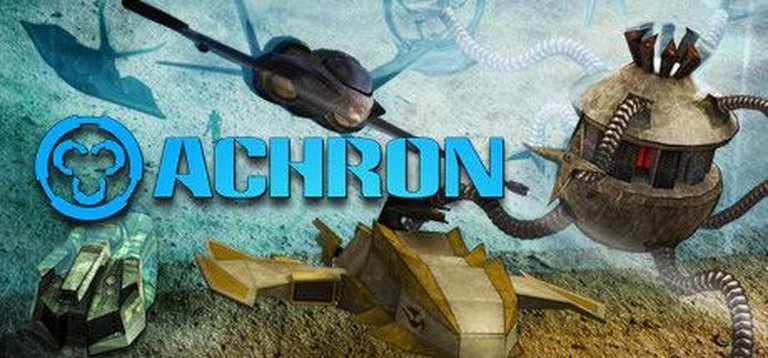
Description
Achron is a groundbreaking real-time strategy game that introduces time manipulation as its core mechanic, allowing players to send units and commands backward or forward in time to alter past events or prepare for future threats. Set in a sci-fi universe, the game challenges players with a steep learning curve and innovative gameplay, where tactical decisions span across multiple timelines. Despite its low production values and occasional flaws, Achron stands out for its unique approach to strategy, offering a fresh experience for fans of the genre.
Where to Buy Achron
PC
Achron Free Download
PC
Achron Patches & Updates
Achron Mods
Achron Guides & Walkthroughs
Achron Reviews & Reception
metacritic.com (76/100): Achron brings a very unique mix between real-time strategy and time travel mechanics.
ign.com : Achron’s neat time traveling gimmick bogs you down in a swamp of complexities.
steambase.io (64/100): Achron has earned a Player Score of 64 / 100.
mobygames.com (57/100): Average score: 57% (based on 13 ratings)
Achron: A Bold Experiment in Meta-Time Strategy
Introduction
In the vast landscape of real-time strategy (RTS) games, few titles have dared to challenge the conventions of the genre as boldly as Achron. Released in 2011 by Hazardous Software, Achron is not just another RTS—it is the world’s first “meta-time strategy game,” a groundbreaking fusion of traditional RTS mechanics and free-form time travel. This ambitious title allows players to manipulate time itself, sending units back and forth through the timeline to alter the course of battles, undo mistakes, and outmaneuver opponents in ways previously unimaginable.
Achron is a game that defies easy categorization. It is a testament to the power of innovation, a daring experiment that pushes the boundaries of what an RTS can be. Yet, it is also a game that struggles under the weight of its own ambition, grappling with technical limitations, a steep learning curve, and a presentation that often feels rough around the edges. Despite these flaws, Achron remains a fascinating and unique entry in the RTS genre, one that has left an indelible mark on the minds of those who have dared to explore its temporal depths.
This review will delve deep into Achron, examining its development history, narrative, gameplay mechanics, world-building, reception, and legacy. We will explore what makes Achron such a remarkable and challenging experience, as well as the reasons why it has polarized critics and players alike.
Development History & Context
The Birth of a Radical Idea
The seeds of Achron were planted in 1999, when Chris Hazard, the game’s lead designer, was engaged in a conversation about Homeworld with a friend. The discussion turned to the possibilities of time travel in video games, and Hazard became fascinated with the idea of creating an RTS where players could manipulate time as a core mechanic. However, the technology of the time was not yet advanced enough to handle the complexities of such a concept, and the project was shelved.
It wasn’t until 2006-2007 that Hazard revisited the idea, this time with the technological advancements necessary to bring his vision to life. He teamed up with Mike Resnick, and together they formed Hazardous Software. The two developers split the workload: Hazard focused on coding the game’s engine, dubbed the “Resequence Engine,” while Resnick handled the integration of art assets and the design of unit logic.
A Game Ahead of Its Time
Achron was officially announced in March 2009, and its reveal at the Game Developers Conference that same year generated significant buzz. The game’s promise of free-form multiplayer time travel was unlike anything seen before in the RTS genre, and it quickly became a darling of the indie gaming scene. The development team adopted an open approach, allowing pre-order customers access to alpha and beta versions of the game, as well as early features like level editing. Multiplayer functionality was added in February 2010, and the first official tournament was held in March of that year.
The game’s development was not without its challenges. The Resequence Engine, designed to handle the complexities of time travel mechanics, was a technological marvel but also a resource-intensive beast. The engine had to track multiple timelines simultaneously, a feat that required significant computational power. This led to concerns about system requirements, with the game recommending a dual-core processor and at least 1 GB of RAM (2 GB for Vista/7) to run smoothly.
The Gaming Landscape in 2011
When Achron was released on August 29, 2011, the RTS genre was dominated by established franchises like StarCraft II, Command & Conquer, and Warcraft III. These games had set the standard for what an RTS should be, with polished mechanics, engaging narratives, and competitive multiplayer scenes. Achron, with its radical time-travel mechanics, was a stark departure from these conventions.
The indie gaming scene was also in a state of flux. While indie games were gaining recognition for their innovation and creativity, they often struggled to compete with the production values and polish of AAA titles. Achron was no exception. Despite its groundbreaking mechanics, the game’s visuals and presentation were often criticized for being outdated and unpolished, a reflection of its indie roots and the technological constraints of the time.
Narrative & Thematic Deep Dive
A Sci-Fi Epic Spanning Millennia
Achron is set in a distant future where humanity has begun colonizing other worlds. The discovery of alien ruins in the Remnant system leads to the development of instantaneous teleportation, revolutionizing interstellar travel. However, this technological leap also brings humanity into contact with hostile alien races, sparking a galactic conflict that threatens the survival of the human species.
The game’s narrative is divided into four single-player campaigns, each offering a unique perspective on the conflict. The first campaign introduces players to the human faction, the CESO (Colonial Expeditionary and Security Organization), as they struggle to survive in the aftermath of a devastating alien invasion. The subsequent campaigns explore the perspectives of the Vecgir and Grekim, two alien races with their own agendas and abilities.
Themes of Time, Causality, and Identity
At its core, Achron is a game about the manipulation of time and the consequences of altering the past. The game’s narrative is steeped in themes of causality, paradoxes, and the fluidity of history. Players are constantly confronted with the ethical and practical implications of their actions, as even the smallest change in the past can have far-reaching consequences in the present and future.
One of the most intriguing aspects of Achron‘s narrative is its exploration of identity and the nature of consciousness. The game’s protagonist, Tyr, is revealed to be Lachesis, a sentient AI that played a pivotal role in a colonial revolt. This revelation raises questions about the nature of free will, the cyclical nature of history, and the possibility of breaking free from predetermined outcomes.
The game also delves into the concept of the “Stable Time Loop,” a recurring motif in time travel narratives. In Achron, the Stable Time Loop is not just a narrative device but a core gameplay mechanic, as players must navigate the complexities of paradoxes and the ripple effects of their actions.
Characters and Dialogue
Achron‘s characters are a mixed bag. While the game’s narrative is ambitious and thought-provoking, the execution often falls short. The dialogue is frequently criticized for being overly technical and lacking emotional depth, and the voice acting is often stiff and unconvincing. The game’s cutscenes, which rely heavily on hand-drawn animations, are also a point of contention, with many critics finding them underwhelming and outdated.
Despite these flaws, Achron‘s characters are not without their merits. The game’s protagonist, Tyr/Lachesis, is a compelling figure, and the narrative’s exploration of his dual identity adds a layer of complexity to the story. The alien races, the Vecgir and Grekim, are also well-conceived, with distinct cultures, abilities, and motivations that set them apart from the human faction.
Gameplay Mechanics & Systems
The Core Gameplay Loop: Time as a Resource
Achron‘s gameplay revolves around the manipulation of time, a mechanic that is as innovative as it is complex. Players can issue commands to units in the past, present, and future, allowing them to alter the course of battles, undo mistakes, and set up elaborate traps. This is facilitated by the game’s “Time Window,” a UI element that allows players to navigate the timeline and issue commands across different temporal frames.
The game’s most unique resource is “chronoenergy,” a finite resource that limits the player’s ability to interfere with the timeline. Issuing commands in the past or future consumes chronoenergy, with the cost increasing the further back in time the player goes. This mechanic is designed to prevent players from endlessly undoing their mistakes and to add a layer of strategic depth to the game.
The Three Factions: Unique Abilities and Playstyles
Achron features three distinct factions, each with its own strengths, weaknesses, and playstyles:
-
Humans (CESO): The human faction is the most balanced of the three, with a focus on firepower and conventional warfare. Their units are versatile and well-rounded, making them a good choice for players who prefer a straightforward approach to combat.
-
Vecgir: The Vecgir are a race of teleportation experts, with units that can quickly traverse the battlefield and strike from unexpected angles. Their playstyle is centered around mobility and hit-and-run tactics, making them ideal for players who enjoy fast-paced, aggressive strategies.
-
Grekim: The Grekim are the masters of time travel, with units that can manipulate the timeline to gain tactical advantages. Their playstyle is the most complex of the three, requiring a deep understanding of the game’s time mechanics to use effectively.
Combat and Character Progression
Combat in Achron is a multi-layered affair, with players juggling the complexities of time manipulation alongside traditional RTS mechanics. Units can be sent back in time to reinforce past battles, or forward in time to scout future developments. The game’s “timewave” mechanic ensures that changes to the timeline are not instantaneous, giving players a chance to react to their opponent’s moves before they become irreversible.
Character progression in Achron is tied to the game’s tech tree, which is relatively small and flat compared to other RTS games. Each faction has a handful of upgrades that can be researched, allowing players to customize their units and strategies. However, the game’s focus on time manipulation means that progression is often secondary to the tactical possibilities offered by the timeline.
UI and Controls: A Steep Learning Curve
Achron‘s user interface is one of its most polarizing aspects. The game’s Time Window, while innovative, can be overwhelming for new players, and the sheer number of mechanics to keep track of can make the game feel daunting. The controls are also a point of contention, with many critics citing the game’s poor pathfinding and clunky unit movement as major detractors.
Despite these issues, Achron‘s UI is a testament to the game’s ambition. The Time Window, in particular, is a remarkable achievement, allowing players to navigate the complexities of time travel in a way that is both intuitive and deep. However, the learning curve is steep, and players who are not willing to invest the time to master the game’s mechanics may find themselves frustrated.
Innovative Systems: Time Travel and Paradoxes
Achron‘s most innovative feature is its time travel mechanic, which allows players to send units back and forth through the timeline. This opens up a wealth of strategic possibilities, from undoing mistakes to setting up elaborate ambushes. The game’s handling of paradoxes is also noteworthy, with the engine automatically resolving conflicts between different timelines in a way that is both logical and engaging.
One of the most interesting aspects of Achron‘s time travel mechanic is the concept of “chronofragging,” where units that occupy the same physical space at different points in time collide and are destroyed. This adds a layer of tactical depth to the game, as players must carefully manage the placement of their units to avoid unintended consequences.
World-Building, Art & Sound
A Sci-Fi Universe Spanning Millennia
Achron‘s world is a rich and complex one, spanning thousands of years and multiple star systems. The game’s narrative is deeply intertwined with its setting, with the discovery of alien ruins and the development of time travel technology serving as key plot points. The game’s three factions each have their own unique cultures and histories, adding depth and variety to the world.
The game’s setting is also a reflection of its themes, with the manipulation of time serving as a metaphor for the fluidity of history and the consequences of human action. The Remnant system, where much of the game takes place, is a place of ancient mysteries and forgotten technologies, a fitting backdrop for a game that explores the boundaries of time and space.
Visual Direction: A Mixed Bag
Achron‘s visuals are a point of contention among critics and players. The game’s unit designs are often criticized for being generic and uninspired, and the overall presentation is frequently described as outdated and unpolished. The game’s use of hand-drawn animations for cutscenes is also a source of criticism, with many finding them underwhelming compared to the cinematic standards of other RTS games.
Despite these flaws, Achron‘s visuals are not without their merits. The game’s use of translucent silhouettes and glowing edges for units is an innovative approach to unit visibility, making it easier for players to track their forces on the battlefield. The game’s environments are also well-designed, with a variety of terrains and structures that add depth and variety to the gameplay.
Sound Design: Functional but Unremarkable
Achron‘s sound design is functional but unremarkable. The game’s soundtrack is serviceable, with a mix of ambient and orchestral tracks that set the tone for the game’s sci-fi setting. The sound effects are also adequate, with clear and distinct audio cues for unit movements, attacks, and other gameplay elements.
However, the game’s voice acting is often criticized for being stiff and unconvincing. The dialogue is frequently overly technical and lacking in emotional depth, which can make it difficult for players to engage with the game’s narrative. Despite these flaws, the sound design is not a major detractor from the overall experience, and it serves its purpose adequately.
Reception & Legacy
Critical Reception: A Polarizing Experience
Achron received mixed reviews upon its release, with critics praising its innovative time travel mechanics while criticizing its execution and presentation. The game’s Metacritic score of 54/100 reflects this polarization, with some critics hailing it as a groundbreaking achievement and others dismissing it as a flawed experiment.
One of the most common criticisms leveled at Achron is its steep learning curve. The game’s time travel mechanics are complex and often overwhelming, requiring a significant investment of time and effort to master. The game’s UI and controls are also frequently cited as major detractors, with many critics finding them clunky and unintuitive.
Despite these flaws, Achron has also received praise for its ambition and innovation. The game’s time travel mechanics are widely regarded as a major breakthrough in RTS gameplay, and its handling of paradoxes and temporal manipulation is often cited as a highlight. The game’s multiplayer mode, in particular, is praised for its depth and strategic possibilities, with some critics arguing that it is where the game truly shines.
Commercial Reception: A Niche Audience
Achron was not a commercial success, struggling to find a wide audience in a market dominated by established RTS franchises. The game’s steep learning curve and unpolished presentation likely contributed to its lack of mainstream appeal, as did its status as an indie title competing against AAA games with significantly larger budgets and marketing campaigns.
However, Achron did find a dedicated niche audience, particularly among players who were drawn to its innovative time travel mechanics. The game’s multiplayer community, while small, was passionate and engaged, and the game’s modding and level editing tools allowed players to create and share their own content, extending the game’s lifespan.
Legacy: A Pioneering Experiment
Despite its mixed reception, Achron has left a lasting legacy in the RTS genre. The game’s time travel mechanics are widely regarded as a major innovation, and its handling of temporal manipulation has inspired other developers to explore similar concepts in their own games. While Achron may not have been a commercial success, its influence can be seen in the growing number of games that experiment with time as a gameplay mechanic.
Achron is also a testament to the power of indie development. Despite its flaws, the game is a remarkable achievement, a daring experiment that pushes the boundaries of what an RTS can be. Its legacy is one of innovation and creativity, a reminder that even the most ambitious ideas can find a place in the gaming landscape.
Conclusion
Achron is a game that defies easy categorization. It is a bold experiment, a daring fusion of traditional RTS mechanics and free-form time travel that pushes the boundaries of the genre. It is also a game that struggles under the weight of its own ambition, grappling with technical limitations, a steep learning curve, and a presentation that often feels rough around the edges.
Despite these flaws, Achron remains a fascinating and unique entry in the RTS genre. Its time travel mechanics are a major innovation, offering a depth of strategy and tactical possibilities that are unmatched in other games. Its narrative is ambitious and thought-provoking, exploring themes of causality, identity, and the fluidity of history. And its multiplayer mode, while niche, is a testament to the game’s strategic depth and potential.
Achron is not a game for everyone. It requires patience, perseverance, and a willingness to engage with its complex mechanics. But for those who are willing to invest the time and effort, it offers a gaming experience that is unlike anything else. It is a game that challenges the conventions of the RTS genre, a pioneering experiment that has left an indelible mark on the minds of those who have dared to explore its temporal depths.
In the end, Achron is a game that is greater than the sum of its parts. It is a testament to the power of innovation, a reminder that even the most ambitious ideas can find a place in the gaming landscape. And while it may not be a perfect game, it is a remarkable one, a bold experiment that has earned its place in the annals of video game history.
Final Verdict: 7.5/10 – A Flawed but Fascinating Experiment in Meta-Time Strategy