
- Release Year: 1997
- Platforms: Macintosh, Windows 16-bit, Windows
- Publisher: The Avalon Hill Game Company
- Developer: Big Time Software, Inc.
- Genre: Simulation, Strategy, Tactics
- Perspective: Isometric
- Game Mode: Hotseat, LAN, Single-player
- Gameplay: Flight Simulation, Squad management, Strategic planning, Turn-based combat
- Setting: Historical events, World War II
- Average Score: 78/100
Description
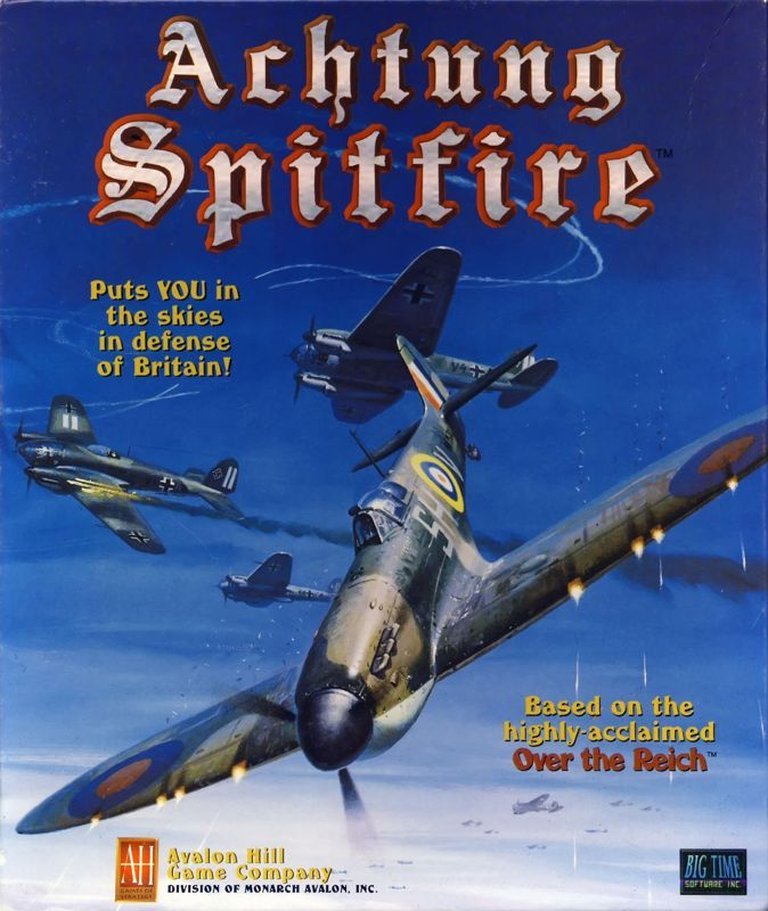
Achtung Spitfire is a turn-based strategy and simulation game set during World War II, covering aviation history from 1939 to 1945. Players command pilots from the RAF, Luftwaffe, and French Armee de l’Air, managing missions and adapting to technical advancements in aircraft. The game features a familiar interface from its predecessor, Over the Reich, and offers different campaigns for each air force, providing a realistic and challenging experience.
Gameplay Videos
Where to Buy Achtung Spitfire
PC
Achtung Spitfire Free Download
Achtung Spitfire Cracks & Fixes
Achtung Spitfire Patches & Updates
Achtung Spitfire Guides & Walkthroughs
Achtung Spitfire Reviews & Reception
en.wikipedia.org (85/100): A very rich wargame, one in which the player’s decisions have an immediate and dramatic effect on the outcome.
homeoftheunderdogs.net (88/100): Achtung Spitfire has one tremendous advantage going for it that Over the Reich does not, though, and it is probably solely due to this factor that AS is, in my opinion, the better game.
mobygames.com (79/100): I am amazed that someone managed to create an exciting flight simulation on a turn-based strategy model! In fact, I prefer this game to most other flight sims because of its realism.
Achtung Spitfire Cheats & Codes
PC
Start the game with the ‘-cool’ command line parameter.
| Code | Effect |
|---|---|
| -cool | unlimited lives |
Mac
Start the game with the ‘-cool’ command line parameter.
| Code | Effect |
|---|---|
| -cool | unlimited lives |
Achtung Spitfire!: A Definitive Review of Turn-Based Aerial Warfare
Introduction
In the pantheon of World War II strategy games, Achtung Spitfire! (1997) occupies a singular niche: a turn-based aerial combat simulator that marries tactical depth with historical gravitas. Developed by Big Time Software and published by Avalon Hill, this prequel to Over the Reich dared to reimagine flight simulation as a cerebral, chess-like experience rather than a reflex-driven arcade spectacle. While overshadowed by flashier contemporaries, Achtung Spitfire! remains a fascinating artifact of late-’90s wargaming—a game that asked players to outthink, not just outshoot, the enemy. This review explores how its inventive systems, stubborn realism, and imperfections cement its legacy as a flawed but ambitious ode to the Battle of Britain.
Development History & Context
Studio Vision & Challenges
Big Time Software, led by designer Charles Moylan, specialized in hybrid strategy-simulation titles like Flight Commander 2 (1994). Moylan’s vision for Achtung Spitfire! was clear: create a game that catered not just to hardcore flight sim enthusiasts but also to strategy gamers and WWII history buffs. The studio reused the engine from Over the Reich (1996), refining its turn-based systems to emphasize squadron management and incremental technological progression.
Technological Constraints
Released in 1997, the game faced stiff competition from real-time strategy giants like Command & Conquer and immersive sims like Jane’s WWII Fighters. Yet Big Time leaned into its limitations: isometric graphics and 2D sprites kept hardware demands low, while the turn-based structure sidestepped the need for real-time rendering. The result was a game that prioritized depth over spectacle, though critics noted its interface felt dated even at launch.
The Wargaming Landscape
Avalon Hill, known for board games like Axis & Allies, saw Achtung Spitfire! as part of its push into digital adaptations. However, the market was shifting toward faster-paced experiences, leaving the game in a commercial gray zone—too complex for casual players, yet lacking the depth of hex-based wargames like Panzer General.
Narrative & Thematic Deep Dive
Campaigns as Historical Document
Achtung Spitfire! forgoes a traditional narrative, instead offering three campaigns for the RAF, Luftwaffe, and French Armee de l’Air. Each mirrors historical events from 1939–1943, including the Battle of Britain and the fall of France. Missions range from intercepting bombers to defending convoys, with briefings that contextualize objectives within the broader war effort.
Characters & Dialogue
Pilots are not personalities but statistics—skill levels, fatigue, and survival rates matter more than backstories. This abstraction reinforces the game’s theme: war as a machine fueled by replaceable parts. The lack of voice acting or cutscenes keeps the focus on cold, logistical decision-making.
Themes of Technological Evolution
The game’s standout thematic achievement is its handling of aircraft development. Early missions pit fragile Spitfire Mk Is against Heinkel bombers, while late-game scenarios introduce advanced models like the Focke-Wulf Fw 190. This progression mirrors the real-world arms race, forcing players to adapt tactics as old strategies become obsolete—a metaphor for the war itself.
Gameplay Mechanics & Systems
Turn-Based Innovation
The core loop blends strategy-layer management (assigning pilots, repairing planes) with turn-based tactical combat. Each turn, players plot movements constrained by their aircraft’s speed, altitude, and turn radius, simulating Newtonian physics in a grid-based system. The result feels akin to X-COM in the skies: methodical, punishing, and deeply rewarding.
Difficulty as Command Hierarchy
The game’s most ingenious twist is its difficulty system:
– Lieutenant: Limited command options, ideal for beginners.
– General: Full control over formations, altitudes, and squad-wide maneuvers.
This approach reframes difficulty as responsibility rather than artificial handicaps—a design choice praised by critics.
Flaws & Frustrations
- Opaque Systems: The lack of a manual (noted in multiple reviews) left players guessing at flight mechanics.
- Repetitive Missions: Without dynamic campaign scripting, objectives grow predictable.
- Multiplayer Limitations: Though featuring hot-seat and PBEM modes, balance issues plagued competitive play.
World-Building, Art & Sound
Visual Design
The isometric perspective and pixel-art planes are functional, if unspectacular. Each aircraft is meticulously rendered for easy identification—a necessity given the importance of recognizing enemy types. Terrain is minimalistic, emphasizing clarity over detail.
Soundscape
The soundtrack, featuring Wagner’s Flying Dutchman Overture, amplifies the melodrama of aerial combat. Engine roars and gunfire are serviceable, but the looping music drew criticism for repetition.
Atmosphere
Despite technical constraints, the game evokes the desperate tone of WWII air warfare. The ever-present risk of pilot death—permanent in campaign mode—adds weight to every decision, reinforcing the stakes of historical battles.
Reception & Legacy
Critical Response
Achtung Spitfire! earned mixed-to-positive reviews (79% average on MobyGames). Computer Gaming World hailed it as “the best Battle of Britain game ever,” while GameSpot (7.8/10) praised its graduated skill system but lamented its steep learning curve. The lack of a manual and abandonment by Big Time Software (which pivoted to land-based wargames) fueled frustration among fans.
Commercial Performance
With under 50,000 units sold, it was a modest success, though Avalon Hill’s closure in 1998 halted plans for a Pacific Theater sequel, Whistling Death.
Influence
The game’s legacy lies in its bold reimagining of aerial combat for strategy purists. Modern titles like IL-2 Sturmovik and War Thunder dominate the simulation space, but Achtung Spitfire! remains a cult favorite for proving turn-based mechanics could capture the chaos of dogfights.
Conclusion
Achtung Spitfire! is an artifact of a bygone era—a game unafraid to prioritize depth over accessibility. Its blend of historical reverence, tactical innovation, and flawed execution makes it a compelling study in niche design. While not for everyone, it stands as a testament to Avalon Hill’s wargaming pedigree and Charles Moylan’s vision. For WWII enthusiasts and turn-based aficionados, it remains a skyward battle cry worth answering.
Final Verdict: A flawed gem that soars in ambition, if not always execution. 7.5/10.