
- Release Year: 2006
- Platforms: Windows
- Publisher: Vertigo Games
- Developer: Vertigo Games
- Genre: Puzzle
- Perspective: Point and select
- Game Mode: Single-player
- Gameplay: Bomb defusing, Boss levels, Grid-based puzzles, Randomized layouts, Time limit
- Setting: Modern
- Average Score: 84/100
Description
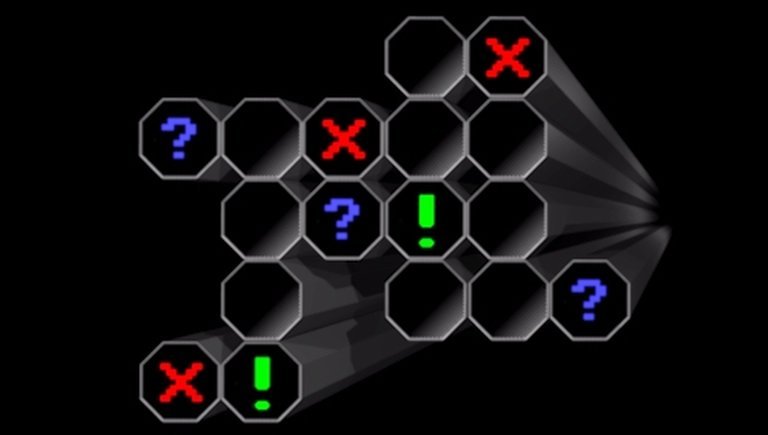
Acidbomb is a puzzle game where players defuse bombs by identifying hidden pistons in a grid-based layout before time runs out. Using ‘SDUs’ (light beams) to scan sections of the grid, players deduce piston locations while avoiding viruses that disrupt visibility. The game features multiple bomb types with unique mechanics, such as heat-sensitive or fast-ticking timers, and includes boss levels and unlockable modes like a custom puzzle simulator. Set across various neighborhoods, each with escalating challenges, Acidbomb blends logic, strategy, and quick decision-making in a high-stakes defusal scenario.
Acidbomb Free Download
PC
Acidbomb Reviews & Reception
mobygames.com (84/100): A puzzle game where the player is tasked with defusing bombs.
Acidbomb Cheats & Codes
PSP
Enter codes at the Password menu in the main menu.
| Code | Effect |
|---|---|
| VIPER | Unlocks Card 173, Viper |
| MIKA | Unlocks Card 178, Mika Slayton |
| KAREN | Unlocks Card 182, Karen Houjou |
| JEHUTY | Unlocks Card 184, Jehuty |
| XMEIGHT | Unlocks Card 199, XM8 |
| YEBISU | Unlocks Card 202, Yu Saito |
| ROPPONGI | Unlocks Card 203, Eri Shibuya |
| SABRAGE | Unlocks Card 200, Kosaka Yuka (Japanese version only) |
| NOMEL | Unlocks Card 201, Yoshida Asaki (Japanese version only) |
| ELYTS | Unlocks Card 202, Saitou Yuu (Japanese version only) |
| MAEB | Unlocks Card 203, Shibuya Eri (Japanese version only) |
| UMEDA | Unlocks Card 201, Asaki Yoshida (US Version) |
| KOBE | Unlocks Card 200, Kosaka Yuka (US version only) |
| ROPPONGI | Unlocks Card 203, Shibuya Eri (US version only) |
| YEBISU | Unlocks Card 202, Yu Saito (US version only) |
| ELYTS | Bikini model clip (Snake gets a nosebleed) |
| MAEB | Bikini model clip (Snake gets a nosebleed) |
Acidbomb: A Hidden Gem in the Puzzle Genre
Introduction
In the vast landscape of puzzle games, Acidbomb stands out as a unique and underappreciated title. Released in 2006 by Vertigo Games, this game blends the tension of bomb defusal with the strategic depth of a puzzle game. Acidbomb is not just another Minesweeper clone; it is a meticulously crafted experience that challenges players to think critically under pressure. This review will delve into the game’s development history, narrative and thematic elements, gameplay mechanics, world-building, and its lasting legacy.
Development History & Context
Acidbomb was developed by Vertigo Games, a studio known for its innovative approach to game design. The game was created using GameMaker, a tool that allowed for rapid prototyping and development. The lead developer, David Galindo (aka Mr. Chubigans), was responsible for both the game design and graphics, showcasing his multifaceted talent.
The game was released in 2006, a year that saw the launch of several high-profile titles such as Gears of War, The Elder Scrolls IV: Oblivion, and The Legend of Zelda: Twilight Princess. Despite the stiff competition, Acidbomb carved out its niche by offering a unique puzzle experience that was both accessible and challenging.
Narrative & Thematic Deep Dive
Acidbomb does not have a traditional narrative in the sense of a linear story. Instead, it presents a series of puzzles that simulate the defusal of various types of bombs. The game’s thematic focus is on tension and strategy, as players must quickly identify and mark the correct cells to defuse the bomb before time runs out.
The game’s setting is a series of neighborhoods, each containing a set of bombs that must be defused. After completing all the bombs in a neighborhood, players face a boss level in the form of a large, complex atomic bomb. This structure creates a sense of progression and achievement, as players move from one neighborhood to the next, each with its own unique challenges.
Gameplay Mechanics & Systems
At its core, Acidbomb is a puzzle game where players must identify and mark the correct cells in a grid to defuse a bomb. Each bomb is composed of a number of cells arranged in a grid, and each cell can be empty or contain a “piston.” The player must correctly mark all the cells with pistons before the time limit runs out.
The game introduces several mechanics to add depth and variety to the puzzles. One of the key mechanics is the use of “SDUs” (Special Detection Units), which are horizontal, vertical, or diagonal light beams that stretch across the screen. These beams can be moved around to highlight different cells, and the player is informed about the total number of pistons present in the area highlighted by the SDUs. This mechanic adds a layer of strategy, as players must use the information provided by the SDUs to deduce the correct layout of pistons.
To make things harder, some of the empty cells contain “viruses.” When clicked, these viruses cover the screen with static for a short time, adding an element of unpredictability and tension. Some puzzles also give the player access to several one-use chaff grenades, which instantly reveal the contents of a tile, providing a temporary advantage.
The game includes various types of bombs, each with its own set of rules. For instance, the “flammable liquid” bomb heats up every time the player marks a cell, threatening to explode if cells are marked too quickly. The “spontaneously combustible” bomb has a timer that ticks down twice as fast, increasing the pressure on the player.
World-Building, Art & Sound
Acidbomb creates a tense and immersive atmosphere through its visual and auditory design. The game’s art style is simple yet effective, with a focus on clarity and functionality. The grid-based layout of the bombs is easy to read, and the use of color and light helps to distinguish between different types of cells and SDUs.
The sound design plays a crucial role in building tension. The ticking of the bomb’s timer and the occasional static from the viruses create a sense of urgency and danger. The game’s music, sourced from various tracks, complements the gameplay by enhancing the overall atmosphere.
Reception & Legacy
Acidbomb received positive reviews from critics, with an average score of 84% based on two ratings. Players also rated the game highly, with an average score of 4.1 out of 5. The game was praised for its innovative mechanics, challenging puzzles, and tense atmosphere.
Despite its critical acclaim, Acidbomb remains a relatively obscure title. It has not received the same level of recognition as other puzzle games from the same era, such as Bejeweled or Peggle. However, it has developed a cult following among puzzle game enthusiasts who appreciate its unique blend of strategy and tension.
Conclusion
Acidbomb is a hidden gem in the puzzle genre, offering a unique and challenging experience that stands out from the crowd. Its innovative mechanics, tense atmosphere, and strategic depth make it a must-play for fans of puzzle games. While it may not have achieved mainstream success, its legacy lives on among those who have discovered and appreciated its unique charm.
In the annals of video game history, Acidbomb deserves recognition as a pioneering title that pushed the boundaries of the puzzle genre. Its blend of strategy, tension, and innovation makes it a standout game that continues to captivate players to this day.