
- Release Year: 2020
- Platforms: Windows
- Publisher: Parable Worlds
- Developer: Parable Worlds
- Genre: Action
- Perspective: Behind view
- Game Mode: Single-player
- Gameplay: Puzzle elements, Shooter
- Setting: Futuristic, Sci-fi
- Average Score: 50/100
Description
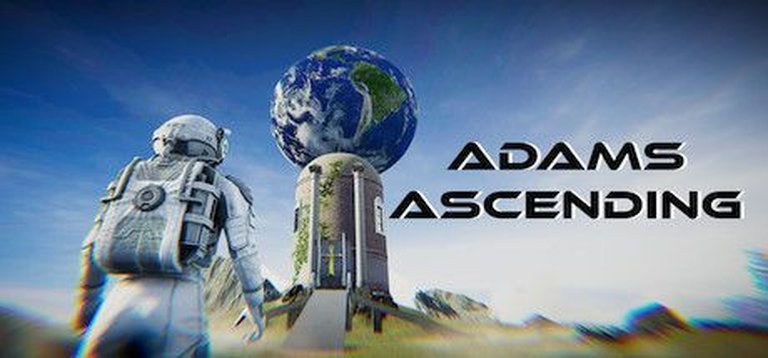
Adam’s Ascending is an action-adventure game set in a sci-fi/futuristic world. Players take on the role of Adam, an explorer on a mission to find his long-lost father. After uncovering a powerful secret, Adam is transported to a mysterious island with supernatural abilities. The game combines elements of shooting, puzzles, and exploration as players unravel the mysteries of the island and discover who Adam must become to rescue his father.
Where to Buy Adam’s Ascending
PC
Adam’s Ascending Reviews & Reception
steambase.io (50/100): Adam’s Ascending has achieved a Steambase Player Score of 50 / 100.
Adam’s Ascending: A Flawed Vision of Spiritual Exploration
Introduction
Adam’s Ascending (2020) is a paradox—a game brimming with metaphysical ambition yet shackled by underdeveloped execution. Developed by solo creator Nick DePalo under the banner of Parable Worlds, this indie action-adventure title positions itself as a meditation on faith, purpose, and self-discovery. Set on a supernatural island where players navigate moral and spiritual choices, the game aspires to channel the nostalgic purity of classic exploration-focused titles like Myst or Shadow of the Colossus. But does it ascend to greatness, or crumble under the weight of its own aspirations?
Development History & Context
A Solo Developer’s Odyssey
Adam’s Ascending emerged from a five-year labor of love by Nick DePalo, a self-taught developer whose mission was to create a “voice for inspiring others to ascend into their own dreams.” Built in Unity and released via Steam Early Access in November 2020, the game reflects DePalo’s grassroots ethos: a rejection of AAA conventions in favor of intimate, player-driven storytelling.
The Early Access Gamble
Launched during a boom of indie narrative experiments (Hades, Disco Elysium), Adam’s Ascending sought to carve a niche with its “Storyplay” concept—a hybrid of episodic storytelling and player agency. However, its Early Access model became a double-edged sword. Promised updates (including graphical polish and mechanic refinements) stalled, with the last developer note dated over five years ago. This stagnation left the game stranded in a semi-developed limbo, emblematic of the risks inherent to solo projects.
Narrative & Thematic Deep Dive
A Quest for Identity
Players embody Adam, a paralyzed explorer searching for his father, a scientist who vanished after discovering a cure for all diseases. Stranded on the island of Damascus—a tripartite realm symbolizing Faith (arctic), Hope (tropical), and Love (desert)—Adam must confront “spiritual and physical enemies” while grappling with existential choices.
Tangible vs. Intangible Paths
The game’s defining mechanic is its bifurcated narrative: Players choose between a “tangible” path (relying on brute force and weapons) or an “intangible” one (solving puzzles through spiritual reflection). This dichotomy mirrors classic morality systems but frames them through a lens of introspection rather than mere good/evil binaries.
Themes of Sacrifice and Purpose
Adam’s Ascending leans heavily into metaphysical symbolism. The island’s central mountain represents the “purpose of humanity,” while collectible “eternity gems” grant time-altering powers. The paralyzed protagonist serves as a literal and metaphorical vehicle for themes of overcoming limitation—though this nuance is often undermined by clunky dialogue and underdeveloped character arcs.
Gameplay Mechanics & Systems
Exploration Without Hand-Holding
The game prides itself on stripping away modern conveniences: no auto-saving, waypoints, or hints. Environments demand careful observation, with hidden passages and environmental puzzles (e.g., manipulating time to unlock paths). While refreshing in theory, this design falters in practice due to uneven signposting and unintuitive solutions.
Combat: A House Divided
The “tangible” combat route feels half-baked, with janky third-person shooting mechanics and repetitive enemy encounters. Meanwhile, the “intangible” path’s puzzle-solving lacks the depth to sustain engagement, often reducing spirituality to simplistic button prompts.
Technical Shortcomings
Early Access limitations loom large. Players report inconsistent controls, bugs (e.g., progression-blocking glitches), and performance hicamps on mid-tier hardware. The lack of updates since 2020 suggests these issues may never be resolved.
World-Building, Art & Sound
Aesthetic Ambition vs. Execution
Damascus Island’s three biomes—frigid wastelands, lush jungles, and scorched deserts—show flashes of artistry, but low-resolution textures and rudimentary lighting undercut the atmosphere. Character models, particularly Adam’s stiff animations, betray the game’s indie budget.
Soundscapes of the Soul
Voltz Supreme’s score stands out, blending haunting choral arrangements with ambient synths to evoke a sense of cosmic wonder. The sound design, however, falters in combat, where punchless gunfire and generic enemy growls break immersion.
Reception & Legacy
Critical Silence
With only four user reviews on Steam (split evenly between positive and negative) and no professional critiques, Adam’s Ascending remains a footnote in gaming history. Its most notable recognition came from appearances at the 2018–2019 Kinda Funny Games Showcases, but hype never translated into mainstream traction.
A Cautionary Tale
The game’s legacy lies in its aspirations rather than its achievements. It exemplifies the pitfalls of Early Access—overpromising, underdelivering, and fading into obscurity. Yet, its thematic boldness may inspire future indies to explore spirituality with greater mechanical rigor.
Conclusion
Adam’s Ascending is a poignant metaphor for its own premise: a flawed, incomplete journey toward transcendence. Nick DePalo’s vision—of a game that marries existential philosophy with player agency—is laudable, but technical limitations and developmental abandonment leave it feeling more like a rough prototype than a polished experience. For patient players seeking a contemplative (if uneven) narrative, it offers fleeting moments of brilliance. For most, however, this is one ascent best observed from a distance.
Final Verdict: A spiritually rich but mechanically frail experiment—worth studying, not celebrating.