
- Release Year: 2015
- Platforms: Windows
- Publisher: Senshi.Labs
- Developer: Senshi.Labs
- Genre: Educational, Role-playing (RPG)
- Perspective: Diagonal-down
- Game Mode: Single-player
- Gameplay: Reading, Story-telling, Turn-based, writing
- Setting: Asia, Fantasy
Description
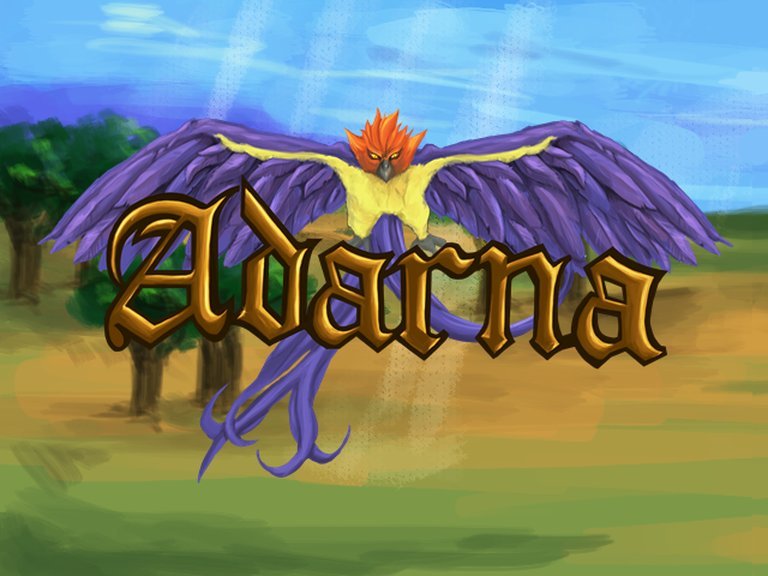
Adarna is an educational role-playing game set in a fantastical Asian-inspired world based on the 17th-century Filipino epic ‘Ibong Adarna’. The game follows Juan, the youngest son of the King of Berbania, who embarks on a quest to find the legendary Adarna Bird to cure his ailing father after his two elder brothers vanish under mysterious circumstances. Players engage in turn-based battles inspired by Japanese RPG mechanics as Juan learns Eskrima (Arnis) skills, while the narrative promotes Tagalog language learning and reimagines the original story’s themes of sibling rivalry into positive cooperation and family bonding.
Adarna Guides & Walkthroughs
Adarna: Review
1. Introduction
In the pantheon of video games that bridge cultural heritage and interactive storytelling, Adarna (2015) stands as a pioneering Filipino RPG that transforms a centuries-old epic into an educational odyssey. Based on José de la Cruz’s 17th-century Ibong Adarna—a cornerstone of Philippine literature—this title by Senshi.Labs transcends mere adaptation. It reimagines the epic’s themes of sibling rivalry and betrayal, channeling them into a narrative of “coopetition” (cooperative competition) designed to teach Tagalog language skills and Filipino family values to young audiences. While constrained by its indie development roots and limited scope, Adarna emerges as a vital experiment in digital cultural preservation, offering a blueprint for how games can reinterpret folklore to address contemporary social dynamics. This review dissects its journey as both a historical artifact and an educational artifact, examining how it navigates the tension between fidelity to source material and modern pedagogical innovation.
2. Development History & Context
Adarna was conceived by Senshi.Labs, a Philippine studio founded by Dr. Beatrice Margarita V. Lapa—a veteran of the Filipino gaming industry with credits on Ragnarok Online and Gravemania: Undead Fever. Lapa, holding a PhD in Communication, spearheaded a team of 24 creatives, including Lead Writer Jon Adam Reyes, Game Designer Mark Detroit C. Tañeca, and Artist Eunice Grace Gatdula. Built on RPG Maker XP (using RGSS), the project was a deliberate act of cultural remediation. Its origins lie in a critical observation: the Ibong Adarna epic, despite its status as mandatory high school reading in the Philippines, perpetuates problematic family values. As Lapa’s 2019 LARO Conference paper notes, the original story glorifies jealousy and betrayal, making it a “point of discussion for university game development classes.”
The development was shaped by technological and cultural constraints. With a lean budget and a focus on educational accessibility, the team prioritized simplicity over graphical fidelity. The engine choice limited innovation but streamlined localization for Tagalog learners. The game’s release on March 7, 2015, coincided with a burgeoning indie scene in the Philippines, yet it operated in a niche between AAA production and mobile edutainment. Its presentation at the 2015 Electronic Sports and Gaming Summit underscored its dual identity: a cultural artifact targeting high school/college demographics and an RPG indebted to Japanese influences like Final Fantasy IV, evident in its diagonal-down perspective and turn-based combat.
3. Narrative & Thematic Deep Dive
The game’s narrative faithfully mirrors Ibong Adarna’s setup: King Fernando of Berbania falls ill, and only the song of the mythical Adarna Bird can cure him. After his eldest sons, Pedro and Diego, vanish during their quests, the youngest, Juan, trains as an eskrimador (Arnis fighter) to rescue his brothers. However, Senshi.Labs’ reinterpretation lies in its thematic reframing. Where the epic frames sibling rivalry as destructive, the game frames it as a catalyst for growth. Through dialogue choices and narrative encounters, players guide Juan toward “coopetition”—collaborative rivalry that resolves conflict through empathy.
Character development undergoes significant nuance. Pedro, the ambitious eldest brother, is portrayed with sympathetic motivations, while Diego, the weak-willed middle sibling, exhibits moments of compassion. This subverts the epic’s one-dimensional antagonists. The narrative’s educational purpose is woven into its structure: Tagalog dialogue is rendered phonetically and contextually, with key vocabulary reinforced through quests. For example, Juan’s interactions with hermits and princesses emphasize bayanihan (communal unity) and pagmamalasakit (compassion), turning moral lessons into gameplay rewards. The game’s brevity—limited to ~1.5 hours due to resource constraints—necessitates focused storytelling, climaxing in Juan’s reconciliation with his brothers after they betray him. This ending, while simplified from the epic’s royal marriages, emphasizes forgiveness over retribution, aligning with Lapa’s goal of “reimagining sibling rivalry for positive conflict resolution.”
4. Gameplay Mechanics & Systems
Adarna’s core loop is a streamlined JRPG experience, optimized for educational engagement. Players navigate towns and forests via a diagonal-down perspective, encountering turn-based battles against creatures like stone golems and enchanted beasts. Combat is intentionally simple: basic attacks, skills (e.g., Espada, Tadyak), and item use dominate, avoiding complex stat builds. This simplicity ensures focus on Tagalog vocabulary—battle commands and enemy names serve as language lessons.
Character progression is linear. Juan gains levels, unlocking skills tied to his eskrimador training, but party members (Pedro and Diego) are temporary allies, limiting deep customization. The UI, built in RPG Maker XP, is functional but dated, with text-heavy menus and minimal visual feedback. Innovation emerges in “Dialogue Choice Moments,” where players select Tagalog phrases to resolve conflicts—choosing “Kasama kita” (“I’m with you”) over aggressive options yields cooperative bonuses.
Flaws arise from engine limitations. Repetitive tilesets, unbalanced enemy encounters, and a lack of side quests dilute immersion. However, these constraints align with the game’s ethos: it prioritizes narrative and language immersion over mechanical depth. The result is a “scaffolded” experience, where gameplay serves as a vehicle for cultural transmission rather than an end in itself.
5. World-Building, Art & Sound
Set in the fantastical Kingdom of Berbania, Adarna’s world-building is a blend of myth and didacticism. Enchanted forests, stone petrification sites, and royal courts evoke the epic’s magic, while simplified locales (e.g., the hermit’s hut, Mount Tabor) ensure accessibility. The art direction, led by Eunice Grace Gatdula, employs vibrant 2D sprites and tilesets sourced from community assets (e.g., Moghunter’s graphical templates). Though rudimentary by AAA standards, the art captures the Adarna Bird’s iridescence and the princes’ traditional Filipino attire, grounding the fantasy in cultural specificity.
Sound design amplifies this atmosphere. Music by D.C. Kairi Sawler and JDB ARTIST blends orchestral melodies with ethnic instruments like the kudyapi (lute), creating an auditory tapestry of Filipino folklore. Sound effects—rustling leaves, clashing arnis sticks—enhance immersion without overwhelming dialogue. The Adarna Bird’s seven songs, though not fully playable, are referenced in key scenes, linking gameplay to the epic’s core motif. Together, art and sound transform Adarna from a language tool into an emotional journey, making cultural heritage tactile and memorable.
6. Reception & Legacy
Upon release, Adarna garnered modest attention within Philippine educational circles but flew under mainstream gaming radars. MobyGames lists it as an “Educational RPG” with no critical aggregator scores (e.g., Metacritic, OpenCritic), reflecting its niche appeal. IndieDB’s community praised its “noble goal” but noted technical limitations, while My Gaming Backlog highlighted its similarity to JRPGs like Oriental Blue: Ao no Tengai. Commercial success was limited, with only 2 players documented on MobyGames—a testament to its distribution challenges.
Its legacy, however, transcends sales. Academia lauds it as a model for “remediation,” using games to reinterpret colonial-era texts for modern audiences. Philip Adrian Gungab’s 2023 analysis in Akda positions Adarna as a “prime example of video game storytelling” that expands on Ibong Adarna’s character dynamics. Culturally, it inspired sequels like Adarna: Alamat ni Maria Blanca (2016), which shifts focus to female empowerment. Its greatest impact lies in pedagogy: teachers report using it to discuss sibling rivalry and language retention, making it a quiet revolution in digital humanities. As Lapa envisioned, it sparks dialogue in universities about games as “equipment for living,” merging play with cultural preservation.
7. Conclusion
Adarna is an imperfect yet indispensable artifact of Philippine gaming. As an RPG, it is constrained by its engine and scope, offering simplistic combat and a fleeting runtime. As a cultural artifact, however, it is a triumph. By reframing a centuries-old epic through the lens of modern education, Senshi.Labs proves that games can be both vessels for language learning and catalysts for social critique. Its greatest strength lies not in polish but in purpose: to transform passive storytelling into active engagement, teaching Tagalog and Filipino values through play. While unlikely to grace “best of” lists, Adarna holds a revered place in video game history as a testament to the medium’s potential to bridge past and present. In a world dominated by globalized blockbusters, it stands as a defiant, heartfelt ode to the power of local stories—and the games that tell them.