
- Release Year: 2016
- Platforms: PlayStation 4, Windows
- Publisher: 505 Games S.R.L.
- Developer: Three One Zero, LLC
- Genre: Adventure
- Perspective: 1st-person
- Game Mode: Single-player
- Gameplay: Exploration, Oxygen management, Suit upgrades, Zero gravity movement
- Setting: Space station, Spaceship
- Average Score: 61/100
- VR Support: Yes
Description
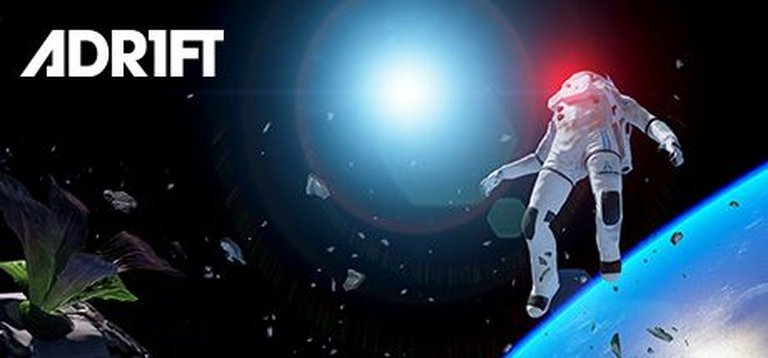
ADR1FT is a first-person adventure game where players assume the role of Alex Oshima, a space station commander who awakens with amnesia after a mysterious disaster destroys her station and kills the crew. Set in the zero-gravity wreckage, the game focuses on linear exploration to find audio logs, emails, and supplies that reveal the story, while managing limited oxygen to avoid suffocation and ultimately activate a rescue vessel, with optional VR support enhancing the immersive movement.
Gameplay Videos
Where to Buy ADR1FT
ADR1FT Free Download
ADR1FT Cracks & Fixes
ADR1FT Patches & Updates
ADR1FT Guides & Walkthroughs
ADR1FT Reviews & Reception
metacritic.com (64/100): although it can be frustrating, it’s hauntingly beautiful
opencritic.com (62/100): As a simulation of being marooned in space, Adrift is peerless. But it’s impossible to divorce the immersion from its mechanical failures, which sours what otherwise could have been a new high bar for narrative-centric games.
ign.com (60/100): Adr1ft is a beautiful and isolating depiction of being stranded in orbit, but it struggles to build a game around that.
monstercritic.com (61/100): ADR1FT’s atmospheric storytelling dazzles with eerie isolation and environmental depth, but its fragmented, shallow narrative leaves players adrift in unanswered mysteries, prioritizing mood over meaningful character or closure.
ADR1FT: A Personal Catastrophe in Zero Gravity – A Definitive Historical Analysis
Introduction: The Weightless Weight of Expectation
ADR1FT arrives not as a game, but as a confession. In the landscape of mid-2010s interactive entertainment, it stands as a stark, solitary monument to a specific kind of digital-age calamity. It is a first-person experience born from a very public professional undoing, attempting to transmute a moment of internet vitriol into a metaphor for cosmic isolation and survival. Its legacy is a curious fracture: critically, a middling adventure game often criticized for repetitive mechanics; historically, a pivotal, if flawed, touchstone in the nascent era of consumer virtual reality. This review posits that ADR1FT is a document of profound personal catharsis that ultimately failed to escape the gravitational pull of its own minimalist design philosophy. It is a game about being lost that, for many players, became a repetitive chore to navigate—a hauntingly beautiful museum piece where the exhibits are the same oxygen tanks and switch panels encountered minutes before. To understand ADR1FT is to understand the collision between an auteur’s raw need for redemption and the harsh, unforgiving physics of game design.
Development History & Context: Burning It All Down
The genesis of ADR1FT is inseparable from the biography of its creator, Adam Orth. In April 2013, Orth, then a creative director at Microsoft, became the epicenter of a viral scandal following the Xbox One’s DRM-heavy announcement. His dismissive Twitter responses—”#dealwithit,” “Why on earth would I live there?”—to consumer outrage ignited a firestorm of online harassment that culminated in his resignation. As the Los Angeles Times vividly documented, Orth was subjected to threats, including emails containing pictures of his infant daughter. This was not mere professional setback; it was a contemporary public shaming, a personal universe detonated.
One week after his departure, Orth began work on ADR1FT. He co-founded the Santa Monica-based studio Three One Zero with former colleague Omar Aziz. The core team was a lean six veterans, augmented by contractors, operating virtually—a structure born from indie necessity but reflective of Orth’s desire for a tight, signature project after years in the AAA trenches. The development spanned approximately 13 months, built in Unreal Engine 4. Crucially, VR was not a port or an afterthought; it was a central pillar from the prototype stage, created initially in Unity to “prove the concept” to publishers. The game was designed to be a “first-person experience” (FPX), a conscious rejection of the shooter genre that had fatigued the team. Orth repeatedly cited influences beyond Gravity (released after his concept was formed), pointing instead to the minimalist, contemplative tone of 2001: A Space Odyssey and Moon, and the environmental storytelling of Proteus. The game was also metaphorically autobiographical: the shattered Northstar IV station was Orth’s shattered career and reputation; the lone, amnesiac survivor was himself, adrift. Publisher 505 Games signed on, and the title was greenlit for PC, PS4, and the then-planned Xbox One. Its delay from September 2015 to March 2016 was strategically timed to coincide with the launch of the Oculus Rift, cementing its identity as a flagship VR experience. An Xbox One version was ultimately cancelled, leaving a slightly fragmented platform legacy.
Narrative & Thematic Deep Dive: Fragments of a Broken Self
ADR1FT presents a narrative architecture of exquisite fragility. Players assume the role of Commander Alex Oshima, awakening amidst the lethal debris of the Northstar IV space station with no memory and a critically leaking EVA suit. The goal is twofold: survive and return home. The “how” and “why” are delivered through a mosaic of environmental storytelling tools—audio logs, email terminals, news broadcasts, and the station’s AI, HAN-IV. This is not a plot unfolded but a puzzle assembled from the detritus of a dead crew.
Thematically, the game is an exercise in isolation (adrift is, after all, the state of being alone without direction). The zero-gravity environment physically manifests emotional dislocation. The constant, draining struggle for oxygen becomes a metaphor for the basic, exhausting labor of recovery from trauma. The crew’s stories, discovered out of sequence, are deliberately mundane. As Orth explained to GamesBeat, they are “normal people in an extraordinary environment.” One character is a doctor battling addiction and the lie that secured his position. Another is a botanist cultivating a fragile garden in the void. These are not sci-fi archetypes but portraits of human flaw, mirroring Orth’s own stated desire to explore “action, consequence and redemption.”
However, the execution of this narrative ambition is where the game’s central contradiction lies. The fragments are atmospheric but emotionally thin. The central mystery—the cause of the station’s destruction—remains ambiguously tied to a “catastrophic event,” with hints at corporate malfeasance and human error but no definitive, satisfying revelation. The protagonist’s silence (Oshima never speaks) is a bold, isolating choice that distances the player as much as it immerses them. The intended player experience—to build a “unique version” of the story from scattered seeds—too often results in a sense of narrative emptiness rather than engaging ambiguity. Critics widely noted the story’s “shallow” (GameCritics) and “detached” (Gaming Age) nature. The personal metaphor, while potent for Orth, risks becoming opaque for the player, transforming a potentially universal story about recovery into a cool, distant intellectual exercise. The game’s emotional peaks, such as discovering the final, tragic audio log of a crew member, are earned more by the player’s own projection than by deliberate narrative craftsmanship.
Gameplay Mechanics & Systems: The Repetitive Treadmill of Survival
The core gameplay loop is a delicate, dangerous ballet in six axes of movement. The zero-gravity navigation is the game’s signature and its burden. Using the suit’s thrusters (which consume oxygen as fuel) to push off surfaces and orient in 3D space is initially thrilling and disorienting—a masterclass in spatial awareness. This is elevated immeasurably in VR, where the illusion of floating is profound, as noted by Destructoid‘s 80% review: “one of the first ‘must-have’ games for VR.”
Yet this elegant system is shackled to a progression model of profound simplicity. The task list is relentlessly, repetitively clear: 1) Find the next terminal to reactivate a station system. 2) Navigate to it through a labyrinth of beautifully rendered but visually homogeneous corridors and debris fields. 3) Perform an interaction (often a simple “press F” to repair). 4) Repeat. The mini-map points the way, stripping away navigation tension. The stakes are the oxygen meter, slowly draining from your suit’s hull breach and rapidly from thruster use. Oxygen canisters and dispensers are the game’s primary collectible and resource node.
The genius of this system is its constant, low-grade tension. Every movement is a cost-benefit analysis. Do you use a burst of thrust to speed towards a distant air bottle, or coast slowly and risk suffocation? This creates genuine, visceral anxiety, particularly in the expansive external spacewalks overlooking the Earth. Polygon‘s 6.5/10 review captured this paradox perfectly: “As a simulation of being marooned in space, Adrift is peerless.”
However, this tension is systematically undermined by the game’s own economy. Oxygen is far too abundant. Canisters are frequently placed just before major challenges or after long swims, turning what should be a desperate scramble into a routine pit stop. As 4Players.de savagely noted, “the Überversorgung an Sauerstoffvorräten jeden Ansatz von Spannung im Keim” (the oversupply of oxygen nipples any hint of tension in the bud). The result is a gameplay experience that oscillates between moments of sublime panic and long, slow, unthreatening drift. The suit upgrade terminals—improving oxygen capacity, thruster power, mobility, and integrity—provide nominal progression but do little to alter the fundamental, repetitive fetch-and-repair loop. There are no traditional puzzles, no combat, no meaningful interaction with the environment beyond “use.” What begins as a survival sim devolves into a “rinse and repeat” (Rock, Paper, Shotgun) checklist adventure. The game’s advertised two objectives—”survive and return home”—are flattened into a single, monotonous verb: “repair.”
World-Building, Art & Sound: Beauty as Both Salvation and Shackles
Visually, ADR1FT is an undeniable triumph of environmental art direction and technical achievement within its constraints. The shattered Northstar IV is a masterpiece of diegetic design. The station’s modules—a sterile command deck, a lush and chaotic botanical garden, a dark engineering bay—tell their own story through debris. Floating personal items (a child’s drawing, a coffee mug, a wedding photo) offer silent, potent eulogies for the lost crew. The use of Unreal Engine 4 allows for astonishing lighting, with harsh ship lights contrasting the deep, star-dusted blackness. The vistas of Earth—swirling cloud patterns, the glittering night side—are breathtaking and constantly pull the player’s gaze, creating a sublime tension between beauty and peril. The aesthetic is pure 2001: clean, minimalist, and faintly ominous.
This beauty is most profound, and most effective, in VR. The sense of scale, the feeling of being a tiny, fragile human in the vastness, is unparalleled. IGN noted that “floating out over the Earth and looking down from this perspective is truly impressive.” However, this beauty highlights the game’s greatest design failure: the world itself is a backdrop, not an interactive ecosystem. The station feels staged, a series of beautiful corridors leading to the next terminal. There is little sense of a functional, lived-in place beyond decorative scattering.
The sound design is equally precise and atmospheric. Skywalker Sound’s Al Nelson crafted a soundscape of oppressive silence broken by: the protagonist’s ragged, panicked breathing (a direct audio link to the oxygen meter); the crunch of suit on metal; the distant, ominous creak of stressed hull plating; and the occasional, jarring broadcast from a panicked Earth media. This audio creates a powerful, isolating cocoon. However, the musical score, composed by Adam Orth and featuring piano pieces by Weezer’s Brian Bell, is divisive. Its minimalist, ambient tones suit the mood, but many found it repetitive or “obnoxious” (Arcade Sushi), a mechanical companion to the repetitive gameplay rather than an emotional guide. The voice acting for the crew’s audio logs is professionally delivered and adds necessary human texture, but the protagonist’s total silence—a missed opportunity for introspective monologue—creates a strange disconnect, noted by reviewers like PlayStation Universe.
Reception & Legacy: The Cult of the Beautiful Flaw
ADR1FT received a “mixed or average” response, with Metacritic scores of 64 (PC) and 56 (PS4). The critical consensus was strikingly consistent: the game’s atmosphere, visuals, and VR immersion were exceptional, but its gameplay was fatally repetitive and its narrative underwhelming. Destructoid‘s 8/10 was a high-water mark, praising its conciseness and VR must-have status. At the other extreme, Electronic Gaming Monthly‘s 5/10 called it “a game in love with space… at the service of an unbefitting journey mired by clumsy movement and contrivances.” The German press (GameStar, 4Players, PC Games) were particularly harsh on the tedious oxygen management and lack of puzzles.
Commercial performance was modest. Its $19.99/$3.99 Steam price point (for the standard edition) soon became its de facto value, reflecting its limited content. Its legacy is bifurcated.
First, as a VR Pioneer: For early adopters of the Oculus Rift and HTC Vive, ADR1FT was a watershed. It demonstrated that VR could deliver unparalleled immersion in a non-combat setting, that the sensation of weightlessness could be a core transformative mechanic. It proved a slow-burn, atmospheric experience could work in the medium. Many contemporary reviews, even the negative ones, conceded its VR credentials. It is remembered alongside EVE: Valkyrie and Elite: Dangerous as an early, significant “presence” title.
Second, as a “Walking Simulator” Cautionary Tale: In the lineage of narrative-driven, minimalist games (Dear Esther, Gone Home, Everybody’s Gone to the Rapture), ADR1FT often feels like the most mechanically constrained. Its attempt to graft survival mechanics (oxygen) onto the “walking sim” template exposed the limitations of the form when the core activity is insufficiently engaging. It showed that beautiful environments and emotional themes are not enough; the player’s moment-to-moment actions must also be compelling. Its legacy here is as a benchmark for what not to do in terms of activity variety.
Third, as an Auteur’s Footnote: Historically, its primary relevance is as the tangible output of Adam Orth’s public shaming and redemption arc. It is a rare, public case of a developerConverting profound personal and professional disaster into a creative work. The “burn it all down” ethos is palpable. However, this personal metaphor arguably became its own trap, leading to a game that prioritized a singular, punishing vision over broader player engagement. The cancelled Xbox One version also serves as a quiet footnote in the console VR ambitions of the mid-2010s that largely failed to materialize.
Conclusion: A Beautiful, Flawed Monument to Isolation
ADR1FT is a game of magnificent, haunting intentions and deficient, repetitive execution. As a technical showcase for virtual reality, it was a resounding success, proving that the medium could evoke awe, terror, and profound isolation. Its art and sound design remain benchmarks for environmental storytelling in space. As a complete, satisfying game, however, it is a profound misfire. Its core loop of “find terminal -> interact -> repeat” is stripped bare of the transformative magic its visuals and VR promise, collapsing under the weight of its own minimalist dogma. The personal narrative of recovery is potent in theory but vague and emotionally distant in practice, leaving players with beautiful memories of floating but few reasons to care about the woman doing it.
Its place in video game history is secure, but it is a niche one. It is a cult classic for VR enthusiasts and a case study in design schools on the perils of confusing atmospheric tension with engaging gameplay. It is the game that asked, “What is it like to be utterly alone in the void?” and answered, “It is mostly very boring, with occasional moments of breathtaking beauty, until you run out of air.” ADR1FT is not a lost classic rediscovered; it is a beautiful, flawed artifact from a moment of bold experimentation, a game that reached for the stars but spent most of its time circling the same, albeit stunning, debris field. It is, in the end, perfectly and tragically adrift.