
- Release Year: 2005
- Platforms: OnLive, Windows, Xbox One, Xbox Series, Xbox
- Publisher: Buka Entertainment, Majesco Entertainment Company, Ziggurat Interactive, Inc.
- Developer: GlyphX Games, LLC
- Genre: Action
- Perspective: Third-person
- Game Mode: Single-player
- Gameplay: Checkpoint saving, Melee Combat, Psychic powers, Shooter, Superpowers, Upgradeable abilities, Vehicle control
- Setting: Futuristic, Sci-fi, Space station, Spaceship
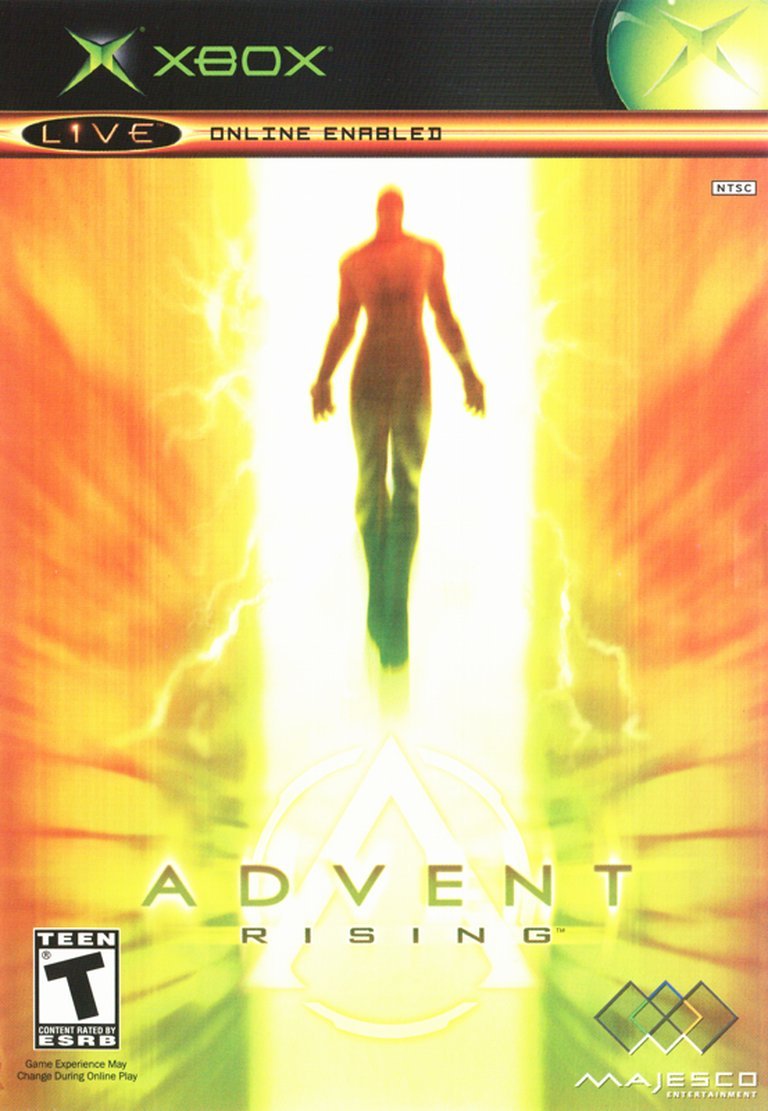
Description
Advent Rising is a third-person shooter set in a sci-fi universe where you play as Gideon Wyeth, a rookie space pilot tasked with saving humanity from the vicious Seekers. The game features a unique flick-targeting system, psychic powers, and a mix of action-packed combat and vehicle segments, all set against a backdrop of interstellar conflict and personal sacrifice.
Gameplay Videos
Advent Rising: Epic Sci-Fi Action: Review
Introduction
In the pantheon of early 2000s sci-fi action games, Advent Rising stands as a curious artifact—a game that promised a grand, cinematic experience but was ultimately overshadowed by its technical flaws and the looming shadow of Halo. Released in 2005 by GlyphX Games and published by Majesco Entertainment, Advent Rising was envisioned as the first installment in a trilogy, with contributions from renowned science fiction author Orson Scott Card. Despite its ambitious narrative and innovative gameplay mechanics, the game was met with a mixed reception, praised for its storytelling and criticized for its bugs and performance issues. This review aims to dissect Advent Rising in its entirety, exploring its development, narrative, gameplay, and lasting legacy.
Development History & Context
The Studio and Its Vision
Advent Rising was developed by GlyphX Games, a studio co-founded by brothers Donald and Geremy Mustard. The Mustard brothers, who later founded Demiurge Studios, brought a unique vision to Advent Rising, blending third-person shooter mechanics with supernatural abilities and a rich sci-fi narrative. The game was built using Epic’s Unreal Engine 2, a powerful but demanding engine for the time, which contributed to some of the game’s technical shortcomings.
Technological Constraints and the Gaming Landscape
The mid-2000s were a transitional period for gaming, with the Xbox and PlayStation 2 dominating the market. Advent Rising was released during the same year as Halo 2, which set a high bar for sci-fi shooters. The game’s reliance on the Unreal Engine 2, while impressive, led to performance issues, particularly on the Xbox, where frame rate drops and bugs were prevalent. The PC version fared better but still suffered from some technical hiccups.
Collaborations and Influences
One of Advent Rising‘s most notable collaborations was with Orson Scott Card, the author of Ender’s Game. Card’s involvement lent the game a literary weight, but the narrative’s execution was not universally praised. The game also drew comparisons to Halo and Star Wars, with critics noting similarities in its combat mechanics and visual style.
Narrative & Thematic Deep Dive
Plot and Characters
Advent Rising follows Gideon Wyeth, a rookie space pilot whose life is upended when a mysterious alien race, the Seekers, threatens humanity. Gideon discovers he possesses latent psychic abilities and becomes humanity’s last hope against extinction. The game’s narrative is structured around a series of set pieces, including space battles, ground combat, and vehicle sequences.
Gideon is joined by a cast of supporting characters, including his brother, a heroic pilot, and Olivia, his fiancée. The relationships between these characters are developed through cutscenes and dialogue, adding emotional weight to the game’s action sequences.
Themes and Dialogue
The game explores themes of sacrifice, destiny, and the struggle for survival. Gideon’s journey from an ordinary pilot to a powerful being is a central narrative arc, echoing classic sci-fi tropes. The dialogue, while serviceable, is occasionally marred by clichés and awkward delivery. However, the voice acting is generally praised for its sincerity, with Gideon’s performance standing out as particularly compelling.
Gameplay Mechanics & Systems
Core Gameplay Loops
Advent Rising is a third-person shooter with a focus on fast-paced combat and supernatural abilities. Players can switch between a third-person and first-person perspective, though some abilities are restricted to the third-person view. The game’s “flick-targeting” system allows players to quickly select enemies by tapping the thumbsticks (on Xbox) or scrolling the mouse wheel (on PC).
Combat and Progression
Gideon wields a variety of human and alien weapons, as well as psychic powers that can be upgraded through use. These powers include telekinesis, time manipulation, and electromagnetic pulses, adding a layer of strategy to combat. The game’s progression system allows players to upgrade weapons and abilities, with each power having five mastery levels.
User Interface and Controls
The HUD displays Gideon’s health, power meter, weapons, and ammunition. Health regenerates if the player avoids damage, while the power meter depletes with use and requires time to recharge. The controls are generally responsive, though the flick-targeting system can be frustrating in chaotic combat scenarios.
Vehicles and Variety
In addition to on-foot combat, Advent Rising features vehicle sequences, including ATVs, turrets, and spaceship battles. These segments add variety to the gameplay but are often criticized for their lack of depth.
World-Building, Art & Sound
Visual Direction and Setting
Advent Rising features a vibrant, cartoonish art style that sets it apart from the more realistic aesthetics of Halo. The game’s environments are expansive and detailed, with a mix of alien landscapes and futuristic technology. The visual style is reminiscent of Halo but with a distinct, stylized flair.
Sound Design and Music
The game’s soundtrack, composed by a 70-piece Hollywood orchestra and led by Emmy Award-winning conductor Mark Watters, is one of its standout features. The music is epic and cinematic, enhancing the game’s dramatic moments. Sound effects are generally well-executed, though some critics noted that individual sounds could be indistinct during intense combat.
Reception & Legacy
Critical and Commercial Reception
Advent Rising received a mixed reception upon release, with critics praising its narrative and ambition but criticizing its technical flaws. The Xbox version was particularly criticized for its bugs and performance issues, while the PC version was better received. The game’s average critic score was around 69%, with some reviewers praising its storytelling and others dismissing it as a flawed Halo clone.
Influence and Legacy
Despite its mixed reception, Advent Rising has developed a cult following over the years. Its ambitious narrative and innovative gameplay mechanics have been cited as influences on later sci-fi action games. The game’s cancellation of its planned sequels has only added to its mystique, with fans speculating about what could have been.
Conclusion
Advent Rising is a game of contradictions—a title that aspired to greatness but was held back by technical limitations and the weight of its own ambition. Its narrative and soundtrack are undeniably strong, offering a compelling sci-fi experience that stands out in the crowded field of early 2000s shooters. However, its bugs, performance issues, and reliance on familiar tropes prevent it from achieving true greatness.
In the end, Advent Rising is a flawed but fascinating relic of its time, a game that dared to dream big but fell short of its lofty goals. Its legacy lies in its ambition and the cult following it has garnered over the years. While it may not be remembered as a classic, it remains a notable entry in the history of sci-fi gaming.