
Description
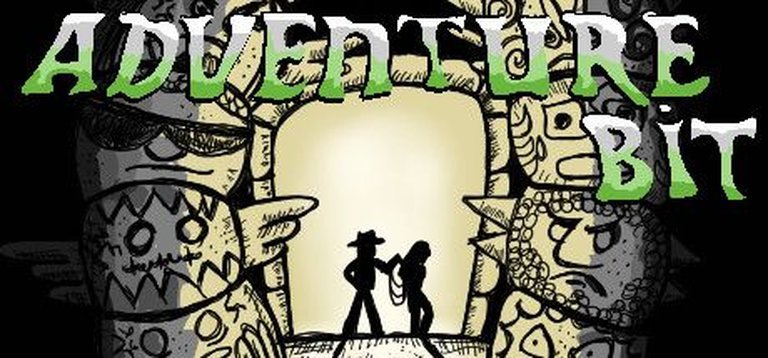
Adventure Bit is a retro-inspired arcade platformer set in the vibrant landscapes of South America, drawing thematic cues from adventure classics like Indiana Jones. Developed by SEEP using Multimedia Fusion, it features side-view, fixed flip-screen visuals that blend nostalgic simplicity with modern animations, backed by a chiptune-inspired soundtrack. The gameplay focuses on accessible platforming challenges that escalate in difficulty through newly unlocked levels, providing sustained engagement for solo players or pairs in local co-op mode.
Where to Buy Adventure Bit
PC
Adventure Bit Reviews & Reception
3rd-strike.com (85/100): Like a trip back in time
Adventure Bit: A Neo-Retro Masterpiece of Restrained Design
Introduction
In an era where retro revivalism often defaults to cynical cash-grabs or bloated homage, Adventure Bit emerges as a startlingly pure, almost devotional, artifact. Released in January 2021 by the Italian duo SEEP (Sergio and Enrico Giansoldati), this game is not merely inspired by the past; it is a painstakingly reconstructed artifact from an alternate timeline where the MSX computer standard flourished. Its thesis is audacious in its simplicity: that the core loop of 1980s action-platformers—a tight coupling of precise movement, pattern recognition, and tense resource management—remains not only viable but profoundly satisfying when stripped of all modern accretions. Adventure Bit argues that genius lies in constraint, and in doing so, it secures its place as a masterclass in focused, nostalgic game design.
Development History & Context
The Architects: SEEP and the “Bit” Universe
Adventure Bit is the product of SEEP, a two-person development team from Turin, Italy, composed of brothers Sergio and Enrico Giansoldati. Their work exists within a micro-franchise or “family” of games sharing the “Bit” suffix—including Abduction Bit (2016), Cosmos Bit, and Thunderflash—each exploring different subgenres (shmup, space opera, action) through a unified, minimalist retro lens. Their vision, as evidenced across their portfolio, is not just to mimic 8-bit aesthetics but to internalize the design philosophy of that era: immediate playability, clear visual communication, and punishing yet fair challenge.
Technological Constraints: The MSX Ghost in the Machine
The team utilized Clickteam Fusion 2.5 (marketed at the time as Multimedia Fusion), a long-standing, accessible game creation system favored by indie developers for its rapid prototyping. This choice is itself a nod to the democratization of game development in the 80s/90s via tools like AMOS or Blitz BASIC on the Amiga. The technological “constraint” is entirely self-imposed: a strict limitation to a palette reminiscent of the MSX’s TMS9918A VDP (Video Display Processor)—a stark, limited color set against a black background—and sound channels that evoke the PSG (Programmable Sound Generator) chips of the period. The “CRT scanline” filter is not an afterthought but a core part of this aesthetic manifesto.
The 2021 Indie Landscape
By 2021, the indie scene was saturated with “pixel art” games, many of which used the style as a superficial veneer for complex, modern mechanics. Adventure Bit stood apart by committing to a systems-level authenticity. It released on Steam for a mere $1.99, positioning itself not as a commodity but as a direct channel to a specific, nostalgic experience. Its competition was not Hollow Knight but the collective memory of titles like Aztec Adventure (on MSX) or Pitfall!—games where the entire narrative was conveyed through box art and a few screens of text.
Narrative & Thematic Deep Dive
Plot as Skeleton: The Treasure Hunt
The narrative is delivered with the brisk efficiency of a 1984 arcade cabinet marquee. The protagonist is not a single hero but a duo: Harry and Lana, two intrepid adventurers drawn by legend into the South American jungle. The lore is a single paragraph: many have entered the Aztec temple before them, all fled in terror. The goal is simple: penetrate the temple, defeat its guardians, and claim the treasure. There is no cinematic, no dialogue trees, no moral quandary. The story is a premise, a justification for the gameplay loop. The “true” ending, requiring the collection of all crystal skulls across all difficulties, simply states: “The story isn’t over. There is much more to discover.” This is not a cop-out; it is a thematic resonance. The game’s legacy is the player’s continued engagement, the personal stories of triumph and failure created in the 90 single-screen chambers.
Characters as Functions
Harry and Lana are functionally identical—a choice that honors the era of avatar-select screens where differences were often cosmetic (see: Ghosts ‘n Goblins, Mega Man). Their personalities are non-existent; they are vessels for the player’s skill. The enemies—jumping spiders, shield-bearing warriors, fire-spitting serpents—are not individuals but patterns. They are obstacles to be read and internalized, supporting the game’s core theme of mastery through repetition and study.
Underlying Theme: The Archaeology of Play
The true theme of Adventure Bit is temporal displacement. It asks the player to think and react like a 1980s gamer, constrained by a limited moveset (jump, whip, capture) and a single-screen tactical arena. The Aztec setting is not just a backdrop; it is a metaphor for the “temple” of classic game design—filled with traps (enemy patterns), treasures (high scores, skulls), and secrets (optimal routes). The game is an act of virtual archaeology, where the player is both excavator and artifact.
Gameplay Mechanics & Systems
The Core Loop: Capture, Whip, Conquer
Each of the 90 levels (spread across 6 difficulties, each with unique stages) operates on a fixed-screen “room” basis. The objective is universally clear: defeat all enemies to open the exit. The combat system is ingeniously simple yet deeply tactical:
1. Whip Attack: A short-range, three-hit stun. Each hit renders an enemy vulnerable.
2. Capture/ Touch: The player must physically move into the stunned enemy’s space to “capture” (defeat) it. This is not a button press but a spatial maneuver, creating tension between offensive and defensive positioning.
3. Environmental Interaction: The whip can be lit by passing through fire pits or from certain enemies. A lit whip is required to ignite torches (often a level completion condition) and to harm ghost-type enemies that are otherwise invulnerable. This creates a resource-management mini-loop within each screen.
Progression & Difficulty: Unlocking the Past
Progression is nonlinear and rewarding. Completing the game on “Novice” unlocks “Easy,” then “Normal,” etc., up to “Insane.” Crucially, each difficulty tier features a wholly different set of levels. This is a masterstroke that transforms a potentially repetitive game into a substantial, 90-level(+) expedition. The difficulty curve is meticulously designed: early stages teach movement and basic enemy patterns; later stages introduce complex multi-enemy setups, precise bomb-throwing puzzles, and devious placement of hazards.
Puzzle-Platforming Fusion
Many levels are pure puzzles. Certain enemies (like shielded warriors) can only be approached from behind or after they attack. Stone heads dispense timed bombs needed to break specific walls. Torches must be lit in a sequence. The “puzzle” is always spatial and reactive, never abstract or dialogue-based. The challenge is execution under pressure.
Co-op: Shared Screen, Shared Fate
The 2-player local co-op is a literal “couch co-op” experience. Both characters operate independently on the same screen, able to stun/capture enemies simultaneously. While the levels are not rebalanced for two players, the ability to divide and conquer dramatically changes the feel and speed of runs. It encourages communication (“I’ll get the left one!”) and creates emergent chaos. Its inclusion is a direct homage to arcade cabinets like Gauntlet, doubling the frantic energy.
UI & Systems: Austere and Functional
The interface is nonexistent during gameplay beyond the score/lives counter. Menues are simple, text-based, with an MSX-type font. Achievements (13 on Steam) are tied to milestones: defeating specific enemy types, finding all skulls on a difficulty, speedrunning. The “Record all your best scores!” feature taps into the arcade leaderboard instinct.
Innovations & Flaws: The Authenticity Trade-off
Innovation: The “different levels per difficulty” system is its most significant mechanical innovation within the retro framework. The lit-whip mechanic is a perfect “one extra thing” that deepens the toolkit without complicating it.
Flaws (by modern standards): The simplicity can feel too bare. There is no map, no hint system, and no mid-level save—a pure “die and retry” ethos that can frustrate. The co-op, while fun, feels like a bonus rather than an integrated experience; level design does not explicitly encourage synergy. Some bomb-throwing segments rely on timing that can feel imprecise.
World-Building, Art & Sound
Visual Direction: The MSX as Muse
The game’s aesthetic is a calculated, faithful recreation of the MSX’s 16-color palette (from a possible 512). Backgrounds are pure black (#000000). Sprites are defined by hard, single-pixel outlines and blocky shapes, yet they possess a charming, almost fluid animation—a subtle “modernization” that prevents them from feeling truly archaic. The jungle temple setting is conveyed through iconic sprite design: green vines, grey stone blocks, red trapdoors, golden skulls. The CRT scanline toggle is not a gimmick but the final, necessary layer of authenticity, softening the harsh pixel edges and adding a slight horizontal blur that mimics period monitors.
Sound Design: Chiptune Soul
Composer Andrea Baroni (main theme) and Stennish (level music) deliver a soundtrack that understands the emotional register of 8-bit music: not just “beeps and boops,” but melody and atmosphere. The tunes are catchy, looping, and dynamically silent during the most tense action—a hallmark of era-appropriate design where sound effects (a sharp “crack” for the whip, a satisfying “plink” for capture, a dismal “wail” for ghosts) took precedence. The audio palette is sparse, clean, and purposeful. It never overwhelms; it informs.
Atmosphere Through Absence
The game’s atmosphere is born from its limitations. The lack of ambient sound or orchestral swell forces focus onto the gameplay-critical audio cues. The black background creates a stark, almost theatrical stage for the action. The “retro” feel is not achieved by adding film grain or vignettes, but by removing everything that would have been impossible on the target hardware. This creates a uniquely purist, concentrated experience.
Reception & Legacy
Critical Reception: Appreciation from the Devoted
The critical reception was modest but positive, averaging 78% based on three specialist reviews:
* 3rd Strike (85%): Praised it as the superior sibling to Abduction Bit, highlighting the “great mix between retro simplistic and modern animations” and the non-repetitive level design via difficulty tiers.
* TrueGamers.it (80%): Called it a “solidissimo titolo vintage” (very solid vintage title), commending its “buona realizzazione tecnica” (good technical execution) and passion, recommending it to both veterans and newcomers wanting an authentic retro experience.
* A hetedik sor közepe (70%): Recommended it to “archaeological Indiana Jones-inspired platformer fans” and those who grew up on 80s games, acknowledging its niche appeal.
Player Reception: A Cult Triumph
The Steam user reception tells a more compelling story: as of the latest data, 97% of 48 user reviews are positive, with a Steambase Player Score of 98/100 from 59 total reviews. This disconnect between critic and player scores is telling. The critics, writing for broader audiences, noted its simplicity as a potential “bad point.” The players, a self-selected group seeking this specific experience, embraced it wholeheartedly. Common praise in user reviews highlights: the addictive “just one more level” loop, the perfect MSX aesthetic, the satisfying capture mechanic, and the immense value-for-money.
Legacy: A Touchstone for Purist Revivalism
Adventure Bit has not spawned clones, but it has served as a touchstone in the indie retro space. It demonstrates that faithful emulation of past design principles—not just aesthetics—can find a dedicated audience. It is a key title in the “SEPProduction” franchise, establishing a reliable brand for quality, minimalist retro experiences. Its influence is likely subtle: in encouraging developers to consider what made old games feel right, not just look right. In an industry chasing photorealism, it stands as a defiant, beautiful monument to the power of abstraction.
Conclusion
Adventure Bit is not for everyone. It offers no epic narrative, no character progression beyond your own skill, and no hand-holding. It is a game that asks you to meet it halfway, to surrender to its constrained logic and archaic rhythms. For those who do, it offers something increasingly rare: a game that feels discovered rather than consumed. It is a perfectly preserved time capsule of game design, built with meticulous care and profound respect for its source material. Its 90 levels across six difficulties are not a checklist but a pilgrimage through a rigorously constructed temple of jumping, whipping, and capturing.
In the pantheon of retro-inspired games, Adventure Bit belongs in the highest tier alongside titles like Shovel Knight (which expands the grammar of old games) and Blast Corps (which revels in pure mechanics). Where Shovel Knight is a love letter to the NES era’s breadth, Adventure Bit is a haiku dedicated to the MSX era’s essence. It is a game that understands that the magic of the 1980s was not in the technology’s limits, but in the creativity those limits demanded. Its final, definitive verdict is this: Adventure Bit is not a relic. It is a living, breathing, and supremely playable argument that some design truths are timeless. It is, quite simply, essential.