
- Release Year: 2014
- Platforms: Windows
- Publisher: Daedalic Entertainment GmbH
- Developer: Daedalic Entertainment GmbH
- Genre: Compilation
- Game Mode: Single-player
Description
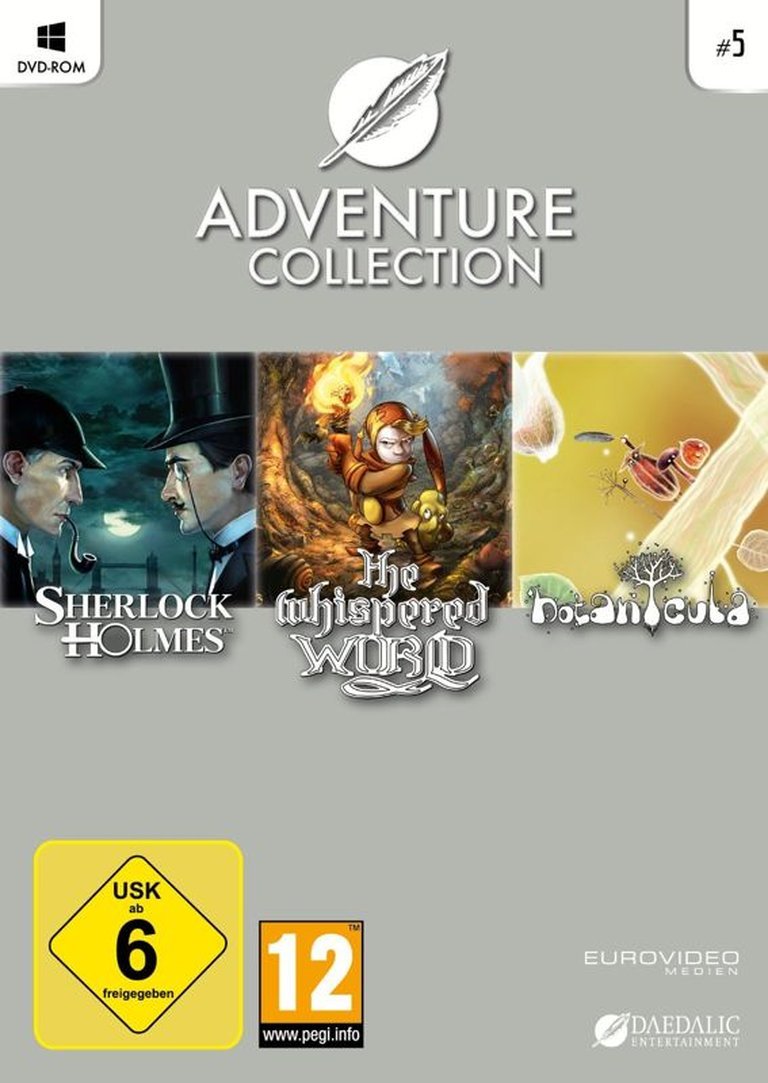
Adventure Collection #5 is a compilation of three critically acclaimed adventure games by Daedalic Entertainment, released in 2014 for Windows. The collection includes ‘The Whispered World,’ a visually stunning fantasy adventure following a young clown on a quest to save his world; ‘Botanicula,’ a whimsical point-and-click game set in a microscopic plant ecosystem; and ‘Sherlock Holmes: Nemesis,’ a classic detective mystery where players solve intricate cases as the legendary sleuth. Each game offers unique storytelling, puzzles, and artistic styles, making this compilation a must-have for fans of narrative-driven adventures.
Adventure Collection #5: A Curated Journey Through Daedalic’s Finest
Introduction: The Art of the Anthology
Few compilations in gaming history have managed to capture the essence of a studio’s creative evolution as elegantly as Adventure Collection #5. Released in 2014 by Daedalic Entertainment, this anthology is more than a mere bundling of titles—it is a meticulously curated exhibition of the studio’s narrative prowess, artistic innovation, and thematic depth. Featuring The Whispered World (2009), Sherlock Holmes: Nemesis (2007), and Botanicula (2012), the collection spans genres, tones, and gameplay mechanics, yet remains unified by Daedalic’s signature commitment to storytelling and atmospheric world-building.
This review will dissect Adventure Collection #5 as both a historical artifact and a living testament to the adventure genre’s enduring appeal. We will explore its development context, narrative and thematic layers, gameplay mechanics, and its place in the broader tapestry of gaming history. By the end, it will be clear why this compilation is not just a footnote in Daedalic’s catalog but a cornerstone of modern adventure gaming.
Development History & Context: The Rise of Daedalic Entertainment
The Studio’s Origins and Vision
Daedalic Entertainment, founded in 2007 in Hamburg, Germany, emerged during a pivotal era for adventure games. The mid-to-late 2000s saw a resurgence of the genre, fueled by digital distribution platforms like Steam and a growing appetite for narrative-driven experiences. Daedalic’s mission was clear: to revive the classic point-and-click adventure formula while infusing it with contemporary sensibilities—richer visuals, deeper storytelling, and more immersive sound design.
The studio’s early successes, such as The Whispered World and the Edna & Harvey series, established its reputation for blending dark humor, emotional depth, and hand-drawn aesthetics. Adventure Collection #5 arrived at a time when Daedalic was transitioning from a niche indie developer to a globally recognized name, thanks in part to partnerships with publishers like Deep Silver and its own publishing arm.
Technological Constraints and Innovations
The games in Adventure Collection #5 were developed across different technological landscapes:
– Sherlock Holmes: Nemesis (2007) was built using traditional 2D backgrounds and sprite-based characters, a nod to the classic adventure games of the 1990s.
– The Whispered World (2009) embraced a more modern approach with high-resolution hand-drawn art and a dynamic camera system, pushing the boundaries of what 2D adventures could achieve.
– Botanicula (2012) represented a radical departure, utilizing a fully animated, puppet-like aesthetic and a minimalist, dialogue-free narrative.
The compilation itself was released on DVD-ROM for Windows, a format that was already becoming obsolete in favor of digital downloads. This choice reflected both the studio’s roots in physical media and the lingering nostalgia for tangible game collections among adventure enthusiasts.
The Gaming Landscape of the Late 2000s and Early 2010s
The late 2000s were a turbulent time for adventure games. While AAA titles dominated the mainstream with action-heavy gameplay, indie developers and smaller studios like Daedalic, Telltale Games, and Wadjet Eye Games were quietly revolutionizing the genre. The success of The Walking Dead (2012) proved that narrative-driven games could achieve both critical acclaim and commercial viability, paving the way for compilations like Adventure Collection #5 to find an audience.
Daedalic’s decision to bundle these three distinct games was strategic. It allowed the studio to showcase its versatility while offering players a diverse experience—from the gothic whimsy of The Whispered World to the cerebral detective work of Sherlock Holmes: Nemesis and the surreal, wordless charm of Botanicula.
Narrative & Thematic Deep Dive: Stories That Linger
The Whispered World: A Tale of Identity and Sacrifice
The Whispered World is a masterclass in blending fairy-tale aesthetics with profound emotional themes. The game follows Sadwick, a young clown with a tragic past, as he embarks on a quest to save his dying world. At its core, the story is about self-discovery and the burden of destiny. Sadwick’s journey is fraught with existential questions: What does it mean to be a hero? Can one escape their fate? The game’s narrative is enriched by its supporting cast, particularly the enigmatic Spot, whose relationship with Sadwick evolves from antagonistic to deeply sympathetic.
Thematically, The Whispered World explores:
– The Duality of Light and Dark: The game’s visual contrast between vibrant colors and shadowy undertones mirrors its narrative duality—hope versus despair, courage versus fear.
– The Weight of Responsibility: Sadwick’s role as the “savior” is not glorified but presented as a heavy, often painful burden.
– The Power of Friendship: The bond between Sadwick and Spot is one of the most compelling aspects of the game, offering moments of levity and heartbreak.
Sherlock Holmes: Nemesis: A Battle of Wits and Morality
Sherlock Holmes: Nemesis is a more traditional adventure game, rooted in the classic detective genre. The story revolves around Holmes and Watson investigating a series of bizarre crimes linked to a mysterious cult. What sets this entry apart is its exploration of Holmes’ psyche—his arrogance, his obsession with justice, and his occasional moral ambiguity.
Key themes include:
– The Nature of Evil: The game’s villains are not mere caricatures but complex figures driven by ideology and desperation.
– The Limits of Logic: Holmes’ reliance on deduction is tested as the case spirals into the supernatural, forcing him to confront the irrational.
– The Cost of Genius: The game subtly critiques Holmes’ detachment from human emotion, suggesting that his brilliance comes at a personal cost.
Botanicula: A Silent Symphony of Whimsy
Botanicula is the most experimental of the three, eschewing traditional dialogue and puzzles in favor of a purely visual and auditory experience. The game follows a group of plant-like creatures as they navigate a surreal, dreamlike world to save their home tree from parasitic invaders.
Its themes are deceptively simple yet profound:
– Environmentalism: The game’s central conflict—saving a dying tree—is a clear metaphor for ecological preservation.
– The Beauty of the Mundane: Botanicula finds wonder in small, everyday moments, from the hum of insects to the rustling of leaves.
– Unity in Diversity: The protagonists, each with unique abilities, must work together to overcome obstacles, emphasizing the power of collaboration.
Gameplay Mechanics & Systems: Innovation and Tradition
The Whispered World: Classic Point-and-Click with a Twist
The Whispered World adheres to the traditional point-and-click formula but introduces several innovations:
– Dynamic Camera System: The game employs a fluid camera that zooms and pans to emphasize key moments, enhancing immersion.
– Inventory-Based Puzzles: While the puzzles are challenging, they are always logically tied to the narrative, avoiding the moon logic pitfalls of older adventure games.
– Character Switching: Players can control both Sadwick and Spot, each with unique abilities that open new puzzle-solving avenues.
However, the game is not without flaws. Some puzzles can feel overly obscure, and the pacing occasionally drags during the middle act. The UI, while functional, lacks the polish of later Daedalic titles.
Sherlock Holmes: Nemesis: Deductive Gameplay
Sherlock Holmes: Nemesis is a more straightforward affair, focusing on:
– Investigation Mechanics: Players gather clues, interrogate suspects, and piece together evidence using Holmes’ deductive reasoning.
– Dialogue Trees: Conversations are rich with branching paths, allowing players to influence the narrative through their choices.
– Mini-Games: The game includes lock-picking and code-breaking sequences, though these can feel dated by modern standards.
The game’s greatest strength is its faithfulness to the source material, capturing the essence of Conan Doyle’s stories. However, its linear structure and lack of replayability may disappoint players seeking more open-ended experiences.
Botanicula: A Puzzle Box of Delights
Botanicula redefines adventure game mechanics with its:
– Minimalist Design: The absence of dialogue and text forces players to rely on visual and auditory cues, creating a uniquely immersive experience.
– Creative Puzzles: The game’s puzzles are less about logic and more about experimentation, encouraging players to interact with the environment in unexpected ways.
– Whimsical Tone: The lack of traditional “failure states” makes the game accessible to casual players while still offering depth for veterans.
The primary drawback is its brevity—Botanicula can be completed in under five hours, leaving some players wanting more.
World-Building, Art & Sound: Crafting Immersion
Visual Aesthetics: A Feast for the Eyes
Each game in the collection boasts a distinct visual identity:
– The Whispered World: A gothic fairy-tale aesthetic, with lush hand-drawn backgrounds and expressive character animations. The art style evokes a sense of melancholic beauty, perfectly complementing the narrative.
– Sherlock Holmes: Nemesis: A more grounded, Victorian-inspired look, with detailed environments that reflect the grit and grandeur of 19th-century London.
– Botanicula: A vibrant, almost psychedelic art style, with characters and settings that resemble living paintings. The game’s visuals are a testament to the power of simplicity and color.
Sound Design: The Unsung Hero
Sound plays a crucial role in all three games:
– The Whispered World features a hauntingly beautiful score that underscores the game’s emotional beats. The voice acting, particularly for Sadwick and Spot, is superb, adding depth to the characters.
– Sherlock Holmes: Nemesis uses a mix of orchestral and ambient music to create tension and atmosphere. The voice work for Holmes and Watson is pitch-perfect, capturing the essence of the characters.
– Botanicula’s sound design is its greatest strength. The game’s lack of dialogue is compensated by a rich, dynamic soundscape—from the chirping of insects to the rustling of leaves—immersing players in its surreal world.
Reception & Legacy: A Lasting Impact
Critical Reception
Upon release, Adventure Collection #5 received praise for its diversity and value. Critics lauded the inclusion of three distinct games, each offering a unique experience. The Whispered World was particularly well-received for its emotional depth and artistic design, while Botanicula was celebrated for its innovation and charm. Sherlock Holmes: Nemesis, though less groundbreaking, was appreciated for its faithful adaptation of the detective genre.
However, the compilation’s lack of new content or enhancements meant it was often seen as a “best-of” rather than a must-have purchase for those who already owned the individual games.
Legacy and Influence
Adventure Collection #5 stands as a testament to Daedalic’s ability to blend tradition with innovation. The games within it have influenced subsequent titles in the adventure genre, particularly in their emphasis on narrative depth and artistic expression. The Whispered World’s success paved the way for more emotionally complex adventure games, while Botanicula’s experimental approach inspired indie developers to push the boundaries of interactive storytelling.
The compilation also highlights the importance of preservation in gaming. By bundling these titles, Daedalic ensured that they would remain accessible to new generations of players, cementing their place in the canon of adventure gaming.
Conclusion: A Timeless Tribute to Adventure Gaming
Adventure Collection #5 is more than just a compilation—it is a love letter to the adventure genre. Through The Whispered World, Sherlock Holmes: Nemesis, and Botanicula, Daedalic Entertainment showcases its mastery of storytelling, art, and gameplay, offering players a journey that is as diverse as it is unforgettable.
While the collection may not have redefined the genre or introduced groundbreaking mechanics, its true value lies in its curation. It is a snapshot of a studio at the height of its creative powers, a celebration of the adventure game’s past, present, and future. For fans of the genre, Adventure Collection #5 is not just a purchase—it is an essential experience, a reminder of why we fell in love with adventure games in the first place.
Final Verdict: 9/10 – A Masterful Anthology That Stands the Test of Time