
- Release Year: 2008
- Platforms: Windows
- Publisher: JoWooD Productions Software AG
- Developer: The Adventure Company
- Genre: Adventure, Compilation
- Perspective: Third-person
- Game Mode: Single-player
- Gameplay: Point-and-click, Puzzle-solving
- Setting: Fantasy, Horror, Mystery
- Average Score: 90/100
Description
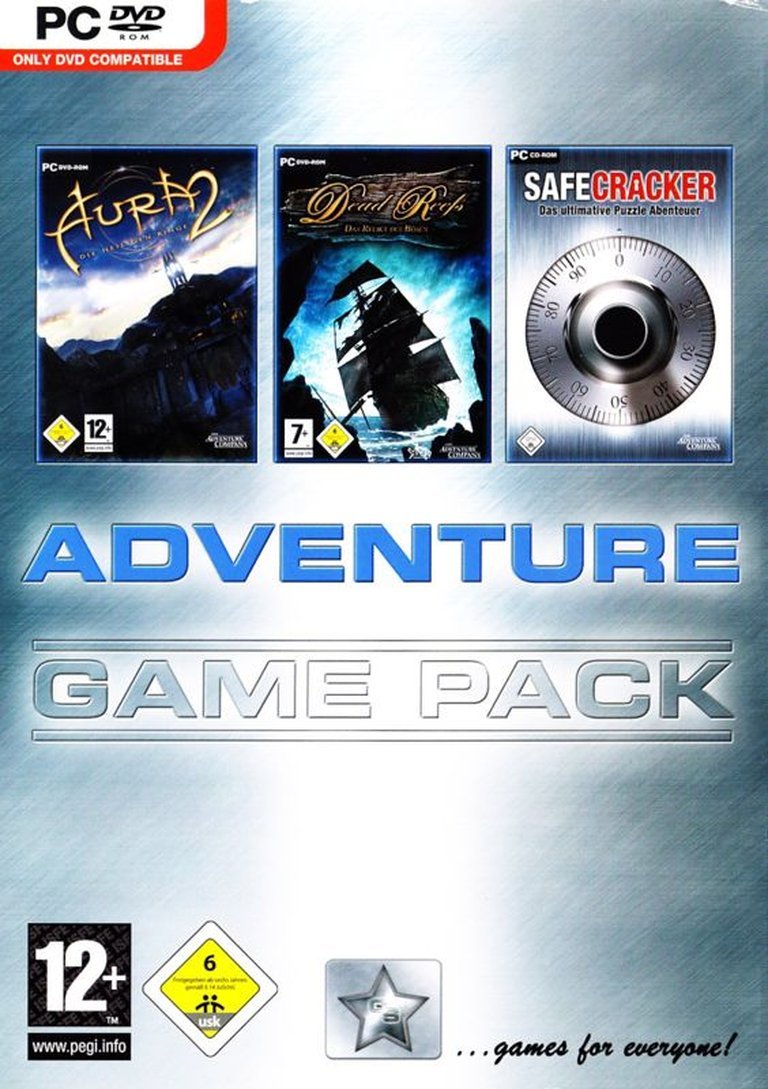
Adventure Game Pack is a compilation of three distinct adventure games by The Adventure Company, released in 2008 for Windows. The pack includes Dead Reefs, a chilling underwater mystery with atmospheric storytelling and puzzles; Safecracker: The Ultimate Puzzle Adventure, a puzzle-focused game centered around cracking safes and solving intricate challenges; and The Sacred Rings, a mystical journey blending technology, magic, and chaos. Each game offers unique settings and gameplay mechanics, from eerie underwater exploration to brain-teasing puzzles and fantastical realms, all tied together by engaging narratives and immersive environments.
Adventure Game Pack Free Download
Adventure Game Pack Reviews & Reception
mobygames.com (90/100): This compilation contains three adventures by The Adventure Company: Dead Reefs, The Sacred Rings, Safecracker: The Ultimate Puzzle Adventure.
Adventure Game Pack: A Curated Journey Through the Golden Age of Point-and-Click Adventures
Introduction: The Last Gasp of a Dying Genre
The Adventure Game Pack (2008) is a fascinating time capsule—a compilation that arrived at the tail end of the classic point-and-click adventure game era, just as the genre was gasping its last breaths before its eventual indie-led resurrection. Published by JoWooD Productions and developed by The Adventure Company, this collection bundles three distinct titles: Dead Reefs (2007), Safecracker: The Ultimate Puzzle Adventure (2006), and The Sacred Rings (2007). While none of these games are household names, they represent the final flickers of a once-dominant genre that had, by the late 2000s, been largely abandoned by major publishers in favor of action-heavy blockbusters.
This review will dissect the Adventure Game Pack not just as a product, but as a historical artifact—a swan song for traditional adventure games before their eventual rebirth in the 2010s. We’ll explore its development context, narrative and thematic depth, gameplay mechanics, and its place in the broader evolution of the genre.
Development History & Context: The Twilight of the Adventure Game
The Adventure Company & The Genre’s Decline
The Adventure Game Pack was published by JoWooD Productions, a now-defunct Austrian publisher known for distributing mid-tier PC games in Europe. The actual development, however, was handled by The Adventure Company, a Canadian studio that specialized in classic adventure games during the 2000s. By the time this compilation released in 2008, the adventure genre was in a dire state:
- The Post-Myst Crash (Late 1990s – Early 2000s): After the massive success of Myst (1993), the market was flooded with imitators, leading to oversaturation and consumer fatigue. Publishers grew wary of funding adventure games due to declining sales.
- The Rise of Action & FPS Dominance: Games like Half-Life (1998) and Halo (2001) shifted industry focus toward fast-paced, action-driven experiences. Adventure games, with their slow pacing and emphasis on storytelling, struggled to compete.
- The Death of LucasArts & Sierra: By the mid-2000s, both LucasArts (creators of Monkey Island and Grim Fandango) and Sierra Entertainment (creators of King’s Quest and Space Quest) had either shut down or pivoted away from adventure games.
The Adventure Game Pack arrived in this climate—a last-ditch effort to keep the genre alive by bundling three recent but relatively obscure titles.
Technological Constraints & Design Philosophy
All three games in the pack were built using pre-rendered 3D backgrounds, a staple of late-era adventure games. This approach allowed for detailed, atmospheric environments without requiring real-time 3D rendering power. However, it also meant:
- Limited Interactivity: Unlike modern adventure games with fully 3D explorable spaces, these titles relied on fixed camera angles and hotspot-based interaction, which could lead to frustrating “pixel hunts.”
- Aging UI Design: The games used traditional point-and-click interfaces, with some (Dead Reefs) still relying on keyboard controls—a relic of the genre’s past.
- Narrative Over Gameplay: Given the genre’s decline, these games doubled down on storytelling and puzzles rather than innovation, catering to a shrinking but dedicated fanbase.
Narrative & Thematic Deep Dive: Three Tales of Mystery & Intrigue
The Adventure Game Pack offers three distinct narratives, each with its own tone and thematic focus. Let’s break them down:
1. Safecracker: The Ultimate Puzzle Adventure (2006) – A Puzzle Box Without a Plot
- Premise: You play as a professional safecracker hired to break into the estate of a recently deceased billionaire, Duncan W. Adams, who has hidden his fortune in 35 intricate safes and puzzles.
- Themes: Greed, legacy, and intellectual challenge. The game is less about storytelling and more about pure puzzle-solving, making it a spiritual successor to The 7th Guest (1993).
- Strengths:
- Varied & Clever Puzzles: From mechanical locks to logic-based riddles, the game offers a wide range of challenges that test different cognitive skills.
- Minimalist Storytelling: The lack of a deep narrative allows players to focus entirely on the puzzles, making it a relaxing yet engaging experience.
- Weaknesses:
- No Character Development: Unlike Myst or The Witness, Safecracker has no emotional stakes—just a series of increasingly complex locks.
- Repetitive Structure: After a while, the lack of narrative payoff can make the experience feel mechanical.
2. Dead Reefs (2007) – A Gothic Horror with Flawed Execution
- Premise: A supernatural mystery set in a haunted coastal town, where the protagonist investigates a series of eerie disappearances tied to an ancient curse.
- Themes: Isolation, madness, and the unknown. The game draws heavily from Lovecraftian horror, with a dark, oppressive atmosphere.
- Strengths:
- Strong Atmosphere: The pre-rendered visuals and moody sound design create a genuinely unsettling experience.
- Engaging Story: Unlike Safecracker, Dead Reefs has a proper narrative arc, with twists and turns that keep players invested.
- Weaknesses:
- Clunky Controls: The keyboard-based movement feels outdated and unintuitive, making exploration more frustrating than immersive.
- Sudden Deaths: The game punishes players with instant death in certain sequences, a throwback to Sierra’s worst design choices (e.g., King’s Quest).
3. The Sacred Rings (2007) – A Mythological Odyssey with Identity Issues
- Premise: A fantasy adventure where the protagonist must recover three magical rings to prevent an ancient evil from returning.
- Themes: Destiny, heroism, and the battle between order and chaos. The game blends mythological elements with classic adventure tropes.
- Strengths:
- Diverse Settings: The game shifts between technological, mystical, and chaotic realms, keeping the visuals fresh and engaging.
- User-Friendly Design: Unlike Dead Reefs, The Sacred Rings has smooth point-and-click controls, making it the most accessible of the three.
- Weaknesses:
- Underdeveloped Characters: The protagonist is a generic hero, and the supporting cast lacks depth.
- Predictable Puzzles: Many of the puzzle solutions are obvious, making the game too easy for veteran adventure fans.
Gameplay Mechanics & Systems: The Last Gasps of a Dying Formula
Core Gameplay Loop: Point, Click, Solve, Repeat
All three games follow the classic adventure game structure:
1. Explore a pre-rendered environment.
2. Find and combine items in an inventory system.
3. Solve puzzles to progress the story.
4. Engage in occasional dialogue (though Safecracker has almost none).
Combat & Progression: Nonexistent by Design
- No Combat: True to the genre, fighting is nonexistent—players must rely on wits, not reflexes.
- Linear Progression: Unlike modern adventure games (Disco Elysium, The Outer Wilds), these titles have no branching paths—just a single, predetermined narrative.
UI & Quality-of-Life Issues
- Pixel Hunting: A persistent problem in Dead Reefs and The Sacred Rings, where tiny interactive objects blend into the background.
- Outdated Controls: Dead Reefs’ keyboard movement feels archaic compared to modern mouse-driven adventures.
- Lack of Hints: Unlike The Secret of Monkey Island (which had a hint system), these games offer little guidance, leading to frustration.
Innovation? None to Speak Of
By 2008, adventure games had stagnated. The Adventure Game Pack does not innovate—it preserves the genre’s past without pushing it forward.
World-Building, Art & Sound: Aesthetic Nostalgia
Visual Design: Pre-Rendered Beauty
- Safecracker uses clean, detailed environments that emphasize puzzle clarity.
- Dead Reefs opts for dark, gothic imagery, with moody lighting and eerie character designs.
- The Sacred Rings has the most varied art style, shifting between steampunk, fantasy, and surrealist settings.
Sound & Music: Atmospheric, But Forgettable
- Dead Reefs has the strongest soundtrack, with haunting melodies that enhance its horror themes.
- Safecracker and The Sacred Rings have functional but unremarkable audio design.
Atmosphere: The Last Vestiges of Classic Adventure
These games ooze nostalgia, but they also feel dated. The fixed camera angles and limited interactivity make them relics of a bygone era.
Reception & Legacy: A Forgotten Footnote in Gaming History
Critical Reception: A Mixed Bag
- German magazine Adventurespiele gave the pack a *90/100, praising *Safecracker’s puzzles and Dead Reefs’ atmosphere.**
- Players on MobyGames rated it **5/5, but with almost no written reviews—suggesting a small but dedicated fanbase.
Commercial Performance: A Niche Product
- The Adventure Game Pack was not a major seller, reflecting the genre’s declining popularity.
- It was one of the last major retail releases for classic adventure games before the indie revival (The Walking Dead, Broken Age).
Legacy: A Bridge Between Eras
While the Adventure Game Pack itself is largely forgotten, it represents:
– The end of an era for traditional adventure games.
– A precursor to the indie renaissance, where crowdfunding (Double Fine’s *Broken Age) and digital distribution (Telltale’s *The Walking Dead) revived the genre.
Conclusion: A Time Capsule Worth Preserving
The Adventure Game Pack is not a masterpiece, but it is a fascinating historical artifact—a last gasp of the classic adventure game before its eventual rebirth. While Safecracker stands out for its pure puzzle design, Dead Reefs and The Sacred Rings are flawed but atmospheric experiences that capture the essence of late-era adventure gaming.
Final Verdict: 7/10 – A Nostalgic Curio for Adventure Fans
- For hardcore adventure enthusiasts, this pack is a worthwhile curiosity.
- For modern players, it’s a reminder of how far the genre has come—and how much it needed to evolve.
The Adventure Game Pack may not be essential playing, but it is essential history—a final bow for a genre that would soon rise again in a new form.