
- Release Year: 2001
- Platforms: Windows
- Publisher: Dice Multi Media Europe B.V., Electronic Arts, Inc., Sold Out Sales & Marketing Ltd.
- Developer: Digital Extremes, Inc.
- Genre: Action, Simulation
- Perspective: Top-down
- Game Mode: Hotseat, Single-player
- Gameplay: Adventure, Pinball
- Setting: Fantasy
- Average Score: 63/100
Description
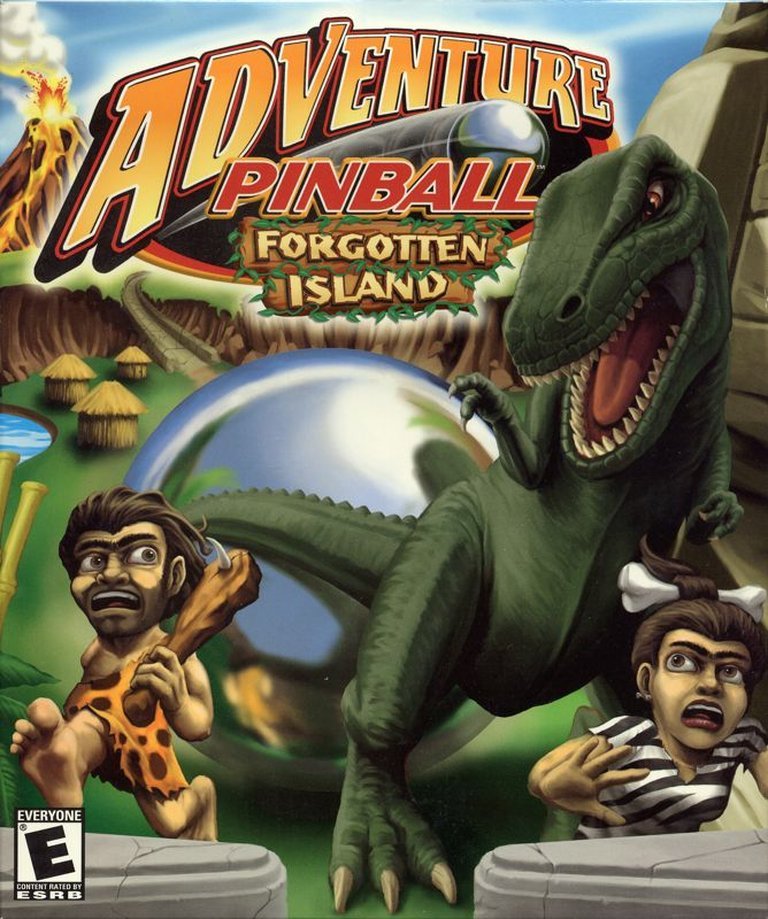
Adventure Pinball: Forgotten Island is a narrative-driven pinball simulation where players embark on a quest after receiving a map from their long-lost grandfather, aiming to save a fantastical island inhabited by dinosaurs, volcanoes, man-eating sharks, and a tribe of cavemen. The game innovates with 3D graphics using the Unreal Engine, featuring a dynamic camera that follows the ball and nine interconnected tables focused on completing missions rather than just achieving high scores, offering a fresh and adventurous twist on traditional pinball gameplay.
Gameplay Videos
Adventure Pinball: Forgotten Island Free Download
Adventure Pinball: Forgotten Island Mods
Adventure Pinball: Forgotten Island Reviews & Reception
metacritic.com (60/100): It’s one of the few times where I would have liked less levels, with more quality construction.
en.wikipedia.org (60/100): While it has its faults, it is for the most part successful in adding first-person shooter flash to a traditional kind of game.
mobygames.com (66/100): Not the usual bargain-bin pinball game
ign.com (67/100): The only thing having a ball here is… that shiny thing you hit.
Adventure Pinball: Forgotten Island: A 3D Engine Experimental Marooned in a Sea of Flippers
Introduction: The Unreal Experiment
In the early 2000s, as 3D acceleration became the new standard for PC gaming, one question lingered in the minds of many developers: what couldn’t this new power be applied to? Digital Extremes, a studio with a formidable reputation for technical prowess forged on the Unreal and Unreal Tournament engines, posed an audacious answer: pinball. The result was Adventure Pinball: Forgotten Island, a 2001 title that stands as one of the most singular and conceptually daring experiments in the genre’s history. Itrepurposed the mighty Unreal Engine 1—the very tool that defined first-person shooters—to create a vibrant, mission-driven, fully 3D pinball experience. This review argues that Forgotten Island is a fascinating case study in ambition versus execution: a game that revolutionized the visual and spatial possibilities of digital pinball but ultimately foundered on the shoals of inconsistent physics, repetitive design, and a fundamental mismatch between its adventurous spirit and the core, often unforgiving, mechanics of the sport it sought to reinvent. It is less a successful pinball game and more a captivating, flawed artifact of a moment when genre boundaries were being aggressively tested.
Development History & Context: Digital Extremes and the Unreal Gamble
The Studio and the Vision: Digital Extremes, based in London, Ontario, Canada, was in a unique position in 2001. Having co-created the original Unreal and developed the acclaimed Unreal Tournament (1999), they were masters of the cutting-edge Unreal Engine. However, their pedigree also included lighter fare: they had previously developed Epic Pinball and Extreme Pinball under the Epic MegaGames banner. This dual expertise—high-fidelity 3D shooters and accessible pinball simulations—created the perfect storm for Forgotten Island. The project was produced under the auspices of Electronic Arts, which provided publishing muscle and a “Top Ten” re-release branding.
Technological Feat and Constraint: The game’s most celebrated and controversial feature was its engine. Using Unreal Engine 1 for a pinball game was, in the words of PC Player (Germany), “unglaublich” (unbelievable). It allowed for a dynamic, moving camera that followed the ball through fully rendered 3D environments, a radical departure from the static, often monotonous top-down or side-view of traditional pinball sims like Visual Pinball or the Pro Pinball series. However, this came at a cost. The engine was designed for open-world shooting, not the precise, deterministic physics required for a credible pinball simulation. As PC Action bluntly stated, “Zum Glück ist Einstein schon tot. Er würde sonst vielleicht qualvoll sterben, müsste er die Ballphysik von Forgotten Island noch miterleben” (“Luckily Einstein is already dead. He would otherwise perhaps die in agony if he had to experience the ball physics of Forgotten Island”). The technology enabled spectacular visuals but was fundamentally misaligned with the core gameplay need for predictable, realistic ball movement.
Gaming Landscape of 2001: The early 2000s PC market was rich with pinball games, from the hyper-realistic Pro Pinball series to the arcade-style 3D Pinball: Space Cadet. Forgotten Island entered this space not by competing on simulation fidelity, but by attempting to fuse pinball with the adventure and exploration genres. It also arrived as the “bargain bin” era of PC gaming was solidifying, with titles often rapidly discounted—a fate that quickly befell Forgotten Island, as noted by the MobyGames user review. Its $30 launch price was frequently criticized (e.g., by Game Revolution) as excessive for the experience offered.
Narrative & Thematic Deep Dive: A Grand, Silly Expedition
Adventure Pinball: Forgotten Island presents a narrative so exuberantly preposterous it becomes part of the game’s charm. The premise is delivered via a note and map from a long-lost grandfather, promising “the adventure of a lifetime.” The player is thus cast as an intrepid explorer tasked with saving a prehistoric paradise from mysterious forces. The story is told through:
1. The Manual’s Journal: The Windows version includes a booklet styled as the protagonist’s personal journal, filling in backstory and providing a tongue-in-cheek tone.
2. In-Game Announcements: A voice-over announcer (derided by a MobyGames reviewer as sounding like Joel Goddard from Late Night with Conan O’Brien) provides colorful commentary—”Good shot!” or “Oh no!”—and narrates mission progress, lending a game-show-meets-adventure-film vibe.
3. Environmental storytelling: Each “region” or interconnected set of tables tells a miniature story through its visuals: cavemen in peril, rampaging dinosaurs, erupting volcanoes, and man-eating sharks. The final confrontation is against the unequivocally named “Dr. Evil.”
The themes are pure, lightweight adventure pulp: exploration, rescue, and conquest of exotic, hostile locales. There is no deeper commentary; the narrative is a simple, effective scaffold for the gameplay. Its campiness is consistent and, for its target audience—clearly younger players and families, as repeatedly noted in reviews (“a great game for kids”)—it creates a low-stakes, high-fantasy atmosphere. The story’s primary function is to justify the mission-based structure, transforming each table from a static playing field into a “region” with a purpose (e.g., “chase away sharks,” “save the cavemen”).
Gameplay Mechanics & Systems: Mission-Based Pinball in a Living World
Core Loop and Structure: This is where Forgotten Island most radically departs from tradition. Instead of a collection of isolated tables for high-score chasing, the game presents 9 interconnected “regions” (Beach, Jungle, Volcano, Cave, Lost City, Ice Cave, Underwater City, Space Station, Forgotten Island). Each region consists of 2-3 distinct table layouts that must be navigated in sequence. Progression is gated not by achieving a target score, but by completing specific missions—discrete objectives like hitting a particular ramp a set number of times, activating switches, or collecting items (gems, archaeologists, cavemen). Completing a region’s final mission unlocks the next region for both Story Mode and the standalone Table Mode.
The 3D Camera and Table Design: The camera’s dynamic following of the ball is the game’s signature. It creates a sense of plunging down ramps, flying over pits, and navigating multi-level layouts in a way a static camera never could. This freedom allowed designers to conceive of tables not as planar surfaces but as sprawling, multi-tiered environments. Tables are linked by secret passages, mini-tables, and hidden caverns, making each region feel like a cohesive adventure zone rather than a single playfield.
Systems and Flaws:
* Power-ups: Collecting specific items or completing mini-games grants temporary power-ups like ball multipliers (earning more extra balls), point multipliers, or a “magnet” flipper. These add a light power-up metagame.
* Physics: This is the game’s Achilles’ heel. Reviews were near-universal in criticizing the ball physics as “halfwegs realistisch” (“halfway realistic” – Computer Bild Spiele) and frustratingly unpredictable. The ball often feels floaty or lacks the controlled momentum of a real pinball, making precise, repeatable shots—the lifeblood of pinball strategy—difficult. As IGN noted, the tables are “structured around hitting certain ramps,” and failing due to physics rather than skill is common.
* Difficulty Spikes: The mission design leads to uneven difficulty. Some objectives require a stroke of luck to hit specific, hard-to-reach targets repeatedly, while others can be cheesed by exploiting a single high-scoring shot. This creates the “unbalanced” experience cited by multiple reviewers.
* Replayability: The mission-based structure gives the game a finite shelf-life. Once all missions for all regions are completed, the core incentive vanishes. Game Over Online poignantly summarized this: “I’ve solved Forgotten Island, and now I’ve forgotten it.” The lack of a compelling endless-mode or robust high-score chasing (since the tables are designed for missions, not pure scoring) limits long-term appeal for pinball purists.
World-Building, Art & Sound: A Vibrant, Noisy Playground
Visual Direction: Leveraging the Unreal Engine, Forgotten Island delivers a cartoonish, saturated, and alive world that was unprecedented for a pinball game. Tables are bursting with detail: dinosaurs that roar and stomp, cavemen who scurry and shriek, waterfalls that cascade, bubbling lava, and glittering treasure chests. The art style is firmly in the “fun for all ages” fantasy realm, avoiding anything truly terrifying. The 3D engine allows for draw distances and environmental scale that were impossible on previous pinball titles. However, the trade-off is a lack of pinball-table authenticity; the playfields are imaginative adventure landscapes first, functional pinball tables second. This sometimes leads to confusing sightlines and visual clutter that can obscure the ball.
Sound Design: The audio is a mix of strengths and weaknesses.
* Sound Effects: Generally praised as “good” and plentiful (Christ Centered Gamer). They are cartoony and satisfying—clunks, bongs, splashy water sounds, and creature noises that reinforce the adventure theme.
* Music: Themes adapt to the region (jungle drums, ice-themed tunes, volcanic percussion), providing decent, if unmemorable, background atmosphere.
* Announcer: This is the most divisive element. The chipper, rapid-fire commentary is intended to be energetic but is frequently called “annoying” and “bieder” (“provincial”/”dull” – Game Captain). Its style, reminiscent of a game show host, clashes with the sense of adventure for some, though others find it part of the game’s quirky charm.
Reception & Legacy: Mixed Signals and a Curious Dead End
Critical Reception at Launch: Adventure Pinball landed with a solidly “mixed” Metascore of 60/100. The range was telling:
* The Positive: Christ Centered Gamer (90%) lauded its complexity, graphics, and family-friendly nature. German magazine PC Games (79%) praised its imaginative levels and hidden bonuses. 4Players (75%) called it a must-see for pinball fans, citing its stable gameplay and good graphics.
* The Negative: PC Gamer (49%) and Game Revolution (42%) were scathing, citing subpar physics and poor value. Gamekult (50%) stated the 3D engine provided insufficient detail and precision, a cruel irony given its ambition. GameSpot (66%) and IGN (67%) landed in the middle, acknowledging the flashy presentation and innovative level design but lamenting the frantic pace, repetitive missions, and lack of table “tightness” for infinite replay.
* The Polarizing Critique: The central debate was clear: was this a brilliant reimagining of pinball as an adventure game, or a failed hybrid that sacrificed the core tenets of pinball simulation? NextGen crystallized the latter view: “it wants to be a lot more than just a pinball game, but… it also just doesn’t handle the basics of pinball gameplay very well.”
Commercial Fate & Evolution of Reputation: The game quickly migrated to bargain bins ($10-$15), as the MobyGames user review noted. Its initial hype faded rapidly. Over time, its reputation has settled into a niche cult status. It is remembered not as a classic, but as a curious, one-of-a-kind experiment. Its use of the Unreal Engine for non-FPS purposes remains a notable trivia footnote in both pinball and Unreal Engine histories. For retro enthusiasts and pinball collectors, it is a prized oddity—a game that looked nothing like a pinball game but played something like one. Modern commentary (e.g., user reviews on MobyGames and Metacritic from the 2020s) often expresses fond nostalgia, praising its creativity, vibrant worlds, and “lasting appeal” as a unique experience, while still acknowledging its physics limitations.
Influence: Direct influence on subsequent pinball games is minimal. The genre largely continued on its separate tracks: high-fidelity simulations (Pinball FX, The Pinball Arcade) and casual arcade titles. However, Forgotten Island can be seen as a precursor to the modern concept of “pinball as a platform for themed experiences.” games like Pinball FX with its elaborate Marvel and Star Wars tables use advanced 3D graphics for spectacle, but they maintain strict simulation physics and score-chasing mechanics. Forgotten Island‘s true legacy is as a proof-of-concept for immersive, world-based pinball—a path not widely pursued but whose spirit lives on in the desire to make pinball tables feel like explorable spaces.
Conclusion: A Flawed Masterpiece of Ambition
Adventure Pinball: Forgotten Island is not a great pinball game by the metrics of the genre: its physics are imprecise, its long-term replayability is weak, and its mission design can be frustratingly luck-dependent. Yet, to dismiss it entirely is to ignore its staggering audacity. It asked a question no one else was asking: “What if a pinball table was an entire adventure level?” and answered it with the most powerful 3D engine available at the time.
The result is a game of breathtaking visual imagination and playful spirit, wrapped in a technical shell that simply wasn’t up to the task. Its 9 interconnected regions, bursting with dinosaurs, cavemen, and erupting volcanoes, remain a wonder to behold and navigate. The sheer joy of the camera swooping after your ball through a 3D jungle canopy or a crumbling ice cave is a unique thrill in the pinball canon.
Its place in history is secure, not as a pinnacle of the genre, but as a defiantly original, deeply flawed, and profoundly interesting dead end. It represents a moment when a talented studio, unshackled from convention, tried to use the tools of one genre to reinvent another. They didn’t fully succeed, but they created something unmistakably theirs—a vibrant, whimsical, and technically fascinating artifact that continues to beguile and frustrate in equal measure two decades later. For the curious player, it is worth experiencing not as a pinball simulation, but as a piece of interactive surrealist art: a beautiful, broken, and utterly unforgettable journey to a forgotten island.