
- Release Year: 2020
- Platforms: Macintosh, Windows
- Publisher: JetDogs Studios Oy
- Developer: GameOn Production
- Genre: Action
- Perspective: Diagonal-down
- Game Mode: Single-player
- Gameplay: Time management
- Setting: Fantasy
Description
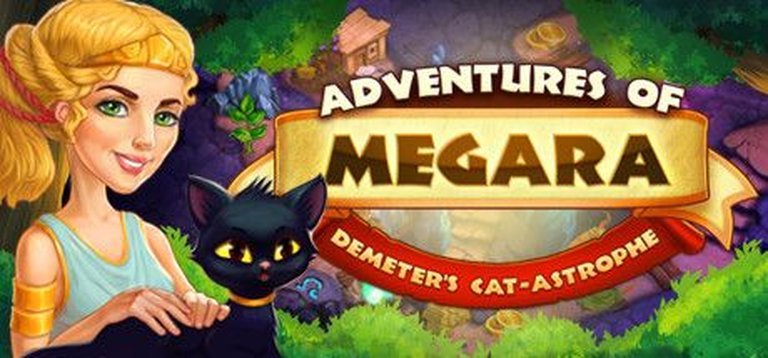
Adventures of Megara: Demeter’s Cat-astrophe is a fantasy time management game set in a colorful, cartoon-inspired world based on Greek mythology. Players assist Megara in restoring Demeter’s grace after a mischievous kitten causes chaos, using point-and-select controls and fixed-screen visuals to solve puzzles and manage resources in a relaxing, single-player adventure.
Gameplay Videos
Where to Buy Adventures of Megara: Demeter’s Cat-astrophe
PC
Adventures of Megara: Demeter’s Cat-astrophe Guides & Walkthroughs
Adventures of Megara: Demeter’s Cat-astrophe: Review
Introduction: A Heroine, a Goddess, and a Very Mischievous Kitten
In the vast and varied ecosystem of casual gaming, few titles lean as elegantly into a single, potent narrative hook as Adventures of Megara: Demeter’s Cat-astrophe. Here is a game whose premise is delivered with the simplistic clarity of an ancient fable: a hungry kitten devours a sacred offering meant for the goddess Demeter, incurring her divine wrath and plunging the land of Hellas into chaos. The hero chosen to set things right? Not Hercules, but his future wife, Megara, in a prequel adventure exploring her own nascent heroism. Released in November 2020 by Russian studio GameOn Production and publisher JetDogs Studios, the game represents a fascinating, if ultimately niche, confluence of time-management mechanics and Greek mythological world-building. This review will argue that Megara is a game of considerable atmospheric charm and competent design that is ultimately hamstrung by the repetitive, sometimes finicky nature of its core time-management gameplay and a lack of meaningful innovation within a crowded genre. Its legacy is likely to be that of a pleasant, well-illustrated diversion rather than a genre-defining classic, yet it remains a noteworthy case study in how mythological IP can be adapted for the casual strategy audience.
Development History & Context: From Farm Frenzy to the Fortunate Fields of Hellas
Adventures of Megara: Demeter’s Cat-astrophe emerged from a studio with a established pedigree in the time-management and casual strategy space. GameOn Production, operating under the JetDogs Studios umbrella, had previously developed titles like Farm Frenzy: Refreshed, Emergency Crew: Volcano Eruption, and Roads of Time 2: Odyssey. This portfolio reveals a developer comfortable with a specific formula: resource gathering, task chaining, and increasingly complex level layouts within a fixed time. Megara is a direct evolution of this template, swapping farmyards or disaster zones for a mythologized Ancient Greece.
The game was built in the Unity engine, a standard for indie and casual titles in 2020, allowing for a relatively swift development cycle and cross-platform deployment (Windows and macOS at launch, with mobile ports following on platforms like Big Fish Games and iWin). The technological constraints were modest by AAA standards—the system requirements call for a 2.0 GHz processor, 2GB RAM, and only 800MB of storage—targeting a broad, low-spec audience. This places the game firmly within the “casual” or “mid-core” market, designed for short bursts on laptops or older PCs.
The 2020 release window is alsocontextually significant. The COVID-19 pandemic had massively boosted the audience for PC and casual gaming, with players seeking accessible, stress-relieving experiences. Megara‘s tagline—”Build, fight, think strategically and win!”—and its “Relaxing” and “Family Friendly” Steam tags positioned it as a perfect salve for turbulent times. Its development was thus less about pushing technical boundaries and more about perfecting a polished, aesthetically pleasing, and thematically coherent package within a proven gameplay loop.
Narrative & Thematic Deep Dive: The Weight of a Single Crumb
The game’s narrative, while paper-thin compared to deep RPGs or visual novels, is its most distinctive and memorable feature. The official synopsis from storefronts lays it all out: the people of Hellas, grateful for a harvest, offer a basket of food to Demeter. A kitten eats it all. Demeter, seeing only “crumbs and bones,” interprets this as a profound insult and unleashes her power to flood towns with monsters and tangling roots. The scale of the punishment is mythologically apt—Demeter is the goddess of the harvest and fertility; to slight her is to threaten the very fabric of life and agriculture.
Megara as Protagonist: Casting Megara, the infamous first wife of Hercules who driven mad by Hera and subsequently killed their children, as the protagonist is a clever, if surface-level, subversion. The game explicitly frames her story as “the heroic adventures of Megara before she met Hercules.” This immediately reframes her from a tragic, secondary figure into an active, capable heroine in her own right. Her character, as presented through brief dialogue and mission objectives, is one of determined resolve and compassion—she is not just cleaning up a mess, but actively seeking to “apologize to Demeter” and “restore nature and destroyed towns.” There’s a subtle theme of taking responsibility for unintended consequences—the kitten’s act was not malicious, but the result is catastrophic, and Megara’s quest is about mitigating fallout and making amends, a relatable theme for the modern era.
Thematic Underpinnings: The narrative touches on classic Greek themes:
* Hubris vs. Piety: The people of Hellas believed their gift was sufficient; Demeter’s reaction underscores the ancient Greek fear of hybris (overweening pride) against the gods. The kitten acts as an agent of chaos, a literal and figurative “monkey’s paw” that disrupts pious intention.
* Restoration and Order: Megara’s entire journey is about restoring kosmos (order) from chaos. Every repaired building, every cleared monster, every gathered resource is a small victory in re-establishing the natural and social order Demeter has withdrawn.
* The Power of the Small: The entire catastrophe is caused by a kitten. The solution is not a mighty army but a clever, resourceful individual working within tight constraints. This reinforces the time-management fantasy: the player, like Megara, is a tiny but crucial agent of massive change.
However, the narrative depth rarely extends beyond this framework. Dialogue is functional, serving to introduce level objectives or provide minor character moments (reuniting citizens, receiving thanks). The “unexpected plot twists” promised in the store blurb are largely absent; the story is a straightforward A-to-B quest. The cat-astrophe itself is the enduring, irreducible joke—a perfect, meme-worthy premise that sells the game’s tone but isn’t developed into profound commentary.
Gameplay Mechanics & Systems: The Relentless Tick-Tock
At its core, Adventures of Megara is a real-time strategy time-management game in the vein of Diner Dash or the Farm Frenzy series (with which it shares DNA via its developer). The player controls Megara (or occasionally summoned helpers) in a fixed, isometric, diagonal-down perspective across various Greek-themed locations: temple grounds, village squares, forest clearings, and caverns.
Core Gameplay Loop: Each level presents a series of interconnected tasks that must be completed before a timer expires. These typically involve:
1. Resource Gathering: Picking crops (olives, figs), chopping wood, collecting water.
2. Processing/Construction: Using resources to build structures (repairing roofs, constructing bridges), feed animals, or create goods (baking bread).
3. Combat & Clearance: Defeating monsters (satyr-like creatures,animated roots) that spawn periodically, often by luring them to traps or using specific tools/weapons. Combat is simple, usually a single-click action after a tool is prepared.
4. Task Chaining: The genius (and frustration) of the genre lies in the efficient chaining of these actions. For example: gather wood → build a ladder → climb to rescue a citizen → citizen repairs a building → building produces a resource needed for the next phase. The player must constantly anticipate the next step.
Progression & Systems: The game features 56 “thrilling levels” plus bonus puzzles, organized into chapters that follow Megara’s journey across Hellas. Progression is linear; completing a level unlocks the next. Stars (1-3) are awarded based on speed and completeness, encouraging replay for perfectionism. A notable innovation is the “Puzzle Piece” system. Each level hides collectible puzzle pieces; finding enough across all levels unlocks bonus content (the “bonus chapter”). This adds a light metagame of exploration and careful scrolling of the screen, though community reports indicate buggy implementation where pieces fail to register, frustrating completionists.
UI & Interface: The point-and-click interface is clean and functional. A bottom bar holds tools/resources, with hotkeys for quick selection. A clear timer dominates the top of the screen. However, a common point of criticism in user reviews (noted on Steam) is the occasionally unresponsive or imprecise pathfinding. Megara can get stuck on environment geometry, wasting precious seconds—a cardinal sin in a genre where every millisecond counts. This transforms strategically sound plans into frustrating failures due to clunky controls.
Innovative or Flawed: The game’s primary innovation is its thematic coat. The mechanics are tried-and-true, but dressing them in Greek mythology—with monsters replacing generic pests, and resources like “olives” and “ambrosia”—adds a layer of charm and visual variety. The “combat” element, while shallow, is more dynamic than simple resource gathering. However, the systems show their age and genre limitations. There is no meaningful character progression beyond star ratings; Megara’s abilities do not permanently upgrade between levels. The difficulty curve is steep but often feels unfair due to the aforementioned pathfinding issues rather than genuine strategic depth. The “time manipulation” tag on Steam is misleading—there is no rewind or slow-motion; it’s pure real-time pressure.
World-Building, Art & Sound: A Vibrant, Cohesive Hellas
This is where Megara unequivocally shines. The game’s visual and auditory design successfully creates a “magical atmosphere of Ancient Greece” as promised.
Art Direction: The game employs a bright, cartoony, and highly saturated art style. Characters and environments are stylized with exaggerated proportions and smooth animations. Megara herself, in her simple tunic, is expressive and iconic. The Greek setting is well-realized through iconic architecture (white-columned temples, agora markets), flora (olive trees, grapevines), and fauna. Each chapter introduces a new locale—a coastal fishing village, a misty forest of cursed trees, a volcanic region—that feels distinct yet coherent. The “fixed/flip-screen” perspective means each level is a single, beautifully composed screen, with no scrolling, focusing player attention. The “stunning full HD graphics” claim is modest but accurate for its style; it looks crisp and colorful on modern displays.
Sound Design: The soundscape is dominated by a pleasant, looping ambient score that evokes ancient Greece with lyre-like melodies and rhythmic percussion. Sound effects are clear and satisfying: the chop of wood, the pluck of olives, the crunch of a defeated monster. The audio successfully reinforces the setting without being intrusive. Importantly, the game supports full audio and interface in eight languages (English, French, German, Russian, Italian, Spanish, Dutch, Portuguese), a significant accessibility plus for a niche import.
Atmosphere Contribution: Together, the art and sound create a world that feels playful and mythological, not grim or historically accurate. This “cartoony” approach perfectly suits the game’s premise—a divine punishment caused by a kitten is inherently silly, and the game’s tone matches that. It makes the repetitive tasks feel less like chores and more like participating in a vibrant, living diorama of Greek myth. The world-building is environmental storytelling at its most basic but effective: the monsters are clearly unnatural, the roots are clearly cursed, and the act of restoring a building visually transforms it from dilapidated to pristine, providing immediate, gratifying feedback.
Reception & Legacy: A Quiet, Buggy Existence
Adventures of Megara enjoyed a quiet commercial life primarily on digital storefronts for PC (Steam, Big Fish Games, iWin, WildTangent) and macOS. Its $8.39-$9.99 price point and “Collector’s Edition” with bonus content and a strategy guide followed the standard model for casual games. However, its critical and community reception is sparse and mixed, indicative of its modest footprint.
Critical Reception: There are no critic reviews aggregated on Metacritic, and MobyGames shows no professional reviews. This is common for games in the casual time-management niche, which operate outside the mainstream games press’s purview. Its absence from major review outlets speaks to its positioning: it is a game for a specific audience seeking a particular experience, not one aiming for broad critical acclaim.
User Reception: On Steam, it has only 3 user reviews as of the latest data, with a split verdict (1 positive, 2 negative). The negative reviews are not about the core concept but about technical and polish issues:
* Achievement Bugs: Multiple reports of achievements not unlocking despite fulfilling conditions (e.g., “Amateur” for 5 achievements, “Collector” for all puzzle pieces). This is a critical flaw in a game that heavily incentivizes completionism through collectibles and stars.
* Save/Installation Issues: Reports of antivirus software flagging the executable and “Disk Write” errors preventing installation.
* Gameplay Polish: The aforementioned pathfinding issues that lead to unfair time losses.
These bugs suggest a lack of robust QA, a common risk for smaller studios with limited resources.
Commercial & Cultural Legacy: The game has no measurable mass impact. It did not revive the time-management genre nor spawn a notable franchise. Its developer, GameOn Production, continues to make similar games (the “Adventures of Megara” series includes Antigone and the Living Toys), indicating a successful, if small, commercial model. Its legacy is twofold:
1. As a Thematic Precedent: It is part of a trend of using mythology (Greek, Norse, etc.) as a backdrop for casual puzzle and management games, following in the footsteps of titles like Mythic Wonders: Philosopher’s Stone or Heroes of Hellas. It demonstrates how these myths can be simplified into actionable, visual game beats.
2. As a Polished Art Asset: For those who played it, it will be remembered as a visually charming and thematically cohesive entry. Its greatest success is in making the mundane act of clicking on resources feel mythologically resonant. However, its technical shortcomings and lack of depth will prevent it from being cited as a “classic” in its genre.
Conclusion: A Charming but Flawed Artifact of Casual Gaming
Adventures of Megara: Demeter’s Cat-astrophe is a game of charming contradictions. It presents a brilliantly simple, meme-ready narrative premise—the divine anger sparked by a kitten—and wraps it in a gorgeous, vibrant rendition of Ancient Greece that is consistently delightful to look at and listen to. In this, it succeeds wholeheartedly. However, it is burdened by the inherent limitations and potential frustrations of its chosen genre. The time-management gameplay, while functional and occasionally satisfying in its puzzle-like chaining, becomes repetitive across 56 levels and is marred by pathfinding imprecisions that can undo perfect strategy.
Its place in video game history is firmly in the “competent niche” category. It is not a lost masterpiece waiting for rediscovery, nor is it a notorious failure. It is a professionally packaged, thematically unique product from a studio that understands its audience and its genre’s formula, but one that perhaps did not have the resources or design ambition to transcend that formula’s common pitfalls. For players seeking a relaxed, aesthetically pleasing casual game with a humorous mythological twist, Megara is a decent, if buggy, way to spend a few hours. For historians, it serves as a clear snapshot of 2020’s casual game market: a Unity-built, IP-wrapped, time-management title aimed at a demographic that values atmosphere and accessibility above systemic depth. Its “cat-astrophe” is ultimately not of mythic proportions, but a gentle stumble in an otherwise pleasant stroll through a beautifully rendered, if digitally troubled, Ancient Greece.