
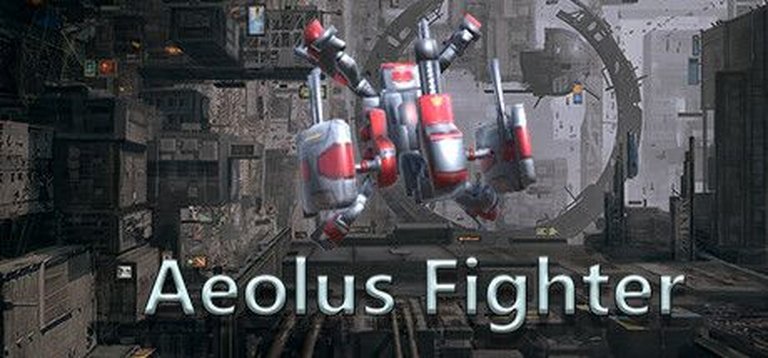
Description
Aeolus Fighter is a top-down, 2D vertical scrolling shooter where players pilot a fighter jet through challenging aerial combat. By destroying enemy planes, players collect diamonds to upgrade their aircraft’s weapons, shields, and special attacks at supply stations, while earning experience to enhance main and secondary guns, culminating in a powerful ‘blood state’ upon reaching maximum level.
Aeolus Fighter: An Underappreciated Artifact of the Indie Shoot-‘Em-Up Revival
Introduction: A Ghost in the Machine
In the sprawling, digitized archives of video game history, certain titles exist as spectral presences—games with minimal critical footprint, sparse player discourse, and biographical data reduced to a few database fields. Aeolus Fighter (2022), developed and published by the enigmatic XF Game, is precisely such a phantom. It arrived not with a roar, but with the quiet digital thud of a new entry on a store page, a vertical-scrolling shoot-’em-up (shmup) built in Unity and released into an ecosystem dominated by retro revivals and genre experiments. This review posits that Aeolus Fighter’s true significance lies not in its execution, but in its perfect encapsulation of a specific, low-friction moment in indie game development: the 2020s-era, asset-store-aided creation of a by-the-numbers genre exercise. It is a game that speaks eloquently about the technological accessibility and market conditions of its time, even as it offers little in the way of innovative design or memorable artistry. By dissecting its available components—its mechanics, its context, its reception—we uncover a case study in functional, anonymous game creation.
Development History & Context: The One-(wo)man Army in the Unity Ecosystem
No dev diaries, no post-mortems, no interviews with “XF Game” exist in the public record. The developer is a ghost, a single entity listed on MobyGames with no credited personnel. This immediately frames Aeolus Fighter within the contemporary paradigm of the micro-studio or solo developer, empowered by engines like Unity and marketplaces like the Unity Asset Store. Released on December 16, 2022, for Windows, its development timeline was likely measured in months, not years.
The technological constraints were self-imposed and budget-driven. The choice of Unity—a now-standard tool for indie 2D games—provided a cross-platform foundation but also likely meant reliance on pre-built shaders, particle systems, and possibly even sprite packs or code assets for core shooter mechanics (enemy spawning, bullet patterns, scrolling backgrounds). The game’s specs (requiring a GTX 960 and 2GB RAM) are trivial by modern standards, suggesting it was optimized for accessibility over spectacle.
Contextually, Aeolus Fighter emerged into a crowded indie shmup scene. The late 2010s and early 2020s saw a vibrant revival of the genre from small teams: games like Macho Attack: The Revenge of the Ex-Wife (2021), Super XYX (2021), and Dordogne (2023, though different in style) demonstrated a willingness to experiment with aesthetics and mechanics. Aeolus Fighter, however, shows no such ambition. Its description reads like a checklist of genre staples: vertical scrolling, top-down perspective, a protagonist fighter, diamond-collection for upgrades. It is a game built from the genre’s DNA without apparent desire to recombine its genes in novel ways. Its most telling contextual detail is the rapid release of a sequel, Aeolus Fighter 2, in 2023. This suggests a business model focused on low-cost, rapid iteration rather than singular artistic vision—a “minimum viable product” approach to a classic genre.
Narrative & Thematic Deep Dive: The Architecture of Absence
- Aeolus Fighter provides no explicit narrative framework. The Steam description states only: “The player controls the protagonist fighter to fight the enemy in the air.” There are no named characters, no cutscenes, no textual lore, and no identifiable antagonists beyond generic “enemy planes.” This is narrative minimalism as a default state, not a stylistic choice.
However, the game’s mechanics imply a faint thematic skeleton. The two core progression systems—diamonds for shop upgrades and experience points for weapon leveling—speak to a loop of accumulation and empowerment. The final, capstone mechanic is most intriguing: “After the level reaches the maximum, the protagonist fighter will enter the state of blood.” The term “blood” is loaded. In game design parlance, it likely denotes a temporary “last stand” or “berserk” state—a moment of heightened power or vulnerability upon reaching max level. Its name evokes sacrifice, desperation, and violence. One could thematically read this as the pilot’s ultimate communion with their machine, a fusion of human and steel where the lines blur (“blood” for the aircraft). Alternatively, it may simply be a poorly translated term for a “overheat” or “critical” state. The absence of context grants it a speculative weight it almost certainly doesn’t earn, but it remains the game’s only narrative hook—a cryptic, final-state condition that hints at a climax without a story.
Ultimately, the narrative is the void the player fills with their own reflexes. It is a pure gameplay loop, a sandbox of aerial combat where the “why” is irrelevant to the “how.” In this, it is deeply traditional, echoing the arcade roots of the genre where story was conveyed through attract mode graphics and a simple premise: You are a ship. Shoot everything.
Gameplay Mechanics & Systems: The Upgrade Ladder as Core Loop
- Aeolus Fighter’s architecture is built around a dual-progression system, a common but effective structure in modernized shmups.
-
The Diamond Economy: Destroying enemies yields diamonds, the universal currency. These are spent at a “supply station,” presumably a pause menu or on-screen icon, for permanent, match-long upgrades. The listed categories are genre-standard: increased bullet count and power (spread shot upgrades), lasers (a focused, piercing beam), protective shields (a one-hit buffer), and “large-scale attack weapons” (likely screen-clearing bombs or a special attack). This system creates a meta-game of resource management across a single run. Do you hoard diamonds for a powerful shield, or immediately upgrade your main gun for consistent damage? The tension is between survivability and offensive output.
-
The Experience Ladder: Concurrently, damaging enemies grants experience. This fills a separate meter. Upon completion, the fighter’s “main gun and secondary gun” upgrade. This is a tiered, automatic power increase that guarantees growth over time, regardless of diamond spending. The key differentiator is the final state: once the maximum level is reached via XP, the “blood” state activates. This is the game’s definitive climax mechanic—a late-game transformation that presumably changes the player’s capabilities dramatically, offering a powerful finale or a frantic last stand before inevitable death. It creates a clear power curve: early-game vulnerability, mid-game optimization via diamonds, and a late-game “final form” climax.
-
Control & Interface: The game supports keyboard, keyboard+mouse, and joystick—a necessary triad for PC shmups, covering keyboard purists, mouse-users seeking precision, and joystick enthusiasts. The “direct control” interface tag suggests a 1:1 movement model (ship moves where you point/steer), common in top-down shooters, as opposed to the tank-like controls of some classics.
Innovation & Flaws: There is no innovation here. The systems are competent, well-understood implementations of 1990s arcade design principles filtered through an indie 2020s lens. The potential flaw lies in the balance between the two progression systems. If the XP upgrades are too generous, the diamond economy becomes irrelevant. If diamonds are essential for survival, the game may become a grind. The “blood” state is the only unique hook, but its implementation—its visual effect, its mechanical benefit or cost, its duration—is entirely unknown from the sources, leaving its quality to pure speculation. The game’s reliance on these two parallel tracks feels both comfortably familiar and creatively inert.
World-Building, Art & Sound: The Aesthetic of the Generic
With zero screenshots, videos, or developer commentary to analyze, this section must be an exercise in deduction from genre conventions and technical constraints.
-
Visual Direction & Setting: The game is a “2D scrolling” “vertical” shooter with a “top-down” perspective. This defines its world: a sky (or space) arena viewed from above, with the player’s ship at the bottom, moving upward into the screen. Backgrounds will likely be simple, scrolling layers—perhaps a sky gradient with clouds, or a starfield, or generic industrial or alien landscapes. Given the Unity engine and indie budget, the art is almost certainly sprite-based. The quality could range from modestly detailed pixel art to cleaner, higher-resolution vector-style sprites. The lack of any distinctive visual descriptor (“retro,” “neon,” “pixel-perfect”) in the sources suggests a deliberate, generic aesthetic—a “blue sky with some clouds” approach that avoids committing to a strong visual identity. The enemy “planes” are not described; they are likely variations on simple jet silhouettes or geometric shapes, a cost-effective design choice.
-
Sound Design: Complete silence from the sources. By genre standard, a functional shmup requires: a catchy, looping background track (likely chiptune or synthesized electronic);清脆的射击音效 (crisp shooting sounds); explosion effects; and a distinct audio cue for power-ups or the “blood” state activation. An indie Unity project would probably utilize royalty-free music packs or simple sequenced tracks. The sound design’s goal would be clarity over character: the player must audibly distinguish their weapon fire from enemy fire and explosions.
The combined effect is one of atmospheric neutrality. Aeolus Fighter presents a world without a tone, a sky without a weather system. It is a pure mechanical arena, where the “world” is merely the space in which numbers (diamonds, XP) and shapes (bullets, ships) interact. This is not an artistic failing per se, but a deliberate (or budgetary) omission that prioritizes clean gameplay readability over immersive world-building.
Reception & Legacy: The Data Point of Obscurity
- Aeolus Fighter exists in a state of near-total critical and commercial obscurity.
- Critical Reception: There are zero critic reviews aggregated on Metacritic or MobyGames. It was not reviewed by any known professional outlets. This is a stark indicator of its profile; it was not on press lists, not sent to reviewers, and not considered newsworthy.
- Player Reception: Data is sparse but telling. As aggregated by Steambase, it holds a Player Score of 67/100 from 3 user reviews on Steam (2 positive, 1 negative). This is a mediocre score from an extremely small sample. The Grouvee and RAWG entries show 0 users playing, wishing, or owning it in their tracked communities. It is, for all intents and purposes, a statistically invisible game.
- Commercial & Market Performance: Its Steam price is listed at $3.99 (down from $4.99), a classic budget pricing point for a short, niche indie game. The fact that a sequel, Aeolus Fighter 2, appeared in 2023 suggests the first title likely recouped its minimal development costs and showed enough (likely very modest) traction to justify a follow-up. This points to a low-expectation, sustainable business model rather than a breakout hit.
Legacy & Influence: Aeolus Fighter has no discernible influence on the industry or the genre. It did not revive interest in vertical shooters, inspire clones, or win awards. Its legacy is as a data point and a template. It demonstrates the ease with which a competent, unoriginal genre game can be produced and released on Steam in the 2020s. It is a footnote in the story of the indie shmup revival, representing the vast majority of titles in any resurgence: the competent, the anonymous, the consumed by a handful of players and then forgotten. Its primary historical value is as evidence of the market’s capacity to support even the most generic iterations of beloved genres.
Conclusion: The Merit of the Mediocre
Aeolus Fighter is not a bad game. By all available indications, it is a functional game. Its systems are understood, its controls are accommodated, and its progression offers a clear, if derivative, power curve. It achieves its apparent goal: to deliver a brief session of vertical-scrolling shooting with upgrade hooks.
Yet, it is also a profoundly unremarkable artifact. It possesses no distinguishing aesthetic, no innovative mechanic, no memorable moments, and no community to speak of. It is the gaming equivalent of a perfectly average episode of a long-running television series—competent, consumable, and instantly forgettable. In the grand tapestry of video game history, Aeolus Fighter is a single, faint thread, indistinguishable from hundreds of others.
Its final verdict is one of historical specificity. Its place is not among the classics, nor among the infamously broken. It resides in a crucial, overlooked middle: the vast catalog of games that prove the barriers to entry have never been lower, and that the shmup genre, for better or worse, can be reduced to a spreadsheet of upgrades and a scrolling background. To study Aeolus Fighter is to study the baseline—the minimum threshold of what constitutes a “shoot-’em-up” in the modern indie landscape. It is a baseline met, and nothing more.