
- Release Year: 2017
- Platforms: Linux, Macintosh, PlayStation 4, Windows, Xbox One
- Publisher: Soedesco B.V.
- Developer: Triangle Studios B.V.
- Genre: Role-playing, RPG
- Perspective: Diagonal-down
- Game Mode: Co-op, Single-player
- Gameplay: Action, Puzzle elements, RPG
- Setting: Fantasy
- Average Score: 50/100
Description
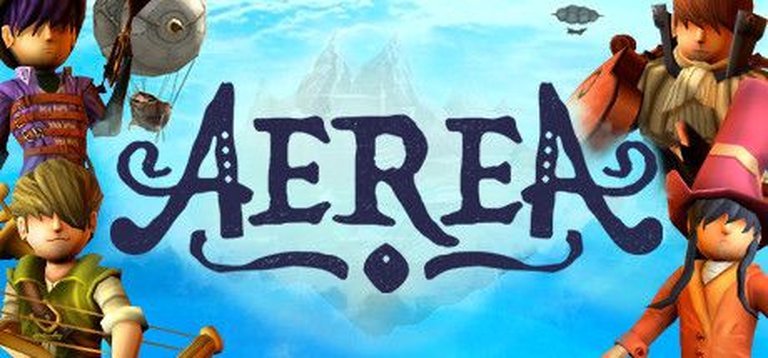
AereA is a fantasy action RPG set on the floating island of Aezir, where players embark on a quest to recover the Great Instruments of Legend. Combining cooperative gameplay with puzzle-solving, the game features a unique twist of using musical instruments as weapons. Despite its charming visuals and orchestral soundtrack, critics noted simplistic combat and repetitive quests, though its whimsical theme appeals to casual and family audiences.
Gameplay Videos
Where to Buy AereA
PC
AereA Cracks & Fixes
AereA Patches & Updates
AereA Guides & Walkthroughs
AereA Reviews & Reception
metacritic.com (46/100): The final product is a reskin of a paint-by-the-numbers dungeon crawler that is devoid of motivation, originality, or replayability.
opencritic.com (52/100): AereA is not the best option if we are looking for a strong RPG experience. It is instead a boring experience that saddly shows great intentions but fails offering an extremely repetitive mechanics.
middleofnowheregaming.com (53/100): AereA is a mediocre experience that tries to blend a new idea with a rehashing of old ideas.
AereA: A Discordant Symphony in the Action RPG Genre
Introduction
In the vast orchestra of action RPGs, AereA (2017) strikes a quirky note as a music-themed dungeon crawler that promised harmony but delivered cacophony. Developed by Dutch studio Triangle Studios and published by Soedesco, AereA invites players into the shattered world of Aezir, where nine primordial instruments must be reclaimed to restore cosmic balance. Despite its melodic premise and vibrant art, the game languished in obscurity, criticized for shallow mechanics, repetitive design, and technical missteps. This review dissects AereA’s ambitions and stumbles, evaluating its place in gaming history as a well-intentioned but flawed experiment in thematic cohesion.
Development History & Context
Triangle Studios, a small Dutch developer, envisioned AereA as a family-friendly fusion of Diablo-inspired action RPGs and symphonic storytelling. Built on Unity Engine, the game targeted multiplatform release (PC, PlayStation 4, Xbox One, Linux, Mac) amid a crowded 2017 landscape dominated by titans like NieR: Automata and Prey. Unlike its contemporaries, AereA leaned into accessibility, emphasizing couch co-op and a whimsical aesthetic. However, budget constraints and limited scope hampered its technical polish. Reviews noted Unity’s limitations in rendering complex environments, contributing to performance hiccups and an art style that, while charming, felt dated against 2017’s photorealistic standards.
At release, the indie RPG scene was flourishing, but AereA’s lack of marketing and muted critical buzz relegated it to bargain bins. Its thematic hook—music as both narrative and mechanic—echoed Brütal Legend’s heavy-metal bravado but lacked comparable depth, leaving it overshadowed by genre staples.
Narrative & Thematic Deep Dive
AereA’s story orbits Great Maestro Guido, whose disciples—Wolff (harp archer), Jacques (cello knight), Jules (lute mage), and Claude (trumpet gunner)—venture across Aezir’s fragmented islands to recover instruments stolen by the sorcerer Demetrio. The premise, though ripe for allegory, squanders its potential. Demetrio is a cardboard antagonist, his motives reduced to clichéd megalomania, while dialogue oscillates between wooden exposition and forgettable banter.
Thematically, music is relegated to set dressing: characters wield instruments as weapons (e.g., a harp fires arrows, a cello doubles as a shield), and bosses fuse fauna with instruments (a cobra with an accordion torso, a mammoth with drum limbs). Yet these ideas feel superficial. The narrative rarely explores music’s emotional or cultural weight, settling for aesthetic nods. In one standout moment, brainwashed disciple Eleanor becomes a mirror boss wielding a violin that drains health through dissonant melodies—a fleeting glimpse of the deeper interplay between sound and conflict the game might have achieved.
Gameplay Mechanics & Systems
AereA’s gameplay loops echo Gauntlet and Diablo, with isometric combat, loot collection, and co-op camaraderie. Players select a class, spam light/heavy attacks, and grind through enemy hordes across nine biomes (desert ruins, lava caves, icy peaks). Sadly, the systems crumble under scrutiny:
- Combat & Progression: Enemies pose negligible threat, dying in 1–2 hits even on higher difficulties. The RPG-lite progression—unlocking skills via “Music Sheets” and upgrading stats—offers no meaningful depth. By mid-game, characters become overpowered, trivializing bosses like the Lyre Scorpion or Bagpipe Cicada. Potions and currency feel superfluous, as challenges rarely demand strategic item use.
- Puzzles & Exploration: Levels are labyrinthine but barren, padded with copy-pasted “switch puzzles” and tedious fetch quests. The absence of a full map exacerbates frustration, forcing players to retrace steps through identical corridors. One DarkStation reviewer noted spending “20 minutes lost in a sewer” due to poor signposting.
- Co-op & Technical Flaws: Local co-op supports up to four players, but technical issues sour the experience. Characters clip through geometry, AI pathfinding falters, and a notorious bug locks players in combat stance post-menu. The 2017 Steam demo drew ire for save-file corruption, requiring patches to stabilize.
World-Building, Art & Sound
AereA’s sole triumph is its whimsical art direction. Hand-drawn environments burst with color: neon fungi glow in swamps, gilded concert halls evoke Baroque opulence, and snow-kissed temples shimmer under faux-celestial light. Boss designs—like the Drum Mammoth, whose footsteps resonate with timpani booms—lean into creative absurdity, marrying zoology and instrumentation with childlike glee.
The orchestral score, composed by Deon van Heerden, channels Legend of Zelda-esque grandeur but suffers from repetition. Tracks loop incessantly across biomes, diluting their impact. Sound design falters further with generic weapon SFX (harp plinks, cello thuds) that lack auditory weight, undermining the music-centric fantasy.
Reception & Legacy
Upon release, AereA garnered tepid reviews (50% Metacritic, 46/100 PS4). Critics lauded its visual charm and co-op accessibility but skewered its repetitive combat, braindead AI, and technical jank. GameSpot called it “a reskin of paint-by-numbers dungeon crawlers,” while PC Aficionado dismissed it as “boring and drab.” Commercial performance mirrored this apathy; UK sales trailed Mario Kart 8 Deluxe, and Steam charts placed it among forgotten mid-tier indies.
Its legacy is a cautionary tale. While praised as a gateway RPG for children (thanks to forgiving difficulty and couch co-op), AereA’s innovations—musical weaponry, instrument-based enemies—went unexplored in later titles. The 2018 Mooncrash expansion for Prey (2017) demonstrated how roguelike mechanics could revitalize stale formulas, but AereA faded without post-launch support.
Conclusion
AereA is a discordant composition—a game with a soaring thematic concept grounded by uneven execution. Its art and boss designs radiate charm, and the co-op framework hints at familial fun, but these are drowned out by monotonous combat, half-baked progression, and technical shortcomings. For historians, AereA exemplifies the risks of style-over-substance design in an era where indie gems like Hollow Knight redefined expectations. As a footnote in RPG history, it serves not as a masterpiece but as a missed crescendo—a reminder that even the most melodic ideas need rigorous tuning to resonate.
Verdict: A quaint, flawed diversion for co-op enthusiasts or completionists hunting bargain-bin curios. For most, however, AereA remains an off-key entry in the action RPG canon.