
- Release Year: 2017
- Platforms: Windows
- Publisher: Corrosive Studios LLC
- Developer: Corrosive Studios LLC
- Genre: Action
- Perspective: 1st-person
- Game Mode: Single-player
- Gameplay: RPG elements, Shooter, Survival horror
- Setting: Europe
- Average Score: 52/100
Description
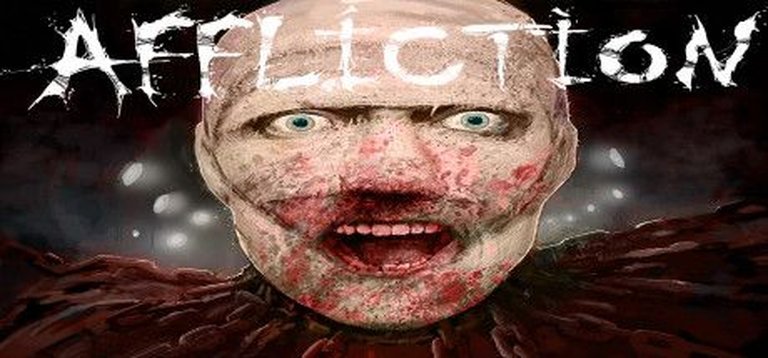
Affliction is a survival horror game set in the fictional Eastern European country of Ghulovka, where players assume the role of Vasya, a patient with fractured memories who awakens in a sinister research facility conducting grim human experiments. As Vasya fights for survival amidst a hellish catastrophe, they must uncover the truth behind their identity and the facility’s horrific purpose, which involves a dangerous chemical weapon called Morana. The game blends action, survival horror, and adventure elements, featuring open exploration, intense combat, and a chilling atmosphere across diverse locations like a derelict research facility, a dark wilderness, and a desolate city.
Where to Buy Affliction
PC
Affliction Cracks & Fixes
Affliction Guides & Walkthroughs
Affliction Reviews & Reception
steambase.io (52/100): Affliction has earned a Player Score of 52 / 100.
niklasnotes.com : The reviews for ‘Affliction’ reveal a polarized sentiment among players, with significant criticism directed at long loading times, bugs, and graphics quality.
Affliction: A Flawed but Fascinating Descent into Psychological Horror
Introduction: A Game Lost in the Shadows
Affliction (2017) is one of those games that slips through the cracks of gaming history—a title that, despite its ambitions, never quite found its audience. Developed by the lone wolf at Corrosive Studios LLC, this first-person survival horror shooter is a curious amalgamation of S.T.A.L.K.E.R.’s bleak atmosphere, Metro’s claustrophobic tension, and Resident Evil’s grotesque body horror. Set in the fictional Eastern European nation of Ghulovka, the game casts players as Vasya, an amnesiac test subject trapped in the Triglav Complex, a derelict Cold War-era research facility where a catastrophic chemical weapon, Morana, has unleashed unspeakable horrors.
At its core, Affliction is a game of survival, exploration, and psychological unraveling, blending shooter mechanics with light RPG elements and a heavy emphasis on narrative-driven horror. Yet, despite its lofty inspirations and a clearly passionate solo developer behind it, the game struggles under the weight of technical limitations, janky mechanics, and a lack of polish—factors that have relegated it to the bargain bins of Steam, where it currently lingers at a mere $0.49.
This review seeks to dissect Affliction in its entirety—not just as a game, but as a cultural artifact of indie horror in the late 2010s. We’ll explore its development history, narrative depth, gameplay systems, artistic direction, and legacy, ultimately asking: Is *Affliction a hidden gem, or a cautionary tale of overambition?*
Development History & Context: The Lone Developer’s Vision
The Birth of Corrosive Studios
Affliction is the brainchild of Corrosive Studios LLC, a micro-studio that, by all accounts, consists of a single developer. This is a crucial detail—Affliction is not just an indie game; it’s a one-person passion project, a fact that colors every aspect of its design, from its ambitious scope to its technical rough edges.
The game was Greenlit on Steam in 2017, a time when the platform was still relatively open to smaller, unproven titles. It was marketed as a “community-driven” experience, with the developer actively seeking feedback during its early access phase. This approach is evident in the game’s Steam page, which proudly declares:
“This game was created based on what the community requested and asked for. What you see in the game is what the community decided on.”
This claim, however, is somewhat misleading. While the developer did engage with players, Affliction was ultimately shaped by one person’s vision, for better or worse.
Inspirations & the Gaming Landscape of 2017
Affliction wears its influences on its sleeve. The Steam description explicitly name-drops a laundry list of inspirations, including:
- S.T.A.L.K.E.R.: Shadow of Chernobyl (bleak Eastern European setting, survival mechanics)
- Metro 2033 (claustrophobic tunnels, post-apocalyptic dread)
- Silent Hill (psychological horror, surreal environments)
- Half-Life (first-person immersion, environmental storytelling)
- Dead Space (body horror, strategic dismemberment)
- Borderlands (cell-shaded visuals, though Affliction’s are far less polished)
- Resident Evil (survival horror, resource management)
This was a crowded field in 2017. The survival horror genre was experiencing a renaissance, with titles like Resident Evil 7 (2017) and Outlast 2 (2017) pushing the boundaries of immersive terror. Meanwhile, Eastern European horror was having a moment, thanks to games like The Vanishing of Ethan Carter (2014) and the Metro series.
Affliction attempted to carve out its own niche by blending Cold War paranoia, chemical warfare, and Lovecraftian body horror—a compelling premise, but one that struggled to stand out in an oversaturated market.
Technological Constraints & the Solo Developer’s Struggle
The biggest limitation facing Affliction was its engine and scope. Built using what appears to be a modified version of the Source engine (or a similar indie-friendly tool), the game suffers from:
- Long, unstable load times (a common complaint in reviews)
- Clunky physics and collision detection
- Outdated visuals, even by 2017 standards
- Frequent bugs and crashes
These issues are symptomatic of a solo developer stretching beyond their technical means. While the game’s ambition is admirable, the execution often feels unfinished, as if Affliction was released before it was truly ready.
Narrative & Thematic Deep Dive: A Story of Memory, Madness, and Morana
Plot Summary: Awakening in Hell
Affliction opens with Vasya, the protagonist, waking up in a filthy cell within the Triglav Complex, a former Soviet research facility repurposed for black-market chemical weapons testing. From the outset, the game establishes a sense of disorientation—Vasya has no memory of how he got there, and the facility is in chaos, overrun by mutants, rogue soldiers, and anarchist rebels.
The central mystery revolves around Morana, a bio-chemical weapon that has leaked containment, transforming the complex into a living nightmare. As Vasya explores, he uncovers fragments of his past, suggesting he may have been involved in the weapon’s development—or perhaps was a test subject himself.
The narrative unfolds through:
- Environmental storytelling (notes, audio logs, graffiti)
- Surreal dream sequences (hinting at Vasya’s fractured psyche)
- Encounters with NPCs (some hostile, some desperate for help)
Themes: The Horrors of War, Science, and the Self
Affliction is, at its core, a meditation on the cost of human experimentation. Its themes include:
-
The Legacy of the Cold War
- The Triglav Complex is a relic of Soviet-era militarism, a place where science was weaponized without regard for ethics.
- The game’s setting—Eastern Europe in civil war—evokes real-world conflicts like Yugoslavia’s dissolution, where abandoned military sites became breeding grounds for horror.
-
The Fragility of Memory & Identity
- Vasya’s amnesia is not just a plot device—it’s a metaphor for the erasure of history.
- The more he uncovers, the more he questions his own complicity in the atrocities committed at Triglav.
-
Body Horror & Transformation
- The Morana chemical doesn’t just kill—it twists, creating grotesque mutants that are as tragic as they are terrifying.
- This reflects classic Lovecraftian and Cronenbergian themes, where the human form is violated by science.
-
The Cycle of Violence
- The game’s factions—military death squads, anarchists, and mutants—are all victims and perpetrators of the same system.
- There are no true heroes, only survivors.
Characters & Dialogue: A Mixed Bag
Affliction’s characters are hit-or-miss.
- Vasya is a silent protagonist, which works in a horror context but limits emotional depth.
- NPCs range from compellingly desperate (a scientist begging for help) to wooden and exposition-heavy (a rebel leader spouting clichés).
- Voice acting is inconsistent—some lines are delivered with genuine dread, while others feel amateurish.
The writing leans heavily on lore, with dozens of collectible notes fleshing out the world. However, the dialogue itself is often clunky, lacking the subtlety of Silent Hill or the grit of Metro.
The Ending(s): Ambiguity or Incoherence?
Without spoiling too much, Affliction offers multiple endings, though they are vague and open to interpretation. Some players report sudden, abrupt conclusions, while others describe a more layered, psychological reveal.
The ambiguity is intentional, but the execution is uneven. A stronger narrative throughline could have elevated Affliction from “interesting but messy” to “haunting and unforgettable.”
Gameplay Mechanics & Systems: Survival Horror with Shooter DNA
Core Gameplay Loop: Explore, Scavenge, Fight, Survive
Affliction bills itself as a blend of FPS, survival horror, and adventure elements. The gameplay loop revolves around:
-
Exploration
- The game features over 30 maps, including research labs, forests, and ruined cities.
- No hand-holding—players must navigate without a minimap, relying on environmental cues.
-
Scavenging & Resource Management
- Ammo, medkits, and plot items are limited, encouraging strategic play.
- Inventory management is basic but functional, though some players report clunky controls.
-
Combat: A Flawed but Functional System
- 11 unique weapons, ranging from pistols to shotguns to experimental energy guns.
- Enemy variety includes:
- Military death squads (tactical, armed)
- Mutants (fast, melee-focused)
- Anarchists (unpredictable, using guerrilla tactics)
- Combat is challenging but janky—hit detection can be unreliable, and enemy AI is inconsistent.
-
Stealth & Survival Elements
- Some sections encourage stealth, though the mechanics are rudimentary.
- No regenerating health—players must scavenge medkits or use limited healing items.
Progression & RPG Elements
Affliction includes light RPG mechanics, though they are minimal:
- No traditional leveling system—progression is gear-based.
- Weapons can be upgraded (e.g., adding scopes or extended mags).
- No skill trees—character growth is linear.
This lack of depth makes Affliction feel more like a linear shooter than a true survival RPG.
UI & Controls: A Product of Its Time (and Budget)
The user interface is functional but dated:
- Inventory management is clunky, with no quick-swap wheel.
- Menus are slow, exacerbating the long load times.
- Controls are keyboard/mouse-only, with no controller support at launch (though later patches may have added it).
Innovations & Flaws
What Affliction Does Well:
✅ Atmospheric world-building—the Triglav Complex feels oppressive and lived-in.
✅ Variety in enemy design—mutants are creepy and distinct.
✅ A sense of isolation—the game doesn’t hold your hand, which can be rewarding for patient players.
Where Affliction Stumbles:
❌ Technical issues—bugs, crashes, and long loads break immersion.
❌ Clunky combat—hit detection and AI are inconsistent.
❌ Lack of polish—voice acting, animations, and UI feel unfinished.
❌ Pacing problems—some sections drag, while others end abruptly.
World-Building, Art & Sound: A Nightmare You Can Hear (But Not Always See)
Setting & Atmosphere: The Triglav Complex as a Character
The Triglav Complex is Affliction’s greatest strength. Inspired by real Cold War bunkers, the facility is a labyrinth of rusted metal, flickering lights, and biological horrors. The game’s Eastern European setting is rich with lore, from Soviet propaganda posters to abandoned experiment logs.
Key locations include:
– The Research Labs (sterile, clinical horror)
– The Wilderness (dark forests, eerie silence)
– The Ruined City (a ghost town, hinting at a larger conflict)
The atmosphere is oppressive, with a constant sense of dread. However, the visual execution is inconsistent—some areas look appropriately grimy, while others feel dated and low-budget.
Art Direction: Cell-Shaded Horror
Affliction uses a cell-shaded graphical overlay, giving it a comic-book aesthetic. This was likely a stylistic choice to mask technical limitations, but the result is mixed:
✅ Some environments benefit from the stylized look, enhancing the surreal horror.
❌ Character models and animations often look stiff and unrealistic.
❌ Lighting is inconsistent—some areas are too dark, while others lack proper shadows.
Sound Design & Music: The Game’s Unsung Hero
Where Affliction truly shines is in its audio design.
- Ambient sounds—dripping water, distant screams, mechanical hums—create an unsettling atmosphere.
- The original soundtrack, composed by Christopher McDonough & Steven Wilcer, is haunting and atmospheric, blending industrial drones with eerie melodies.
- Voice acting, while uneven, has moments of genuine terror (e.g., a scientist’s panicked last words).
The sound design carries much of the horror, compensating for the visual shortcomings.
Reception & Legacy: A Game That Slipped Through the Cracks
Critical & Commercial Reception: Mixed at Best
Affliction launched on October 25, 2017, to little fanfare. On Steam, it holds a “Mixed” rating, with 49% positive reviews out of 97 total.
Common Praise:
– “Great atmosphere and story” (players who enjoyed the lore)
– “Scary and immersive” (those who appreciated the horror elements)
– “A hidden gem for fans of S.T.A.L.K.E.R. and Metro“ (niche audience)
Common Criticisms:
– “Buggy and unoptimized” (technical issues plagued many players)
– “Clunky controls and combat” (janky mechanics frustrated others)
– “Feels unfinished” (lack of polish was a recurring complaint)
The game never gained traction outside of a small, dedicated fanbase. Its $0.49 price tag today reflects its lack of commercial success.
Legacy: A Cautionary Tale or a Cult Classic?
Affliction is not a game that redefined the genre, but it is a fascinating case study in:
✔ Solo development ambitions—what one person can achieve (and where they fall short).
✔ The challenges of indie horror—competing in a market dominated by AAA and polished indie darlings.
✔ The power of atmosphere over mechanics—how sound and setting can carry a game, even when gameplay falters.
It has not spawned sequels or imitators, but it remains a curiosity—a game that could have been great with more time, resources, and polish.
Conclusion: A Flawed but Fascinating Horror Experience
Affliction is not a masterpiece, but it is far from worthless. It is a game of contradictions:
- Ambitious in scope, but limited in execution.
- Rich in atmosphere, but rough in mechanics.
- Haunting in its storytelling, but clumsy in its delivery.
Final Verdict:
⭐⭐⭐☆☆ (3/5) – A flawed diamond in the rough.
Who Should Play It?
– Fans of S.T.A.L.K.E.R. and Metro who crave Eastern European horror.
– Patients players who can overlook jank for atmosphere and lore.
– Indie horror enthusiasts who appreciate ambition over polish.
Who Should Avoid It?
– Players who demand tight gameplay—Affliction’s combat and controls are clunky.
– Those who hate bugs—this game has them in spades.
– Casual gamers—the lack of hand-holding and punishing difficulty may frustrate.
Final Thoughts: The Tragedy of Affliction
Affliction is a game that deserved better—better funding, better optimization, better luck. It is a testament to what a single developer can dream up, even if they lack the means to fully realize it.
In the pantheon of survival horror, it will never sit beside Resident Evil or Silent Hill. But in the shadows of indie gaming, it carves out a small, eerie niche—a nightmare you might stumble upon in a Steam sale, and one that, for all its flaws, lingers in the mind long after the credits roll.
For $0.49, it’s worth a look. Just don’t expect perfection. Expect a flawed, fascinating descent into madness.
Would you dare to explore the Triglav Complex? Or is Affliction best left forgotten? The choice, as always, is yours.