
- Release Year: 2011
- Platforms: PlayStation 3, Windows, Xbox 360
- Publisher: Home Entertainment Suppliers Pty. Ltd., Tru Blu Entertainment Pty Ltd
- Developer: Big Ant Studios Pty Ltd
- Genre: Sports
- Perspective: 3rd-person (Other)
- Game Mode: Online PVP, Single-player
- Setting: Australia
- Average Score: 68/100
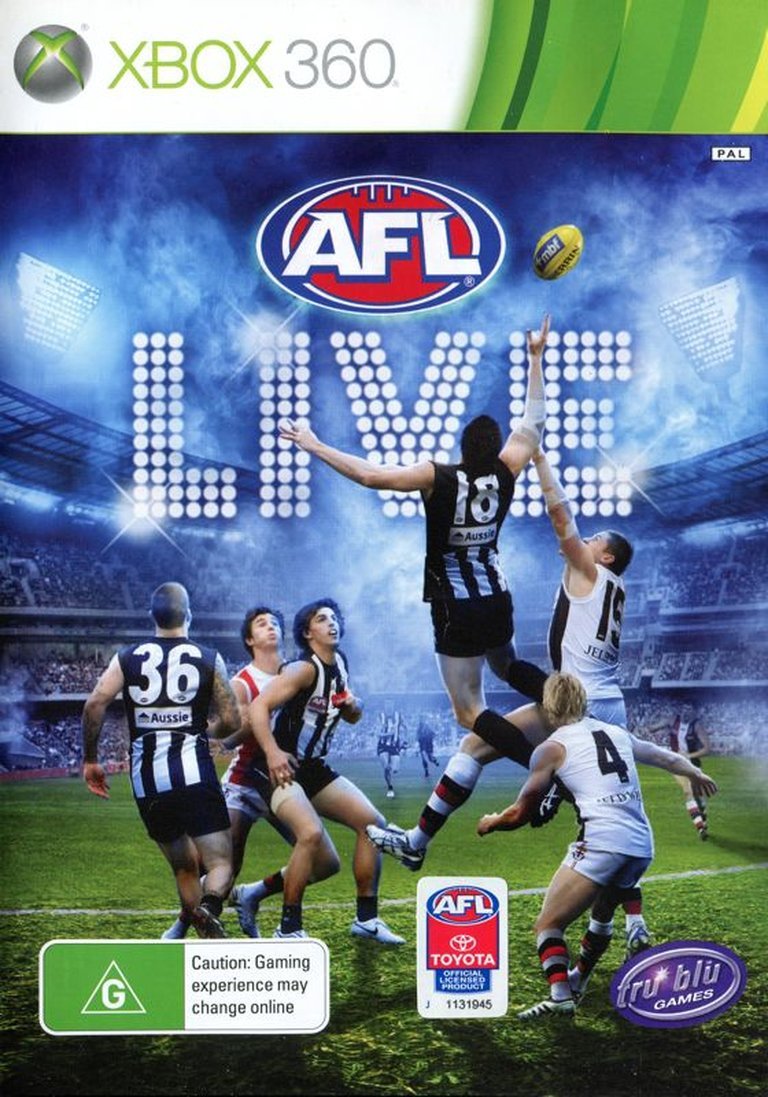
Description
AFL Live is a licensed sports simulation game developed by Big Ant Studios, immersing players in the high-octane world of Australian Rules Football (AFL) across Xbox 360, PlayStation 3, and Windows platforms. Set in contemporary Australia, it features 3rd-person perspective gameplay with direct control mechanics, allowing fans to relive the intensity of AFL matches, though it was noted for solid foundations marred by limited content and a steep learning curve.
Gameplay Videos
AFL Live Free Download
AFL Live Patches & Updates
AFL Live Mods
AFL Live Reviews & Reception
ign.com : solid foundation of gameplay here, and it’s almost certainly the best AFL experience we’ve had in a video game so far. However, AFL Live is still too hit-and-miss to be recommended on gameplay alone.
gamesreviews2010.com (80/100): AFL Live 2011 is the most realistic and immersive AFL experience to date.
gamespot.com (65/100): AFL Live offers up a fun game of Aussie Rules that gets the basics right but little else.
impulsegamer.com (60/100): easily the best AFL game to date, certain elements, especially in terms of graphics and some gameplay leave a lot to be desired.
AFL Live: Review
Introduction
Imagine the roar of 100,000 fans at the MCG on Grand Final day, the oval ball slicing through the air like a torpedo pass, and bone-crunching tackles echoing across the oval—AFL Live (2011) promised to bottle that uniquely Australian chaos for the first time on next-gen consoles. After a four-year drought since the last multi-platform AFL title (AFL Premiership 2007), fans starved for a worthy digital footy fix turned to Big Ant Studios’ ambitious entry. As the spiritual successor to a lineage of often mediocre sims stretching back to Australian Rules Football (1989), AFL Live marked a pivotal revival, delivering the most authentic recreation of Australian Rules Football yet. My thesis: While groundbreaking in its core simulation and multiplayer promise, AFL Live stumbles on content depth, polish, and accessibility, cementing its status as a flawed pioneer that lit the fuse for the modern AFL series.
Development History & Context
Big Ant Studios, a Melbourne-based outfit founded in 2001, spearheaded AFL Live under CEO Ross Symons, with key leads like Development Director Michael Merren (51 prior credits), Lead Programmer Tomas Lundell, Lead Designer Andrew Symons, and Art Director Adam Briggs. This 129-person team (98 developers, 31 thanks) built from scratch using Sony’s PhyreEngine, prioritizing fluid AFL mechanics over flashy visuals amid tight budgets typical of niche Australian sports titles. Publisher Tru Blu Entertainment (also handling Rugby League Live) secured full AFL licensing, including all 17 teams, 12 stadiums from the 2011 season (e.g., MCG, Etihad, The Gabba), and commentators Dennis Cometti and Brian Taylor.
Development spanned years, delayed from 2010 to April 21, 2011 (PS3/Xbox 360), with PC in 2012, partly due to Gold Coast Suns roster uncertainties. Big Ant’s vision, gleaned from forums like BigFooty, emphasized realism: no head-high bumps, manual/automatic bouncing, ruck contests sans meters, and off-ball play (shepherding, smothering). Technological constraints of the era—seventh-gen consoles’ limits on player models (every player photographed/modeled), dynamic weather, and 4v4 online (Xbox Live/PSN/GFWL)—forced trade-offs. No career mode emerged, as focus stayed on core loops.
The 2011 landscape pitted it against giants like FIFA 11 and Madden NFL 11, but AFL’s regional appeal (Australia-exclusive) meant modest expectations. Big Ant drew from prior flops by IR Gurus (e.g., clunky AFL Live 2004), aiming for free-flowing play amid handball-heavy modern AFL evolution. A Game of the Year Edition (2012) added 2012 rosters, Skoda Stadium, and GWS Giants, showing post-launch commitment.
Narrative & Thematic Deep Dive
As a pure sports sim, AFL Live eschews traditional plots for emergent narratives woven through AFL’s cultural tapestry. Modes like Toyota AFL Premiership Season and NAB Cup recreate the real 2011 calendar—22 home-and-away rounds, finals knockouts—building tension toward premiership glory. Custom Seasons/Finals let players script dream runs, like underdogs Footscray toppling Geelong, echoing footy’s underdog lore.
Thematic heart lies in authenticity: Footy Factory’s $6.5M salary cap enforces balance for online fairness, mirroring AFL drafts/trades (editable stats, no official drafts due to licensing). Extra teams—Victoria, Indigenous All Stars, Hall of Fame Dream Team—evoke heritage clashes, celebrating footy’s Victorian roots and inclusivity. Commentary from Cometti (“What a grab!”) and Taylor injects drama, though repetitive and disjointed, lacking context (e.g., out-of-place calls).
Characters shine via 600+ licensed players with traits: Brendan Fevola’s long-range accuracy vs. Chris Judd’s midfield dominance. Progression simulates aging/regression across seasons, with rewards like Brownlow/B&F tallies. Themes of endurance, tribalism (home crowds in team colors, heritage rounds), and strategy (team styles: Sydney Swans’ small-man game) immerse players in footy’s blue-collar ethos. Yet, absent depth—no tribunal, blood rule, or multi-season dynasty—flattens arcs, reducing epics to match strings.
Gameplay Mechanics & Systems
AFL Live‘s core loop—contest possession, chain handballs/kicks, score via marks/goals—nails AFL’s frenzy. Direct control in 3rd-person yields fluid mechanics: varied kicks (torpedo, stab, snap, grubber; left/right-footed fade/draw), handballs (to player/space, “look-aways”), ruck taps/punches (timing-based, stats-influenced). Off-ball shines: smother, baulk, fend, shepherd, “behind the play” incidents add chaos. Tackling demands timing to avoid penalties; interchanges (manual/auto at stamina thresholds) rotate via D-pad HUD without pausing.
Innovations abound: Radar, no on-screen meters (high difficulty aims meter-free), auto/manual bouncing (penalties for 15m runs), deliberate rushed behinds. Training drills tutorials; online XP/badges (e.g., “Dropbear” for no-quits) with handicaps/reliability ratings deter rage-quits. UI is functional—interchange menus color-coded (backs yellow, mids blue)—but fiddly locally.
Flaws mar: Steep curve (dozen matches to master), stoppage-heavy (packs hard to break), erratic AI (unrealistic misses, ruck woes). Camera struggles—close for packs, wide for vision—frustrates. No career/manager mode limits progression; custom teams balance via attribute caps. Multiplayer excels (local 2-7p, online 4v4/8p total), but launch bugs/crashes plagued.
| Mechanic | Strengths | Weaknesses |
|---|---|---|
| Kicking/Handball | Varied types, lock-on strafing | Charge times slow packs |
| Contests | Contested marks, ruck nuance | Frequent stoppages |
| Tactics | Styles, tagging, interchanges | No deep plans |
| Online | XP, badges, anti-quit | Lag on ADSL |
World-Building, Art & Sound
Australia’s ovals form the backbone: Licensed 2011 stadiums (AAMI, Patersons, ANZ) with dynamic weather (rain slicks ball, clouds shadow), crowds in colors (home bias), flags/floggers. GOTY adds Skoda Stadium. Atmosphere evokes footy grounds—MCG’s vastness, SCG’s intimacy—but lacks chants (no Collingwood “Carn the Maggies!”), booing, or pre-match banners.
Art is serviceable: Player models (photographed faces) passable afar, animations natural (hits-ups honor leads), replays shine. Graphics dated—stadiums bland, no HD pop—but frame-rate stable. UI slick, replays high-res.
Sound falters: Cometti/Taylor commentary loops quickly, unnatural flow; two tracks (Holy Grail, Last Ones Standing) grate in menus. SFX dull (tackles thud weakly), crowds murmur sans immersion. Stadium roars miss nuance, undermining tension.
Reception & Legacy
Launch reception averaged middling: MobyGames 61% critics (GameSpot 6.5/10: “best in years, but no world-class”), IGN 6/10 (“strong foundation, years to greatness”), Impulse Gamer/Capsule 6/10 (steep curve, lacking stats/music). GameRankings 64%; players 3.3/5. Praised as “best AFL to date” for gameplay/multiplayer; panned for bugs, no career, average presentation.
Commercially modest (niche market), but spawned AFL Live 2 (2013, Wicked Witch). Big hiatus followed—Tru Blu shifted to Evolution series (2017)—until Big Ant’s AFL 23 (2023). Influence: Proved viable next-gen AFL sim, pioneering XP online, motion-captured traits (foreshadowing AFL 23/26). Evolved reputation from “promising start” to foundational, inspiring patches/DLC hopes.
Conclusion
AFL Live captures footy’s essence—chaotic contests, tactical depth, communal roar—in its finest digital form yet, a valiant Big Ant triumph over legacy dross. Yet, steep onboarding, content voids, and technical hitches (bugs, sound paucity) cap it as solid B-tier. In AFL history, it’s the turning point: flawed genesis enabling evolutions like AFL 26. Verdict: 7/10—Essential for diehards, optimistic buy for footy faithful; a cornerstone, not crown jewel. Play it, then pray for sequels.