
- Release Year: 2016
- Platforms: Windows
- Publisher: Evergreen
- Developer: Evergreen
- Genre: Simulation
- Perspective: Top-down
- Game Mode: Single-player
- Gameplay: Agricultural, Business simulation, City building, construction simulation, Industrial, Managerial
- Average Score: 33/100
Description
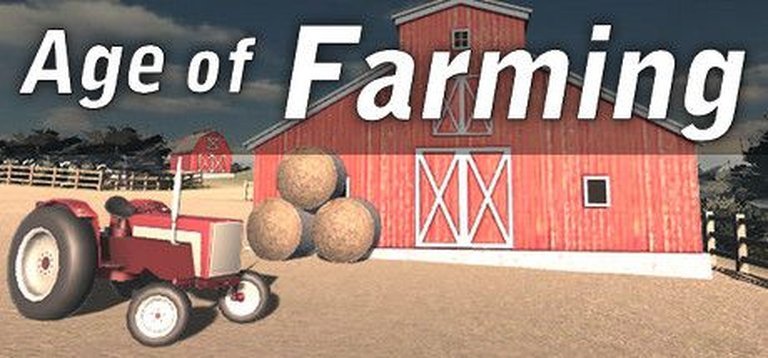
Age of Farming is a real-time agricultural simulation game where players manage and expand a traditional American-style farm. Operate diverse machinery, construct buildings, and make strategic business decisions to grow your farm’s infrastructure. Sell grains dynamically at one of three market points with fluctuating prices, requiring economic savvy to maximize profits. The game offers endless customization through its wide range of machines, buildings, and layout options, immersing players in the challenges and rewards of farm management.
Where to Buy Age of Farming
PC
Age of Farming Cracks & Fixes
Age of Farming Guides & Walkthroughs
Age of Farming Reviews & Reception
steambase.io (33/100): A dynamic game, which lets you control the whole process, from plowing and sowing to investing in buildings and wind farms.
Age of Farming: A Bumper Crop of Ambition, A Harvest of Disappointment
Introduction
In the fertile valley between Stardew Valley’s pixel-perfect charm and Farming Simulator’s diesel-fueled realism lies Age of Farming, a 2016 indie agricultural sim that dared to plant seeds in crowded soil. Developed and published by Evergreen, this $0.99 Steam Early Access title promised dynamic farm management, machinery operation, and economic strategy—a trifecta of rural escapism. Yet, as our excavation reveals, Age of Farming remains a cautionary tale of unrealized potential, withered by neglect and overshadowed by titans of the genre. This review dissects its botched harvest: a game that mistook early access for abandonment, and potential for fulfillment.
Development History & Context
Studio Vision Against the Odds
Evergreen, an obscure developer with no prior catalog, positioned Age of Farming as a love letter to American agricultural life. Released on November 18, 2016—Stardew Valley’s breakout year—the game sought to capitalize on the farming sim resurgence by emphasizing realism and player agency. Built in Unity and marketed as an “open-ended beta,” it targeted budget-conscious players with a sub-$1 price point.
Technological and Market Constraints
The game’s design reflected the limitations of a small team: top-down perspective, rudimentary physics, and textures reminiscent of early-2000s browser games. It entered Early Access with promises of iterative development, as per Steam posts: “We want feedback to develop the game to suit players’ needs.” Yet, developer logs ceased after December 2017, leaving the game in perpetual “beta” limbo—a digital ghost town where tractors rust and crops never sprout.
Narrative & Thematic Deep Dive
The Illusion of Americana
Age of Farming’s narrative exists solely in its premise: inherit a farm, “feel the climate of a traditional American farm” (per its Steam description), and sell grain to fluctuating markets. There are no characters, quests, or environmental storytelling—only static “buy-in points” with stale price banners. Thematically, it gestures toward self-reliance and capitalism (e.g., investing in wind farms for passive income), but these ideas wither without narrative context. Compared to Stardew Valley’s Pelican Town—a community brimming with secrets—Evergreen’s world is an emotional dust bowl.
The Silent Protagonist Problem
Players exist as a disembodied cursor, devoid of identity or motivation. While Harvest Moon and its successors tie farming to legacy (e.g., reviving a grandfather’s farm), Age of Farming reduces the player to a spreadsheet manager. Grain prices change, but there’s no lore explaining market forces—just banners with numbers. The omission of human connections (no romance, rivalry, or mentorship) renders the farm a sterile grid of tasks, not a home.
Gameplay Mechanics & Systems
Core Loop: A Wheat-Thin Economy
The game’s primary loop is deceptively simple:
1. Cultivate: Plow fields, plant crops (wheat, strawberries), and harvest.
2. Invest: Purchase machinery (combines, silos) or infrastructure (wind turbines).
3. Sell: Monitor three grain markets for peak prices.
Early players noted superficial parallels to Farming Giant but criticized the lack of depth. Machines like tractors and plows handle identically, with no customization or degradation. The promised “infinite ways to organize your farm” collapses into repetitive cycles due to limited building types (silos, barns) and no terrain editing.
UI and Progression: A Harvest of Frustration
- User Interface: Cluttered menus and unclear tooltips plague the experience. Equipping a wheelbarrow or refilling a watering can requires navigating an unintuitive sidebar (described by a Reddit user as “Windows 95-era design”).
- Progression: Daily goals (e.g., “earn $500”) unlock new machines, but balancing costs feels punitive. A Steam review laments: “You’ll grind for hours just to afford a seed drill… and realize it barely speeds things up.”
- Economy: Market fluctuations lack impact. Prices change arbitrarily, not reflecting supply/demand or seasonal logic—a stark contrast to Farming Simulator’s dynamic economy.
The Early Access Trap
Promised features like multiplayer and expanded machinery never materialized. The “Labor of Love” tag on Steam feels ironic; Evergreen’s last update was in 2017. Bugs—like crops vanishing after storms—persist unchecked, turning playthroughs into exercises in save-scumming.
World-Building, Art & Sound
Visuals: A Pixelated Wasteland
The top-down perspective evokes RimWorld but lacks its detail. Fields are flat green grids, buildings resemble cardboard cutouts, and animals (cows, chickens) stand motionless, “confined to where you put them” (per a Reddit TOMT thread). The color palette—muted browns and greens—suggests autumnal decay, but not intentionally. ModDB screenshots reveal jagged edges and placeholder textures, highlighting its rushed presentation.
Sound Design: The Silence of the Fields
Ambient sound is nonexistent. Machinery drones with generic loops, and grain sales trigger a bland “cha-ching” more fitting for a mobile ad. The absence of seasonal music or wildlife noises (e.g., chirping birds) strips the farm of vitality. In Stardew Valley, rain sounds soothe; here, it’s just visual noise.
Reception & Legacy
Critical and Commercial Drought
At launch, Age of Farming garnered “Mostly Negative” Steam reviews (12% positive), with players lamenting its “soulless grind” and “abandonware” status. It sold roughly 9,000 copies (per PlayTracker)—a pittance next to Stardew Valley’s 41 million. MobyGames lists no critic reviews, and its page remains incomplete (“Wanted: Description”). Steam Charts show peak concurrent players at 1, reflecting its irrelevance.
Industry Impact: A Footnote
The game’s sole legacy is as a case study in Early Access pitfalls. While Stardew Valley revitalized the genre and Farm Together polished cooperative farming, Age of Farming exemplifies how mismanaged access erodes trust. Its failure paved the way for indies like Farm Manager to refine agricultural economics—without the broken promises.
Conclusion
Age of Farming is less a game than an unmarked grave for ambition. Its $0.99 price tag lured curious players, but the experience is a barren field: no narrative warmth, no mechanical depth, and no developer care. Evergreen’s vision of “dynamic farm management” remains unharvested, fossilized by neglect. In the pantheon of farming sims, it’s a weed—not a rose.
Verdict: A historical curiosity for genre archaeologists only. Avoid unless cataloging gaming’s cautionary tales. 🌾🚜❌