
- Release Year: 2013
- Platforms: Windows
- Publisher: WEBZEN Dublin Ltd.
- Developer: Suzhou Snail Digital Technology Co., Ltd.
- Genre: Action, RPG
- Perspective: First-person, Third-person
- Game Mode: MMO, Online PVP
- Gameplay: Guild management, Instance dungeons, Professions, PvP, Sandbox
- Setting: Ancient, China, Imperial
- Average Score: 93/100
Description
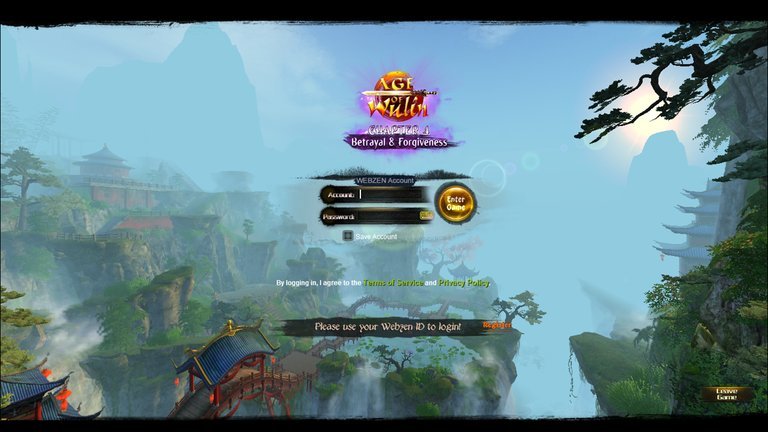
Age of Wulin is a free-to-play MMORPG that immerses players in a realistic medieval China inspired by 2000-year-old Wuxia fiction, featuring eight distinct martial arts schools and 27 regions. It emphasizes open PvP combat and player-driven sandbox elements, where choices in faction allegiance, professions like bounty hunting or espionage, and guild management shape the game’s economy and social dynamics, all underscored by an authentic cultural portrayal.
Gameplay Videos
Age of Wulin Patches & Updates
Age of Wulin Guides & Walkthroughs
Age of Wulin Reviews & Reception
mmoreviews.com (93.4/100): one of the most expansive and ambitious free-to-play MMORPG to date.
ign.com : The minutiae of its game design are so painstakingly earnest that it is at once admirable and borderline twee.
gamesradar.com : It’s beautiful, expansive and varied.
Age of Wulin: The Wuxia MMORPG That Dared to Be Different
In the crowded landscape of massively multiplayer online role-playing games, dominated by high-fantasy tropes of orcs, elves, and spell-slingingheroes, Age of Wulin (released as Age of Wushu in North America) emerged as a striking, defiantly specific vision. It was not merely another game set in China; it was a deliberate, scholarly attempt to translate the intricate social codes, philosophical underpinnings, and breathtaking martial artistry of Wuxia fiction into an interactive, persistent sandbox. This review argues that Age of Wulin represents a fascinating, if ultimately flawed, case study in cultural adaptation and systemic ambition—an MMO whose profound respect for its source material both constituted its greatest strength and contributed to its niche, turbulent legacy. It is a game that asked players to understand a culture through its rules, rather than simply accept a universal power fantasy.
Development History & Context: A Chinese Vision, Western Publishing Divisions
Age of Wulin was developed by Suzhou Snail Digital Technology Co., Ltd., a Chinese studio more commonly known as Snail Games. The project originated under the title 九阴真经 (Jiǔyīn Zhēnjīng, or Nine Scroll Manual), a direct reference to a famed fictional manual of supreme martial arts from classic Wuxia novels. Development began as early as 2009, with a Chinese commercial launch in 2012. This lengthy, iterative development cycle within the Chinese MMO market—known for its live-service model and rapid iteration—meant the game arrived in the West with a degree of polish and content depth uncommon for a new title, but also with the accumulated complexities of a long-tail live game.
The Western release, managed by WEBZEN Dublin Ltd. for Europe (as Age of Wulin) and by Snail USA for North America (as Age of Wushu), was a study in fragmented publishing. A “varied series of publishing agreements,” as noted in the IGN preview, resulted in different business models: free-to-play in most of Europe, but a hybrid of free trial and one-time purchase for the “deluxe version” in the US. This fractured launch strategy immediately signaled a lack of unified global vision and created confusing player experiences from the outset. The core creative team, as listed on MobyGames, included international staff like Creative Producer Alexis Guariguata and Graphic Design Manager Bill Sweeney (a veteran with credits on World of Warcraft), suggesting an effort to bridge Chinese design philosophy with Western localization sensibilities. However, the fundamental design ethos remained undeniably and proudly Chinese, a point community manager Chris Brooks stressed to IGN: “Because [Snail Games] is a Chinese developer, it’s really important to them that [Age of Wulin] authentically reflects the Chinese culture. Sometimes, games of this type are made in Korea and don’t have the appropriate, authentic feel.“
Technologically, the game was built for the PC landscape of 2012-2013. Its minimum requirements (Pentium 4 2.4GHz, 1GB RAM, GeForce 6600) were modest, indicative of a strategy to maximize accessibility in emerging and lower-spec markets. The recommended specs (AMD Athlon II x2, 2GB+ RAM, GeForce 9600GT) still positioned it as a title that would not push high-end rigs, a conscious trade-off for broad reach. This technical foundation would later be a point of criticism regarding visual fidelity and animation fluidity.
Narrative & Thematic Deep Dive: The Unwritten Laws of the Jianghu
Age of Wulin’s narrative is not delivered through a linear, cinematic plotline but is instead emergent, systemic, and deeply embedded in the concept of the Jianghu—the martial arts world. This is not a backdrop; it is the game’s central mechanic and thematic core. The player is not a chosen one on a fixed quest but a nascent wanderer (jianghu means “rivers and lakes,” a metaphor for the boundless, lawless world outside imperial courts) forging a reputation through actions.
The game’s lore draws directly from 2,000 years of Wuxia tradition, popularized globally by films like Crouching Tiger, Hidden Dragon and Hero. The eight playable Martial Arts Schools are the primary narrative vehicles, each a complete philosophical and mechanical package:
* The “Good” Aligned: Shaolin (monastic, disciplined, staff/fist), Wudang (Taoist, balanced, sword/tai chi), Emei (female-led, agile, sword/fist), and Beggars’ Sect (Robin Hood-esque, populist, staff/palm techniques).
* The “Neutral” Aligned: Scholars’ Academy (eccentric intellectuals, versatile weapon users) and Tang Clan (assassins, experts in hidden weapons and poisons).
* The “Evil” Aligned: Royal Guards (authoritarian, ruthless, heavy swords) and Blissful Valley (hedonistic, longevity-obsessed, vicious twin-swords).
Each school possesses a unique internal skill—a cultivated energy or neigong—which is the only irreplaceable skill tied to the faction. Leaving a school means losing this core power, creating a profound and weighty decision with permanent consequences, a stark contrast to the ” respeccing ” common in other MMOs.
The underlying narrative theme is the negotiation of personal morality (Chivalry and Guilt) within a rigid social hierarchy. The game’s famous reputation system tracks how every NPC views you based on your actions. Bumping into people lowers your standing; completing tasks for a region raises it. This systemic storytelling means your narrative is written by the collective gossip of thousands of NPCs. The game “encourages”—indeed, requires for school advancement—pursuing aggressive actions against rival sects: spying, stealing, arson, and large-scale castle sieges. The line between “heroic” and “villainous” quests is often blurred by sect loyalty, forcing the player to engage with a morally complex world where your school’s “good” deed may be another’s atrocity.
Gameplay Mechanics & Systems: A Sandbox of Cultivation and Consequence
Age of Wulin dismantles the standard MMO paradigm. There are no character levels. Progression is purely skill-based. Experience points from quests, crafting, and combat are converted into “Cultivation” points, which are spent to directly upgrade the proficiency of individual martial arts skills. This creates a vast, open-ended progression web where a master of one school’s techniques could theoretically learn skills from others (with appropriate reputation and tradition points), creating hybrid, personalized fighters. The combat system itself is a dynamic rock-paper-scissors triangle: Overt (damage attacks) beats Block, Feint (defense-breaking) beats Overt, and Block beats Feint. Success requires reading opponents and cycling skills, consuming a regenerating **Energy pool.
The profession system is a standout feature, offering 17 civilian paths like blacksmith, pharmacist, painter, beggar, chess-player, and musician. These are not mere crafting benches but involve mini-games and tasks that contribute to the world’s economy. The most infamous mechanic is the Offline Character System. When a player logs out, their character becomes an AI-controlled NPC in the world. Other players can interact with them, trade, or, most notably, kidnap them. Kidnapping is a “mischievous” act that places the offline player’s character in a state of “bondage,” requiring them to work off a small debt upon their next login. This brilliantly (or terrifyingly) blurs the line between player and world object, creating emergent stories of revenge, ransom, and guild-based jailbreaks.
The PvP sandbox is the game’s beating heart. Open-world PvP is enabled in most regions, with faction warfare escalating to massive Guild Castle sieges. As GamesRadar+ reported, these could involve up to 650 players total (400 vs. 400 plus 250 reinforcements per side) fighting for control of one of 40 castles. These were monumental, lag-filled, chaotic affairs that truly tested the game’s scale and networking. Activities like Bounty Hunter missions and sect spying added layers of political intrigue to the constant state of conflict.
World-Building, Art & Sound: Sweeping Vistas and Stiff Animations
The game world is undeniably ambitious: 130 square kilometers spread across 26+ regions, representing a geographically diverse medieval China from jungles to frozen wilderness, as detailed on MobyGames and in reviews. The art direction commits to a realistic, non-fantasy aesthetic. Architecture, clothing, and landscapes are rooted in Ming dynasty inspiration, avoiding the typical Western MMO’s hybrid fantasy-steampunk clutter. This creates a sense of place that feels researched and cohesive, a “realistic representation of medieval China” as the description states.
Visually, as noted by MMOReviews and GamesRadar+, the game can be “extraordinarily pretty” at a distance, with sweeping vistas and a distinct Oriental charm that forgives many shortcomings. However, the technical execution is its Achilles’ heel. Character animations, especially during combat, are frequently cited as stiff and lacking the “gracefulness and speed” of the martial arts they portray. The “kung-fu pandas” joke in the IGN headline indirectly points to a perceived lack of fluidity compared to cinematic inspirations. The graphics, while colorful and stylistically consistent, do not match the fidelity of contemporary premium MMOs like Final Fantasy XIV: A Realm Reborn, and suffer from shadow draw-in issues. The soundtrack appropriately incorporates traditional Chinese instruments, enhancing the atmospheric immersion even when the visuals falter.
Reception & Legacy: A Cult Classic’s Rise and Regional Decline
Age of Wulin enjoyed a strong initial reception in its native China upon its 2012 launch, a testament to Snail’s expertise in the domestic market. Western previews from outlets like IGN and GamesRadar+ were enthusiastically positive, praising its ambition, authentic Wuxia flavor, deep systems, and massive scale. The phrase “wears its heart on its sleeve” captured the critical appreciation for its earnest, unapologetic cultural specificity.
However, its Western life was fraught and ultimately shortened. The European version (Age of Wulin), published by Webzen, closed its servers in July 2017. Players were given a one-time opportunity to transfer characters to the North American Age of Wushu servers, operated directly by Snail USA. This closure speaks volumes about the challenges of maintaining a complex, PvP-heavy, culturally niche MMO in Western markets with smaller, less dedicated player bases compared to China. Criticisms that solidified over time focused on a punishing and sometimes grindy progression curve, server performance issues during large-scale PvP, a steep learning curve for its complex systems, and the aforementioned technical presentation gaps. The very mechanics that made it unique—like the offline kidnapping and severe faction loyalty penalties—could be perceived as punishing or alienating to a mainstream audience.
Its legacy is one of influential niche craftsmanship. The game proved there was a market for a serious, systemic Wuxia simulator. It directly spawned a mobile port, Age of Wushu Dynasty (2016), and a sequel, Age of Wushu 2 (beta in 2017), extending its ideas to new platforms. Its most significant contribution may be in demonstrating the viability of non-level-based, skill-tree progression and deeply systemic reputation mechanics within an MMO framework—concepts that would later be explored in more mainstream titles but with different thematic trappings. It remains a beloved, remembered title for a dedicated community of Wuxia purists who valued its uncompromising vision over mainstream polish.
Conclusion: The Authentic, Flawed Jianghu Simulator
Age of Wulin is not a great MMO by the conventional metrics of accessibility, graphical fidelity, or mass-market appeal. It is, however, a profoundly great Wuxia simulator. Its unparalleled commitment to translating the social dynamics, philosophical conflicts, and martial arts intricacies of a millennia-old literary tradition into game mechanics represents a peak of cultural specificity in game design. The systems—the faction-bound internal skills, the reputation-driven narrative, the offline NPC world, the brutal school warfare—coalesce into an experience that feels less like playing a hero and more like inhabiting a character in a Wuxia novel.
Its flaws are inseparable from its strengths. The same rigor that makes school switching a life-altering event also creates an intimidating barrier to entry. The same player-driven sandbox that enables epic 650-player castle sieges also allows for mechanics like offline kidnapping that can feel punitive or intrusive. The authentic Chinese world is sometimes let down by dated graphics and animations.
In video game history, Age of Wulin stands as a monument to ambitious regional development. It is a cautionary tale about the perils of fragmented publishing and the cultural gulf between Eastern design sensibilities and Western mass markets. Yet, it is also an inspiration—a reminder that the MMO genre can be a vessel for deeply specific, systemic storytelling that challenges Western players to learn a new set of rules, both mechanical and cultural. For those willing to climb its steep learning curve, Age of Wulin offers an experience no other game has replicated: the chance to have your character’s life—and legend—shaped not by scripted events, but by the whispered opinions of a virtual world that truly seems to watch your every move. Its server closures do not erase the fact that, for a time, it built a living, breathing, and brutally honest Jianghu on our PCs.