
- Release Year: 2007
- Platforms: PlayStation 2, Wii, Windows
- Publisher: NDS Denmark ApS
- Developer: Beyond Reality Games Ltd., Coyote Developments Ltd
- Genre: Action
- Perspective: Behind view
- Game Mode: Single-player
- Gameplay: Platform
- Setting: Fantasy
- Average Score: 62/100
Description
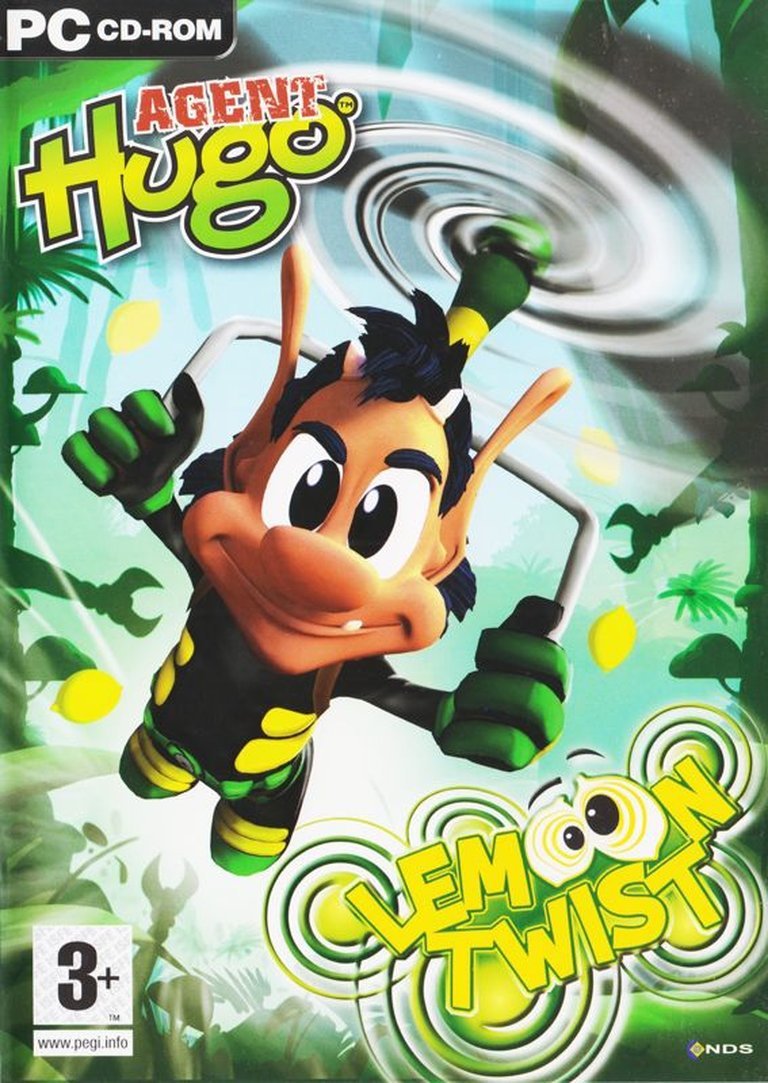
Agent Hugo: Lemoon Twist is a 3D platformer starring Hugo the TV troll, who is dispatched to Dr. Hypno’s island fortress to thwart the villain’s scheme of launching a Hypno-satellite into space to hypnotize and control the planet. Players navigate behind-view levels, defeating or evading hypnotized minions with Hugo’s tail, collecting items, and utilizing power-ups like speed boots, power boots, a rolling ball, and a helicopter suit.
Gameplay Videos
Agent Hugo: Lemoon Twist Free Download
Agent Hugo: Lemoon Twist Cracks & Fixes
Agent Hugo: Lemoon Twist Mods
Agent Hugo: Lemoon Twist Cheats & Codes
Wii (Europe) (EN,SE,DK,NO,FI) [RHGX6Z]
Gecko codes for use with Nintendo Wii Custom Firmware/Homebrew or compatible emulator such as Dolphin.
| Code | Effect |
|---|---|
| 081ECA50 01000000 20112FEC 00000000 |
All Missions Open |
| 4A000000 81000000 04AE91E0 00000000 E0000000 80008000 |
Freeze Time |
| 4A000000 81000000 04AEA0CC 4FFFFFFF E0000000 80008000 |
Infinite Health |
| 4A000000 81000000 04AE91D0 000003E7 E0000000 80008000 |
Set lemoons to 999 |
| 041E6A5B 01010101 041E6A5C 01010101 |
Mission 1 to 6 Movies Unlocked |
| 041E6A54 05FFFFFF | Game Complete Movie Unlocked |
| 041E6A60 10101010 041E6A64 10101010 |
Secret Suits Unlocked |
Agent Hugo: Lemoon Twist: Review
Introduction
In the twilight of the PlayStation 2 era, as the seventh generation of consoles dawned with the Wii’s motion-controlled revolution, a peculiar budget platformer slunk onto European shelves: Agent Hugo: Lemoon Twist. Starring the diminutive Danish TV troll Hugo—beloved star of interactive quizzes and adventure shows since the early ’90s—this 2007 title (with a Wii port in 2008) promised spy-thrilled antics against a world-domination scheme. Yet, what unfolds is less a lemony twist of fresh innovation and more a sour, derivative pulp of outdated design choices masquerading as family fun. As a historian of licensed games and budget shovelware, my thesis is clear: Lemoon Twist exemplifies the pitfalls of low-budget European tie-ins, aping giants like Crash Bandicoot while failing to capture the charm of its Hugo heritage, cementing its place as a forgettable footnote in platformer history.
Development History & Context
Agent Hugo: Lemoon Twist emerged from the unassuming studios of Beyond Reality Games Ltd. and Coyote Developments Ltd., UK-based outfits specializing in licensed, low-to-mid-budget titles for aging hardware. Published by Danish firm NDS Denmark ApS (sometimes branded as ITE Media), it was co-developed for Windows and PS2 in late 2007, with a Wii follow-up in mid-2008—exclusively in Europe, reflecting Hugo’s regional cult status from his Interactive Television roots.
The era was unkind to such projects. By 2007, 3D platformers had evolved dramatically: Naughty Dog’s Jak series and Traveller’s Tales’ Crash Bandicoot revivals showcased fluid controls, vibrant worlds, and technical prowess on PS2, while Nintendo’s Wii demanded motion gimmicks. Hugo’s team, however, operated under severe constraints—evident in the game’s locked 30FPS even on PC (a lazy console port), stiff animations suggesting minimal motion capture, and textures recycled from early-2000s assets (one bomb eerily mirrors M&M’s The Lost Formulas from 1999). Credits list 75 contributors, including testers like Lars Lynge Nielsen and sound from EPIC sound, but many overlapped with prior Hugo flops like RoboRumble (2006), hinting at a small, iterative team lacking resources for polish.
Hugo’s legacy as a TV mascot drove the vision: a kid-friendly spy parody rebooting the Agent Hugo subseries post-RoboRumble. Yet, in a market flooded by Super Mario Galaxy‘s acclaim, this felt like a relic from PS1’s budget bin, prioritizing fidelity to Hugo’s trollish whimsy over technological ambition. Debug features unearthed via TCRF—such as level selects, render modes, and texture viewers—reveal a rushed production, with QuickBoot skipping logos for hasty testing.
Narrative & Thematic Deep Dive
At its core, Lemoon Twist peddles a threadbare spy thriller laced with Hugo’s cartoonish absurdity. Dr. Hypno, a mad scientist with a penchant for world domination, constructs a “hypno-satellite” on his secret island fortress, aiming to beam mind-control rays globally. Guarded by “hyper-mad-hypnotised minions,” the plot tasks Agent Hugo—equipped with W’s “Energy Combat Suit” (ECS) and lemon-based anti-hypno serum—with infiltration and sabotage. Supporting cast includes stern leader Mrs. Alltobright of R.I.S.K. (Risky Intelligent Spy Knights), flirtatious HoneyBunny, and gadgeteer W, evoking a trollish Team America.
Thematically, it’s a shallow homage to James Bond via budget lens: espionage gadgets (speed/power boots, helicopter suit, rolling ball) parody Q-branch toys, while Hypno’s generic villainy underscores “evil for evil’s sake.” Cutscenes, surprisingly competent for PS2-era shovelware, inject humor—like self-destruct gags—but dialogue is wooden, with voice acting derided as “basement students” (English) or “garbage-can bums” (Spanish). No deep character arcs; Hugo’s a silent protagonist, minions faceless fodder. Plot progression across 19 levels (beach to factory) builds to a single, underwhelming boss: a maze, speed phase, and spaceship plate-smack.
This narrative laziness mirrors budget tropes—recycled from RoboRumble—lacking the Hugo TV show’s interactive wit. Themes of anti-hypnosis via lemons nod to Scandinavian whimsy, but devolve into filler, prioritizing collectathon busywork over coherent storytelling.
Gameplay Mechanics & Systems
Lemoon Twist clings to a Crash Bandicoot-inspired loop: linear behind-view platforming, tail-whips on hypnotized foes, and collectibles (lemons for costumes, batteries?). Core actions—double-jump, spin-attack, evade—feed 20 levels through six biomes, punctuated by four transformations: speed boots (dash), power boots (heavy stomps), rolling ball (curl), and helicopter suit (glide). Missions demand bomb-touching or lemon-hoarding, with a hub “secret hideout” for training these via interactive rooms.
Flaws abound. Controls torment: helicopter/roller sluggish on turns, shoe modes barely tolerable, post-attack stun risks abyssal plunges. Camera rivals Data Design Interactive’s infamy—fixed, unresponsive, obscuring jumps with “impossible distance estimation.” UI embarrasses: a PS1-esque menu offers only “New Game/Continue/Exit,” no options. Power boots trivialize challenges, easing progression to boredom. Invisible walls gatekeep, collision glitches clip foes through geometry, and rectangular platforms slip victims into acid/abysses. Single boss disappoints: maze-obstacles, speed-dash, plate-hit—easy, unmemorable.
Progression shines modestly: lemon collections unlock costumes, levels vary (jungle ruins to snowy peaks). Yet, plagiarism screams—level design apes Crash Twinsanity‘s fruits/combat/transforms—yielding repetitive loops sans innovation.
| Mechanic | Strengths | Weaknesses |
|---|---|---|
| Platforming | Varied biomes, training hub | Slippery platforms, poor camera |
| Combat | Tail-whip simplicity | Post-hit stun, easy foes |
| Transformations | Contextual fun (e.g., helicopter for gaps) | Sluggish handling, overpowered boots |
| Collectibles | Costume rewards | Generic (lemons, batteries) |
| UI/Controls | PEGI 3+ accessibility | Archaic menu, unresponsive inputs |
World-Building, Art & Sound
Dr. Hypno’s island fortress sprawls inventively—beaches, jungles, ruins, deserts, mountains, factories—fostering atmospheric progression from tropical infiltration to industrial climax. The hideout hub adds replay value, but execution falters.
Visuals regress from prior Hugos: plywood-cut models, skunk-vomit textures (jelly water, peppered-tomato lava), static expressions. Animations stiffen like amateur Blender rigs—foes jerk puppet-like. PS2 roots betray Wii/PC ports: 30FPS chugs, no polish.
Sound fares worse: uninspiring snooze-tracks, inept effects (parachute double-jumps, edutainment pickups), menu bloops evoking ancient cartoons. Voice acting grates, music blandly generic. Collectively, they sap immersion, turning vibrant locales into ugly relics.
Reception & Legacy
Launch reception cratered: Jeuxvideo.com’s 7/20 (35%) lambasted 3D ineptitude—”cameras show everything except what you want”—hoping it Hugo’s last. MobyGames aggregates 35% critics/2.8/5 players; YouTuber Pixel Pursuit’s 4/10 deems it “best Hugo, still underwhelming.” No Metacritic aggregate; sales obscure, but eBay rarities ($100+ PS2) signal obscurity.
Reputation endures as budget punchline: Qualitipedia’s “self-destruct” trope highlights rip-offs, controls, graphics. Preceded Hula Holiday (2008), ending reboot trilogy amid Hugo’s decline. Influence? Nil—exemplifies PS2 shovelware glut, predating indie platformer renaissance (Celeste). Debug leftovers intrigue preservationists, but no remakes/industry ripples. In Hugo lore, a curious nadir.
Conclusion
Agent Hugo: Lemoon Twist embodies budget gaming’s double-edged sword: affectionate Hugo nod with decent length/variety, yet crippled by archaic tech, plagiarism, and executional sins. Not malicious, merely mediocre—a 3/10 curiosity for mascot completists. In video game history, it whispers of licensed obscurity, a troll too twisted to endure. Approach with caution; your time deserves better platforms.