
- Release Year: 2007
- Platforms: Windows
- Publisher: Buka Entertainment, Playlogic International N.V.
- Developer: Lesta Studio
- Genre: Strategy, Tactics
- Perspective: Diagonal-down
- Game Mode: Single-player
- Gameplay: Diplomacy, Real-time tactics battles, Real-time, Scripting language: Lua, Trading
- Setting: Historical events
- Average Score: 48/100
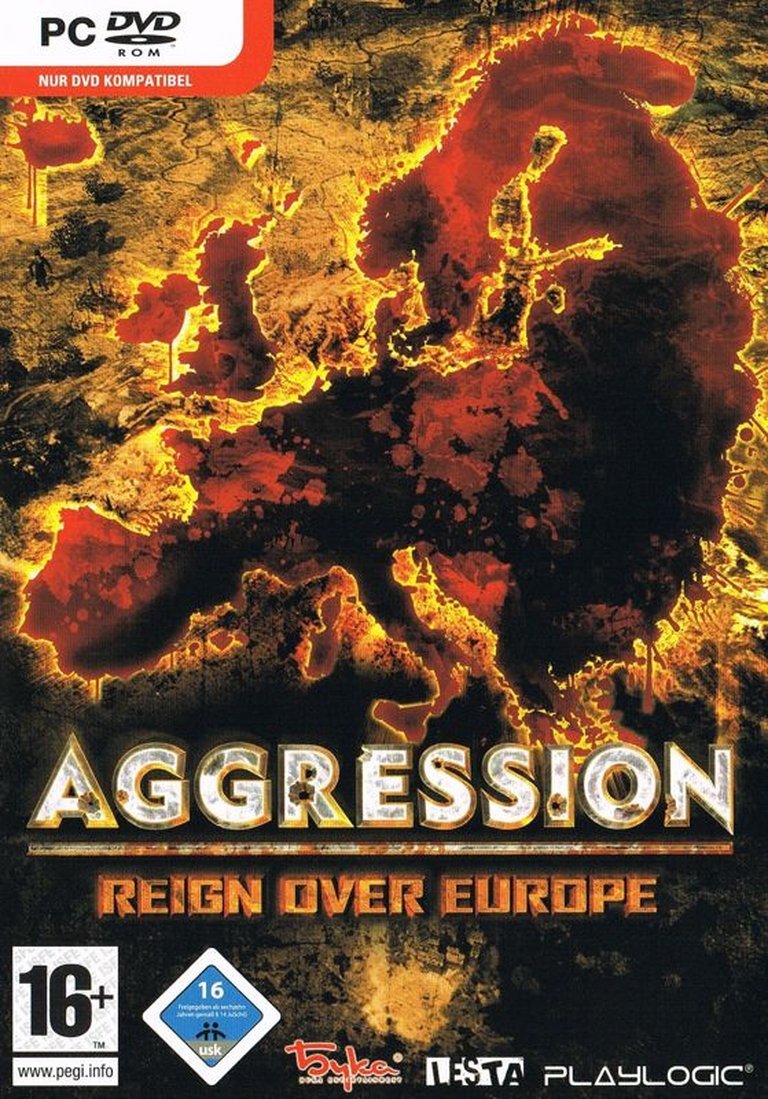
Description
Aggression: Reign over Europe is a historical real-time strategy game set between 1910 and 1950, encompassing both World Wars. Players lead one of four nations—Germany, Britain, Russia, or France—through campaigns focused on military, economic, and diplomatic domination of Europe. Gameplay involves real-time management of territories on a strategic map, with the option to resolve battles automatically or command armies tactically. Featuring 150 land-based units and six standalone battle scenarios, the game emphasizes conquest through warfare while omitting naval combat. Players must balance politics, trade, and technology to achieve continental supremacy.
Aggression: Reign over Europe Free Download
Aggression: Reign over Europe Cracks & Fixes
Aggression: Reign over Europe Patches & Updates
Aggression: Reign over Europe Reviews & Reception
gamewatcher.com : When summarising Aggression: Reign Over Europe, the easiest way to look at it is not saying what it has, but what it lacks.
gamefaqs.gamespot.com (35/100): Your units will not follow your orders, your infantry will not fire on an artillery battery 2 meters off their nose.
mobygames.com (62/100): Aggression: Reign Over Europe is a strategic game without the means to match it’s ambitions.
Aggression: Reign over Europe: Review
In the pantheon of historical strategy games, few titles have dared to tackle the sweeping scope of two world wars within a single experience. Aggression: Reign over Europe, developed by Lesta Studio and published by Buka Entertainment and Playlogic Entertainment, is one such ambitious endeavor. Released in 2007, this real-time strategy game attempts to cover the tumultuous period from 1910 to 1950, allowing players to lead one of four major European powers through the crucible of war and political intrigue. Despite its lofty goals, Aggression struggles to live up to its potential, marred by technical shortcomings and a lack of polish. This review will delve into the game’s development history, narrative depth, gameplay mechanics, world-building, reception, and ultimate legacy.
Development History & Context
The Studio and Creators’ Vision
Lesta Studio, a Russian development team, took on the monumental task of creating a game that spans two world wars and the interwar period. The studio’s vision was to provide a holistic approach to state administration, allowing players to control political, economic, technological, and military spheres. This ambition was evident in the game’s design, which aimed to create an immersive experience of ruling a nation during one of the most tumultuous periods in European history.
Technological Constraints and Gaming Landscape
Released in 2007, Aggression faced significant technological constraints. The game’s graphics and user interface, while functional, feel dated by today’s standards. The real-time strategy genre was already crowded with titans like Total War and Command & Conquer, which set high benchmarks for gameplay mechanics, visual fidelity, and user experience. Aggression had to carve out its own niche in this competitive landscape, which it attempted to do by offering a unique historical scope and depth of strategic options.
Narrative & Thematic Deep Dive
Plot and Characters
Aggression covers a 40-year period from 1910 to 1950, encompassing both World Wars and the interwar years. Players can choose to lead one of four major powers: Germany, Britain, Russia, or France. Each nation comes with its own set of strengths, weaknesses, and historical context, providing a rich tapestry of strategic options.
The game’s narrative is driven by historical events and player decisions. Key figures from history, such as political leaders, generals, and public figures, can be recruited and managed, adding a layer of role-playing elements to the strategy gameplay. These characters earn experience points and level up, allowing players to assign new skills and abilities, further personalizing the strategic experience.
Dialogue and Themes
The dialogue in Aggression is serviceable but lacks the depth and nuance found in more polished strategy games. The game’s themes revolve around the complexities of war, diplomacy, and statecraft. Players must navigate the treacherous waters of international politics, balancing alliances, trade agreements, and military conflicts. The game’s historical setting provides a rich backdrop for exploring these themes, but the execution often feels rushed and superficial.
Gameplay Mechanics & Systems
Core Gameplay Loops
Aggression is divided into two main gameplay modes: the strategic map and the real-time tactical battles. On the strategic map, players manage the political, economic, and military development of their nation. This includes diplomacy, trading, resource management, and technological research. The map is presented in real-time but can be paused at any time, allowing players to make strategic decisions without the pressure of constant action.
Combat and Character Progression
Combat in Aggression is handled through real-time tactical battles. Players can choose to auto-resolve these battles or take direct control. The tactical maps are detailed and feature a variety of units, each with its own strengths and weaknesses. However, the combat mechanics are plagued by issues such as poor pathfinding, unclear visual interfaces, and obscure tactical unit values. These flaws make the battles frustrating and unsatisfying, detracting from the overall experience.
Character progression is handled through a skill tree system. Historical figures can be recruited and managed, with each character earning experience points and leveling up. This adds a layer of depth to the strategic gameplay, as players must carefully manage their roster of leaders and advisors.
UI and Innovative/Flawed Systems
The user interface in Aggression is functional but feels outdated. The menus are cluttered, and important information is often buried under layers of sub-menus. The game’s tutorial system is extensive but isolated, making it difficult for new players to grasp the game’s complexities. The auto-control mode is a welcome addition, allowing players to delegate certain tasks to the AI, but it often feels like a crutch rather than a genuine strategic tool.
World-Building, Art & Sound
Setting and Atmosphere
Aggression is set in a historically accurate recreation of early 20th-century Europe. The game’s maps are detailed and feature a variety of environmental elements, from cities and transportation routes to natural landscapes. The atmosphere is enhanced by the game’s sound design, which features a mix of historical music and sound effects. However, the visual direction feels dated, with graphics that are far from impressive by modern standards.
Visual Direction and Sound Design
The game’s visuals are a mix of 2D and 3D elements. The strategic map is presented in 2D, with detailed illustrations of cities and landscapes. The tactical battles, however, are rendered in 3D, with a variety of units and environmental effects. The sound design is adequate, with a mix of historical music and sound effects that enhance the game’s atmosphere. However, the voice acting is often stiff and unconvincing, detracting from the overall experience.
Reception & Legacy
Critical and Commercial Reception
Upon its release, Aggression received mixed reviews. Critics praised the game’s ambitious scope and depth of strategic options but criticized its technical shortcomings and lack of polish. The game’s graphics, user interface, and combat mechanics were frequently cited as areas in need of improvement. Despite these flaws, Aggression found a niche audience among strategy enthusiasts who appreciated its unique historical setting and depth of gameplay.
Influence on Subsequent Games and the Industry
Aggression did not have a significant impact on the strategy genre or the gaming industry as a whole. Its technical flaws and lack of polish prevented it from achieving the same level of success as its contemporaries. However, the game’s ambitious scope and depth of strategic options laid the groundwork for future historical strategy games, which would build on its innovations and address its shortcomings.
Conclusion
Aggression: Reign over Europe is a bold attempt to cover the sweeping scope of two world wars within a single strategy game. Despite its ambitious goals and depth of strategic options, the game is marred by technical shortcomings and a lack of polish. Its graphics, user interface, and combat mechanics are frequently cited as areas in need of improvement. However, the game’s unique historical setting and depth of gameplay make it a worthwhile experience for strategy enthusiasts. In the pantheon of historical strategy games, Aggression stands as a flawed but ambitious endeavor, a testament to the challenges and rewards of tackling such a monumental task. Its legacy lies in the lessons it provides for future developers, who can learn from its successes and failures to create even more immersive and polished historical strategy experiences.