
- Release Year: 2019
- Platforms: Windows
- Publisher: AAGH Games
- Developer: AAGH Games
- Genre: Action
- Perspective: 1st-person
- Gameplay: Shooter
- Setting: Futuristic, Sci-fi
Description
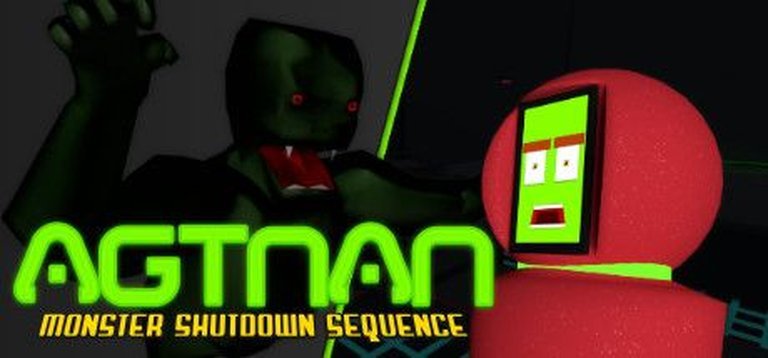
Agtnan: Monster Shutdown Sequence is a first-person sci-fi survival shooter where players control a robot forced into a gladiatorial shutdown sequence, battling night terrors across hazardous arenas. Set in a futuristic world, the game challenges players to survive dynamic environments filled with moving platforms, lasers, and portals, using explosives to fight back and collecting Creds to upgrade the robot’s abilities like speed, damage resistance, and bomb types.
Gameplay Videos
Where to Buy Agtnan: Monster Shutdown Sequence
PC
Agtnan: Monster Shutdown Sequence: A Review of a Curious Artifact in the Arena Shooter Genre
Introduction: The Phantom of the Arena
In the vast digital archives of gaming, some titles flicker briefly—launched with modest ambition, only to vanish into the static of obscurity. Agtnan: Monster Shutdown Sequence is one such phantom. Released by the lone-wolf studio AAGH Games in the crowded indie landscape of 2019, it promised a potent cocktail of retro arena FPS action, sci-fi survival, and mechanical ingenuity. Yet, nearly six years after its debut, it exists as a spectral footnote: a game with a clear vision, a functional (if sparse) execution, and virtually no audience or critical discourse to speak of. This review will not champion a lost classic; instead, it will dissect Agtnan as a fascinating case study in minimalist design, unfulfilled promise, and the brutal realities of indie game visibility. Its thesis is this: Agtnan is a technically competent but conceptually hollow experience, whose greatest significance lies not in its gameplay but in what its silence reveals about the challenges of carving a niche in a saturated market.
Development History & Context: AAGH’s Solitary Shutdown
The context for Agtnan is one of profound isolation. Developed and published solely by AAGH Games, LLC, a studio whose public presence is limited to a sparse website and a quiet itch.io page, the game was created outside the ecosystem of publishers, major marketing pushes, or even a robust modding community. It emerged in 2019, a year teeming with high-profile releases and a peak in the “boomer shooter” nostalgia wave that had already seen successful titles like Dusk and Prodeus. Agtnan entered this arena not as a contender, but as a whisper.
Technologically, it was built in Unity, using Blender for models and Audacity for sound—a standard, accessible indie toolkit. The constraints were less about hardware and more about resources: with no credited team beyond “AAGH Games” (suggesting a solo or tiny-team effort), scope was inevitably limited. The initial release on August 4, 2019 (Windows) promised five unique arenas, a core survival loop, and a progression system, with “Future Content” (Story Mode, More Arenas, Multiplayer) explicitly listed as forthcoming on its Steam store page. The development history, as pieced together from patch notes and news posts, is a chronicle of modest upkeep: a price drop in March 2020, a menu/controls update in April 2020, and a final update in May 2020 adding music and bug fixes. There has been no meaningful development activity since mid-2020. The “Story Mode” and “Multiplayer” features, once part of the selling point, were quietly abandoned. The game’s trajectory is a stark diagram of Early Access–era pitfalls: a small studio over-promising, under-resourcing, and ultimately failing to sustain momentum, leaving a product frozen in a perpetual beta state with a player base so small it is statistically irrelevant (MobyGames reports 1 collector; Steam shows 1 user review, which is “Very Positive”).
Narrative & Thematic Deep Dive: The Un-Yawned Story
Here, the review must concede a profound emptiness. Agtnan possesses a narrative premise, not a narrative. The official description delivers a classic sci-fi dystopia vignette: “You are a robot, a robot on the run. You’re released from your imprisonment to avoid or kill the night terrors sent your way for your captors’ entertainment, just like the gladiators of old—if gladiators had CPUs and roller wheels.” This is a serviceable, if derivative, hook reminiscent of The Running Man or Gladiator transposed onto a robot.
However, this premise is completely inert. There is no in-game story delivery—no terminals, no voice logs, no environmental storytelling within the sterile, hazard-filled arenas. The protagonist, the “Agtnan,” is defined solely by its gameplay function: a first-person camera attached to a robot model. Its “LED face” with a “panicked expression” is the only character beat, a superficial flourish. The antagonists, the “night terrors” or “monsters,” are generic hostile models with no lore, names, or motivation beyond attacking the player. The promised “Story Mode” to answer “Who are you, really? Why are you here?” was never built. Thematically, the game gestures at concepts of dehumanization (even for a robot), spectacle violence, and survival against engineered threats, but without any narrative or mechanical system to explore these ideas, they remain empty signifiers. The world of Agtnan is not a world at all; it is five abstract, disconnected testing chambers with a backstory printed on the box.
Gameplay Mechanics & Systems: The Loop and Its Gaps
The core gameplay loop is straightforward and, in its moment-to-moment, competently executed. Players are dropped into a sealed arena with a simple objective: survive for a set time or eliminate all waves of monsters. The primary tool is explosive boxes that spawn at fixed points on the map. These are the sole weapon—a limited-use, timed explosive that can be dropped or thrown. This creates a tense resource management dynamic: when to use a bomb, where to place it for maximum effect against charging enemies, and the constant risk of being cornered while waiting for a respawn.
Progression occurs between rounds via Creds, dropped by defeated monsters. These currency units allow upgrades on a simple talent tree, improving core stats: speed, stamina (presumably for sprinting), health/damage resistance, and bomb variants (e.g., “giant or splitting bombs”). This system provides a satisfying sense of growth across a single play session, making the player more resilient and potent with each survived wave.
However, the systems are shallow and underdeveloped:
1. Combat: Relies on a single, clumsy weapon. There is no secondary fire, no alternative tools, no environmental interaction beyond running and bombing. The ” Fight Back” feature feels constrained.
2. Arena Mechanics: This is where the game attempts innovation. Each of the five maps introduces a unique gimmick: spinning gears, moving platforms, laser fences, portals, conveyor belts. These are not just obstacles but integral to strategy—using a portal to escape, luring monsters onto conveyor belts into hazards. Yet, these mechanics are implemented in a binary, often impersonal way. They are environmental scripts to avoid, not systems to master. Their “themes” (e.g., “Octagon Lines,” “Day Rings”) are purely aesthetic or structural, lacking any cohesive visual or narrative identity.
3. UI & Feedback: The interface is minimalistic, showing health, ammo (bomb count), and wave timer. It is functional but offers little feedback. Damage is unclear, enemy types (beyond visual variation) have no discernible behaviors or weaknesses, and the impact of the “Creds” upgrade system, while present, doesn’t radically alter the feel of the game.
4. Flaws: The movement is basic. There is no crouch-sprinting, mantling, or advanced mobility tricks common in modern arena shooters. The bomb arc can be imprecise. As noted in a Steam update, some maps had bugs where players could get stuck on geometry or, comically, not fall to their death when intended. These are symptoms of a project past its maintenance phase.
In essence, the gameplay is a bare-bones, competent tribute to the 90s arena FPS, but it lacks the depth, weapon variety, or frenetic energy of its inspirations (Quake, Unreal Tournament). It feels like a solitary proof-of-concept for a robust arena system rather than a finished product.
World-Building, Art & Sound: Aesthetic of the Vacant Chamber
The setting is explicitly sci-fi/futuristic, but its realization is one of stark minimalism. The arenas are large, geometric, brightly colored (often with vivid, contrasting hues) spaces floating in a void. The art style is low-poly, clean, and functional. There is no attempt at a coherent “lab” or “arena” aesthetic beyond bright platforms against dark backgrounds. Textures are simple, lighting is basic (though an update did add “improved colored lighting”), and the environmental hazards (gears, lasers) are simple geometric primitives. This creates a clinical, almost sterile atmosphere—less a gladiatorial pit and more an abstract testing ground.
The sound design is equally sparse. The official Steam news mentions the addition of “new background music for the Octagon Lines arena, giving every arena its own unique BGM.” This implies that, at launch, most arenas were silent or shared a single track. The music that was added is likely ambient, electronic tracks fitting the sci-fi theme, but there is no public commentary on its quality or effectiveness. Sound effects for bombs, monster noises, and player feedback are present but unremarkable—functional placeholder beeps and explosions. The overall aesthetic is one of economy over artistry. It conveys a setting—a futuristic, bureaucratic death-trap—but does so with zero personality, lore, or environmental storytelling. The world does not feel lived-in or menacing; it feels empty and procedural.
Reception & Legacy: The Sound of Silence
The commercial and critical reception of Agtnan is defined by its near-total absence. With only one user review on Steam (a recommend) and no critic reviews on aggregators like MobyGames or Metacritic, it exists in a state of near-zero discourse. The Steam store page shows a “Very Positive” rating from that single reviewer, who praised the tutorial but offered no substantive critique. Its commercial performance is implied by its price history: a permanent reduction from an original (unstated) price to $4.49, and its continued presence at that low point suggests negligible sales pressure.
Its legacy is therefore virtually non-existent. It has no discernible influence on the retro FPS revival or the broader indie shooter scene. It is not cited in “best of” lists, does not have a modding community, and its concepts (arena hazards, bomb-based combat) are better executed elsewhere. Its place in video game history is as a cautionary footnote—a title that illustrates the vast chasm between having a viable gameplay idea and building a game that resonates, sustains development, or finds an audience. The gap between its ambitious “Future Content” roadmap and the final, static state of version 2.0 is its most enduring feature. It serves as data point for researchers studying Early Access abandonment and the long-tail survival rates of ultra-niche indie titles.
Conclusion: The Shutdown That Never Was
Agtnan: Monster Shutdown Sequence is not a bad game in the sense of being broken or offensive. It is a functionally complete, minimalist arcade experience that achieves the basic goal it sets for itself: survive waves in hazard-filled arenas using bombs. For a few dollars, a player can get a dozen or more half-hour sessions of tense, if repetitive, gameplay. Its mechanics are clear, its controls work, and its progression hook is appropriately addictive in short bursts.
However, as a piece of game design, writing, or world-building, it is fundamentally anemic. It lacks the depth to sustain interest beyond its immediate loops, the narrative to provide motivation, and the artistic or mechanical flair to distinguish it from the countless other retro shooters. Developed in apparent isolation without community engagement or post-launch support, it is a time capsule of a specific, failed indie venture. Its true “monster shutdown sequence” was the cessation of its own development and the gradual erasure of its presence from the cultural conversation.
Final Verdict: Agtnan: Monster Shutdown Sequence earns a historical rating of ★☆☆☆☆ (1/5) not for failing as a playable toy, but for failing utterly to become anything more. It is a ghost in the machine of the indie games market—a testament to the fact that even a technically sound idea, without execution, support, or soul, is destined for the quietest of digital graveyards. It survives only as a lesson, and perhaps as a $4.49 curiosity for the completist with a specific itch for unadorned, hazard-based arena survival. For everyone else, its shutdown was, and remains, complete.