
- Release Year: 2010
- Platforms: Windows
- Publisher: Wastelands Interactive
- Developer: Vipagames, Wastelands Interactive
- Genre: Action
- Perspective: Behind view
- Game Mode: Single-player
- Gameplay: Aviation, Flight, Shooter
- Setting: Oceania, World War II
- Average Score: 25/100
Description
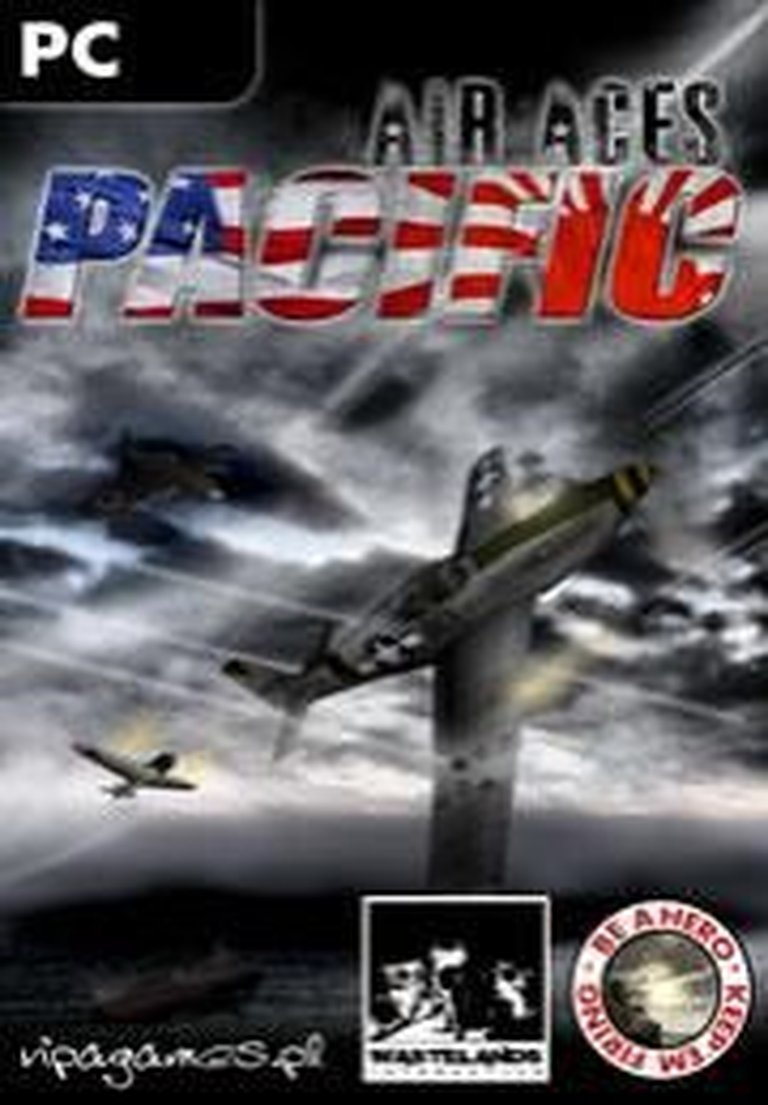
Air Aces: Pacific is an arcade-style aerial combat simulator set during World War II in the Pacific theater. Players take on the role of a fighter pilot launching from an aircraft carrier to engage in missions against Japanese forces, either solo or with a wingman. The game features five unlockable planes, including iconic aircraft like the Grumman F6F Hellcat and Vought F4U Corsair, and offers a mix of dogfighting and naval combat with weapons like machine guns, rockets, and torpedoes. Missions include multiple objectives, and players must safely land back on the carrier to complete them. The game blends action and flight simulation with a behind-view perspective, though it has been criticized for its repetitive gameplay and technical issues.
Air Aces: Pacific Cracks & Fixes
Air Aces: Pacific Patches & Updates
Air Aces: Pacific Reviews & Reception
hookedgamers.com (15/100): A broken, ugly and dull game that does nothing to entertain the players.
mobygames.com (36/100): Average score: 36% (based on 2 ratings)
hookedgamers.com : Air Aces: Pacific is a game that takes the latter to the next step. It not only fails to produce the advertised quality, but the features listed as the game’s main attractions are fictional at best.
Air Aces: Pacific: A Flawed Experiment in Arcade Aerial Combat
Introduction
Air Aces: Pacific (2010) is a game that exists in the liminal space between ambition and execution—a title that promised to blend the thrill of arcade dogfighting with the depth of aerial combat simulation, only to stumble into the abyss of technical shortcomings and design missteps. Developed by Wastelands Interactive and Vipagames, this Windows-exclusive title arrived at a time when the flight combat genre was already crowded with more polished alternatives, from the hardcore realism of IL-2 Sturmovik to the accessible arcade action of Blazing Angels. Air Aces: Pacific attempted to carve out its own niche by offering a “new approach to the arcade genre,” but its legacy is one of unfulfilled potential, marred by critical disdain and player apathy.
This review dissects Air Aces: Pacific in exhaustive detail, examining its development history, narrative (or lack thereof), gameplay mechanics, technical performance, and the broader context of its reception. Through this analysis, we aim to understand not just why the game failed, but what its failures reveal about the challenges of balancing arcade accessibility with simulation depth in a niche genre.
Development History & Context
The Studio Behind the Game
Wastelands Interactive, a Polish developer, was primarily known for its work in turn-based strategy games, particularly the World War II-themed Bitter Glory series. Air Aces: Pacific represented a significant departure from their usual output, marking their first foray into real-time aerial combat. The game was co-developed with Vipagames, a smaller studio that handled much of the coding and 2D/3D graphics. The collaboration was an attempt to leverage Wastelands’ strategic design experience with Vipagames’ technical prowess, but the result was a game that felt caught between two identities.
The development team was small—just nine people credited in total—with key roles filled by individuals like Leszek Lisowski (product development) and Łukasz Żmijewski (code and 2D/3D graphics). The game’s music was composed by Kevin MacLeod, a prolific artist whose work appears in over 500 other games, lending Air Aces: Pacific a generic, royalty-free soundtrack that did little to elevate its atmosphere.
Technological Constraints and Engine
Air Aces: Pacific was built using the OBE (OpenGL-Based Engine) by D6Team, a proprietary 3D engine that promised “innovative graphics” and dynamic scenery. The engine was touted for its ability to render large-scale aerial battles with “tens of simultaneously active planes” and environmental effects like rain and lightning. However, the final product suffered from severe optimization issues, with critics noting that the game’s visuals were outdated even by 2010 standards. The engine’s limitations were particularly evident in the game’s draw distance, texture repetition, and lack of dynamic lighting, which made the Pacific theater feel more like a static diorama than a living battlefield.
The game’s system requirements were modest—recommending a Pentium 4 3 GHz, 1 GB of RAM, and a GeForce 6800—but even these specifications struggled to deliver a smooth experience. Players reported frequent frame rate drops, especially during larger engagements, and the game’s physics engine was rudimentary at best, with planes behaving more like floating hitboxes than realistic aircraft.
The Gaming Landscape in 2010
By 2010, the flight combat genre was already well-established, with several key titles dominating the market:
– Simulation-Heavy Titles: IL-2 Sturmovik: 1946 (2006) and Microsoft Combat Flight Simulator 3 (2002) catered to hardcore enthusiasts with detailed flight models and historical accuracy.
– Arcade-Oriented Games: Blazing Angels (2006) and Aces of the Pacific (1992) offered more accessible, fast-paced dogfighting with simplified controls.
– Hybrid Approaches: Wings of Prey (2009) attempted to bridge the gap between simulation and arcade, offering multiple difficulty settings to appeal to both casual and hardcore players.
Air Aces: Pacific entered this crowded field with the ambitious goal of blending arcade accessibility with “realistic aerial combat.” However, its execution failed to meet the standards set by its competitors. The game’s marketing emphasized its “dynamic scenery” and “variable reality settings,” but these features were either poorly implemented or entirely absent in the final product.
Narrative & Thematic Deep Dive
The Absence of Story
Air Aces: Pacific is, at its core, a mission-based aerial combat game with no overarching narrative. The player assumes the role of an unnamed Allied pilot stationed on an aircraft carrier in the Pacific Theater during World War II. There are no cutscenes, no character development, and no dialogue beyond mission briefings. The game’s “campaign” is little more than a loosely connected series of objectives, with each mission tasking the player with shooting down enemy planes, bombing ground targets, or escorting friendly aircraft.
The lack of narrative context is striking, especially when compared to contemporaries like Blazing Angels, which featured a full-fledged story mode with named characters and a progression system. Air Aces: Pacific offers no such depth. The player’s motivations are reduced to a simple objective list, and there is no sense of progression beyond unlocking new aircraft.
Thematic Elements: War as a Spectacle
The game’s thematic focus is squarely on the spectacle of aerial combat, with little attention paid to the human or historical dimensions of World War II. The Pacific Theater, with its vast ocean expanses and tropical islands, is rendered as a generic backdrop for dogfights, devoid of the cultural or strategic significance it held in the actual war. The game’s environments are repetitive, with identical island layouts and reused textures, reinforcing the impression that the developers prioritized quantity over quality.
The game’s tone is similarly detached. There is no moral ambiguity, no exploration of the horrors of war, and no attempt to contextualize the player’s actions within the broader conflict. Instead, Air Aces: Pacific presents war as a series of arcade challenges, where the player’s success is measured purely in terms of high scores and mission completion times.
Missed Opportunities
The absence of narrative and thematic depth is particularly disappointing given the rich history of the Pacific Theater. The game could have drawn inspiration from real-world events, such as the Battle of Midway or the Guadalcanal Campaign, to create a more immersive experience. Even a simple framing device—such as a pilot’s journal or radio chatter—could have added much-needed context. Instead, Air Aces: Pacific feels like a hollow shell, a game that goes through the motions of aerial combat without ever making the player feel like they are part of something larger.
Gameplay Mechanics & Systems
Core Gameplay Loop
Air Aces: Pacific structures its gameplay around a series of missions, each with primary and secondary objectives. The player begins each mission by taking off from an aircraft carrier, which also serves as a resupply and repair point. Missions typically involve:
– Dogfighting: Engaging enemy aircraft in aerial combat.
– Ground/Bombing Runs: Destroying enemy ships, buildings, or ground installations.
– Escort Missions: Protecting friendly aircraft from enemy interceptors.
The game’s controls are simplistic, with the player able to adjust speed, perform a boost (which must recharge), and fire three types of weapons:
1. Machine Guns: Unlimited ammunition, but weak against armored targets.
2. Rockets: Limited supply, effective against both air and ground targets.
3. Torpedoes: Limited supply, designed specifically for naval targets.
The gameplay is straightforward, but the lack of depth becomes apparent quickly. There are no power-ups, no mid-mission repairs, and no dynamic events that alter the mission’s flow. The player’s plane can take damage, but the only way to repair it is to land on the carrier, which resets the plane’s health instantly—a mechanic that undermines any sense of tension or consequence.
Flight Model and Physics
The game’s flight model is one of its most criticized aspects. Despite marketing claims of “realistic aerial combat,” the physics are arcady at best and broken at worst. Planes handle more like floating cars than actual aircraft, with no realistic stall mechanics, drag, or momentum. The player can perform impossible maneuvers, such as climbing vertically at full speed or making sharp turns without losing velocity.
Enemy AI is equally uninspired. Opposing planes follow predictable flight paths and often slow down unnaturally when hit, making them easy targets. Dogfights lack the chaotic, high-stakes feel of games like IL-2 Sturmovik or even Blazing Angels, instead devolving into repetitive target practice.
Progression and Unlocks
Air Aces: Pacific features a rudimentary progression system, with five planes available to unlock:
1. Grumman F6F Hellcat (default)
2. Vought F4U Corsair
3. North American P-51 Mustang
4. Douglas A-20 Havoc
5. FJ Fury
However, the unlocks are tied to mission completion rather than player performance, and there is no customization or upgrade system. Each plane handles similarly, with minor variations in speed and weapon loadout, but none of them feel distinct enough to justify the unlock grind.
UI and HUD
The game’s user interface is functional but unpolished. The HUD includes a radar mini-map (which marks enemies as red dots), a health bar for the player’s plane, and a double crosshair for targeting. The radar is useful but overly simplistic, with no indication of enemy altitude or type. The health bar is similarly basic, with no visual feedback on which parts of the plane are damaged.
The mission briefings are text-based and lack any visual or auditory flair, further reinforcing the game’s barebones presentation. There is no voice acting, no dynamic mission updates, and no feedback beyond a score screen at the end of each mission.
Multiplayer and Replayability
Air Aces: Pacific is a single-player-only experience, with no multiplayer or cooperative modes. The lack of online play was a significant oversight in 2010, a time when games like War Thunder and World of Warplanes were already demonstrating the appeal of competitive aerial combat. Without multiplayer, the game’s replayability is severely limited. Once all missions are completed and all planes unlocked, there is little incentive to return.
World-Building, Art & Sound
Visual Design: A Pacific Paradise Lost
The game’s visual design is one of its most glaring weaknesses. The Pacific Theater, with its vast oceans, tropical islands, and dramatic weather, should have been a feast for the eyes. Instead, Air Aces: Pacific delivers a repetitive, low-poly landscape that feels more like a tech demo than a finished product.
- Environmental Repetition: Every island in the game uses the same textures, models, and layouts. Trees, buildings, and terrain features are reused ad nauseam, creating a sense of déjà vu that undermines any immersion.
- Weather Effects: The game’s marketing touted “dynamic scenery” and “murky nights full of heavy rain and lightning,” but these effects are poorly implemented. Lightning strikes are identical sprites, rain has no impact on visibility or physics, and night missions are darkened versions of daytime levels with no dynamic lighting.
- Plane Models: The aircraft are serviceable but lack detail. There are no visible damage models, no cockpit views, and no animations beyond basic flight maneuvers.
The game’s graphical shortcomings are particularly egregious when compared to contemporaries like Wings of Prey, which featured detailed plane models, dynamic weather, and large-scale battles with hundreds of units.
Sound Design: A Silent Sky
The audio design in Air Aces: Pacific is equally underwhelming. The game’s soundtrack, composed by Kevin MacLeod, consists of generic, royalty-free tracks that do little to enhance the atmosphere. The sound effects are basic, with engine noises, gunfire, and explosions lacking the punch and realism of other flight combat games.
There is no voice acting, no radio chatter, and no ambient noise beyond the occasional thunderclap. The absence of audio feedback makes the game feel sterile and lifeless, further detracting from the immersion.
Atmosphere: A Missed Opportunity
The Pacific Theater of World War II was a place of both breathtaking beauty and horrific violence. Air Aces: Pacific fails to capture either. The game’s environments are bland, the missions are repetitive, and the lack of narrative or atmospheric detail makes the setting feel like an afterthought. Instead of evoking the tension of a carrier-based pilot’s life or the chaos of a dogfight over Guadalcanal, the game presents war as a series of arcade challenges, devoid of any emotional or historical weight.
Reception & Legacy
Critical Reception: A Resounding Thud
Air Aces: Pacific was met with near-universal disdain from critics. The game holds a Metacritic score of 36% based on two reviews, with Hooked Gamers awarding it a scathing 15% and Christ Centered Gamer giving it a slightly more generous 56%. Common criticisms included:
– Broken Gameplay: Critics noted the game’s numerous bugs, including mission-breaking glitches, unresponsive controls, and AI that failed to function as intended.
– Outdated Graphics: The visuals were described as “archaic” and “ugly,” with repetitive environments and poor texture work.
– Lack of Depth: The absence of a narrative, meaningful progression, or multiplayer modes left reviewers with little to praise.
– False Advertising: The game’s marketing promises of “realistic aerial combat” and “dynamic scenery” were seen as misleading, with the final product failing to deliver on either front.
Hooked Gamers’ review summed up the consensus: “Air Aces: Pacific is a broken, ugly and dull game that does nothing to entertain the players. Its repetitive, uninteresting and off-putting gameplay just goes to show that no matter how far technology and innovation brings this favourite passion of ours, there will always be third rate garbage out there as well.”
Commercial Performance and Player Reception
The game’s commercial performance is difficult to gauge, but its low profile and lack of player reviews suggest it was a financial disappointment. On MobyGames, the game has been collected by only four players, and its average player score is a mediocre 2.9 out of 5. User reviews on platforms like ModDB and IndieDB are similarly negative, with players criticizing the game’s repetitive missions, poor controls, and lack of polish.
Legacy: A Footnote in Flight Combat History
Air Aces: Pacific has had no discernible influence on the flight combat genre. It arrived too late to compete with established titles like IL-2 Sturmovik and Blazing Angels, and its flaws ensured it would be quickly forgotten. The game’s only lasting legacy is as a cautionary tale about the dangers of overpromising and underdelivering in a niche market.
In the years since its release, the flight combat genre has continued to evolve, with games like War Thunder and DCS World offering increasingly realistic and immersive experiences. Air Aces: Pacific, by contrast, remains a relic of a time when indie developers could still attempt to compete in a crowded space—only to be swiftly overshadowed by more polished alternatives.
Conclusion: A Game That Never Took Flight
Air Aces: Pacific is a game that promised much but delivered little. Its ambition to blend arcade accessibility with simulation depth was admirable, but its execution was fatally flawed. From its repetitive missions and broken physics to its outdated graphics and lack of narrative, the game fails on nearly every level.
In the pantheon of flight combat games, Air Aces: Pacific occupies a forgettable niche—a footnote in a genre that has seen far greater achievements. It is not a game worth revisiting, nor is it one that offers any meaningful insights into the art of aerial combat. Instead, it stands as a testament to the importance of polish, playtesting, and honest marketing in game development.
For players seeking a true Pacific Theater experience, titles like IL-2 Sturmovik: Cliffs of Dover or War Thunder offer far more depth, realism, and enjoyment. Air Aces: Pacific, by contrast, is a game best left grounded.
Final Verdict: 2/10 – A broken, repetitive, and visually unappealing experiment that fails to deliver on its promises.