
- Release Year: 2024
- Platforms: Windows
- Publisher: WerFEST Software
- Developer: WerFEST Software
- Genre: Action
- Perspective: 1st-person
- Game Mode: Single-player
- Gameplay: Shooter
- Setting: Naval, War, watercraft
- Average Score: 93/100
Description
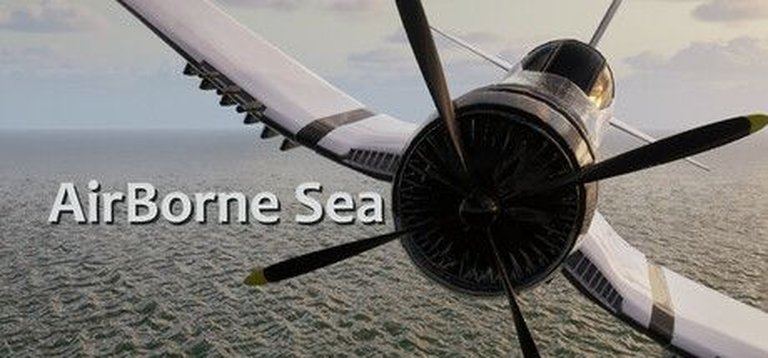
AirBorne Sea is a single-player, first-person shooter set on the bow of a battleship during naval warfare, where players control a mouse-aimed anti-aircraft gun to defend against relentless waves of enemy aircraft including fighters, bombers, torpedo bombers, and attack planes. Progress through progressively difficult levels by achieving kill targets, earning points to purchase upgrades for the cannon, missiles, ship defenses, and perks, all built in Unreal Engine 5.
Gameplay Videos
Where to Buy AirBorne Sea
PC
AirBorne Sea Reviews & Reception
steambase.io (95/100): has earned a Player Score of 95 / 100. This score is calculated from 19 total reviews which give it a rating of Positive.
store.steampowered.com (92/100): 92% of the 14 user reviews for this game are positive.
steamcommunity.com : Overall, it’s a decent game. Good job Dev 🙂
AirBorne Sea: Review
Introduction
In the vast ocean of modern indie shooters, where hyper-realistic battle royales and sprawling open-world epics dominate, AirBorne Sea emerges like a rogue wave—a compact, unapologetically arcade-style naval defender that harkens back to the golden age of score-chasing shoot ’em ups. Developed single-handedly (with collaborative touches) by WerFEST Software and released in full on September 12, 2024, after a year in Early Access, this $9.99 Steam title plants you behind a 40mm anti-aircraft gun on a battleship’s bow, fending off relentless waves of WWII-inspired enemy planes. Its hook? Pure, adrenaline-fueled simplicity: the roar of cannons, the fiery ballet of exploding aircraft, and the ticking clock of your ship’s survival. As a game historian, I see echoes of classics like Airborne Ranger (1987) and rail shooters from the arcade era, but AirBorne Sea carves its niche with modern Unreal Engine polish and iterative passion. My thesis: This is a triumphant underdog tale of solo-dev grit, delivering addictive, upgrade-driven defense gameplay that punches above its weight, even if its minimalist narrative and scope limit its transcendence to legend status.
Development History & Context
AirBorne Sea is the brainchild of WerFEST Software, a remote indie outfit led primarily by a solo developer whose journey began in early 2022 as a nostalgic “aircraft shooting range (naval battler)” inspired by childhood games. Showcased first on Unreal Engine forums in July 2022, the project evolved through meticulous devlogs, transforming from rudimentary prototypes—complete with placeholder models and basic VFX—into a refined Steam title. WerFEST’s vision was clear: recapture the thrill of defending a battleship from aerial onslaughts, blending arcade intensity with progression systems absent in pure retro clones.
Built initially on Unreal Engine 4 (with a roadmap pivot to UE5 for enhanced graphics and optimization), the game navigated the indie landscape of 2023-2024, a period flooded with procedural roguelites and live-service giants. Technological constraints were self-imposed; WerFEST optimized for mid-range PCs (min spec: GTX 1060, 4GB RAM), focusing on procedural environment generation amid resource limitations—no massive teams or AAA budgets here. Early Access launched August 4, 2023, after Steam page wishlisting campaigns and demo releases, allowing community feedback to shape updates like overheating mechanics (replacing clunky ammo limits) and multilingual support (11 languages by launch, including Russian, French, and Japanese).
The gaming context was ripe for such a throwback: post-COVID arcades-in-exile like Asphalt 8: Airborne and naval sims (World of Warships) thrived, but AirBorne Sea stood apart as a “mouse-controlled shooter” emphasizing direct control over spectacle. Devlogs reveal relentless iteration—fixing torpedoes, adding ship bots, refining HUD—mirroring solo-dev triumphs like Stardew Valley. Challenges abounded: sound design delays pushed full release, and 2024 roadmaps prioritize UE5 migration, controller bugs, and immersiveness. Priced accessibly amid Steam sales, it embodies indie resilience in an era where 76,000+ games vie for attention on ModDB alone.
Narrative & Thematic Deep Dive
AirBorne Sea forgoes cinematic cutscenes or branching stories for a stark, mission-driven vignette: You’re an unnamed gunner on a lone battleship, thrust into a war-torn sea where “the smell of napalm in the morning” mingles with salt spray. The “plot” unfolds across progressively brutal levels, each demanding a kill quota amid escalating aggression—no dialogue, no characters beyond faceless foes and allied ship bots. Enemy types—attack aircraft, fighters, torpedo bombers, bombers, and aces—serve as thematic antagonists, embodying the relentless Pacific Theater air raids of WWII, with torpedoes threatening hull integrity and bombers pounding decks.
Thematically, it’s a meditation on survival and marksmanship in anonymous warfare. The poetic blurb—”send present with 14 pounds of lead to bad guys and enjoy fireworks of planes burns like a red coal carpet”—evokes Apocalypse Now‘s visceral chaos, underscoring isolation: your ship as a fragile bastion against “heavens… behind your back.” Upgrades (perks like bomber shields, torpedo defense, radar) symbolize resource-scarce improvisation, critiquing war’s grind without preachiness. Medals and stats screens add meta-layering, turning runs into personal legends akin to Team Fortress 2 badges.
Yet, depth is arcade-shallow; no lore dumps or pilot backstories limit emotional investment. Custom and hardcore modes hint at emergent narratives—player-defined hellscapes—but the core loop prioritizes mechanical poetry over scripted drama. In historical context, it nods to real AA gunnery (40mm Bofors, RIM-7 Sea Sparrow missiles), blending authenticity with abstraction for thematic punch: one gunner vs. the sky.
Gameplay Mechanics & Systems
At its core, AirBorne Sea is an on-rails tower defense shooter hybrid, your fixed turret traversing a dynamic ocean via mouse-look (with sensitivity/inversion options). Waves demand quota kills, blending score attack with survival; ship health depletes from hits/torpedoes, ending runs on zero HP. Direct control shines: fluid cannon rotation, overheating gauge (glows red on barrels/UI), and homing RIM-7 missiles (targeted by glowing frames) create rhythmic intensity.
Core Loops: Levels ramp difficulty—more foes, aggression—via procedural generation. Earn XP for kills, spend on 10+ perks (e.g., damage boost, reload disable, missile volleys, projectile speed). Early Access evolutions fixed pain points: torpedoes now destructible, LODs for performance, custom ammo tables per level. UI excels post-updates—top-screen enemy counters, split health/overheat bars, pause-on-minimize—making chaos readable.
Combat & Progression: Varied planes force adaptation—dodge agile fighters, prioritize torpedo bombers. Allies (ship bots firing “poom-poom”) aid without trivializing. Innovative: destructible planes shatter with refraction VFX, water splashes globalize impacts. Flaws? Elevation limits frustrate (per forums), controller quirks persist. Custom mode lets players script scenarios; hardcore tests limits. Achievements (19 Steam) reward milestones, fostering replayability in short bursts (few hours/session).
Systems cohere into addictive escalation, echoing Pac-Man‘s intensity, but shine via upgrades: from pea-shooter to missile-spewing fortress.
World-Building, Art & Sound
The setting—a procedurally generated wartime sea—immerses via isolation: endless waves under dynamic skies (weather, fog, day/night teases). Battleship bow feels lived-in—painted hulls, second gunner WIP—amid background fleets firing/illuminating. Art direction: realistic yet stylized UE5 visuals (post-launch migration planned), with sparks on hits, plane debris, new water sims. VFX pop—explosions refract, falls ripple massively—elevating arcade roots.
Sound design, a post-EA focus, transforms: rich SFX (cannon booms, propeller whirs, crashes), spatial music, full audio in 11 languages. Free assets iterated to “reveal the game even better,” with HDR/color correction enhancing napalm glows. Atmosphere builds tension—distant engines swell to roars—making each salvo visceral. Contributions: bots add chaos, friendly fire scars allies. Overall, elements forge a taut, breezy naval inferno, though 2024 roadmaps eye deeper day/night, concussions for polish.
Reception & Legacy
Launch reception skewed niche-positive: Steam’s 92-95% (14-19 reviews) praises arcade purity (“decent game,” intense loops), but low volume (1-18 peak players) reflects obscurity—no MobyGames/Metacritic critics, ModDB rank 1,846/76k. Early Access demos built wishlists; forums buzzed updates (e.g., overheating lauded). Commercial: $9.99 yields steady support, family sharing/HDR broadens appeal.
Legacy evolves as indie archetype: solo-dev success story influencing micro-shooters amid UE5 indies. Echoes Airborne Ranger, inspires naval arcs in Airborne Empire. Post-1.0 roadmap (UE5, free mode, skills rework) promises growth; if realized, it cements as cult score-chaser. Currently, a hidden gem for shoot ’em up historians, its influence ripples via devlogs modeling transparent iteration.
Conclusion
AirBorne Sea distills naval warfare to euphoric essence: mouse-flicked leads raining skyward, ships enduring amid pyrotechnics. WerFEST’s odyssey—from 2022 prototypes to polished UE defender—yields mechanically sound, progressively addictive gameplay, bolstered by iterative art/sound. Shortcomings (light narrative, scope) temper ambitions, but fervent reception affirms its charm. In video game history, it claims a foothold as exemplary indie arcade revival—8.5/10, essential for turret enthusiasts, a blueprint for passion-driven solos. Hoist the anchor; the skies await.