
- Release Year: 2018
- Platforms: Macintosh, Nintendo Switch, PlayStation 4, Windows, Xbox One
- Publisher: Blindflug Studios AG, MP Digital, LLC
- Developer: Blindflug Studios AG
- Genre: Action, Roguelike, Shooter
- Perspective: Diagonal-down
- Game Mode: Single-player
- Gameplay: Crafting, Flight, Permadeath, Procedural generation
- Setting: dieselpunk, Sky
- Average Score: 61/100
Description
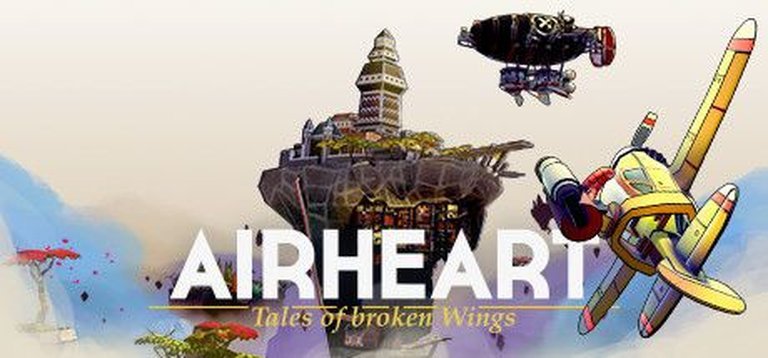
Airheart: Tales of Broken Wings is a roguelike arcade shooter set in a whimsical, sky-bound world where players take on the role of Amelia, a young pilot navigating a floating archipelago filled with danger and adventure. The game blends flight combat, resource gathering, and crafting as players upgrade their plane, battle pirates, and explore a vibrant, hand-drawn 2D world, all while facing the threat of permadeath and the challenge of surviving in a treacherous sky.
Gameplay Videos
Where to Buy Airheart: Tales of Broken Wings
PC
Airheart: Tales of Broken Wings Cracks & Fixes
Airheart: Tales of Broken Wings Patches & Updates
Airheart: Tales of Broken Wings Guides & Walkthroughs
Airheart: Tales of Broken Wings Reviews & Reception
opencritic.com (60/100): A solid time. A decent enough story with some fantastic world-building, fun progression via crafting, and some really intense quick decisions to be made.
metacritic.com (63/100): A touching, beautiful game that starts off excitedly but quickly loses its momentum unless you enjoy excessive amounts of repetitive content.
nintendolife.com (60/100): A solid time. A decent enough story with some fantastic world-building, fun progression via crafting, and some really intense quick decisions to be made.
indiegamewebsite.com : Awesome visuals and sound in this rogue-like airplane adventure.
Airheart: Tales of Broken Wings Cheats & Codes
Nintendo Switch (Atmosphere / EdiZon / SXOS)
Use Atmosphere / EdiZon / SXOS to apply the following cheat codes.
| Code | Effect |
|---|---|
| 580F0000 033A8F98 580F1000 000000A0 580F1000 00000000 580F1000 00000018 580F1000 00000010 580F1000 00000018 780F0000 00000014 640F0000 00000000 0000270F |
9999 oil |
| 580F0000 033A8F98 580F1000 000000A0 580F1000 00000000 580F1000 00000018 580F1000 00000010 580F1000 00000018 780F0000 00000018 640F0000 00000000 000F423F |
99999 money |
| 580F0000 033A8F28 580F1000 000000A0 580F1000 00000000 580F1000 000000F8 580F1000 00000020 580F1000 00000010 780F0000 00000010 640F0000 00000000 43480000 |
Infinite HP |
PC (Cheat Engine Table v1.0)
Use Cheat Engine to apply the following features.
| Code | Effect |
|---|---|
| Unlimited Money | Activate/Update: Try to buy at Shop |
| Unlimited Oil | Activate: Get Some Oil |
| Unlimited HP | Activate: Get into Stage |
Airheart: Tales of Broken Wings – A Skybound Roguelike with Broken Dreams
Introduction
Airheart: Tales of Broken Wings is a game that soars on the strength of its ambition but stumbles under the weight of its execution. Developed by Swiss studio Blindflug Studios and released in 2018, this dieselpunk-inspired twin-stick shooter blends roguelike mechanics with sky-fishing, airplane combat, and a crafting system that feels both innovative and frustratingly opaque. Set in the floating city of Granaria, players take on the role of Amelia, a young pilot and fisherwoman determined to reach the stratosphere and catch the legendary Skywhale—a quest that promises riches, glory, and the fulfillment of her late father’s dream.
At its core, Airheart is a game of contrasts: its vibrant, handcrafted visuals and soaring soundtrack clash with its repetitive gameplay loops and punishing permadeath mechanics. The game’s premise is undeniably charming—a world where fish swim through the skies, pirates lurk in the clouds, and every flight is a gamble between fortune and failure. Yet, for all its creativity, Airheart struggles to maintain momentum, bogged down by grinding, unclear mechanics, and a lack of meaningful progression that leaves players feeling more like they’re treading water than soaring through the heavens.
This review will dissect Airheart in exhaustive detail, examining its development history, narrative and thematic depth, gameplay systems, artistic achievements, critical reception, and lasting legacy. By the end, we’ll determine whether this skybound adventure is a hidden gem or a cautionary tale of unfulfilled potential.
Development History & Context
The Studio Behind the Wings
Blindflug Studios AG, based in Zurich, Switzerland, is a small but ambitious indie developer with a portfolio that includes Cloud Chasers (2016), a mobile game that served as a spiritual precursor to Airheart. The studio’s name—German for “blind flight”—hints at its fascination with aviation and exploration, themes that permeate Airheart. The game was developed over several years, with an Early Access period on Steam beginning in October 2016, allowing the team to refine its mechanics based on player feedback.
The studio’s creative lead, Jeremy Spillmann, also served as the 2D artist, giving the game a cohesive visual identity. The team was small but passionate, with key contributors like programmer Michael Müller handling gameplay crafting and Radek Paszkowski (credited as “Programming, AI & Shader Wizardry”) adding technical polish. The game’s narrative was penned by Patrick Coursey, while voice acting for Amelia was provided by Kira Buckland, a veteran of anime and video game voice work (Fire Emblem, Persona 5).
Technological Constraints and Design Choices
Airheart was built using the Unity engine, a common choice for indie developers due to its accessibility and cross-platform capabilities. The game’s isometric, diagonal-down perspective was a deliberate stylistic choice, evoking classic arcade shooters while allowing for vertical exploration—a rarity in the twin-stick shooter genre. The decision to stack levels vertically, with each “sky layer” built atop the previous one, created a sense of scale and progression, though it also introduced navigational challenges.
One of the game’s most controversial design choices was its permadeath mechanic. Unlike many roguelikes, where death resets progress but retains some meta-progression (e.g., unlocked items or upgrades), Airheart often forces players to start from scratch if they fail to crash-land on Granaria. This punishing approach was intended to heighten tension but instead alienated many players, who found the risk-reward balance skewed too far toward frustration.
The Gaming Landscape in 2018
Airheart launched into a crowded market. The roguelike/roguelite genre was in full swing, with games like Dead Cells (2018), Hades (2018 Early Access), and Into the Breach (2018) setting high standards for procedural generation, tight gameplay loops, and narrative integration. Twin-stick shooters were also well-represented, with Nuclear Throne (2015) and Enter the Gungeon (2016) proving that the genre could thrive with deep mechanics and replayability.
Against this backdrop, Airheart struggled to carve out a niche. Its unique setting and sky-fishing premise were eye-catching, but its lack of procedural generation (levels are handcrafted but static) and repetitive grinding made it feel outdated compared to its peers. The game’s dieselpunk aesthetic—a blend of 1920s industrial design and retro-futurism—was another point of differentiation, but it wasn’t enough to overcome the gameplay’s shortcomings.
Narrative & Thematic Deep Dive
The Story: A Tale of Loss and Ambition
Airheart’s narrative is simple but effective. Amelia, the protagonist, is a young woman who lost her father during their journey to Granaria, the floating city. Now, she ekes out a living as a sky fisherwoman, harvesting valuable fish oil to sell in the city’s markets. Her ultimate goal is to reach the stratosphere and catch the legendary Skywhale, a feat that would secure her fortune and honor her father’s memory.
The story is told through sparse cutscenes and environmental storytelling. Amelia’s internal monologue (voiced by Kira Buckland) provides occasional insight into her motivations, but the game’s narrative is largely secondary to its gameplay. This minimalist approach works in some ways—it keeps the focus on exploration and survival—but it also leaves the world feeling underdeveloped. Granaria, for instance, is a fascinating concept (a city built on social inequality and ecological collapse), but it’s barely explored beyond a few NPC interactions.
Themes: Ecology, Capitalism, and the Cost of Ambition
Airheart’s most compelling themes revolve around environmental degradation and economic disparity. The game’s sky-fishing mechanic is more than just a gameplay gimmick; it’s a commentary on overfishing and resource depletion. As players ascend through the sky layers, they’ll notice that fish populations dwindle over time, mirroring real-world ecological collapse. This isn’t just flavor text—it’s a mechanical reality. If players overfish the lower layers, they’ll find fewer resources on subsequent runs, forcing them to venture higher (and into greater danger) to survive.
The game also touches on class struggle. Granaria is a city of haves and have-nots, where the wealthy live in luxury while the poor (like Amelia) risk their lives to scrape together a living. The sky pirates, who serve as the game’s primary antagonists, are a manifestation of this inequality—desperate individuals turned to banditry in a world where the system is rigged against them.
Characters: Amelia and the Sky Pirates
Amelia is a sympathetic protagonist, but she’s also something of a cipher. Her voice acting is solid, but the game doesn’t give her much depth beyond her quest for the Skywhale. The sky pirates, meanwhile, are more interesting as a concept than as individuals. They’re portrayed as ruthless but also as victims of circumstance, adding a layer of moral ambiguity to the combat. Unfortunately, the game doesn’t explore their backstories in any meaningful way, leaving them as little more than cannon fodder.
Dialogue and Writing
The writing in Airheart is functional but unremarkable. The game’s few NPC interactions are brief and often repetitive, and the lack of a deeper narrative means that the dialogue rarely rises above exposition. That said, the game’s environmental storytelling is strong. The way the sky layers change as you ascend—from lush, fish-filled skies to barren, pirate-infested wastelands—tells a story of its own, one of decline and desperation.
Gameplay Mechanics & Systems
Core Gameplay Loop: Fish, Fight, Craft, Repeat
Airheart’s gameplay revolves around a simple but punishing loop:
1. Take Off: Start from Granaria with your current plane configuration.
2. Ascend and Explore: Fly through sky layers, collecting fish (for oil/money), scrap (for crafting), and avoiding or fighting pirates.
3. Engage in Combat: Use your plane’s weapons (guns, lasers, etc.) and harpoon to fend off enemies. The harpoon is particularly versatile—it can disarm turrets, steal weapons, or drag enemies back to base for dismantling.
4. Return to Base: Crash-land (or safely land) in Granaria to sell fish oil, craft new parts, and upgrade your plane.
5. Repeat: Venture higher, face tougher enemies, and inch closer to the Skywhale.
This loop is engaging at first, but it quickly becomes repetitive. The lack of procedural generation means that each sky layer is static, and the grinding required to upgrade your plane can feel tedious. The game’s permadeath mechanic exacerbates this issue—losing your plane (and all its upgrades) after a failed crash-landing is devastating, especially since the controls during these sequences are finicky.
Combat and Controls: A Mixed Bag
Combat in Airheart is a twin-stick affair, with the left stick controlling movement and the right stick aiming your weapons. The game offers two control schemes:
– Relative Controls: Push left/right to steer the plane.
– Absolute Controls: Point in the direction you want to move.
Most players (and critics) found Relative Controls more intuitive, but even then, the plane’s movement can feel sluggish, especially during dogfights. The harpoon mechanic is a highlight—it’s satisfying to snag an enemy’s weapon or drag a pirate plane back to base—but it’s underutilized in the later stages, where brute force (i.e., better guns) becomes the dominant strategy.
Crafting System: A Puzzle with a Steep Learning Curve
The crafting system is Airheart’s most innovative (and divisive) feature. Instead of a traditional recipe-based system, crafting in Airheart works like a puzzle. Players combine scrap materials in a workshop, experimenting with different combinations to discover new parts. The game provides hints (e.g., “this combination is close but missing one component”), but there’s no in-game guide—players are expected to figure it out through trial and error.
This system is clever in theory, but it’s frustrating in practice. The lack of a tutorial or recipe list means that players often waste resources on failed experiments. Worse, the crafting interface is clunky, and the feedback is vague. Some players (like those at The Indie Game Website) compared it to Doodle God, where discovery is part of the fun, but others found it needlessly opaque.
Progression and Permadeath: A Punishing Grind
Progression in Airheart is tied to your plane’s upgrades, which are lost if you fail to crash-land safely. This permadeath mechanic is the game’s most controversial feature. On one hand, it adds tension—every flight feels like a gamble. On the other hand, it’s demoralizing to lose hours of progress due to a single mistake, especially since the crash-landing minigame is more about luck than skill.
The game does offer a “normal mode” without permadeath, but even then, the grinding is excessive. Upgrading your plane requires vast amounts of fish oil and scrap, and the lack of fast travel means that players must repeatedly traverse the same sky layers to gather resources. This repetition is the game’s biggest flaw—it turns what should be an exhilarating adventure into a chore.
UI and Quality-of-Life Issues
The UI in Airheart is functional but unpolished. The crafting menu is cluttered, and the lack of tooltips or explanations for mechanics (like overfishing or enemy behaviors) forces players to rely on external guides. The game’s tutorial is minimal, covering only the basics and leaving players to figure out the rest through trial and error. This design choice might appeal to hardcore fans of roguelikes, but it alienates casual players.
World-Building, Art & Sound
A Dieselpunk Sky Utopia
Airheart’s greatest strength is its world-building. Granaria is a visually stunning city, a dieselpunk metropolis floating among the clouds. The game’s art style is a mix of hand-drawn 2D assets and 3D environments, giving it a unique, storybook-like aesthetic. The sky layers are meticulously designed, each with its own distinct color palette and environmental hazards. Lower layers are lush and teeming with fish, while higher layers are barren and infested with pirates and drones.
The game’s vertical design is particularly impressive. As players ascend, they can look down on the layers below, creating a sense of scale and progression. The transition between layers is seamless, and the way the environment changes—from sunny skies to stormy wastelands—adds to the immersion.
Visual Design: A Feast for the Eyes
The visuals in Airheart are a standout feature. The game’s color palette is vibrant, with each sky layer boasting its own unique hues. The fish designs are whimsical (some resemble real-world species, while others are purely fantastical), and the enemy planes are detailed and varied. The game’s use of lighting is also noteworthy—sunlight filters through the clouds, casting dynamic shadows on the floating islands.
The only visual downside is the occasional camera issue. The fixed top-down perspective can make it difficult to spot enemies or obstacles at the edges of the screen, leading to cheap deaths. This is a common problem in twin-stick shooters, but it’s especially frustrating in Airheart, where a single hit can spell disaster.
Sound Design and Music: A Soaring Soundtrack
The audio design in Airheart is excellent. The game’s soundtrack, composed by Michel Barengo, is a mix of upbeat electronic tracks and atmospheric pieces that shift dynamically as players ascend. The music in the lower layers is light and airy, evoking the freedom of flight, while the higher layers feature more intense, rhythmic tracks that underscore the danger.
The sound effects are equally impressive. The hum of the plane’s engine, the thwip of the harpoon, and the explosions of enemy ships all feel satisfying. The voice acting, while sparse, is well-delivered—Kira Buckland’s performance as Amelia adds a layer of personality to the protagonist.
Reception & Legacy
Critical Reception: A Mixed Bag
Airheart received mixed reviews upon release, with critics praising its visuals, soundtrack, and unique premise but criticizing its repetitive gameplay and punishing mechanics. On Metacritic, the game holds a score of 63/100 (based on 16 critic reviews), while user scores are slightly lower (5.8/10). OpenCritic gives it a 64/100, with only 37% of critics recommending it.
Positive Reviews:
– PSX Extreme (85/100): “If you’re looking for a rogue-like that has a lot of charm and stands out from the crowd, you can’t go wrong with Airheart.”
– Jeuxvideo.com (70/100): “A daring mix of shooter and roguelike in a dieselpunk world… Airheart captivates with its simplicity and effectiveness.”
– PlayStation LifeStyle (7.5/10): “The bizarre-sounding concept of skyfishing feels almost natural. A charming adventure.”
Negative Reviews:
– TheSixthAxis (6/10): “Fails to deliver a game with staying power. Repetitive gameplay and UI issues get in the way.”
– GameCritics (35/100): “Buggy game mechanics and lackluster crafting shoot this little ship out of the sky.”
– Garage Band Gamers (4/10): “With so many great roguelites on the market, it’s hard to recommend Airheart.”
Player Reception: A Niche Appeal
Player reception was similarly divided. On Steam, the game holds a “Very Positive” rating (80% positive from 125 reviews), suggesting that those who enjoyed it really enjoyed it, while others found it frustrating. Common praises included:
– The game’s visuals and soundtrack.
– The satisfaction of discovering new crafting recipes.
– The unique premise and world-building.
Common criticisms included:
– The grinding and repetitive gameplay.
– The punishing permadeath mechanic.
– The lack of tutorials or clear explanations for mechanics.
Legacy: A Cult Classic or a Forgotten Experiment?
Airheart hasn’t had a significant impact on the gaming industry, but it has developed a small, dedicated fanbase. Its unique blend of sky-fishing, dieselpunk aesthetics, and roguelike mechanics makes it a standout title in the indie scene, even if its execution is flawed. The game’s biggest legacy may be its ambition—it’s a title that dared to be different, even if it didn’t quite stick the landing.
Conclusion: A Game of Highs and Lows
Airheart: Tales of Broken Wings is a game of contradictions. It’s visually stunning but mechanically repetitive. Its crafting system is innovative but frustratingly opaque. Its world is rich with potential but underdeveloped in execution. For every moment of soaring triumph—like finally crafting a powerful new weapon or narrowly escaping a pirate ambush—there’s a moment of crushing disappointment, like losing hours of progress to a botched crash-landing.
Final Verdict: 6.5/10 – A Flawed but Fascinating Experiment
Airheart is not a bad game, but it’s not a great one either. It’s a game that will appeal to a niche audience—players who enjoy punishing roguelikes, experimental crafting systems, and dieselpunk aesthetics. For everyone else, its repetitive grinding and lack of meaningful progression will likely prove too frustrating to overcome.
That said, Airheart is worth experiencing for its sheer ambition. Few games dare to blend sky-fishing, airplane combat, and ecological commentary into a single package, and even fewer do so with such style. If you can look past its flaws, there’s a charming, if imperfect, adventure waiting in the skies of Granaria.
Recommendation:
– Play it if: You enjoy roguelikes with unique premises, love dieselpunk aesthetics, or are fascinated by experimental crafting systems.
– Skip it if: You dislike grinding, prefer games with clear tutorials, or are easily frustrated by punishing permadeath mechanics.
In the end, Airheart: Tales of Broken Wings is a game that soars on creativity but stumbles on execution—a fitting metaphor for Amelia’s own skybound journey.