
- Release Year: 2024
- Platforms: PlayStation 5, Windows, Xbox Series
- Publisher: Plaion GmbH (Austria)
- Developer: Evil Raptor
- Genre: Action, Adventure, Platformer
- Perspective: Behind view
- Game Mode: Single-player
- Gameplay: Hacking, Platform, Run and gun, Shooter, Spaceship piloting, Stealth
- Setting: Futuristic, Sci-fi
- Average Score: 65/100
Description
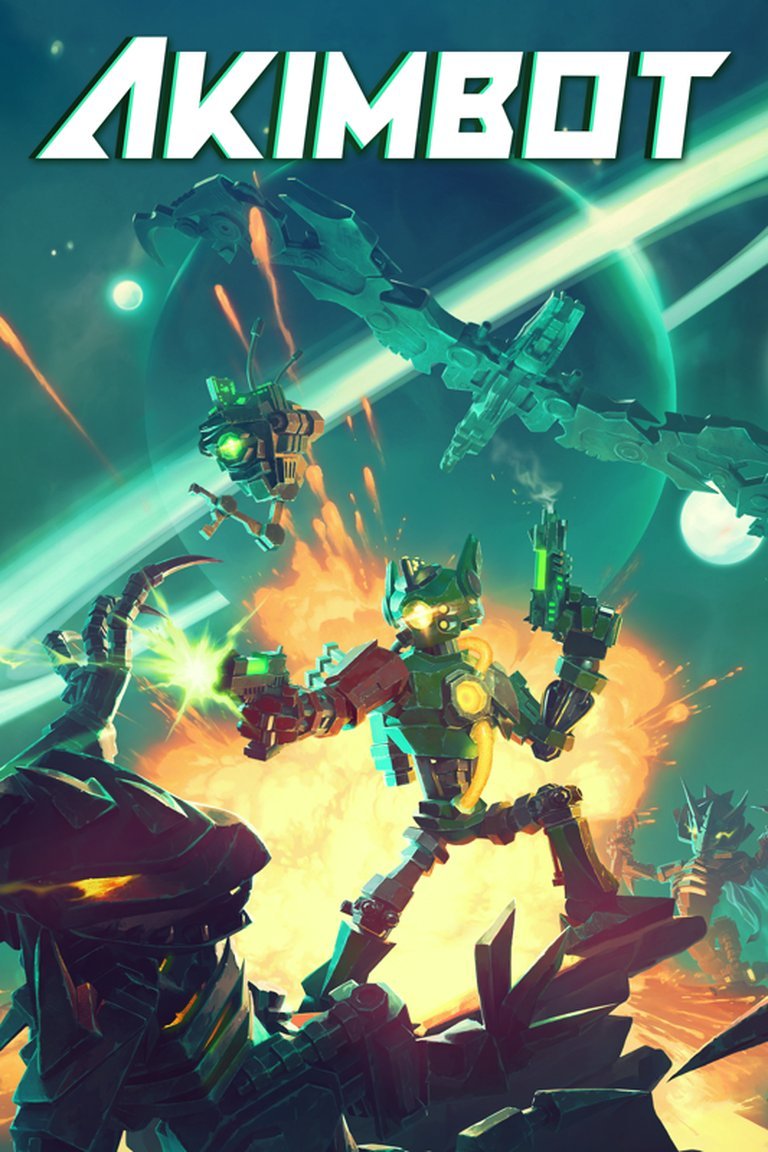
Akimbot is an action-platformer set in a sci-fi future, developed by Evil Raptor and published by Plaion GmbH. The game blends classic PS2-era platforming mechanics with third-person shooter elements, featuring vibrant environments, explosive gunplay, and a mix of adventure gameplay reminiscent of titles like Ratchet & Clank and Jak & Daxter. Players navigate futuristic landscapes while battling enemies and utilizing an arsenal of firearms, available on Windows, PlayStation 5, and Xbox Series since August 2024.
Gameplay Videos
Where to Buy Akimbot
Akimbot Free Download
Akimbot Mods
Akimbot Guides & Walkthroughs
Akimbot Reviews & Reception
metacritic.com (65/100): It was supposed to become a star and an iconic game, and it may have convinced someone of that. But certainly not all. Many expected more. The Developers failed to elevate any aspect of this game to anything more than very mediocre.
lordsofgaming.net : Despite some loose screws in need of tightening, this bot is locked and loaded for adventure.
gamecritics.com : After rolling credits, I was disappointed — with a bit more polish and inspiration, it could have been so much more.
opencritic.com (66/100): Akimbot is a fun platformer that can be expanded upon with a sequel.
Akimbot: Review
Introduction
In an era dominated by remakes and sequels, Akimbot emerges as a bold, unapologetic love letter to the golden age of 3D platformers. Released on August 29, 2024, by Evil Raptor and Plaion, this French indie title plunges players into a vibrant, robot-populated universe reminiscent of Ratchet & Clank and Jak & Daxter‘s PS2 heyday. Its premise is deceptively simple: guide the assassin robot Exe and his motley drone sidekick Shipset across galaxies to foil the rogue scientist Evilware’s cosmic rampage. Yet, beneath its explosive, high-octane exterior lies a game of dual identities—a nostalgic tribute that simultaneously struggles to carve out its own legacy. Akimbot captures the chaotic charm of its inspirations but falters under the weight of its own ambitions, resulting in an experience that is both a delightful romp and a cautionary tale of homage without innovation. This review delves into the game’s intricate layers to reveal why it resonates as a flawed yet enduring artifact of modern indie game development.
Development History & Context
A Studio’s Vision and Technological Ambition
Evil Raptor, a small French studio founded by Nicolas Meyssonnier (creative lead and head of studio), approached Akimbot with a clear mission: to “relive the feelings” of childhood nostalgia while leveraging modern technology. The team, comprising just 205 developers and contributors, utilized Unreal Engine 5 to craft a visually ambitious experience—a bold choice for an indie project. Meyssonnier, whose prior work included the well-received Pumpkin Jack, aimed to channel the spirit of PS2-era classics like Ratchet & Clank and Jak & Daxter, infusing them with contemporary polish. As he stated in a MonsterVine interview, the goal was to create an atmosphere that evokes nostalgia while “staying at the top of the technology and continually reinventing gameplay mechanics.” This vision was ambitious, given the genre’s niche status in 2024, where 3D platformers have been overshadowed by open-world epics and remasters.
Constraints and the Gaming Landscape
Developed over several years, Akimbot faced the classic indie dilemma: balancing creative scope with resource limitations. The team embraced constraints by focusing on a core duo (Exe and Shipset) and a focused narrative, yet the game’s scale—spanning multiple planets and time periods—stretched their capabilities. Technically, Unreal Engine 5 enabled lush, colorful environments but also led to performance inconsistencies, particularly on consoles where screen tearing plagued the PS5 and Xbox Series X versions. Released at an accessible $19.99, Akimbot positioned itself as an affordable alternative to AAA platformers, capitalizing on a market starved for PS2-style run-and-gun adventures. Its timing was strategic, filling a void left by the lack of new entries in franchises like Ratchet & Clank. However, the game’s development also underscored the challenges of emulating genre titans—without the resources of a studio like Insomniac Games, Evil Raptor had to innovate within constraints, leading to both triumphs and compromises.
Narrative & Thematic Deep Dive
Plot and Character Dynamics
Akimbot‘s narrative is a zany, self-aware sci-fi romp centered on Exe, a brooding robot mercenary, and Shipset, a wisecracking drone companion. Their journey begins with a prison break, thrusting them into a galaxy-spanning quest to stop Evilware, a rogue scientist bent on erasing the Algorithm (the robot government) using a time-warping artifact. The plot embraces absurdity—think time-traveling T-Rex bots and intergalactic warfare—yet its execution is uneven. The core arc of Exe and Shipset’s evolving relationship is the narrative’s strongest element. Initially, Shipset is a liability, his sarcastic banter (“I’m the brains, you’re the brawn!”) grating as he leeches off Exe’s skills. By the game’s midpoint, however, their dynamic matures into a genuine partnership, with Shipset’s comedic relief serving as a counterpoint to Exe’s stoicism. This mirrors Ratchet & Clank‘s buddy-comedy formula, though Exe’s arc as a “reluctant hero” lacks the emotional depth of Ratchet’s growth. Supporting characters, such as the stern Ambastor and unhinged Evilware, feel underdeveloped, serving as plot devices rather than fully realized figures. Evilware, in particular, is a one-note villain, his chaos driven by cartoonish malice rather than nuanced motivation.
Dialogue, Themes, and Execution
The dialogue, penned by Reece Bridger (who also voices Exe and Shipset), is a double-edged sword. Bridger’s performance is energetic, with Exe’s gruff delivery and Shipset’s rapid-fire quips providing moments of genuine humor (“We’re doomed! Doomed… but stylishly!”). Yet, much of the writing feels forced, relying on outdated tropes like “bot” and “scrap” as stand-ins for profanity. The themes of power and corruption—embodied by the Algorithm’s authoritarian rule versus Evilware’s anarchy—are intriguing but superficial. The game hints at philosophical questions about what makes a “hero,” but these threads are never fully explored. Narrative cohesion suffers from pacing issues, with repetitive missions and a plot that telegraphs developments (“Of course he’s a double agent!”). While Akimbot succeeds in capturing the lighthearted tone of PS2 platformers, its narrative remains a “more-of-the-same” affair—charming but forgettable.
Gameplay Mechanics & Systems
Core Platforming and Combat
Akimbot‘s gameplay is a masterclass in homage, blending responsive platforming with explosive combat. Exe controls with fluidity: double jumps, air dashes, wall runs, and a grappling hook form a versatile toolkit that echoes Jak & Daxter‘s movement. The platforming is solid, though occasionally hampered by janky physics—e.g., misaligned wall-run transitions or finicky double-jump timing. Later levels compound these mechanics, requiring precision during airborne battles where players must shoot while navigating platforms. Combat, meanwhile, channels Ratchet & Clank: Deadlocked‘s intensity, with Exe auto-strafing while aiming. His arsenal, however, is a mixed bag. Starting with a standard assault rifle, players unlock a sniper rifle, rocket launcher, and minigun. The sniper rifle quickly dominates, dispatching most foes in two shots, rendering other weapons redundant. Special weapons— purchasable with “Botcoins” earned from destroying crates and enemies—add variety but feel tacked-on. The Plasma Rifle, for instance, is overpowered, while others like the Akimbos (dual pistols) are niche upgrades. Weapon upgrades are limited to three tiers for special items, with no mods for primary guns, leading to a flat progression system. Enemies suffer from repetition—robotic bats, shielded grunts, and flying drones—with little variation in tactics, making combat feel monotonous despite its satisfying feedback.
Gameplay Variety and Polish
Akimbot avoids stagnation with eclectic diversions. Vehicle segments range from buggy rides (reminiscent of Jak 3) to spaceship battles evoking Star Fox. While some, like the T-Rex charge sequences, are thrilling, others—particularly the driving sections—are clunky, with unresponsive controls that frustrate more than entertain. Hacking mini-games (Snake-style puzzles, button sequences) appear but lack depth, serving as filler rather than engaging challenges. The checkpoint system is generous, respawning players at the point of death—a welcome touch given the game’s occasional difficulty spikes. Yet, this generosity highlights underlying flaws: level design is often linear, and exploration feels unrewarding, with collectibles (“Lost Data”) offering only superficial lore. UI is clean but sparse, with no map system, forcing players to rely on environmental cues. Performance is another concern: crashes on PC and screen tearing on consoles mar the experience, though the generous checkpointing mitigates progress loss. Ultimately, Akimbot‘s mechanics are a triumph of nostalgia but a letdown of innovation—fun in bursts, yet lacking the depth to sustain long-term engagement.
World-Building, Art & Sound
Visual Design and Atmosphere
Akimbot‘s art direction is its crowning achievement. Built on Unreal Engine 5, the game delivers a vibrant, painterly aesthetic that channels PS2-era platformers through a modern lens. Planets are diverse and imaginative: a sun-drenched beach opening gives way to war-torn battlefields, icy caves, and psychedelic dream sequences. Environments pop with bold colors, from neon-lit cities to dusty deserts, creating a sense of scale that makes traversal feel grand. Character design is equally strong—Exe, with his bulky armor and energy-fueled dashes, resembles a Ratchet & Clank protagonist, while Shipset’s single-arm, drone-like form adds visual distinction. However, the world feels hollow. Despite its beauty, Akimbot‘s planets are devoid of NPCs or interactive elements, serving as mere backdrops for combat and platforming. Time-travel mechanics add unique touches—past desert levels with sand storms that obscure platforms—but these moments are fleeting. The game’s “robot-only” universe is a clever conceit, yet it limits world-building; factions like Evilware’s Abyssal aquatic army or the Algorithm’s enforcers are visual set pieces rather than cultures. This surface-level beauty makes Akimbot a visual treat but an immersive letdown.
Audio Design and Musical Score
The soundtrack is a standout, composed by Ludovic Frances (Telurik) to evoke the whimsical intensity of PS2 platformers. Tracks like the beach-level theme blend nostalgia with originality, while the mid-game spaceship chase sequence elevates the core theme into an epic, memorable crescendo. Sound design is equally polished—robotic footsteps, weapon discharges, and Exe’s dash effects (green flames, whirring servos) create tactile feedback. Voice acting, led by Reece Bridger, is a mixed bag. Bridger’s chemistry with himself as Exe and Shipset is palpable, but Shipset’s constant quips wear thin for some players, echoing divisive characters like Claptrap from Borderlands. The score’s strength lies in its ability to mirror the gameplay’s highs and lows—soaring during boss fights, jaunty during exploration—yet it can’t compensate for the narrative’s shallowness. In a game where audio carries significant emotional weight, Akimbot‘s sound design is a triumph, proving that even in a visually driven genre, sound can define a world.
Reception & Legacy
Launch Reception and Critical Consensus
Akimbot debuted to a mixed but generally positive reception, reflecting its identity as a niche homage. On Metacritic, it scored 65/100 (PC) and 71/100 (PS5), with critics praising its presentation, platforming, and value proposition. MKAU Gaming lauded it as a “great mix of platformer and action-adventure,” awarding 90%, while Gamereactor International highlighted its “modern twist” on classics, noting it was “not merely a clone.” However, criticisms centered on repetitive combat, shallow storytelling, and technical hiccups. GameCritics dismissed it as a “middling, uninspired entry,” while Xbox Tavern infamously called it a “deeply unrewarding experience.” Player reviews on Steam were more forgiving, with an 8.1/10 “Very Positive” rating, citing its nostalgia and fun factor. The game’s $19.99 price point was frequently cited as a redeeming quality, positioning it as an accessible alternative to AAA titles. Commercially, it remains a cult hit—scoring a #6,606 ranking on PC and #591 on PS5 in MobyGames’ database—with modest sales reflecting its niche appeal.
Long-Term Legacy and Influence
In the annals of gaming history, Akimbot occupies a peculiar space: a “genre purist’s delight” that underscores the difficulty of emulating classics. Its legacy is twofold. First, it revitalized interest in 3D platformers, proving there’s an audience for PS2-style run-and-gun adventures—a void filled partly by the delayed Ratchet & Clank: Rift Apart. Second, it serves as a case study in homage development. Evil Raptor’s success lies in nailing the feel of its inspirations, while its failures—limited weapon variety, world-building depth—highlight the genre’s complex demands. The game’s divisive reception mirrors Pumpkin Jack‘s trajectory, but its stronger mechanics and charm have fostered hope for a sequel. As Lords of Gaming noted, “Exe and Shipset can take off on another adventure in the future.” Industry-wise, Akimbot may inspire indies to tackle 3D platformers, but it also underscores the risk of relying too heavily on nostalgia without innovation. Its place in history is secure as a flawed, heartfelt tribute—a “blast from the past” that reminds us why we fell in love with the genre, even as it shows how far we have to go.
Conclusion
Akimbot is a paradox: a loving homage that feels both familiar and frustratingly incomplete. It excels in capturing the spirit of PS2 platformers—its vibrant art, responsive controls, and explosive combat evoke the joy of classics like Ratchet & Clank—yet it stumbles under the weight of its own ambition. The narrative, while charming, is a shallow echo of better-told stories, and the gameplay, fun in bursts, suffers from repetition and limited progression. Its technical quirks—crashes, screen tearing, and a lack of depth in world-building—further mar what could have been a masterpiece. Yet, Akimbot remains endearing. Its heart is in the right place, and its moments of brilliance—whether the soaring soundtrack, the dynamic duo chemistry, or the sheer spectacle of a T-Rex battle—remind us why we cherish this genre. For fans of PS2-era platformers, especially at its budget price, Akimbot is a must-play, a nostalgic romp that scratches an itch left by modern gaming. As for its legacy, it stands as a testament to the challenges of homage development: a game that honors its past while begging for a future. Evil Raptor has laid a strong foundation; here’s hoping the next chapter in Exe and Shipset’s adventure can evolve this promising bot into a legend.