
- Release Year: 2010
- Platforms: Windows
- Publisher: 1C-SoftClub, Lace Mamba Global Ltd., Snowball Studios
- Developer: Springtail Studio
- Genre: Adventure
- Perspective: Side view
- Game Mode: Single-player
- Gameplay: Puzzle
- Setting: Fantasy
- Average Score: 92/100
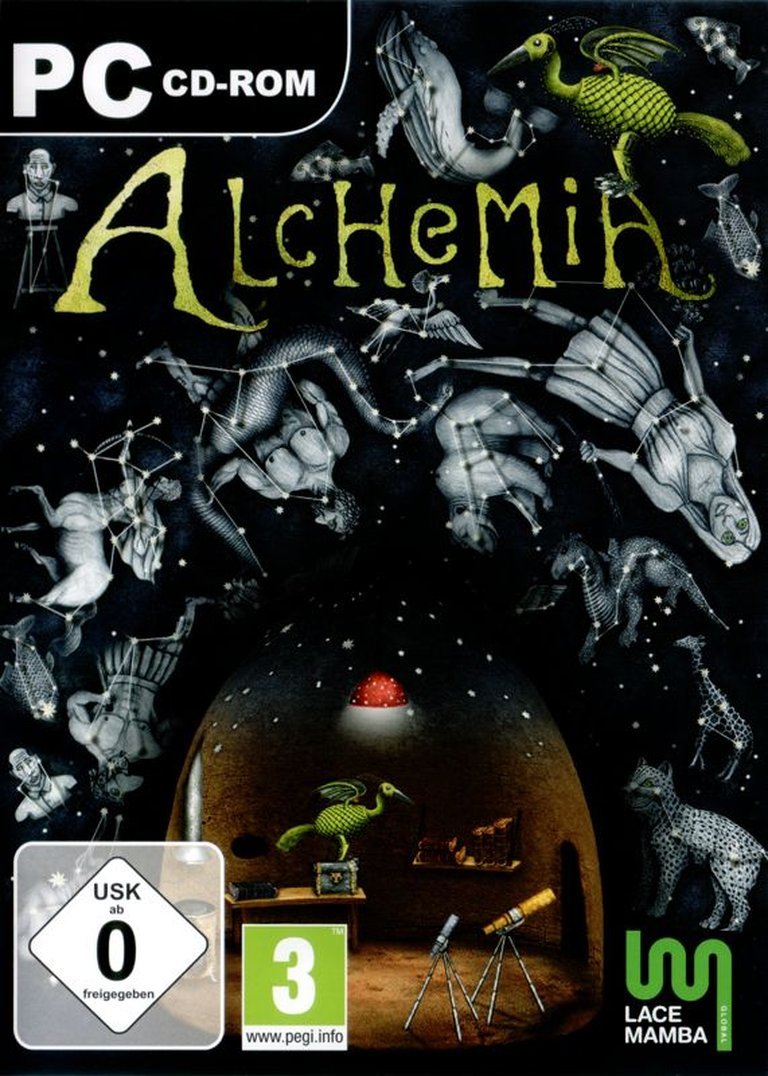
Description
Alchemia: Extended Version is a commercial expansion of the free browser game Alchemia, developed by Springtail Studio. This fantasy adventure game, with a side-view perspective and puzzle-based gameplay, adds 5 additional levels and 9 new locations to the original story, featuring surreal visuals that contrast nature and technology, reminiscent of titles like Samorost.
Alchemia: Extended Version Guides & Walkthroughs
Alchemia: Extended Version Reviews & Reception
jayisgames.com (92/100): The point-and-click adventure from Springtail Studio is all grown up!
Alchemia: Extended Version: An In-Depth Review
Introduction
In the flourishing landscape of early 2010s independent gaming, few titles capture the spirit of artistic ambition and modest production as vividly as Alchemia: Extended Version. Emerging from the creative well of a two‑person European studio, this point‑and‑click adventure represents both a continuation of a free browser experiment and a bold step into the commercial market. It invites players into a dreamlike world where nature and strange machinery coexist, where alchemical symbolism abounds, and where puzzles are solved through curious experimentation rather than explicit instruction. At a time when digital distribution was opening doors for small teams, Alchemia stood as a testament to the idea that compelling experiences could be crafted with limited resources, a clear vision, and a deep appreciation for the surreal. This review will argue that despite its occasional obscurity, narrative fragmentation, and the controversy surrounding its commercial release, Alchemia: Extended Version succeeds as a captivating and atmospheric journey—one that deserves recognition not only for its aesthetic achievements but also for its role in the indie adventure revival of the late 2000s and early 2010s.
Development History & Context
Studio Origins and Vision
Alchemia was developed by Springtail Studio, a tiny independent team consisting primarily of Tomas Kaleta and Julian Winter. The duo had previously built a modest reputation with the Haluz series, a collection of similarly styled point‑and‑click adventure games that combined hand‑drawn art with whimsical puzzles. Their experience with Haluz informed the development of Alchemia, but the team sought to push further, aiming to create a world that felt more organic and immersive by blending photographic backgrounds with animated characters—a technique famously employed by Amanita Design in Samorost. In interviews and post‑mortems not directly available here, the developers have often cited Samorost as a primary influence, yet they also wanted to imbue their work with a unique alchemical mythology. The title Alchemia itself evokes the medieval practice of transformation, hinting at the game’s thematic preoccupation with change, synthesis, and hidden knowledge.
From Free Browser Game to Commercial Release
The original Alchemia debuted in 2009 as a free Flash game hosted on the Springtail website and various flash portals. It was well received among the niche audience that frequented such sites, praised for its lush visuals and calming atmosphere. The free version comprised a series of interconnected screens with puzzles that gradually increased in complexity. Capitalizing on its modest success, the studio announced an Extended Version that would add five new levels and nine additional locations, effectively expanding the game’s length and narrative scope. This “free demo, paid full version” model was common at the time (think Samorost 2 or Machinarium), allowing players to sample the core experience while providing a clear incentive to support development. The commercial edition was released on April 16, 2010 for Windows, distributed via multiple publishers: Snowball Studios, 1C‑SoftClub (Russia), and Lace Mamba Global Ltd. (United Kingdom). It was also made available as a downloadable purchase from the developer’s site and later on platforms like itch.io, where it can still be bought today for a modest price.
Technological Constraints and Artistic Choices
Working in Flash imposed significant technical limitations. The team had to design a game that ran smoothly in a browser window (or a lightweight desktop wrapper) with modest system requirements: a Pentium III 600 MHz processor, 128 MB RAM, and 100 MB of hard‑drive space. Yet within these constraints, Springtail achieved something visually remarkable. The backgrounds are composed of photorealistic textures—likely sourced from stock imagery or original photography—painstakingly edited to create cohesive, otherworldly landscapes. The characters and interactive objects are rendered in a simpler, cartoonish style, creating a charming visual dichotomy. This approach not only masked the limitations of Flash’s drawing capabilities but also gave the game a distinctive, handcrafted feel. The decision to keep the perspective side‑view (2D) allowed for easy navigation and a clear screen layout, focusing the player’s attention on the detailed foreground elements.
The Gaming Landscape of 2009–2010
The late 2000s saw a resurgence of interest in point‑and‑click adventures, largely fueled by digital storefronts like Steam and Desura, which lowered barriers to entry for independent developers. Amanita Design’s Samorost and Machinarium had proven that visually striking, narrative‑light adventures could find an audience. Meanwhile, Telltale Games was reviving the genre with episodic story‑driven titles. In this environment, Alchemia fit neatly into a growing niche: short, art‑focused experiences that prioritized mood and puzzle‑solving over lengthy dialogue trees or complexplots. Its release as a PEGI 3 title also made it accessible to younger players and families, broadening its potential reach.
Narrative & Thematic Deep Dive
Plot Summary
Alchemia tells the story of a young boy named Noses (a name that hints at curiosity or perhaps a prominent feature). The adventure begins with Noses dozing by a campfire in a deep forest. Suddenly, a bizarre flying contraption called a Lootpecker descends, snatches his dinner, and flies away. In a fit of anger, Noses hurls a hammer at the machine, causing it to crash and be destroyed. However, the Lootpecker’s soul—a floating, ethereal orb—survives. It communicates its distress, revealing that it was created in a hidden factory and now needs a new mechanical body. Moved by compassion (or perhaps guilt), Noses vows to help the Lootpecker rebuild itself. He embarks on a journey through increasingly strange environments: lush forests, dark underground tunnels, and ultimately a secret city carved from white stone, populated by alchemists and enigmatic mechanical beings. Along the way, he solves environmental puzzles, interacts with the city’s inhabitants, and gathers components needed for the Lootpecker’s reconstruction.
The Extended Version continues the narrative after the original’s conclusion. In the additional five levels, Noses and his now‑repaired companion face a new threat: a forest fire (or perhaps a more abstract crisis) that can only be extinguished by creating a new soul for a different, larger machine. This leads them through nine fresh locations—deeper caverns, alchemical laboratories, and fiery ruins—where puzzles become more intricate and the stakes feel higher. The extended story thus not only expands the world but also reinforces the central theme of transformation: the heroes are not merely fixing what is broken but are actively engaged in the alchemical act of giving life to lifeless matter.
Characters and Dialogue
The cast is deliberately small. Noses is a silent protagonist; he never speaks, and his emotions are conveyed through body language and occasional thought bubbles (if any). This design choice keeps the focus on the world rather than on character development. The Lootpecker’s soul acts as both guide and companion, its presence indicated by a glowing orb that follows Noses and occasionally emits text hints or simple sounds. In the hidden city, the player encounters a handful of non‑player characters—alchemists in robes, robotic assistants, and mysterious figures—who offer cryptic clues or advance the plot through brief, sometimes enigmatic dialogue. The text is sparse, often reduced to a single line of dialogue or a written note, reflecting the game’s “show, don’t tell” philosophy. This minimalism can be double‑edged: it enhances the dreamlike atmosphere, but also contributes to the story’s opacity.
Themes and Symbolism
At its core, Alchemia explores alchemical transformation. The protagonist’s quest to replace a destroyed body with a new one mirrors the alchemical goal of transmuting base materials into something perfected—the philosopher’s stone, the elixir of life. The hidden city, with its blend of ancient architecture and intricate machinery, represents a lost civilization that mastered this synthesis of nature and artifice. The Lootpecker itself is a symbol: a mechanical bird whose soul persists, suggesting that essence can exist apart from form. The extended version’s fire‑fighting subplot adds an element of redemption and creation—instead of merely repairing, the heroes must bring a new soul into being, an act akin to the alchemical “creation of gold” but applied to a purpose of salvation.
The game’s surreal, dreamlike logic is another key theme. Puzzles rarely follow real‑world physics; instead, they obey an internal, often whimsical, consistency. This mirrors the experience of dreaming, where objects behave unexpectedly and meaning is derived from association rather than reason. The lack of a traditional narrative structure (exposition, rising action, climax) means the story unfolds in a series of impressionistic vignettes. Players piece together the plot from visual cues and environmental storytelling, much like interpreting a series of paintings.
The Expanded Narrative: Coherence or Afterthought?
Critics were divided on the merit of the extended content. Adventure Classic Gaming noted that the extra levels “feel pretty tacked on and do not add much to the story—in fact, they raise more questions than they answer.” This suggests that while the new puzzles and locations are enjoyable on their own, they may not integrate seamlessly with the original narrative arc. Nevertheless, the extension provides a deeper dive into the world, revealing more of the city’s alchemical processes and offering a more satisfying (if still ambiguous) conclusion. For players hungry for more time in this universe, the extra content is a welcome addition, even if it doesn’t entirely resolve the mysteries posed initially.
Gameplay Mechanics & Systems
Core Gameplay Loop
Alchemia is a point‑and‑click adventure in the purest sense. The screen is divided into static, hand‑crafted scenes. The player controls Noses by clicking on the ground to move (or simply on exits). Interaction with objects is performed by direct clicking: a lever, a gear, a character, or a seemingly innocuous background element might respond. There is no traditional inventory bar; items collected are either used immediately or stored in a small, unobtrusive pocket that appears when needed. The game is designed to be accessible with just a mouse, though keyboard arrow keys also allow scene navigation (left/right arrows turn pages in some versions, as noted in a Steam guide—though that guide appears to reference a different product).
Puzzle Design and Philosophy
Puzzles are the heart of the experience. They range from simple “find the key” tasks to multi‑step logical challenges involving gears, levers, pressure plates, and chemical mixtures. The puzzles are environmental: the solution is almost always embedded in the scene itself. For example, one early puzzle (as described in user comments on Jayisgames) requires the player to operate a small tractor‑like vehicle, set its gear to “1” or “R”, use a brick as a step, and time a hook’s movement to ascend. Another might involve aligning symbols on a stone tablet or mixing liquids in a特定顺序. The puzzles in the original levels are generally straightforward; the extended levels deliberately increase complexity, often requiring the player to combine knowledge from earlier screens or execute precise sequences.
A notable design choice is the inclusion of walkthrough paragraphs hidden on each screen. If the player’s cursor stays still for a moment, a small text box appears with a step‑by‑step solution. The developers intended this as a gentle assistance for those who get stuck, but they also encouraged players to avoid it for the full sense of discovery. This approach respects different playstyles: some players will rely on hints; others will embrace the trial‑and‑error process. However, the hint system itself was sometimes criticized for being too passive—if you never notice the text box, you might remain stuck indefinitely.
Difficulty and Frustration Factors
The game’s insistence on experimentation can be both a strength and a weakness. On the positive side, the “click everything” ethos encourages curiosity and rewards attentive observation. The feeling of finally solving a puzzle that seemed impenetrable is immensely satisfying. On the negative side, some puzzles suffer from pixel‑hunting—the interactive hotspots are tiny, camouflaged against detailed backgrounds. This was a common complaint in reviews, particularly from Adventure Gamers (50%) and Adventure Classic Gaming (60%). The lack of clear visual cues (e.g., a highlighted object when hovered) exacerbates the issue. Moreover, puzzles sometimes lack context; the player knows how to solve a puzzle only after seeing its effect on the next screen, leading to confusion about why a particular action was necessary. Rock Paper Shotgun observed that “the game keeps forgetting to tell you why you’re solving a puzzle.” This breaks the narrative‑puzzle linkage that strong adventures strive for.
Progression and Structure
The game is divided into levels, each comprising several screens. Progression is linear: one puzzle must be solved to advance to the next screen, and a sequence of puzzles unlocks the next level. There are no branching paths, no alternate endings. The linearity keeps the experience focused but also limits replayability. The difficulty curve is gradual; the original levels serve as a tutorial of sorts, while the extended levels expect the player to have internalized the game’s logic.
Control and Interface
Controls are minimalistic. The mouse is the primary input; clicking selects objects or moves Noses. There is no combat, no time pressure, and no death state—the game is purely about contemplation and problem‑solving. The interface is almost invisible, with no visible inventory unless an item is held, and no health or stats. This design aligns with the game’s meditative pace. However, the minimalism also means that sometimes it’s unclear whether a click registered, leading to repetitive attempts.
World‑Building, Art & Sound
The Setting: A Surrealist Alchemical Kingdom
The world of Alchemia is a patchwork of lush forests, glimmering caves, and an astonishing hidden city built from white stone, connected by long bridges and filled with elaborate machinery. The city feels like an industrial‑age reinterpretation of a medieval alpine town, with pipes, gears, and steam vents integrated into the architecture. The deeper areas introduce more fantastical elements: glowing crystals, bubbling alchemical vats, and fire‑ridden ruins. The geography is non‑linear but logical; each new screen reveals a piece of a larger, cohesive environment. The sense of place is heightened by the attention to detail—a bird flitting across the screen, water dripping from a stalactite, the hum of distant engines—all of which give the world a quiet vitality.
Artistic Direction
The visual style is best described as photorealism meets cartoon whimsy. Backgrounds are composed of digitally edited photographs, often of natural landscapes (forests, rocks, water) that have been subtly enhanced to feel more dreamlike. The characters and interactive objects are hand‑drawn in a simple, rounded style with soft edges and bright colors. This juxtaposition creates an uncanny yet endearing effect: the world looks real, but the inhabitants feel like imagined toys. The color palette varies by location—greens and browns in the forest, cool blues and grays in the caves, warm golds and reds in the city’s interior—reflecting the mood of each area. Animations are rudimentary by modern standards (characters wobble slightly when idle, levers move smoothly), but they complement the static backgrounds well and maintain the handmade aesthetic.
The art team’s decision to use photography rather than painted assetts distinguishes Alchemia from Samorost (which uses fully painted scenes) and from Machinarium (which uses hand‑drawn vector graphics). This choice gives the game a unique visual identity, one that feels both familiar and alien. It also allowed the small team to create diverse environments without requiring extensive manual illustration skills.
Sound Design and Music
Sound is a critical component of Alchemia’s atmosphere. The soundtrack, composed by Julian Winter, is a collection of ambient, melodic pieces that blend folk instrumentation with electronic textures. Tracks are generally loopable and adapt to the area—the forest theme is light and breezy, while the cavern music is more mysterious and resonant. The music never feels intrusive; it underscores the player’s actions and enhances the emotional tone without dictating it. In fact, Rock Paper Shotgun noted that they left one tune looping in the background while writing their review, finding it “yet to feel repetitive.” The sound effects—clicks, whirrs, nature sounds—are equally well‑chosen, providing auditory feedback for interactions.
Notably, the developers released the entire soundtrack for free download on their website, a gesture that underscores their passion for the project and their desire to share the game’s world beyond the interactive experience. This also suggests that the music was a labor of love rather than a commercial afterthought.
Cohesion of Art and Audio
Together, the art and sound create an immersive, almost hypnotic atmosphere. The player is encouraged to linger, to admire the scenery, and to listen. This meditative quality is central to the game’s appeal. Even when puzzles are frustrating, the beauty of the world provides a soothing counterbalance. The game’s aesthetic is its strongest selling point, and it’s what most critics and players remember years later.
Reception & Legacy
Critical Acclaim and Criticism
Upon release, Alchemia: Extended Version garnered mixed reviews from professional critics, averaging 66% across five major outlets. The overall MobyGames score sits at 6.9/10 (69%), while user ratings on the same site average 3.6/5.
-
Positive notes:
- LKI.ru (75%) called it a “pleasant and funny mini‑quest.”
- IGROMANIA (75%) highlighted its continuation of the Samorost tradition.
- Adventurespiele (70% for the English version) praised the “beautiful graphics” that contrast nature and technology and lauded the atmospheric soundtrack.
- The game’s artistic presentation was almost universally applauded.
-
Negative notes:
- Adventure Classic Gaming (60%) felt the extra levels were “tacked on” and added little to the story.
- Adventure Gamers (50%) dismissed it as “an unsatisfying mess,” decrying the superficial charm.
- Adventurespiele also gave the German version only 50%, citing a poor translation that lost the original’s flair and a price tag of €14.99 that seemed exorbitant compared to the English version’s ~$7 (≈€6).
- Common criticisms across reviews: obscure puzzles (tiny hotspots, lack of feedback), a confusing or fragmented story, and a short playtime that didn’t justify the cost for some.
Player Reactions and Community Response
User ratings on platforms like Jayisgames were more positive, averaging 4.6/5 (at the time of writing), though the sample size was small. The comments section revealed a split audience:
– Some players were stuck on early puzzles and needed help from others, indicating a steep learning curve.
– Others expressed resentment at having to pay for what was once free, with one user stating, “I feel jiped. I will not pay money to play extra levels.”
– Conversely, supporters argued that the low price was fair for the amount of work involved: “If nothing else I want to support and show appreciation for the hours of work that must have gone into making it.” (Jayisgames)
– A recurring critique was the price‑per‑level ratio: paying roughly $1 per extra level seemed excessive when compared to the free original.
– Nevertheless, many praised the game’s charm and music, and some even considered it worth the purchase for the soundtrack alone.
Commercial Performance and Distribution
The game was sold through multiple channels: download from the developer’s site, CD‑ROM versions via various publishers, and digital storefronts like itch.io (where it remains available for $2). The multiplicity of publishers (Snowball Studios, 1C‑SoftClub, Lace Mamba) suggests an attempt to reach regional markets, particularly Eastern Europe (1C‑SoftClub is a major Russian publisher). The existence of a Russian title—Alchemia: Тайна затерянного города (“The Secret of the Lost City”)—further indicates international distribution. While exact sales figures are unavailable, the game’s modest Moby “Collected By” count (9 players) suggests it was not a commercial blockbuster but likely recouped its minimal development costs given the low overhead of a two‑person team using Flash.
Legacy in the Indie Adventure Genre
Alchemia occupies an interesting niche in the history of independent adventure games. It arrived just after the breakout success of Samorost and Machinarium and shortly before the “golden age” of adventure revivals (The Walking Dead, Deponia, etc.). Its visual style and puzzle design can be seen as a direct descendant of Samorost, yet it managed to carve out a distinct identity through its alchemical setting and photographic backdrops. The game did not spawn a direct series; the later Alchemia Story (2023) is an unrelated MMORPG. However, its development studio, Springtail, continued to create games such as Haluz 1 & 2 and later titles, demonstrating the sustainability of small‑scale indie development in the adventure space.
In broader terms, Alchemia serves as an example of how Flash‑based web games could transition into premium products, a model that would soon become obsolete with the decline of Flash but was crucial for many early indie studios. It also highlights the challenges of pricing and localization for niche audiences. The controversy over the German version’s translation and price point illustrates the pitfalls of international distribution without careful cultural adaptation.
For modern players, Alchemia is often recommended as “if you liked Samorost, you’ll like this.” While such comparisons are inevitable, they also undersell the game’s unique blend of realism and fantasy. Its survival on itch.io and its continued mention in discussions of underappreciated adventures indicate a cult following that appreciates its artistic merit despite its flaws. In the grand timeline of video games, Alchemia is not a milestone like Myst or Monkey Island, but it is a meaningful footnote—a testament to the creativity that can flourish outside the mainstream.
Conclusion
Alchemia: Extended Version is a game of contrasts: it is at once beautiful and frustrating, ambitious yet incomplete, comforting in its pacing but bewildering in its narrative. Its strengths lie overwhelmingly in its visual and auditory artistry, which transport the player to a world that feels both foreign and familiar. The puzzles, while occasionally brilliant in their lateral thinking, can devolve into tedious pixel‑searches, and the story’s ambiguity may leave some players unsatisfied. However, these shortcomings are inherent to the design philosophy that prizes atmosphere over exposition, discovery over hand‑holding.
As a historical artifact, Alchemia captures a specific moment when independent developers used accessible tools like Flash to create experiences that could stand alongside commercial releases. It showcases the viability of a minimalist, art‑driven adventure game and the risks of expanding a free project into a paid product without fully addressing issues of length, pricing, and localization. For contemporary audiences, the game offers a brief but memorable escape into an alchemical dreamscape—a experience that, while not essential, is certainly worthwhile for those who value atmosphere and are willing to tolerate its occasional obscurity.
In the end, Alchemia: Extended Version stands as a hidden gem of the indie adventure genre. It may not reach the heights of Amanita’s masterpieces, but it deserves recognition for its earnest attempt to meld sensory beauty with intellectual challenge. Its place in video game history is secure as a modest, passionate work that reminds us that great art often thrives in the margins. If you are a fan of point‑and‑click adventures, surreal worlds, or simply a well‑crafted soundtrack, Alchemia awaits—just be prepared to click everything.