
- Release Year: 2021
- Platforms: Nintendo Switch, PlayStation 4, PlayStation 5, Windows, Xbox One, Xbox Series
- Publisher: Microids SA
- Developer: Péndulo Studios, S.L.
- Genre: Adventure
- Perspective: Behind view
- Game Mode: Single-player
- Setting: Fantasy
- Average Score: 62/100
Description
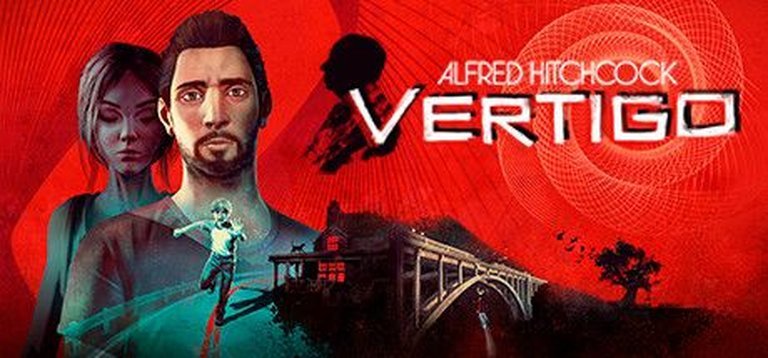
Alfred Hitchcock: Vertigo is a psychological thriller adventure game developed by Pendulo Studios, inspired by the master of suspense’s iconic themes. Players follow Ed Miller, a writer suffering from amnesia after a car accident, as he unravels disturbing truths about his past through surreal visions and symbolic dreams. Set across multiple eerie locations filled with puzzles and moral choices, the game employs cinematic third-person perspectives, direct character control, and branching narratives to explore themes of guilt and fractured identity.
Gameplay Videos
Where to Buy Alfred Hitchcock: Vertigo
Alfred Hitchcock: Vertigo Free Download
Alfred Hitchcock: Vertigo Cracks & Fixes
Alfred Hitchcock: Vertigo Mods
Alfred Hitchcock: Vertigo Guides & Walkthroughs
Alfred Hitchcock: Vertigo Reviews & Reception
opencritic.com (55/100): Alfred Hitchcock Vertigo has some of the funniest voice acting in any game I’ve played this year, but unfortunately that wasn’t the intent.
metacritic.com (70/100): Alfred Hitchcock: Vertigo weaves a wonderful mystery that is full of surprises. The direction and audio pay homage to its namesake and will please fans of the source material.
empireonline.com : Practically every choice or action throughout the game is meaningless, Vertigo barrelling along its own linear story towards a singular ending with no real deviation along the way.
Alfred Hitchcock: Vertigo: Review
In the pantheon of cinematic masterpieces, few directors have left as indelible a mark as Alfred Hitchcock. His films, characterized by their suspenseful narratives and psychological depth, have inspired countless adaptations across various media. Among these, the video game “Alfred Hitchcock: Vertigo” stands out as a unique and ambitious endeavor, aiming to capture the essence of Hitchcock’s legendary thriller while forging its own path. Developed by Pendulo Studios and published by Microids, this narrative-driven adventure game offers a deep dive into themes of obsession, memory, and reality, all wrapped in a cinematic experience that pays homage to the master of suspense.
Development History & Context
Pendulo Studios, a Spanish developer with a rich history in adventure games, has consistently delivered titles that blend compelling narratives with innovative gameplay mechanics. Their portfolio includes acclaimed series like “Runaway” and “Blacksad,” which have garnered critical acclaim for their storytelling and visual fidelity. “Alfred Hitchcock: Vertigo” is no exception, representing the studio’s latest foray into the world of psychological thrillers.
The game’s development began in early 2018, during the production of “Blacksad: Under the Skin.” Microids, the publisher, acquired the rights to use Hitchcock’s name and likeness, setting the stage for a game that would be loosely inspired by the director’s 1958 film “Vertigo.” The development team, led by creative director Ramón Hernáez, aimed to create an original story that captured the spirit of Hitchcock’s work while avoiding a direct adaptation. This approach allowed for a fresh narrative that could explore themes of obsession, identity, and perceptual deception, all while leveraging the technological advancements of the era.
The gaming landscape at the time of “Vertigo’s” release was dominated by a mix of narrative-driven adventures and action-packed titles. Games like “Life is Strange” and “Telltale’s The Walking Dead” had popularized the use of player choice and branching narratives, setting a high bar for storytelling in the medium. Pendulo Studios sought to differentiate “Vertigo” by focusing on a more cinematic experience, utilizing the Unity engine to create a visually stunning and immersive world. The studio’s experience with adventure games, coupled with their commitment to high-quality production values, positioned “Vertigo” as a standout title in a crowded market.
Narrative & Thematic Deep Dive
At its core, “Alfred Hitchcock: Vertigo” is a story about the fragile nature of memory and the blurred lines between reality and fantasy. The game follows Ed Miller, a writer who survives a car crash that allegedly kills his wife and daughter. Traumatized by the event, Ed begins to suffer from severe vertigo and seeks therapy to uncover the truth about what happened. The narrative unfolds through the perspectives of three main characters: Ed, his therapist Dr. Julia Lomas, and Sheriff Nick Reyes. Each character provides a unique lens through which the story is told, revealing layers of deception and psychological turmoil.
The plot is a complex web of flashbacks, dreams, and hallucinations, all woven together to create a sense of disorientation and suspense. Ed’s memories are unreliable, influenced by his trauma and the manipulations of those around him. Dr. Lomas’ hypnotherapy sessions serve as a means to explore these memories, allowing the player to piece together the truth from the fragments of Ed’s past. Sheriff Reyes, meanwhile, investigates the events surrounding the crash, providing a grounded perspective that contrasts with Ed’s increasingly unstable worldview.
Themes of obsession, guilt, and identity permeate the narrative, echoing the compulsive pursuits and fractured psyches of Hitchcock’s protagonists. Ed’s paralyzing guilt over the presumed deaths of his family fuels an obsessive quest for answers, mirroring Scottie’s fixation in the film and Norman Bates’s identity crisis in “Psycho.” The game’s exploration of these themes is nuanced and thought-provoking, inviting players to question the nature of reality and the reliability of their own perceptions.
Gameplay Mechanics & Systems
“Alfred Hitchcock: Vertigo” is an adventure game that prioritizes storytelling over traditional gameplay mechanics. The core loop revolves around investigation, dialogue, and puzzle-solving, all presented in a cinematic style that mimics Hitchcock’s filmmaking techniques. Players control three distinct playable characters—Ed Miller, Dr. Julia Lomas, and Sheriff Nick Reyes—through a seamless switching mechanic activated during pivotal sequences. This system enables experiencing the same events from multiple viewpoints, revealing discrepancies in memories and building narrative tension as players piece together the truth.
The game’s UI is sleek and intuitive, with minimal on-screen elements to maintain immersion. The camera angles and movements are carefully choreographed to evoke a sense of unease and suspense, drawing inspiration from Hitchcock’s signature techniques. The dolly zoom effect, for example, is used to simulate Ed’s vertigo, creating a disorienting visual experience that heightens the game’s psychological tension.
Puzzle-solving in “Vertigo” is integrated into the narrative, with environmental clues and inventory items serving as keys to unlocking new story beats. The puzzles are designed to be methodical and engaging, requiring players to connect clues from flashbacks to real-time observations. This approach fosters a sense of discovery and agency, as players actively participate in unraveling the mystery rather than passively consuming the story.
World-Building, Art & Sound
The world of “Alfred Hitchcock: Vertigo” is a meticulously crafted blend of mid-20th-century American locales and surreal, dream-like environments. The game’s art direction is heavily influenced by Hitchcock’s visual style, with shadowy lighting, dramatic camera angles, and atmospheric details that immerse players in a sense of unease. The environments are rendered in a stylized 3D style, with a color palette that shifts between muted tones and vibrant hues to reflect the characters’ emotional states.
The sound design is equally impressive, featuring an original score composed by Juan Miguel Martín. The music blends orchestral suspense with dissonant motifs to mirror vertigo’s disorienting effects, directly inspired by Bernard Herrmann’s seminal work on the original film. The soundtrack is complemented by a cast of talented voice actors who bring depth and nuance to the characters, further enhancing the game’s immersive qualities.
Reception & Legacy
Upon its release, “Alfred Hitchcock: Vertigo” received mixed reviews from critics. While the game was praised for its atmospheric storytelling and voice acting, it was criticized for its pacing and repetitive gameplay. The Metascore for the PC version stands at 61/100, reflecting a consensus of average quality with notable highs in storytelling offset by technical shortcomings. Critics lauded the game’s suspenseful pacing in sequences like the hypnosis sessions and childhood flashbacks, noting how the mid-century modern environments and tangible visual effects enhance immersion and tension. However, many reviewers found fault with clunky puzzles and repetitive exploration, which undermined the overall experience.
Commercially, “Vertigo” achieved modest success, with estimated sales of 100,000 to 200,000 units on Steam for the PC version during its first year. The console ports, delayed from an initial 2021 target to early 2022, performed more modestly, totaling over 50,000 units across platforms amid a crowded indie adventure game market. Despite these challenges, the game’s legacy endures through its nomination for Best Adventure Game at the 2022 Pégases Awards, recognizing its narrative innovation in the genre. “Vertigo” has subtly influenced a wave of smaller Hitchcock-inspired indie projects emphasizing psychological thrillers, underscoring its niche impact within adventure gaming circles.
Conclusion
“Alfred Hitchcock: Vertigo” is a bold and ambitious attempt to translate the master of suspense’s cinematic techniques into an interactive medium. While the game stumbles in execution, it succeeds in capturing the essence of Hitchcock’s storytelling, offering a unique and engaging experience for fans of psychological thrillers. The narrative’s exploration of memory, obsession, and reality is both thought-provoking and entertaining, providing a rich tapestry of themes that resonate long after the credits roll. Despite its flaws, “Vertigo” stands as a testament to Pendulo Studios’ commitment to high-quality production values and innovative storytelling, securing its place in the annals of video game history.