
- Release Year: 2010
- Platforms: Windows
- Publisher: Intenium GmbH, Micro Application, S.A.
- Developer: Gimagin, Merscom LLC
- Genre: Adventure
- Perspective: 1st-person
- Game Mode: Single-player
- Gameplay: Hidden object, Mini-games
- Setting: Fantasy
- Average Score: 71/100
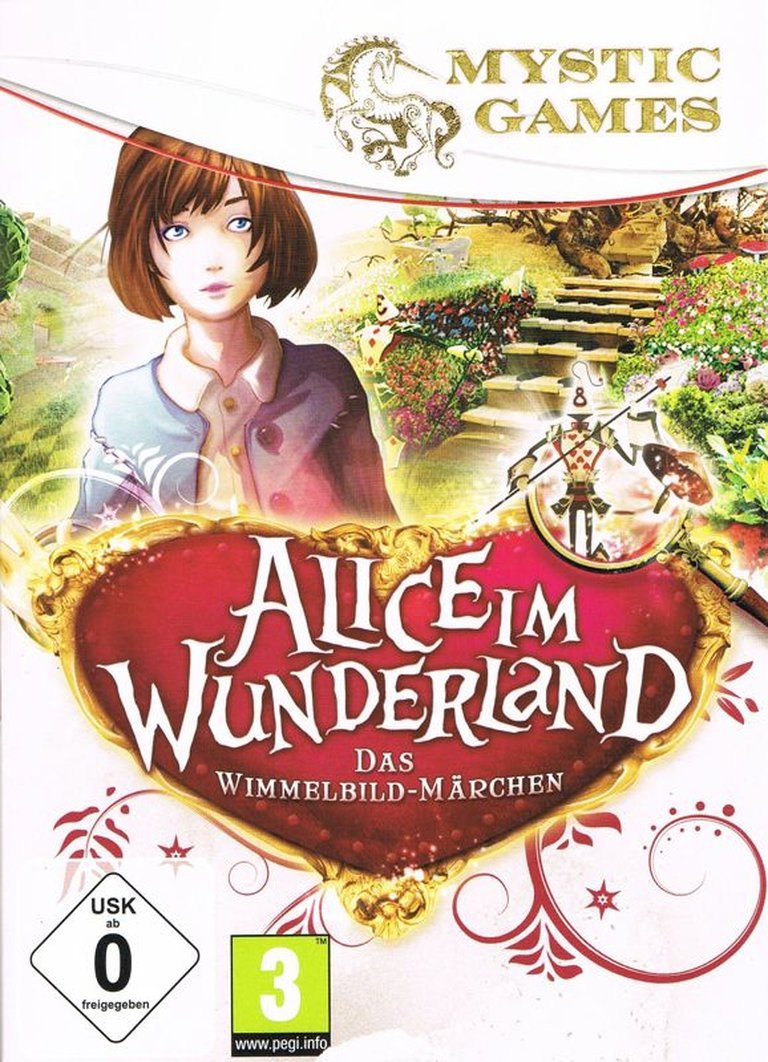
Description
Alice in Wonderland is a hidden object adventure game where Rachel Jordan discovers a portal to Wonderland in an old house. The game tasks players with helping Rachel navigate through Wonderland, solving puzzles and hidden object scenes to free 12 imprisoned girls from the clutches of the evil queen. The game features a mix of hidden object gameplay and mini-games, all set within the whimsical and fantastical world of Lewis Carroll’s classic tale.
Gameplay Videos
Where to Buy Alice in Wonderland
PC
Alice in Wonderland Cracks & Fixes
Alice in Wonderland Guides & Walkthroughs
Alice in Wonderland Reviews & Reception
metacritic.com (89/100): A definite must play!
gamespot.com (60/100): This psychedelic puzzle-laden action adventure displays plenty of promise, but repetitive combat ensures that it falls well short of its potential.
en.wikipedia.org (70/100): The game was met with mostly positive reception upon release.
gamesradar.com (70/100): It’s hardly original but it’s enjoyable and occasionally surprising.
mobygames.com (70/100): Alice in Wonderland is a licensed game based on the 2010 movie of the same name.
Alice in Wonderland Cheats & Codes
DS
Behind the Bonus Door, tap the padlock icon to enter codes at the combination lock.
| Code | Effect |
|---|---|
| 7493 | ‘Drink Me’ Bottle |
| 7453 | Red Guard Shield |
| 7483 | Red Queen Dress |
| 7675 | Red Queen Mask |
| 2273 | Unlock the ‘Big Playing Card’ item |
| 3676 | Unlock the ‘Dormouse Coat’ |
| 3675 | Unlock the ‘Dormouse Mask’ |
| 4625 | Unlock the ‘Green Alice Book’ item |
| 4332 | Unlock the ‘Impossible Ideas’ t-shirt |
| 5398 | Unlock the ‘Keyhole’ t-shirt |
| 2628 | Unlock the ‘Mad Hatter Coat’ |
| 4288 | Unlock the ‘Mad Hatter’ t-shirt |
| 2675 | Unlock the ‘March Hare Mask’ |
| 2625 | Unlock the ‘Tan Alice Book’ item |
| 8328 | Unlock the ‘Tea Cup’ item |
| 8946 | Unlock the ‘Tweedle Outfit’ |
| 9483 | Unlock the ‘White Queen’s Dress’ |
| 9675 | Unlock the ‘White Rabbit Mask’ |
| 8463 | Unlock the ‘White Rabbit’s Watch’ item |
Game Boy
Enter Action Replay/GameShark codes
| Code | Effect |
|---|---|
| 01094fc1 | Stop Timer (Hide And Seek) |
| 016471c1 | Max Stars |
| 0101bbc0 | Always Small Alice! |
| 0105bac0 | Infinite Health |
| 0101b9c0 | Have Key |
PC (Original American McGee’s Alice)
Enable Console Mode in Options. Type codes during gameplay.
| Code | Effect |
|---|---|
| god | God Mode |
| wuss | All Weapons |
| give all | All Weapons and Ammo |
| cg_cameradist -45 | First Person View |
| noclip | No Clipping Mode |
| health # | Set Health to # (100=Full) |
| notarget | Invisibility |
| cg_cameradist 128 | Normal View |
| give [itemname] | Gives specific item (see valid item names) |
| map [mapname] | Jump to Map (see valid map names) |
Alice in Wonderland (2010): A Fractured Fairy Tale in Interactive Form
Introduction
Tim Burton’s 2010 Alice in Wonderland film reimagined Lewis Carroll’s classic as a gothic coming-of-age saga, and its video game adaptation aimed to channel that surreal energy into interactive form. Developed by French studio Étranges Libellules and published by Disney Interactive Studios, the game exists in multiple iterations: a Metroidvania-style action-adventure for Wii/PC and a side-scrolling puzzle-platformer for Nintendo DS. While the game captures Burton’s twisted aesthetic and expands on the film’s lore, it struggles under the weight of repetitive combat and uneven design. This review argues that Alice in Wonderland (2010) is a fascinating curio—a licensed title that transcends its cash-grab roots in moments of ingenuity but falters under technical and narrative constraints.
Development History & Context
Étranges Libellules, known for Asterix & Obelix XXL and The Legend of Spyro: Dawn of the Dragon, faced the daunting task of adapting Burton’s vision under tight deadlines. Released on March 2, 2010—days before the film—the game was part of Disney’s cross-media blitz. The studio leveraged its experience in licensed games to create distinct experiences across platforms:
– Wii/PC versions focused on 3D exploration and character-swapping mechanics.
– DS version embraced touch-based puzzles and a minimalist art style.
– Zeebo edition (a Brazil-exclusive budget title) pared down the experience to basic platforming.
Technological constraints of the era, particularly the Wii’s motion controls and the DS’s dual-screen setup, shaped gameplay. Voice actors from the film, including Mia Wasikowska (Alice) and Stephen Fry (Cheshire Cat), lent authenticity, though their involvement was limited to key scenes. The gaming landscape of 2010 was saturated with movie tie-ins, but Alice stood out for its ambition, even if execution wavered.
Narrative & Thematic Deep Dive
The game loosely follows the film’s plot, casting players not as Alice but as her companions: the Mad Hatter, Cheshire Cat, White Rabbit, March Hare, and Dormouse. Their mission is to protect Alice as she navigates Underland (the film’s renamed Wonderland) to overthrow the Red Queen. The narrative expands on the movie’s lore, delving into the Hatter’s grief over his family’s demise and the Cheshire Cat’s morally ambiguous role as a trickster.
Key Themes:
– Identity and Rebellion: Alice’s journey mirrors her struggle to embrace her role as “the real Alice,” while the Red Queen’s tyranny critiques authoritarianism.
– Perception vs. Reality: The Hatter’s “perspective magic” mechanic literalizes Burton’s theme of subjective reality, allowing players to manipulate environments via optical illusions.
– Sacrifice: The bittersweet ending—where Alice drinks “Futterwacken potion” (Jabberwocky blood) to return home—emphasizes self-sacrifice, though critics noted it undermines player agency.
The DS version adds Absolem the Caterpillar as a playable character, introducing gravity-shifting puzzles that highlight Carroll’s absurdist logic. However, dialogue often feels sparse, with Alice relegated to repetitive quips (“Well done!”), weakening emotional engagement.
Gameplay Mechanics & Systems
Wii/PC Version: A Flawed Metroidvania
- Character Abilities: Each companion has unique skills:
- Mad Hatter: Alters perspectives to reveal hidden paths.
- Cheshire Cat: Turns invisible to bypass enemies.
- White Rabbit: Freezes time for precision platforming.
- March Hare: Uses telekinesis to disarm foes.
- Dormouse: Excels in melee combat.
- Progression: “Impossible Ideas” (currency) and chess pieces unlock upgrades, encouraging backtracking.
- Combat: Repetitive button-mashing against Card Soldiers and the Bandersnatch. Quick-time events during boss fights (e.g., Jabberwocky) add little depth.
- Criticism: Clunky Wii motion controls and a static AI-controlled Alice, who often feels like “The Load” (TV Tropes, 2010).
DS Version: A Stylized Gem
- Touchscreen Mechanics: Swipe-based combat and puzzles (e.g., assembling map tiles).
- Art Style: Black-and-white aesthetics with bursts of color, evoking Burton’s gothic flair.
- Praise: Critics lauded its “charming artistic direction” (Vooks, 2010) and inventive use of DS hardware.
World-Building, Art & Sound
- Visual Design: The Wii/PC versions mirror Burton’s twisted landscapes—crumbling castles, oversize mushrooms, and jagged hedgemazes—but suffer from blurry textures. The DS’s stark, storyboard-like visuals aged better.
- Sound Design: Richard Jacques’ score blends Danny Elfman-esque whimsy with eerie undertones. The Cheshire Cat’s echoing laughter and the Red Queen’s shrill commands enhance immersion.
- Atmosphere: The Queendom of the Red Rose exudes menace, with thorny corridors and patrolling Card Soldiers, while the Mushroom Forest’s bioluminescent flora creates a dreamlike contrast.
Reception & Legacy
- Critical Reception:
- DS: 78/100 (Metacritic), praised for puzzles and art.
- Wii: 69/100, criticized for repetitive combat.
- PC: 63/100, dubbed “unremarkable” (GamesRadar, 2010).
- Commercial Performance: Sold ~0.5M units on Wii/DS (VGChartz), modest for a licensed title.
- Legacy: While overshadowed by American McGee’s Alice, the DS version remains a cult favorite for its creativity. The game’s “escort mission” structure influenced later titles like ICO, albeit indirectly.
Conclusion
Alice in Wonderland (2010) is a paradoxical creation—a licensed game that occasionally transcends its genre. The DS version shines as a bold reimagining, while the Wii/PC iterations suffer from dated design. For Burton fans, it’s a nostalgic trip through Underland’s twisted corridors; for historians, it exemplifies the struggles of movie tie-ins in the late 2000s. Its legacy lies not in innovation but in proving that even flawed adaptations can harbor glimmers of madness worthy of Carroll himself. Final Verdict: A curiosity best experienced through the DS lens.