
- Release Year: 2016
- Platforms: Windows
- Publisher: 8floor Ltd.
- Developer: Creobit
- Genre: Puzzle
- Perspective: Fixed / flip-screen
- Game Mode: Single-player
- Gameplay: Point and select
- Setting: Fantasy
- Average Score: 81/100
Description
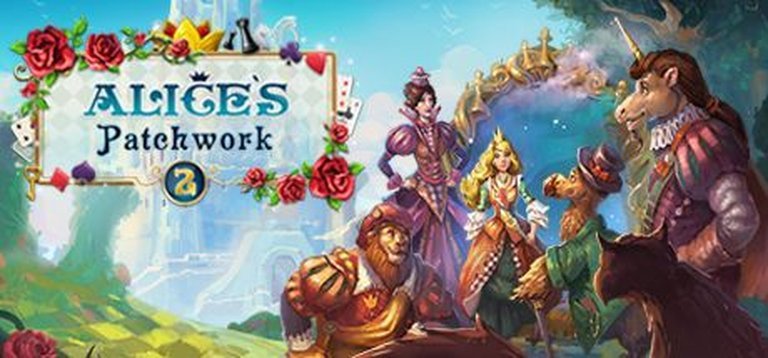
Alice’s Patchwork 2 is a fantasy puzzle game where players join Alice on an adventure through a whimsical chess kingdom inspired by Lewis Carroll’s classic tale. The game features 120 unique patchwork mosaic puzzles crafted from six different materials—wood, cloth, glass, paper, precious stones, and metal—set across six enchanting locations. Players solve puzzles to uncover iconic scenes like the Mad Tea Party and the Red Queen’s intrigues, helping Alice transform from a pawn into a queen. With special quests, trophies, and over 10 hours of calming music, the game offers relaxing yet engaging gameplay for all ages.
Gameplay Videos
Alice’s Patchwork 2 Guides & Walkthroughs
Alice’s Patchwork 2 Reviews & Reception
steambase.io (81/100): Alice’s Patchworks 2 has earned a Player Score of 81 / 100.
Alice’s Patchwork 2: A Whimsical Puzzle Odyssey Through the Looking Glass
Introduction: A Stitch in Time
In the vast tapestry of puzzle games, few titles weave together literary nostalgia and mechanical innovation as deftly as Alice’s Patchwork 2. Released in 2016 by Ukrainian developer Creobit and published by 8floor Ltd., this sequel to the original Alice’s Patchwork (also 2016) is a love letter to Lewis Carroll’s Through the Looking-Glass, reimagined as a mosaic-based puzzle adventure. At its core, the game challenges players to assemble 120 intricate patchwork mosaics across six fantastical worlds, each crafted from distinct materials—wood, cloth, glass, paper, precious stones, and metal—while guiding Alice from pawn to queen in a chess-inspired wonderland.
Yet, Alice’s Patchwork 2 is more than a mere puzzle compiler. It is a meticulously designed experience that balances accessibility with depth, offering a soothing yet engaging escape for casual players and puzzle enthusiasts alike. With its vibrant art direction, cheerful soundtrack, and clever integration of Carroll’s iconic characters, the game carves out a niche in the oversaturated puzzle genre. However, its linear progression, repetitive mechanics, and tenuous narrative connection to its source material raise questions about its lasting appeal.
This review dissects Alice’s Patchwork 2 through a multifaceted lens, exploring its development context, narrative ambitions, gameplay systems, artistic achievements, and cultural legacy. By the end, we’ll determine whether this game is a masterful stitch in the fabric of puzzle gaming or a fleeting thread in the grander tapestry of Alice in Wonderland adaptations.
Development History & Context: The Ukrainian Puzzle Renaissance
The Studio Behind the Looking Glass
Alice’s Patchwork 2 is the brainchild of Creobit, a Ukrainian game development studio founded in 2010 and based in Kharkiv. Specializing in casual and puzzle games, Creobit has cultivated a reputation for polished, family-friendly experiences, often drawing inspiration from classic literature and folklore. Their portfolio includes titles like Mosaics Galore 2 (2015), Halloween Patchwork: Trick or Treat (2021), and Christmas Patchwork: Frozen (2020), all of which share Alice’s Patchwork 2‘s core mosaic-assembly mechanics.
The studio’s collaboration with 8floor Ltd., a publisher known for distributing casual and indie games, ensured the game’s visibility on platforms like Steam, where it launched via Steam Greenlight—a now-defunct community-driven program that allowed indie developers to gauge interest and secure distribution. This partnership was crucial in navigating the competitive landscape of 2016, a year dominated by AAA titles like Overwatch and Doom but also marked by the rise of indie darlings such as Stardew Valley and Inside.
Technological Constraints and Design Philosophy
Developed using a custom engine, Alice’s Patchwork 2 is a technically modest but artistically ambitious project. The game’s system requirements—compatible with Windows XP SP3, 1.5 GHz processors, and just 512 MB of RAM—reflect its accessibility-focused design, ensuring it could run on low-end machines and appeal to a broad audience. This approach aligns with Creobit’s mission to create “entertaining gameplay for players of all ages,” as stated in the game’s official description.
The fixed/flip-screen visual style and point-and-select interface hark back to classic puzzle games like Mahjong and Jigsaw titles, prioritizing clarity and ease of interaction. The decision to limit the game to single-player mode further underscores its focus on a solitary, meditative experience—a stark contrast to the multiplayer-driven trends of the mid-2010s.
The Gaming Landscape of 2016
Alice’s Patchwork 2 emerged during a pivotal era for puzzle games. The genre was experiencing a renaissance, fueled by mobile successes like Candy Crush Saga and Monument Valley, as well as PC indie hits such as The Witness and Stephen’s Sausage Roll. However, the market was also saturated with derivative, low-effort puzzle games, making it difficult for titles like Alice’s Patchwork 2 to stand out.
The game’s Steam Greenlight origins highlight its grassroots appeal. Greenlight, which operated from 2012 to 2017, democratized game distribution by allowing the community to vote on which indie titles should be sold on Steam. Alice’s Patchwork 2’s approval through this system speaks to its niche but dedicated fanbase, even if it never achieved mainstream recognition.
Narrative & Thematic Deep Dive: A Pawn’s Journey to Queenship
Plot Overview: Through the Looking Glass, Piece by Piece
Alice’s Patchwork 2 loosely adapts the plot of Through the Looking-Glass, Lewis Carroll’s 1871 sequel to Alice’s Adventures in Wonderland. The game’s premise revolves around Alice discovering an old family mirror that serves as a portal to a chess kingdom, where she must navigate six distinct worlds—each representing a rank in her journey from pawn to queen. Along the way, she encounters familiar characters like the White Rabbit, the Red Queen, Humpty Dumpty, and the Lion and the Unicorn, all rendered in a whimsical, storybook aesthetic.
However, the narrative is minimalist by design. Unlike its literary inspiration, which is rich with wordplay, satire, and philosophical musings, Alice’s Patchwork 2 reduces the story to a framework for progression. The “plot” unfolds through static images and brief descriptions rather than dialogue or cutscenes. For example:
– World 1 (Wood): Alice arrives in a garden with talking flowers.
– World 2 (Cloth): She attends the Mad Hatter’s tea party.
– World 3 (Glass): She solves Humpty Dumpty’s riddles.
– World 4 (Paper): She witnesses the Lion and Unicorn’s duel.
– World 5 (Precious Stones): She navigates the Red Queen’s intrigues.
– World 6 (Metal): She achieves queenship in a grand coronation.
This structure ensures the game remains accessible to all ages, but it also dilutes the depth of Carroll’s work. The absence of dialogue or character interaction means the game leans heavily on player imagination to fill in the gaps—a double-edged sword that may disappoint fans of narrative-driven experiences.
Themes: Order from Chaos
At its heart, Alice’s Patchwork 2 is a meditation on creation and order. The act of assembling mosaics mirrors Alice’s journey through the Looking-Glass world, where she must impose structure on the absurd. Key themes include:
1. Transformation: Alice’s evolution from pawn to queen parallels the player’s progression from novice to master puzzle-solver.
2. Duality: The game’s chess motif reflects Carroll’s exploration of opposites—order vs. chaos, logic vs. whimsy, reality vs. fantasy.
3. Persistence: The repetitive nature of puzzle-solving reinforces the idea that mastery comes through patience and practice.
Yet, these themes are subtly embedded rather than explicitly explored. The game trusts players to infer meaning from its mechanics and visuals, a design choice that aligns with its casual, stress-free ethos.
Characters: Familiar Faces, Shallow Depths
The game’s cast is drawn directly from Through the Looking-Glass, but their roles are largely decorative. Characters like the Red Queen and Humpty Dumpty appear as static images in the mosaics or as trophy icons for achievements, but they lack agency or development. For instance:
– The White Rabbit is reduced to a mosaic piece rather than a guide or antagonist.
– Tweedledum and Tweedledee are referenced in achievement names but never interact with Alice.
This superficial treatment of Carroll’s characters is the game’s most glaring weakness. While it capitalizes on the nostalgia and recognition of Alice in Wonderland, it fails to leverage the richness of its source material in any meaningful way.
Gameplay Mechanics & Systems: The Art of Assembly
Core Gameplay Loop: Puzzle as Progression
Alice’s Patchwork 2 is, at its core, a mosaic-assembly puzzle game. Each of the 120 puzzles tasks players with reconstructing an image by placing irregularly shaped pieces onto a grid. The mechanics are simple but addictive:
1. Initial Setup: Each puzzle begins with a few pieces already placed and five random pieces available in a side panel.
2. Placement: Players drag and drop pieces from the panel onto the grid. Correct placements lock into place, while incorrect ones return to the panel.
3. Replenishment: Each placed piece is replaced by a new random piece from the remaining pool.
4. Completion: The puzzle is solved when all pieces are correctly placed, revealing the full image.
This loop is repeated ad nauseam, with variations introduced through:
– Material Themes: Each world uses a different material (e.g., wood, glass), altering the visual style but not the mechanics.
– Bonus Pieces: Some puzzles include special pieces that, when placed, trigger coin bonuses or hints.
– Time Trials: An optional timed mode adds pressure for players seeking a challenge.
Progression and Unlocks: The Key to the Kingdom
Progression is linear and gated by a key system:
– Each puzzle awards 1–3 keys based on performance (e.g., speed, accuracy).
– Players need a minimum number of keys to unlock the next world (e.g., 40 keys to exit World 1).
– This creates a grind-like dynamic, as players may need to replay puzzles to accumulate enough keys.
While this system encourages replayability, it also artificially extends playtime. Some players, as noted in Steam reviews, found this frustrating, especially when stuck grinding for keys to progress.
Achievements and Trophies: A Collector’s Paradise
The game features 18 Steam achievements, which serve as meta-goals beyond puzzle completion. These include:
– Humpty Dumpty: Collect 1,000,000 coins.
– Coronation: Unlock all trophies.
– Queen Alice: Complete World 6.
– Tweedledum: Collect 500,000 coins.
Achievements like these incentivize perfectionism, rewarding players who engage with the game’s optional challenges. However, the grind-heavy nature of coin collection (e.g., replaying the same puzzle for maximum coins) has drawn criticism for being tedious.
UI and UX: A Seamless Stitch
The game’s user interface is clean and intuitive, with:
– A minimalist HUD that displays the current puzzle, available pieces, and progress.
– Visual feedback for correct/incorrect placements (e.g., pieces snapping into place).
– Optional hints that highlight the correct position of a random piece.
The point-and-select controls are responsive, though some players noted minor issues with piece dragging on certain resolutions. Overall, the UI prioritizes accessibility, making it easy for players of all ages to jump in.
Innovations and Flaws: A Mixed Bag
Innovations:
– Material Variety: The use of six distinct materials (wood, cloth, etc.) adds visual diversity to the puzzles.
– Bonus System: Special pieces that grant coins or hints introduce strategic depth.
– Relaxing Gameplay: The lack of penalties for mistakes makes it stress-free.
Flaws:
– Repetitive Mechanics: The core gameplay loop lacks evolution, leading to monotony.
– Grindy Progression: The key system feels arbitrary and padded.
– Shallow Narrative: The Alice in Wonderland theme is underutilized.
World-Building, Art & Sound: A Wonderland of Aesthetics
Setting and Atmosphere: A Chessboard of Dreams
Alice’s Patchwork 2 transports players to a storybook version of Looking-Glass Land, where each of the six worlds corresponds to a chess rank and a distinct aesthetic:
1. Wood (Pawn): A lush garden with talking flowers.
2. Cloth (Knight): The Mad Hatter’s whimsical tea party.
3. Glass (Bishop): Humpty Dumpty’s riddle-filled domain.
4. Paper (Rook): The Lion and Unicorn’s battleground.
5. Precious Stones (Queen): The Red Queen’s opulent court.
6. Metal (King): Alice’s coronation in a grand hall.
The fixed/flip-screen visuals evoke the feel of a pop-up book, with vibrant colors and intricate details that reward close inspection. However, the static backgrounds and lack of animation limit immersion, making the world feel more like a diorama than a living kingdom.
Art Direction: A Patchwork of Styles
Under the guidance of Art Director Ksenia Markina, the game’s visuals strike a balance between whimsy and precision:
– Mosaic Designs: Each puzzle is a handcrafted collage, with pieces that fit together like a jigsaw but retain the organic irregularity of patchwork.
– Character Portraits: Iconic figures like the Cheshire Cat and March Hare are rendered in a cartoonish, storybook style, staying true to Carroll’s illustrations while adding a modern flair.
– Material Textures: The six materials (wood, cloth, etc.) are visually distinct, with wood puzzles featuring grain patterns and metal puzzles gleaming like polished steel.
The art direction is cohesive and charming, though it lacks the surreal edge of Carroll’s original illustrations by John Tenniel. Instead, it opts for a softer, more child-friendly aesthetic.
Sound Design: A Symphony of Whimsy
Composed by Alexander Maslov and Aleksander Carpeev, the game’s soundtrack is a delightful blend of calming and cheerful melodies that complement the puzzle-solving experience. Key features include:
– Ambient Tracks: Gentle, looped compositions that enhance focus without distracting.
– Sound Effects: Satisfying clicks and snaps when pieces are placed correctly.
– Thematic Variety: Each world has its own musical motif, reinforcing the shift in atmosphere.
The audio design is subtle but effective, though some players criticized the repetitive nature of the tracks after extended play sessions.
Reception & Legacy: A Niche Gem in the Puzzle Crown
Critical and Commercial Reception
Alice’s Patchwork 2 received mixed but generally positive reception upon release. On Steam, it holds a “Very Positive” rating (81/100) based on 315 reviews, with players praising its:
– Relaxing gameplay and accessibility.
– Charming art style and soothing music.
– Addictive puzzle mechanics.
However, criticisms centered on:
– Repetitive gameplay and lack of innovation.
– Grindy progression and arbitrary key requirements.
– Superficial use of the Alice in Wonderland license.
Commercially, the game found a niche audience but never achieved mainstream success. Its $14.99 launch price (later reduced to $2.99) and casual appeal positioned it as a budget-friendly puzzle experience, ideal for fans of the genre but unlikely to attract broader attention.
Evolution of Reputation
Over time, Alice’s Patchwork 2 has been overshadowed by more ambitious puzzle games, but it retains a cult following among:
– Casual gamers seeking a stress-free experience.
– Puzzle enthusiasts who enjoy mosaic-assembly games.
– Alice in Wonderland fans drawn to its whimsical aesthetic.
Its legacy is modest but enduring, serving as a testament to Creobit’s ability to craft polished, accessible games within a crowded market.
Influence on Subsequent Games
While Alice’s Patchwork 2 did not revolutionize the puzzle genre, its success contributed to:
– The rise of mosaic-assembly puzzles in casual gaming.
– The continued popularity of literary-themed puzzle games (e.g., Alice’s Lullaby, 2024).
– The growth of Ukrainian indie developers in the global market.
Its Steam Greenlight origins also highlight the democratization of game distribution, proving that small studios could find success through community-driven platforms.
Conclusion: A Queen’s Gambit in Puzzle Gaming
Alice’s Patchwork 2 is a flawed but charming puzzle game that stitches together literary nostalgia, relaxing gameplay, and vibrant artistry. Its accessible mechanics and whimsical aesthetic make it a delightful diversion for casual players, while its grindy progression and shallow narrative may frustrate those seeking depth.
Final Verdict:
– For Puzzle Enthusiasts: A solid but repetitive mosaic-assembly game with beautiful visuals and soothing music.
– For Alice in Wonderland Fans: A visually appealing but narratively hollow adaptation that underutilizes its source material.
– For Casual Gamers: A perfectly relaxing experience, ideal for unwinding after a long day.
Score: 7.5/10 – A well-crafted but niche puzzle game that shines in moments but fails to transcend its genre’s limitations.
In the grand chessboard of video game history, Alice’s Patchwork 2 is neither a pawn nor a queen—it’s a knight, moving in unexpected ways but ultimately serving a supporting role in the larger narrative of puzzle gaming. For those who appreciate its unique stitch in the fabric of casual games, it remains a hidden gem worth discovering.