
- Release Year: 2005
- Platforms: Windows
- Publisher: Flashjesterpunk
- Developer: Flashjesterpunk
- Genre: Action
- Perspective: Top-down
- Game Mode: Single-player
- Gameplay: Arcade, Shooter
- Setting: Futuristic, Sci-fi
- Average Score: 69/100
Description
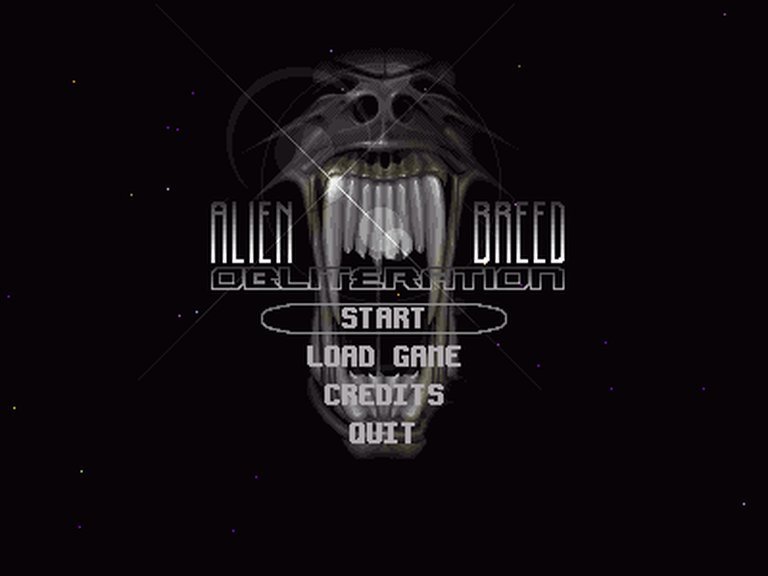
Alien Breed: Obliteration is a top-down sci-fi shooter that continues the classic Alien Breed series, tasking players with the role of an IPC Marine sent to investigate a deep space outpost overrun by aliens. The game features fast-paced arcade-style combat, maze-like levels filled with enemies, and improved graphics and gameplay mechanics over its predecessors. Players must fight through corridors and rooms to complete objectives and escape via exit-lifts, all while battling relentless alien forces in a retro-inspired, 2D scrolling environment.
Gameplay Videos
Alien Breed: Obliteration Free Download
Alien Breed: Obliteration Guides & Walkthroughs
Alien Breed: Obliteration Reviews & Reception
mobygames.com (71/100): It’s awesome! Sit down with Alien Breed: Obliteration for about ten minutes and I guarantee that you’ll be hooked.
Alien Breed: Obliteration Cheats & Codes
PC
Enter codes during gameplay.
| Code | Effect |
|---|---|
| AAJIHGDDC | Access level 2 |
| CGGHDGGDG | Access level 3 |
| HDICICCII | Access level 4 |
| IDHEHDGCC | Access level 5 |
| IJIIDIHEC | Access level 6 |
| CFDFEFEFJ | Access level 7 |
| JIIJIIIIC | Access level 8 |
| AAAABAAAA | Access level 9 |
| CCGDGBBBB | Access level 10 |
| HHIAAAJJIG | Access level 11 |
| GGDDJJHFD | Access level 12 |
| JIECBFGFF | Access level 13 |
| HGGEDDCCB | Access level 14 |
| HHHGFGDCC | Access level 15 |
| IHHDCHGHFF | Access levels 16 to 20 |
| tuleby | Skip level |
| tulebz | Skip level |
| ALIENS ARE FAGGOTS | Invincibility (enter at computer terminal in south part of level 2) |
| alien1c39o704 | God mode |
| alien1c360804 | Keys |
| alien 1c370e2f | Ammunition |
| alien1c360a40 | Energy |
| alien1c390d99 | Money |
Amiga
Enter codes at the Intex computer on level 1.
| Code | Effect |
|---|---|
| KATRINA HAS FARTED AND ITS A BEAUTY | Aliens disappear |
| I WANT FISH | Debug Mode ([F3] for more keys, [F6] to destroy level, [F7] to complete level, [F9] walk through walls) |
| ST EMULATOR | Degraded graphics |
| PC EMULATOR | Disable the Intex computer |
| ELVIS MODE | Elvis mode |
| HARD BASTARDS | Faster aliens |
| SALMON RUSHDIE PLAYS ALIEN BREED | Invisibility |
| STEVIE WONDER | Purple screen |
| F*** OFF | Reset computer |
| KNACKERED JOYSTICK | Reversed joystick controls |
| ALIENS ARE BENDERS | Unlimited energy |
| JESUS THIS JIM BEAMS IS GOOD STUFF | Unlimited energy |
| KEY TO THE CITY | Unlimited keys |
| THE IRAQIS MADE THE WEAPONS | Weak weapons |
Alien Breed: Obliteration – A Love Letter to a Classic, Warts and All
Introduction: The Legacy of a Forgotten Gem
In the annals of gaming history, few franchises have oscillated between obscurity and cult adoration as much as Alien Breed. Born in the early 1990s as Team17’s answer to Gauntlet meets Alien, the series carved out a niche with its claustrophobic corridors, relentless xenomorph hordes, and a grimy, industrial sci-fi aesthetic. Alien Breed: Obliteration, released in 2005 as a freeware homage, is a fascinating artifact—a labor of love that both celebrates and struggles to escape the shadow of its predecessors. This review dissects the game’s development, mechanics, and legacy, arguing that while Obliteration is a flawed but passionate tribute, it ultimately serves as a poignant reminder of how far indie remakes could push the boundaries of nostalgia in the mid-2000s.
Development History & Context: A One-Man Army
The Studio and the Vision
Alien Breed: Obliteration was the brainchild of FlashJesterPunk, a lone developer operating under the radar of the commercial gaming industry. Unlike Team17’s original Alien Breed titles—polished products of the Amiga’s golden age—Obliteration was a fan-made project, crafted with the tools and limitations of early 2000s indie development. The game’s credits list is a testament to its grassroots origins: FlashJesterPunk handled coding, level design, graphics, audio, and even product management, with only James Monkman (of Heavy Stylus and RGCD) contributing to design and documentation.
This was an era when freeware and fan games were exploding in popularity, fueled by communities like RGCD (Retro Game Coding & Design) and platforms such as Curly’s World of Freeware. Obliteration emerged as part of this movement, a time when developers could distribute their work freely via websites and archives like the Internet Archive, bypassing the gatekeepers of traditional publishing.
Technological Constraints and Design Choices
The game’s technical foundation was modest by 2005 standards. Built for Windows with keyboard-only controls, Obliteration eschewed the 3D acceleration and complex physics engines of its contemporaries in favor of a pure 2D, top-down perspective, hearkening back to the Amiga originals. This was both a limitation and a deliberate aesthetic choice—an attempt to recapture the tactile, pixel-perfect gameplay of the 1990s.
However, this fidelity came with trade-offs. The pre-computed lighting system, for instance, was a throwback to the Amiga’s hardware limitations but felt archaic in an era where dynamic lighting was becoming standard. Similarly, the enemy AI, while functional, lacked the sophistication of even mid-2000s commercial titles, leading to exploitable behaviors (e.g., corner-trapping aliens).
The Gaming Landscape of 2005
By 2005, the gaming world had moved on from top-down shooters. Halo 2 and Half-Life 2 dominated the FPS scene, while World of Warcraft redefined multiplayer experiences. Yet, Obliteration found its niche among retro enthusiasts and fans of the original Alien Breed series. It was a game out of time—a deliberate anachronism that appealed to those who yearned for the simplicity and brutality of arcade-style shooters.
Narrative & Thematic Deep Dive: A Thin Veneer of Sci-Fi Horror
Plot and Setting
Obliteration’s narrative is minimalist, even by the standards of its genre. Players assume the role of an IPC Marine (a nod to the Alien franchise’s Weyland-Yutani Corporation) sent to investigate the deep-space outpost CL1-M4X, which has gone dark after an alien infestation. The setup is familiar: a lone soldier, a derelict station, and waves of creatures reminiscent of Alien’s xenomorphs.
The game’s 15 levels are structured as a series of objectives—activate systems, retrieve data, or survive ambushes—before escaping via an exit lift. There’s no dialogue, no cutscenes, and no character development. The story is conveyed purely through environmental storytelling: blood-smeared walls, flickering monitors, and the occasional corpse of a fallen crew member.
Themes: Isolation and Survival
Obliteration’s strength lies in its atmosphere of dread. The game’s sound design—distant screeches, the hum of malfunctioning machinery, and the occasional guttural growl—creates a sense of creeping horror. The top-down perspective, while limiting in terms of immersion, amplifies the tension by obscuring what lies beyond the player’s immediate field of view.
Thematically, Obliteration is a meditation on futility. The marine is a faceless cog in a corporate machine, sent to clean up a mess with no hope of reinforcement. The aliens are relentless, the objectives arbitrary, and the station itself feels like a labyrinthine death trap. This aligns with the Alien franchise’s core themes: humanity’s insignificance in the face of an indifferent universe.
Missed Opportunities
While the game’s narrative is serviceable, it squanders opportunities to deepen its lore. The pre-computed lighting, for instance, could have been used to create dynamic horror effects (e.g., flickering lights, sudden blackouts) but instead remains static. Similarly, the lack of environmental hazards (e.g., collapsing structures, toxic leaks) makes the station feel less like a living nightmare and more like a series of shooting galleries.
Gameplay Mechanics & Systems: A Refined but Flawed Formula
Core Gameplay Loop
Obliteration’s gameplay is a refinement of the Gauntlet-style shooter, with a few modern twists:
1. Movement and Combat: The marine moves in eight directions, firing in the direction of the cursor. Unlike the original Alien Breed, Obliteration allows shooting while backpedaling, a small but significant improvement that adds fluidity to combat.
2. Weapon Variety: The arsenal includes pistols, shotguns, flamethrowers, and grenades, each with distinct strengths. The flamethrower, in particular, is a highlight—ideal for clearing tight corridors.
3. Objective-Based Levels: Each level tasks the player with specific goals (e.g., activate terminals, rescue survivors) before unlocking the exit. This prevents the gameplay from devolving into mindless slaughter.
Progression and Replayability
The game lacks a traditional progression system—no XP, no skill trees, no permanent upgrades. Instead, players scavenge for weapons and ammo within each level, adding a layer of resource management. The lack of saves (outside of manual checkpoints) forces players to adapt on the fly, though this can feel punishing given the game’s difficulty spikes.
Replayability comes from:
– High scores and speedrunning potential.
– Hidden secrets (e.g., hidden rooms with powerful weapons).
– Random enemy spawns (though the AI’s predictability limits this).
Flaws in the System
- Enemy AI: The aliens are aggressive but easily exploitable. Players can kite enemies into corners or abuse hit-and-run tactics, breaking the game’s intended challenge.
- Lighting and Atmosphere: The pre-computed lighting is a missed opportunity. Dynamic effects (e.g., strobes, emergency lights) could have heightened the horror.
- Difficulty Curve: Some levels feel unfairly punishing, with overwhelming enemy waves and limited ammo. The lack of a difficulty slider exacerbates this.
World-Building, Art & Sound: A Retro Aesthetic with Modern Polish
Visual Design
Obliteration’s art style is a love letter to the Amiga era, with chunky pixel art and a gritty, industrial palette. The character sprite received a noticeable upgrade, featuring more detailed animations and a realistic stance, but the environments remain functional rather than spectacular.
The shading effects add depth to the 2D sprites, but the lack of dynamic lighting prevents the game from achieving the claustrophobic dread of Doom or System Shock. The top-down perspective, while nostalgic, limits immersion—players never feel the weight of the station’s oppressive atmosphere.
Sound and Music
The sound design is where Obliteration shines. The weapon sounds are punchy, the alien shrieks are unsettling, and the ambient noise (distant machinery, echoing footsteps) creates a tense, oppressive mood. The music, however, is underutilized—limited mostly to the menu screen. A dynamic soundtrack (e.g., rising tension during combat) could have elevated the experience.
Reception & Legacy: A Cult Classic in the Making
Critical Reception
Obliteration received mixed but generally positive reviews from critics and players alike:
– Freegame.cz (85%): Praised its faithfulness to the original and its addictive gameplay.
– Curly’s World of Freeware (83%): Called it a “fantastic feel” that keeps players engaged.
– Hrej! (70%): Criticized its lack of atmosphere compared to the original but acknowledged its solid gameplay.
– PlnéHry.cz (50%): Dismissed it as “only average”, citing technical flaws and repetitive design.
Player reviews were more enthusiastic, with many praising its replay value and nostalgic charm.
Influence and Legacy
Obliteration’s impact is subtle but significant:
1. Fan Game Renaissance: It proved that indie developers could revive classic franchises without corporate backing, paving the way for future fan remakes.
2. Top-Down Shooter Revival: Games like Alien Swarm (2010) and Crimsonland (2014) owe a debt to Obliteration’s fast-paced, objective-driven gameplay.
3. Preservation of a Legacy: By keeping the Alien Breed name alive, Obliteration helped bridge the gap between Team17’s original titles and their later Alien Breed reboots (e.g., Alien Breed: Evolution).
Conclusion: A Flawed but Essential Tribute
Alien Breed: Obliteration is not a perfect game, but it is a passionate one. Its faithfulness to the original, combined with modern refinements, makes it a compelling experience for fans of retro shooters. However, its technical limitations and missed opportunities prevent it from transcending its fan-game roots.
Final Verdict: 7.5/10 – A Nostalgic Triumph with Room for Improvement
For those who grew up with Gauntlet and Alien Breed, Obliteration is a must-play. For modern audiences, it’s a fascinating time capsule—a reminder of how far indie games have come, and how much further they can go.
Where to Play: Available for free on the Internet Archive and other abandonware sites.
Recommended For:
– Fans of top-down shooters (Gauntlet, Alien Syndrome).
– Retro enthusiasts who appreciate faithful remakes.
– Players who enjoy challenging, objective-based gameplay.
Not Recommended For:
– Those seeking deep narrative or character development.
– Players frustrated by exploitable AI or punishing difficulty spikes.
In the end, Alien Breed: Obliteration is more than just a fan game—it’s a testament to the enduring power of nostalgia, and a bridge between gaming’s past and present.