
- Release Year: 2015
- Platforms: Windows
- Publisher: Mannequin Games LLC
- Developer: Mannequin Games LLC
- Genre: Action, RPG, Survival horror
- Perspective: 1st-person
- Game Mode: Single-player
- Gameplay: RPG elements, Survival horror
- Setting: Horror, North America
- Average Score: 46/100
Description
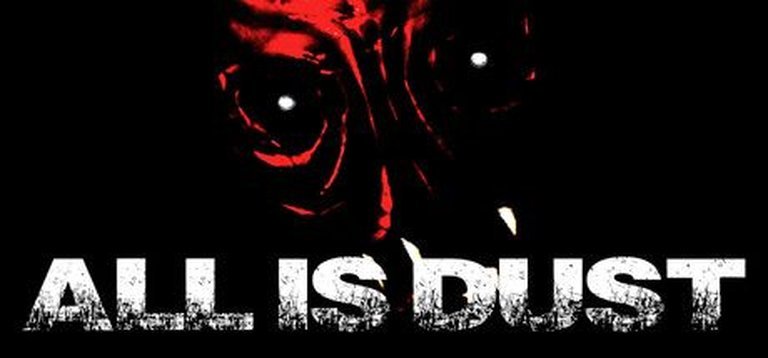
All Is Dust is a freeware survival horror game set in 1928 during the Dust Bowl in North America. Players take on the role of Thomas Joad, a struggling farmer who, after spotting a mysterious teal light outside his home, embarks on a terrifying journey that blurs the line between reality and nightmare. The game features first-person gameplay with RPG elements, augmented reality art, and a haunting narrative filled with eerie creatures and psychological horror. As Thomas explores his farm and confronts the supernatural, the story unfolds through hand-drawn cutscenes and his own narration, culminating in a chilling twist that suggests the entire ordeal may have been a dream.
Gameplay Videos
Where to Buy All Is Dust
PC
All Is Dust Guides & Walkthroughs
All Is Dust Reviews & Reception
steambase.io (45/100): All Is Dust has earned a Player Score of 45 / 100.
gamegrin.com (55/100): Overall, All is Dust is a great way to kill half an hour if you’re looking for a quick way to pass time.
mobygames.com (42/100): Average score: 42% (based on 2 ratings)
dreadcentral.com : The game consists of “four” “chapters,” which come together to tell the “plot.”
store.steampowered.com (45/100): All Reviews: Mixed (45% of 1,322)
All Is Dust: A Forgotten Relic of the Horror Boom
Introduction
In the mid-2010s, the indie horror genre was a battleground of innovation and imitation. Amidst the sea of Slender clones and jump-scare factories, All Is Dust emerged as a curious anomaly—a free-to-play horror experience set against the backdrop of the Dust Bowl, a historical period rarely explored in video games. Developed by Mannequin Games LLC, a student team from the University of Utah’s Entertainment Arts and Engineering program, All Is Dust attempted to blend historical realism with supernatural horror. Yet, despite its ambitious premise and the sheer novelty of its setting, the game has largely faded into obscurity, remembered more as a footnote in the annals of indie horror than a standout title.
This review seeks to dissect All Is Dust in its entirety, examining its development, narrative, gameplay, and legacy. Was it a diamond in the rough, overlooked due to its technical limitations, or was it merely another forgettable entry in the oversaturated horror market of the 2010s? Through a comprehensive analysis, we will determine whether All Is Dust deserves a second look or if it is best left buried beneath the digital dust of gaming history.
Development History & Context
The Birth of a Student Project
All Is Dust was conceived as a student project at the University of Utah’s Entertainment Arts and Engineering (EAE) program, a prestigious institution known for producing talent that often transitions into the AAA gaming industry. The game was spearheaded by John Schwarz, who served as both the director and lead designer. Schwarz’s vision was to create a horror game that diverged from the typical haunted house or asylum settings, instead grounding its terror in the historical suffering of the Dust Bowl era.
The Dust Bowl, a period of severe dust storms that devastated the American and Canadian prairies during the 1930s, provided a unique and underutilized backdrop for horror. The environmental and economic despair of the era—where families lost their livelihoods, homes, and even their lives to the relentless dust storms—offered a rich tapestry of real-world horror that could be amplified with supernatural elements. Schwarz and his team aimed to capitalize on this, blending historical authenticity with occult themes to create a game that was as much about psychological dread as it was about jump scares.
Technological Constraints and Ambitions
Developed using the Unity engine, All Is Dust was constrained by the technological limitations of both the engine and the team’s experience. The game was built over the course of a single academic year, a tight timeline that forced the team to make significant compromises in scope and polish. The final product reflects these constraints, with a relatively small, linear environment and repetitive gameplay mechanics.
Despite these limitations, the team attempted to innovate in several areas:
– Oculus Rift Support: All Is Dust was one of the early indie titles to experiment with VR, offering compatibility with the Oculus Rift DK2. This was a bold move for a student project, reflecting the team’s ambition to push the boundaries of immersion in horror gaming.
– Hand-Drawn Cutscenes: To compensate for the limited 3D art budget, the team incorporated hand-drawn cutscenes, which were praised by critics as one of the game’s few standout features.
– Historical Authenticity: Schwarz conducted extensive research into the Dust Bowl, providing the team with historical context to inform the game’s setting and narrative. This included lessons on the era’s agriculture, economics, and cultural impact, which were intended to lend the game a sense of authenticity.
The Gaming Landscape of 2015
All Is Dust was released on June 26, 2015, a time when the indie horror genre was both thriving and oversaturated. The success of Amnesia: The Dark Descent (2010) and Outlast (2013) had inspired a wave of imitation, with developers rushing to capitalize on the popularity of first-person horror. Meanwhile, the Slender phenomenon (2012) had spawned countless clones, many of which relied on cheap jump scares and minimalist gameplay to achieve viral success.
In this environment, All Is Dust faced an uphill battle. While its Dust Bowl setting was unique, its core gameplay loop—collecting notes while evading monsters—was derivative of Slender and its ilk. The game’s free-to-play model, while attractive to players, also meant that it lacked the marketing budget and visibility of paid titles. Compounding these challenges was the game’s release on Steam Greenlight, a platform that was increasingly criticized for its lack of curation, allowing a flood of low-quality indie titles to saturate the market.
The Team Behind the Game
The development team for All Is Dust consisted of 18 students, a surprisingly large number for a student project. The credits reveal a diverse range of roles, from engineers and artists to designers and audio specialists. Key figures included:
– John Schwarz: Director and lead designer, responsible for the game’s vision, narrative, and level design.
– Kagan Breitenbach: Composer, who created the game’s eerie, 1930s-inspired soundtrack.
– Christopher Cherrington: 3D character and environment artist, tasked with bringing the Dust Bowl farm to life.
– Swapnil Sawant: Lead engineer, overseeing the technical implementation of the game’s mechanics.
Despite the team’s size, Schwarz later reflected on the challenges of managing such a large group, noting that the lack of preproduction time and the need to accommodate everyone’s input led to design compromises that diluted the game’s identity. This is a common pitfall in student projects, where the desire to include every team member’s contributions can result in a lack of cohesive vision.
Narrative & Thematic Deep Dive
Plot Summary
All Is Dust follows Thomas Joad, a farmer struggling to survive the Dust Bowl in 1931 Oklahoma. The game opens with Thomas and his daughter, Patricia, trapped in a car during a dust storm. A radio broadcast details the hopelessness of the situation, setting a tone of despair that permeates the entire experience. After the car crashes, Thomas awakens to find his farm overrun by supernatural entities and his daughter missing. Over the course of three nights, he must explore the farm, uncovering clues about the horrific events that have befallen his land.
The narrative unfolds through a series of hand-drawn cutscenes and environmental storytelling. Thomas discovers that his farm has become a nexus for dark forces, tied to an ancient occult ritual. The game’s climax reveals that the events of the game may have been a dream or hallucination, with the final cutscene depicting Thomas’s lifeless body in the wrecked car, suggesting that his entire ordeal was a dying man’s nightmare.
Themes and Symbolism
All Is Dust is steeped in themes of despair, loss, and existential dread, all of which are amplified by its historical setting. The Dust Bowl itself serves as a metaphor for the inevitability of suffering and the fragility of human existence. The game’s title, All Is Dust, is a direct reference to the biblical phrase “ashes to ashes, dust to dust,” reinforcing the theme of mortality and the futility of resistance in the face of overwhelming forces.
Key themes include:
– Historical Trauma: The Dust Bowl was a man-made ecological disaster, exacerbated by poor farming practices and economic exploitation. The game uses this backdrop to explore the psychological toll of such trauma, with Thomas’s farm representing the collapse of the American Dream for many families of the era.
– Occult Horror: The supernatural elements of the game are rooted in folk horror, a subgenre that blends rural settings with pagan or occult themes. The red, faceless creatures that stalk Thomas evoke imagery of scarecrows and harvest demons, tying the horror to the land itself.
– Fatherhood and Guilt: Thomas’s relationship with his daughter, Patricia, is central to the narrative. His failure to protect her—whether in reality or in his dying hallucination—adds a layer of personal guilt to the broader themes of loss and helplessness.
Character Analysis
- Thomas Joad: The protagonist is a character narrator, with his internal monologue guiding the player through the game’s events. His voice acting, while amateurish, conveys a sense of weary determination, fitting for a man who has lost everything. Thomas’s journey is one of denial and acceptance, as he grapples with the reality of his situation.
- Patricia Joad: Thomas’s daughter is more of a symbol than a character, representing innocence and vulnerability in the face of overwhelming horror. Her fate is left ambiguous, adding to the game’s unsettling atmosphere.
- The Red Creatures: These faceless, long-armed entities are the game’s primary antagonists. Their design is reminiscent of SCP-173, with their inability to move while being observed. Their presence is tied to the occult rituals that have corrupted the farm, serving as both physical threats and manifestations of Thomas’s guilt and fear.
Narrative Strengths and Weaknesses
Strengths:
– Unique Setting: The Dust Bowl is a fresh and underutilized backdrop for horror, providing a sense of historical weight that many indie horror games lack.
– Atmospheric Storytelling: The hand-drawn cutscenes and environmental details (such as children’s drawings used as clues) create a haunting, dreamlike atmosphere.
– Thematic Depth: The game’s exploration of despair and existential dread is more ambitious than many of its contemporaries, which often rely on shallow jump-scare narratives.
Weaknesses:
– Underdeveloped Plot: The story is vague and underdeveloped, with key details left unexplained. The occult elements feel tacked on rather than fully integrated into the historical setting.
– Amateur Voice Acting: The narration and dialogue are delivered with a lack of polish, undermining the game’s attempts at emotional depth.
– Predictable Twist: The revelation that the events may have been a dream is a cliché in horror storytelling, robbing the narrative of its potential impact.
Gameplay Mechanics & Systems
Core Gameplay Loop
All Is Dust follows a familiar indie horror formula:
1. Exploration: Players navigate Thomas’s farm, searching for clues (notes and drawings) that advance the story.
2. Evasion: The farm is inhabited by red, faceless creatures that stalk Thomas. These enemies cannot move while being observed, a mechanic borrowed from SCP-173 and Slender.
3. Progression: As Thomas collects more clues, the number of creatures increases, ratcheting up the tension.
The game is divided into three nights, each with its own set of objectives. The structure is linear, with little room for deviation from the main path.
Combat and Survival Mechanics
- No Combat: Thomas is defenseless, relying entirely on stealth and evasion to survive. This design choice aligns with the game’s emphasis on helplessness and despair.
- Freeze Tag Mechanics: The creatures adhere to a “Can’t Move While Being Watched” rule, forcing players to stare them down to immobilize them. This mechanic is central to the gameplay but becomes repetitive and frustrating as the number of enemies increases.
- Health System: Thomas can take multiple hits before dying, though the exact mechanics are unclear. The game’s difficulty is inconsistent, with some players reporting that environmental hazards (such as fire pits) are more deadly than the creatures themselves.
Level Design and Exploration
The game’s single map is a hub-and-spoke design, with a central farmhouse serving as a safe zone and various outbuildings (barns, fields, and sheds) branching off as exploration areas. The layout is confusing and disorienting, with few landmarks to guide the player. This was an intentional design choice, meant to evoke the isolation and confusion of the Dust Bowl, but it often leads to frustration rather than immersion.
Key Locations:
– Farmhouse: The starting point and safe haven, where Thomas can briefly catch his breath.
– Cornfields: Dense and maze-like, these areas are where most of the creatures lurk.
– Barn: A focal point for several jump scares and clues.
– Fire Pits: Environmental hazards that deal damage if Thomas gets too close.
UI and Controls
- Minimalist UI: The game features no HUD, with only a lantern to illuminate the environment. This design choice enhances immersion but can make navigation difficult.
- Direct Controls: Movement is handled via WASD keys, with mouse control for looking around. The F key is used to interact with objects, a standard convention in first-person games.
- No Settings Menu: One of the game’s most glaring oversights is the lack of customizable controls or graphics settings, a common issue in early Unity games.
Innovations and Flaws
Innovations:
– Historical Horror Setting: The Dust Bowl is a rare and effective setting for horror, providing a sense of realism that grounds the supernatural elements.
– VR Support: The game’s compatibility with the Oculus Rift was ahead of its time, offering an early glimpse at the potential of VR horror.
Flaws:
– Repetitive Gameplay: The core loop of collecting notes and evading creatures grows stale quickly, with little variation across the game’s three nights.
– Poor Enemy AI: The creatures’ behavior is predictable and exploitable, reducing the tension rather than enhancing it.
– Technical Issues: The game suffers from bugs and crashes, particularly on older systems. Many players reported issues with VR compatibility and missing settings menus.
World-Building, Art & Sound
Setting and Atmosphere
All Is Dust excels in atmospheric world-building, using its Dust Bowl setting to create a sense of desolation and decay. The farm is depicted as a once-thriving homestead now choked by dust and corruption, with environmental details reinforcing the historical context. The cornfields, in particular, are a standout feature, evoking the claustrophobic and disorienting nature of the era’s dust storms.
The game’s visual design is a mix of realism and surrealism:
– Realistic Elements: The farmhouse, barn, and fields are grounded in historical accuracy, with textures and props that reflect the period.
– Surreal Elements: The red creatures and occult symbols (such as the inverted cross with a downward-pointing triangle) introduce a supernatural layer, blurring the line between historical trauma and psychological horror.
Art Direction
- Environmental Art: The game’s 3D environments are functional but unpolished, with blocky textures and repetitive assets. The lack of detail is a product of the team’s limited resources and time constraints.
- Hand-Drawn Cutscenes: The 2D cutscenes are the game’s artistic highlight, featuring expressive, sketch-like visuals that contrast with the 3D environments. These sequences are moody and atmospheric, effectively conveying the game’s themes of despair and loss.
- Lighting and Shadows: The game’s lantern-based lighting creates a claustrophobic atmosphere, with shadows that obscure the creatures until they are dangerously close. This is one of the game’s strongest visual elements, enhancing the sense of vulnerability.
Sound Design and Music
- Ambient Soundscapes: The game’s sound design is minimalist but effective, with wind howling, distant thunder, and the creaking of the farmhouse creating an oppressive atmosphere. The sound of the creatures’ footsteps (described by critics as a “poorly looped horse gallop”) is less successful, undermining the tension.
- Music: Composed by Kagan Breitenbach, the soundtrack features eerie, dissonant strings and haunting melodies that evoke the game’s 1930s setting. The music is sparse, used primarily during cutscenes and key moments to heighten emotional impact.
- Voice Acting: The narration and dialogue are delivered by John Schwarz, whose amateurish performance detracts from the game’s attempts at emotional depth. The lack of professional voice acting is a common issue in student projects but is particularly noticeable in a narrative-driven game.
Contributions to the Overall Experience
The art and sound design of All Is Dust are uneven but occasionally effective. The hand-drawn cutscenes and lantern-lit environments create a haunting, dreamlike atmosphere that aligns with the game’s themes. However, the repetitive environments and amateurish voice acting undermine the immersion, leaving the game feeling unfinished rather than intentionally minimalist.
Reception & Legacy
Critical Reception
All Is Dust received mixed to negative reviews upon release, with critics praising its ambition and setting while criticizing its execution and polish. The game holds a 42% average score on MobyGames, based on two critic reviews, and a 2.0/5 player score on the same platform.
Key Critic Reviews:
– GameGrin (55/100): “All is Dust is a great way to kill half an hour if you’re looking for a quick way to pass time. If you’re willing to spare money, there are plenty of better horror games out there to choose from. But it’s free so you can’t complain too much.”
– Exposed Magazine (30/100): “If you’re after a quick thrill, All Is Dust is worth a quick playthrough – just don’t expect anything too overwhelming. All the hand-drawn cutscenes are actually really impressive, and the narrative is decent, but ultimately this is a stale game which could have been so much better.”
Player Reception:
The game’s Steam reviews are similarly mixed, with a 45% positive rating based on 1,322 reviews. Common complaints include:
– Repetitive gameplay and lack of innovation.
– Technical issues, including crashes and missing settings.
– Underwhelming horror elements, with many players finding the creatures more annoying than scary.
Commercial Performance
As a free-to-play title, All Is Dust did not generate direct revenue, but its presence on Steam Greenlight and subsequent release on Steam provided the development team with valuable exposure. The game was downloaded by thousands of players, though exact numbers are not publicly available. Its lack of monetization (no DLC or microtransactions) meant that it did not achieve financial success, but it served as a portfolio piece for the student developers.
Influence and Legacy
All Is Dust has had little lasting impact on the horror genre or the broader gaming industry. Its Dust Bowl setting remains underutilized, with few subsequent games exploring the historical period for horror. The game’s VR experimentation was ahead of its time but was overshadowed by more polished VR horror titles like The Vanishing of Ethan Carter VR and Resident Evil 7.
Potential Lessons for Indie Developers:
– Unique Settings Matter: The game’s historical backdrop was its strongest selling point, proving that indie horror can thrive outside of traditional haunted house or asylum settings.
– Polish is Essential: The game’s technical issues and lack of polish undermined its potential, highlighting the importance of quality assurance in indie development.
– Narrative Depth Requires Strong Execution: While All Is Dust attempted to explore themes of despair and guilt, its amateurish voice acting and underdeveloped plot prevented these themes from resonating with players.
The Game’s Place in Horror History
All Is Dust is best remembered as a curiosity—a game that tried something different but ultimately failed to deliver on its ambitions. It stands as a testament to the challenges of student game development, where limited resources and tight deadlines often result in compromised vision. While it is not a classic of the genre, it is a fascinating artifact of the mid-2010s indie horror boom, offering a glimpse into the experimental and often flawed nature of the era’s games.
Conclusion: A Flawed but Fascinating Experiment
All Is Dust is a game of contradictions. It is ambitious yet underdeveloped, atmospheric yet repetitive, innovative yet derivative. Its Dust Bowl setting is one of the most unique and compelling aspects of any indie horror game, providing a rich historical backdrop that few titles have attempted to explore. Yet, the game’s execution falls short of its potential, hampered by technical limitations, amateurish voice acting, and repetitive gameplay.
Final Verdict
Score: 5/10 – A Flawed Experiment Worth Experiencing for Its Ambition Alone
All Is Dust is not a great game, but it is a fascinating one. It is a product of its time, reflecting both the creativity and the limitations of mid-2010s indie horror. For players interested in historical horror or experimental narratives, it offers a brief but memorable experience. For those seeking polished gameplay or deep scares, it will likely disappoint.
Who Should Play It?
– Horror enthusiasts looking for unique settings and atmospheric storytelling.
– Indie game historians interested in the evolution of the horror genre in the 2010s.
– VR early adopters curious about experimental VR horror from the pre-Resident Evil 7 era.
Who Should Avoid It?
– Players seeking deep gameplay mechanics or replayability.
– Those who dislike repetitive or unpolished experiences.
– Anyone expecting AAA-level production values or professional voice acting.
Final Thoughts
All Is Dust is a relic of a bygone era in indie horror—a time when ambition often outpaced execution, and unique ideas were frequently buried under technical limitations. It is not a masterpiece, but it is a valuable artifact, offering a glimpse into the creative struggles of student developers and the challenges of innovating in an oversaturated genre. For those willing to overlook its flaws, it provides a haunting, if brief, journey into the heart of the Dust Bowl’s despair.
In the end, All Is Dust is dust in the wind—a fleeting, forgotten experiment that, while not perfect, deserves to be remembered for its boldness and originality.