
- Release Year: 2024
- Platforms: Linux, Windows
- Publisher: Totally Not Aliens UG (haftungsbeschränkt)
- Developer: Totally Not Aliens UG (haftungsbeschränkt)
- Genre: Role-playing (RPG)
- Perspective: 3rd-person (Other)
- Game Mode: Single-player
- Gameplay: Turn-based strategy
- Setting: World War I
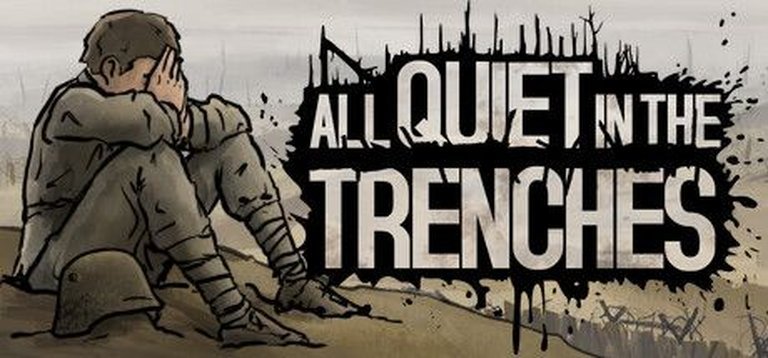
Description
Set in World War I on the Western Front, All Quiet in the Trenches is a narrative turn-based strategy RPG where players assume the role of a German Unteroffizier tasked with managing a squad of soldiers through the brutal realities of trench warfare. The game focuses on decision-making that balances the physical and mental well-being of the soldiers with the demands of superiors, creating a unique story each time as choices directly impact their survival and personal fates, rather than altering the war’s outcome.
Gameplay Videos
Where to Buy All Quiet in the Trenches
All Quiet in the Trenches: Review
Introduction: The Unwinnable War
The First World War has long been the neglected stepchild of video game warfare. While the explosive, heroic fantasies of World War II and beyond have been mined for decades, the grim, static horror of the trenches has proven a notoriously difficult subject to gamify. Into this difficult space steps All Quiet in the Trenches, a 2024 Early Access title from the German indie studio Totally Not Aliens. Its very title is a direct, unmissable invocation of Erich Maria Remarque’s seminal anti-war novel Im Westen nichts Neues (All Quiet on the Western Front), signalling an ambition that is both literary and moral. This is not a game about winning the war, but about surviving it—a meticulous, often harrowing, bureaucratic drama of survival played out in the mud between the lines. My thesis is this: All Quiet in the Trenches is a profoundly important and thematically daring experiment, a game that understands the essence of the Great War’s futility in a way few interactive works ever have. However, it is also a project currently caught between its brilliant, uncompromising vision and the rough, uneven mechanics needed to fully deliver that vision. It is a stuttering, beautiful, and deeply frustrating testament to the cost of war, both on the battlefield and in the trenches of game development.
Development History & Context: A Studio Forged in History
The story of All Quiet in the Trenches is inextricably linked to its national context. Developed by Totally Not Aliens UG, a small team based in Bamberg, Germany, the game is a debut project born from a specific cultural and historical lineage. The developers have consistently cited Remarque’s novel as their primary inspiration, a text that for over a century has shaped the German—and indeed, global—understanding of WWI as a mechanized tragedy of lost youth. This perspective is fundamental; as the developers state on their FAQ, “we are German ourselves (making German history and cultural aspects more easily accessible for us) led to the setting of our game.” Choosing to play as German soldiers on the Western Front is a deliberate, historically grounded decision that avoids the pitfalls of nationalist heroism, aligning instead with a tradition of Vergangenheitsbewältigung—coming to terms with a difficult past.
Built in Unity, the game’s technological foundation is modest, reflecting its indie status. The system requirements (a Dual Core 3.1 GHz, 4GB RAM) are light, ensuring accessibility but also hinting at the limitations of its scope and visual fidelity. Crucially, the game entered Steam Early Access on January 17, 2024, with a clear, ambitious roadmap stretching to a planned full 1.0 release in “late 2026/early 2027.” This long tail of development is telling. The studio is not just adding polish; they are building the game in chronological phases, with updates named for the evolving horror of the conflict: the Trench Update (April 2024), Battle Update (July 2024), Machine Gun Update (December 2024), Gas Update (May 2025), Soldier Update (October 2025), the Hospital Update (planned), and finally the End of War Update. This methodical, period-by-period expansion mirrors the game’s thematic core: the slow, relentless grind of a conflict that cannot be hurried or won.
Notably, the project has received support from the German Federal Ministry of Transport and Digital Infrastructure, as noted on its Steam page. This governmental backing is significant, suggesting an official recognition of the game’s cultural and educational value as a work of historical engagement and remembrance. It exists within a small but notable ecosystem of WWI-focused games, with titles like Trenches (2009, 2021) and Valiant Hearts: The Great War (2014) as thematic precursors, but with a uniquely German, soldier-management focus.
Narrative & Thematic Deep Dive: The Weight of a Single Life
The narrative architecture of All Quiet in the Trenches is its most profound and innovative element. The player assumes the role of a German Unteroffizier (sergeant) in 1915 on the Western Front. The central, crushing premise is established immediately: Your choices will not change the war. The timeline is fixed. The major battles—Verdun, the Somme—will happen. The war will end in an Armistice in November 1918. You are not a general altering history; you are a non-commissioned officer trying to preserve a handful of lives within a maelstrom you cannot control. This is the game’s core thematic thesis, a direct translation of the fatalism at the heart of Remarque’s novel to an interactive format.
The narrative emerges from a dynamic system of decision-making and consequence. The game’s world is populated by a pool of 12 distinct soldiers, each with a pre-written background, personality traits, and personal story arcs. At the start of each new campaign, the composition of your squad is randomly selected from this pool, ensuring a different cast of characters each time. Their stories—revealed through journal entries, dialogue events, and their reactions to your commands—are the game’s true “plot.” One soldier may be a devoted family man writing letters home; another a poetic intellectual crumbling under the shelling; a third a pragmatic survivor whose morality erodes with each tour of the trenches.
The dilemma system is the engine of this narrative. Your authority exists in a precarious balance between two meters of approval: Morale (from your men) and Prestige (from your superiors). Every decision—how many hours to rest the troops, whether to prioritize digging trenches or repairing barbed wire, how to allocate scarce medical supplies, whether to follow a reckless order or show mercy to a captured enemy—shifts these axes. Letting soldiers rest improves Morale but may anger the Logistics Officer and lower Prestige. Executing a daring raid for supplies might boost Prestige but get a beloved soldier killed. The genius lies in the specificity: these are not grand, world-changing choices, but the intimate, constant negotiations of command under extreme duress. As the German critic from GameStar notes, the goal is to make the player feel the dilemma, not just see it as a UI mechanic.
Thematically, the game is a relentless anti-war statement. It achieves this not through graphic violence (though it features “corpses on the battlefield” per its mature content description), but through the erosion of humanity. The “chaos of war” manifests as physical and mental degradation: exhaustion, wounds, shell shock (with the upcoming Hospital Update promising to expand on war-related illnesses and psychological suffering). The management tasks—digging latrines, burying the dead, pest control in the trenches—are not glorified “resource-gathering” quests but degrading chores that chip away at spirit. The inclusion of civilian interactions (helping a French village, as hinted in the planned French Update) adds another layer, reminding the player of the war’s collateral devastation beyond the front lines. The fixed, unwinnable nature of the war itself is the ultimate thematic punch: you are not a hero; you are a functionary in a meat-grinder, and your solemetric for success is a slightly lower, more humane body count.
Gameplay Mechanics & Systems: The Grind of Survival
Gameplay in All Quiet in the Trenches is structured around a cyclical interplay of three phases: Camp, Trench, and Battle. This tripartite structure mimics the actual rhythm of trench warfare and is the game’s fundamental loop.
-
Camp Phase: This is the base-management and narrative hub. Time passes in 10-day increments. Here, you allocate your soldiers to projects (currently around 100 in the Early Access version). These are essential but grim tasks: digging new trenches, repairing defenses, scavenging for supplies, burying corpses, latrine duty, rest, or treating the wounded. Each project consumes one soldier for the turn and has consequences for Morale, Prestige, physical exhaustion, and mental state (the latter system is set to be expanded with the Soldier Update’s “moods”). The camp is also where most journal stories (nearly 200 currently) trigger—dialogue events, character revelations, and random occurrences that flesh out the squad’s personalities. Balancing the workload to prevent exhaustion while keeping up with necessary infrastructure and satisfying the demands of the Logistics Officer (for supplies) and Nurse Elisabeth (for medical care) is a constant, tense juggling act.
-
Trench Phase: This is the static defense period. Your squad holds a section of the frontline trench. Turns represent hours or days. The primary activity is maintaining the trench system: reinforcing sandbags, repairing barbed wire (added in the Trench Update), building ladders for assaults. Enemy machine gun fire, artillery barrages, and sniper attacks are random events that can wound or kill soldiers if they are not under cover. The tension here is one of attrition and anticipation—the slow wearing down of defenses and nerves before the inevitable assault.
-
Battle Phase: This is the most action-oriented but also the most criticized segment. When an enemy attack comes, the game shifts to a tactical, turn-based engagement on a predefined map. You issue commands to your soldiers: Move to Cover, Suppressive Fire, Throw Grenade, Treat Wounded, Retreat. Unlike traditional tactical games, you do not have free movement; soldiers move between set nodes. The mechanics are intentionally cumbersome to reflect the chaos and poor communication of trench warfare. Weapon jams, lost equipment (glasses, rifles), and the infamous “buttoned-up” state of fortifications all consume precious turns. The Battle Update (July 2024) was a major overhaul of this system, improving NPC behavior and adding cutscenes, but player feedback on Steam remains clear: combat is a major weak point.
The common criticisms are stark: janky AI where soldiers fail to engage properly, unsatisfying animations, and a feeling of limited agency. Soldiers—even trained snipers—miss point-blank shots, breaking immersion. The battles are often short, scripted, and feel more like a necessary hazard to endure than a tactical challenge to master. Player feedback consistently calls for a “longer, more involved engagement” and better control. This is the game’s central tension: its narrative and management systems are deeply engaged with the consequences of combat, but the combat itself is often described as a frustrating, disconnected mini-game. The upcoming Hospital Update aims to expand post-battle objectives (searching bodies for dog tags/ supplies, treating more wounded), which may help integrate combat more meaningfully into the overall survival narrative.
Progression is not about becoming more powerful, but about enduring longer. The recently added Soldier Update (0.10) introduced a skill system with 13 abilities and a “friends and rivals” relationship mechanic, adding a layer of long-term development and interpersonal dynamics that was previously missing. This is a critical step toward making soldiers feel like evolving individuals rather than static assets.
The UI/UX is functional but can be opaque. Players have requested clearer feedback mechanisms—more visible indicators for morale, exhaustion, and the precise impact of decisions. The journal system, while rich, can be overwhelming with its ~200 potential stories.
World-Building, Art & Sound: A Gritty, Stylized Contrast
All Quiet in the Trenches presents a world that is instantly recognizable yet deliberately stylized. Its visual direction employs a comic-book-like art style—a choice noted in multiple sources (Gamepressure, Steam store page). Characters have exaggerated features, and environments use a muted, earthy palette with bold outlines. This aesthetic serves a dual purpose. On one hand, it softens the visceral horror, creating a slight buffer that makes the grim subject matter more palatable. On the other, it creates a stark, almost graphic novel realism that emphasizes the archetypal nature of the soldiers and the surreal horror of the landscape. As one Steam commenter noted, “the somewhat cartoony art style actually works for me here, the war becomes a backdrop not the focus.” It is not the photorealistic horror of a Call of Duty, but the illustrative, memory-like quality of a historical text brought to life.
The sound design by Valentin Spiegel (credited for both music and sound) is a crucial, though less documented, component. The sparse, melancholic soundtrack and the cacophony of artillery, distant gunfire, and the oppressive silence of the trenches are implied to be key to the atmosphere. The mature content description emphasizes “disturbing content in the form of narrative text or imagery,” suggesting that the horror is often conveyed through written journal entries and visual icons (like a corpse icon) rather than gratuitous gore, aligning with its educational/reflective tone.
The world itself is the Western Front circa 1915-1916. The setting is not a vast open world but a series of vignettes: the claustrophobic, waterlogged trench; the desolate No Man’s Land; the sparse, shell-cratered terrain of battle maps; and the ramshackle camp behind the lines. The atmosphere is one of pervasive damp, dirt, fatigue, and dread. The recent Trench Update added new trench areas and defensive/offensive battlefields, slowly fleshing out thisocalyptic geography. The sense of place is one of a static, consuming environment where the land itself is an enemy.
Reception & Legacy: A Promising, Flawed Dawn
Upon its Early Access launch in January 2024, All Quiet in the Trenches was met with significant curiosity and a generally warm, if cautious, reception. It currently holds a “Very Positive” rating on Steam (90% positive from ~830 reviews), with a Steambase player score of 91/100. The praise is consistently directed at its compelling storytelling, emotional character development, and potent atmosphere. Players repeatedly mention forming attachments to their squad members and feeling the “weight of their decisions.” The game’s core premise—that you cannot win the war, but you can humanize the experience of those in it—resonates deeply. Many reviews compare its emotional tone favorably to narrative-heavy survival games like This War of Mine and Dead in Vinland.
However, the criticisms are equally consistent and pointed:
1. Combat System: Universally cited as “janky,” “unsatisfying,” “frustrating,” and “disconnected.” Issues with AI pathfinding, unreliable unit actions, poor animation, and a lack of tactical depth dominate negative feedback.
2. Repetition & Pacing: Players report the camp management tasks and battle sequences becoming monotonous. A specific complaint from late 2025 notes a “glitch” where an entire year (1916) in camp felt empty, with repeated event triggers, highlighting the need for more dynamic, varied content to break the cycle.
3. Illusion of Agency: While choices affect Morale/Prestige, many feel the outcomes are too scripted and consequences lack tangible weight. There is a desire for a “sandbox mode” and more impactful, branching narrative paths.
4. Missing Systems: The most requested features are a training/skill improvement system (now partially here), more dynamic and lighthearted events to offset the grimness, and clearer UI feedback on stats and decision impacts.
The lone critic review from GameStar (Germany) perfectly encapsulates the dichotomy: it calls it an “exciting strategy game with interesting mechanics and great implementation of setting,” but directly compares it to This War of Mine, stating the developers must “not only show the player a dilemma, but make them feel it.” The potential is seen as enormous; the execution is seen as currently uneven.
Its legacy is, as of early 2026, still being written. It is a niche title with a dedicated but small player base (concurrent players hovering around 10-20). Its true influence will depend on its ability to overcome the Early Access hurdles and deliver a polished final product. If it succeeds, its legacy will be as a pioneer of the “unwinnable war” genre, a game that made the futility and bureaucracy of WWI a central, playable theme rather than a backdrop. It stands in a lineage with games like Spec Ops: The Line (which deconstructed shooter heroism) and Papers, Please (which made bureaucracy a moral nightmare), but applies that lens to historical warfare. It may also influence future historical games to focus on lower-tier command and the daily grind rather than grand strategy or heroics.
Conclusion: A Trench of Its Own
All Quiet in the Trenches is not a finished masterpiece. It is, in the purest sense, a work in progress—a bold and uneven experiment laid bare in the public crucible of Early Access. Its greatest achievement is its unwavering moral clarity and its translation of WWI’s defining characteristic—the utter insignificance of the individual against the tectonic plates of history—into a compelling interactive metaphor. The game’s slogan, “You cannot win, but maybe they can survive,” is a devastatingly simple summary of its entire design philosophy.
Yet, for every moment where a journal entry from a homesick soldier or the quiet tragedy of a battlefield grave-digging project lands with emotional force, there is a battle sequence that feels like a broken, clunky obstacle. The management loop is deep and engaging, but it risks becoming a repetitive chore without more dynamic world events and clearer systemic feedback.
This review must be a dual verdict. As it stands in Early Access (circa early 2026, post-Soldier Update, pre-Hospital Update): All Quiet in the Trenches is a highly recommended experience for a specific audience—the history buff, the narrative sim enthusiast, the player seeking a somber, reflective experience over power fantasy. Its flaws are significant and often frustrating, but its heart is in the right place, and its best moments are uniquely powerful. In its potential final form: if Totally Not Aliens can refine the combat AI, inject more dynamic variety into the cycle, and flesh out the soldier relationships and mental health systems as planned, it has the makings of a landmark title in historical and narrative gaming. It could become the definitive interactive adaptation of the WWI experience, not through spectacle, but through the cumulative weight of a thousand small, futile, and profoundly human decisions. It is a game fighting its own war against clunky mechanics, and its survival—like that of the soldiers it portrays—is far from assured, but worth rooting for. The trenches are quiet, but the development struggle is loud, and the world should be listening.