
- Release Year: 2021
- Platforms: Linux, Macintosh, Nintendo Switch, Windows
- Publisher: ButtonX, RedDeerGames Sp. z o.o.
- Developer: ButtonX
- Genre: Action, Puzzle
- Perspective: Side view
- Game Mode: Co-op, Online PVP
- Gameplay: Match-5, Puyo Puyo, Puzzle, Tetris
- Setting: Anthropomorphic, Seafaring
- Average Score: 57/100
Description
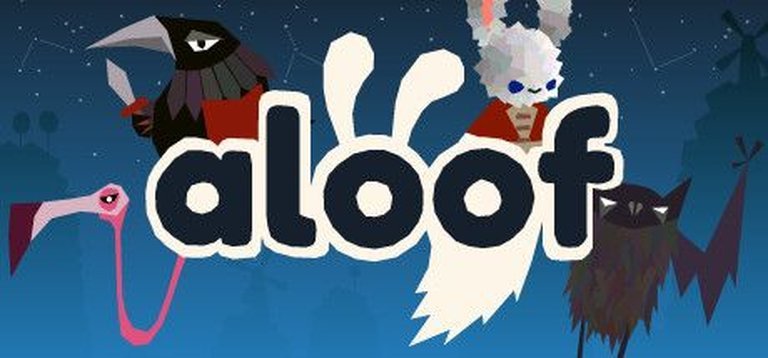
Aloof is a puzzle-action game set in a seafaring world where players control anthropomorphic animals, using Tetris-inspired block-matching mechanics to build islands, defend against opponents, and solve challenging puzzles. With an exceptional art style and demanding gameplay, it features solo campaigns, local co-op, and competitive modes, including rescue missions and boss fights, all centered around adorable yet determined creatures.
Gameplay Videos
Where to Buy Aloof
PC
Aloof Reviews & Reception
opencritic.com (64/100): When you tread into the puzzle space with anything that remotely looks Tetris-ish you’re unfortunately going to invite some level of comparison to it…
3rd-strike.com (50/100): Aloof is an original take on the genre, but we can’t say that this is going to become the next best thing.
Aloof: A Hauntingly Innovative Puzzle-Fighter Lost at Sea
Introduction: The Allure of the Unknown
In the crowded waters of the puzzle-fighter genre, where the towering legacies of Puyo Puyo and Super Puzzle Fighter II Turbo cast long shadows, Aloof arrived in 2021 as a quiet, enigmatic vessel. It is a game that immediately invites comparison through its core falling-block mechanics, yet stubbornly refuses to be categorized by them. This review posits that Aloof is a game of profound and fascinating contradictions: a title with a deeply inventive mechanical core, a hauntingly unique artistic identity, and a creator whose personal history is as compelling as the game itself, yet it is simultaneously burdened by a frustrating lack of cohesion, a nearly nonexistent narrative frame, and a multiplayer ecosystem that never fully realized its potential. Aloof is not a masterpiece, but it is an essential, study-worthy artifact of indie design—a bold, flawed, and ultimately memorable experiment that asks “what if?” and then stumbles in its pursuit of the answer.
Development History & Context: The Nurse, The Investigator, The Developer
The story of Aloof cannot be separated from the singular, unlikely journey of its creator, Joram Van Schaik. As documented in press releases from publisher RedDeerGames and community discussions, Van Schaik’s path to game development was orthogonal to the traditional route. He began his career as a nurse in a psychiatric ward for schizophrenia, a role demanding immense empathy and resilience. His interests, however, leaned toward the technical and investigative, leading him into the high-stakes world of cybercrime investigation, where he specialized in hacking cases and encrypted communications. It was amidst this unlikely fusion of human psychology and digital code that the desire to create video games took root.
Without formal training in game design or programming, Van Schaik became an autodidact, developing Aloof as a solo project under his studio, ButtonX, based in The Hague, Netherlands. This background is crucial context. The game’s brooding, almost oppressive atmosphere and themes of isolation (“Aloof” meaning distant or reserved) may reflect a worldview shaped by both the intimate struggles of mental healthcare and the solitary, paranoid logic of cyber Forensics. The meticulous, system-driven design—where every mechanic has a clear, rule-based purpose—speaks to an investigator’s mindset. He later partnered with the Polish indie publisher RedDeerGames (known for titles like Cyber Protocol and Art Sqool) to bring Aloof to a wider audience, culminating in its Windows release on March 25, 2021, and a Nintendo Switch port on October 15, 2021.
Technologically, Aloof was built in Unity, a common engine for indies, but its fixed/flip-screen perspective and 2D pixel art suggest a conscious evocation of retro sensibilities within a modern framework. It launched into a puzzle scene that, post-Lumines (2005), had seen relatively few major innovations in the competitive puzzle-fighter subgenre. Aloof’s timing placed it alongside a small wave of genre curiosities like Them and Us (2021), but it stood apart due to its creator’s story and its deliberate departure from the genre’s typically vibrant, arcadey aesthetic.
Narrative & Thematic Deep Dive: The Story That Wasn’t There
Here lies Aloof‘s most significant and consistently criticized failure: the absence of a narrative. The game presents a protagonist—a “cute and brave little bunny”—sailing a wooden boat through a surreal, storm-tossed fantasy world, engaging in bizarre battles against other anthropomorphic animals. The setting is evoked through stark, moody pixel-art backdrops of churning seas, desolate islands, and ominous skies, accompanied by a “haunting” and “unsettling” soundtrack that suggests dread rather than triumph.
Yet, for all this evocative mise-en-scène, there is no plot. No dialogue, no cutscenes, no textual lore explains why the bunny is fighting, what the islands represent, or who the adversaries are. The “Voyage Mode” is simply a sequence of 23 puzzle stages culminating in boss fights, presented as abstract challenges. Critics were almost unanimous in their lamentation. As eShopper Reviews stated, “We don’t know why, we don’t know how come he is in such a predicament, and we truly regret having no information whatsoever.” 3rd-Strike concurred: “Even though Aloof has an interesting visual representation, we have absolutely no clue what we are actually doing.” The game’s title and atmosphere imply a theme of emotional isolation and existential struggle, but without narrative anchors, this potential depth floats in a “nothingness,” leaving players to project their own meaning onto a beautifully rendered but inert world. It is a game that feels profoundly about something—its very title and aesthetic scream a melancholic thesis—yet refuses to state its case. This is perhaps the most “aloof” design choice of all, and it severely limits the game’s emotional and thematic resonance, making it feel incomplete rather than mysterious.
Gameplay Mechanics & Systems: A Labyrinth of Brilliant Ideas
If Aloof’s narrative is its void, its gameplay is its dense, intricate continent. It takes the basic premise of Tetris-like falling blocks and systematically deconstructs and reassembles it into something utterly distinctive. The goal is not simply to clear lines, but to create specific shapes (often 5+ blocks of the same color) on a dual-well playfield. Successfully forming a shape attacks the opponent, but here is the first crucial twist: the opponent has a shield. The first attack breaks the shield for only a few seconds; a second, immediately subsequent attack during that window is required to deal “real damage.” This establishes Aloof‘s core tension: it is a game of setup and punishing response, not just rapid-fire matching.
The strategic depth explodes from there. Instead of automatic falling, players have full control over the pieces. They can move them left, right, and, uniquely, back up the well. Pieces can be attached to the side of existing same-colored blocks before landing, enabling complex shape-building impossible in other puzzle games. The entire playfield can be flipped at any time, effectively doubling the strategic space. Furthermore, each side of the dual-well can be flushed independently, allowing a player to reset one field while continuing to build on the other—a vital tool for managing the two-stage attack cycle.
The “Voyage Mode” teaches these mechanics through puzzles with multiple win conditions: sometimes you must destroy the opponent’s islands, sometimes seize all islands, sometimes defeat them before they seize any. These “islands” are key. Creating certain shapes summons defensive islands to your side of the screen. Controlling more islands makes you harder to defeat and can provide healing. This creates a resource-control meta-game layered atop the combo-building.
The innovations are numerous and largely successful. As Cyril Lachel of Defunct Games notes, these mechanics “really go a long way to shake up this style of competitive puzzler” and make it “hard to go back to Puyo Puyo and Puzzle Fighter.” The emphasis on deliberate, tactical piece placement over frantic speed is a fresh take. However, the game’s ambition is also its Achilles’ heel. The tutorial is notoriously overly long and poorly paced (eShopper Reviews), failing to efficiently communicate the interplay between these deep systems (3rd-Strike describes everything as “obscure and clumsy”). The flip-side mechanic, while brilliant, is under-explained. This creates a significant barrier to entry; the game’s genius is locked behind a wall of unintuitiveUX.
World-Building, Art & Sound: A Masterclass in Atmospheric Dissonance
Aloof’s presentation is its most immediately striking and divisive element. The pixel-art is not bright or cute in the manner of its animal protagonists. Instead, it employs a muted, “broody,” and “dour” palette of greys, dark blues, and sickly yellows. The environments are storm-wracked, bleak, and lonely. This is a world of psychological weight, not playful whimsy. The sound design reinforces this with a “haunting,” often piano-led soundtrack that creates constant, low-grade tension. As Higher Plain Games observed, this is “a personal taste thing but it’s different to the norm for sure.”
This artistic choice is a bold and largely successful evocation of a specific mood—one of anxiety, isolation, and quiet desperation. It perfectly complements the game’s mechanical focus on defense, shield management, and slow-burn combos. You feel like you are struggling against a relentless, unforgiving sea. However, it creates a profound dissonance with the “cute animals” and the standard puzzle-fighter genre expectations of vibrant, joyful chaos. For many, this mismatch is jarring. 3rd-Strike called the atmosphere “haunting” but felt it was “at odds with the gameplay” and made the experience “feel a bit uncomfortable.” The art style is a statement, but without a narrative to contextualize it, that statement feels arbitrary or even pretentious. It is a world begging for a story to justify its gloom, making the lack of narrative feel like a missed opportunity of historic proportions.
Reception & Legacy: The Cult of the Almost-There
Aloof‘s reception has been a study in contrasts, reflective of its own dichotomous nature. On MobyGames, it holds a 68% average from two critics: a glowing 85% from Gamer’s Palace (who praised its “knackish gameplay” and fantastic soundtrack, lamenting only the lack of story) versus a damning 50% from eShopper Reviews (which criticized the long tutorial, dour presentation, and lack of coherence).
Player reception, as gathered from aggregators like Steambase, tells a different story. With a Player Score of 94/100 based on hundreds of reviews (largely on Steam, where it’s often deeply discounted), Aloof has cultivated a passionate cult following. These players champion its deep, rewarding strategy, its perfect suitability for local co-op (praised by Higher Plain Games as “genuinely unique and frantic”), and its audacious design choices. The disparity between critic and player scores suggests a game that is either deeply loved by those who push through its initial barriers or dismissed by those who don’t.
Its legacy is currently that of a curated indie darling. It is not cited as a major influence on mainstream design, likely due to its niche appeal, small player base (critics noted difficulty finding online opponents), and the dominance of established giants like Puyo Puyo Tetris. However, within the indie puzzle scene, it is remembered as a brave, idiosyncratic title that experimented earnestly with the one-on-one puzzle formula. Its mechanics—particularly the full piece control, side-attaching, and dual-flush system—represent a significant “what if” branch in the genre’s evolution tree. Its most enduring legacy may be as a cautionary tale about the perils of prioritizing mechanical innovation over player onboarding and narrative justification, and as a testament to the unique, unpredictable vision a solo developer can manifest.
Conclusion: A Flawed Gem in the Rough Waters of Genre
Aloof is a game that deserves to be played, studied, and discussed, but not necessarily celebrated as a classic. Its mechanical depth is arguably unmatched in the competitive puzzle space; the system where planning a two-part attack, controlling territory via islands, and manipulating two distinct playfields creates a cerebral, strategic experience unlike any other. The co-op implementation is a standout feature that fully realizes the potential of its systems. Yet, this brilliance is housed within a frustrating shell. The narrative vacuum robs the beautiful, melancholic world of purpose. The obtuse tutorial and menu design create an unnecessary wall between the player and the game’s genius. The online multiplayer, while conceptually sound, suffers from population issues.
Joram Van Schaik’s journey from psychiatric nurse to cyber investigator to indie developer imbues Aloof with a fascinating aura of outsider artistry. The game feels less like a product and more like a personal statement—a complex, defended, and isolating creation. Its place in video game history is not as a genre-defining hit, but as a significant case study in uncompromising indie design. It proves that profound innovation can exist outside the mainstream, but also that innovation without accessibility and context is a ship that will struggle to find a crew. Aloof is a compelling, infuriating, and ultimately memorable voyage into the depths of puzzle-game design, a game as aloof and brilliant as its creator.