
- Release Year: 2004
- Platforms: PlayStation 2, Windows
- Publisher: Midas Interactive Entertainment Ltd., RTL Enterprises GmbH
- Developer: 49Games GmbH
- Genre: Sports
- Perspective: 1st-person, 3rd-person
- Game Mode: Hotseat, LAN, Online PVP, Single-player
- Gameplay: Career mode, Equipment upgrades, Skill progression
- Setting: Europe
- Average Score: 75/100
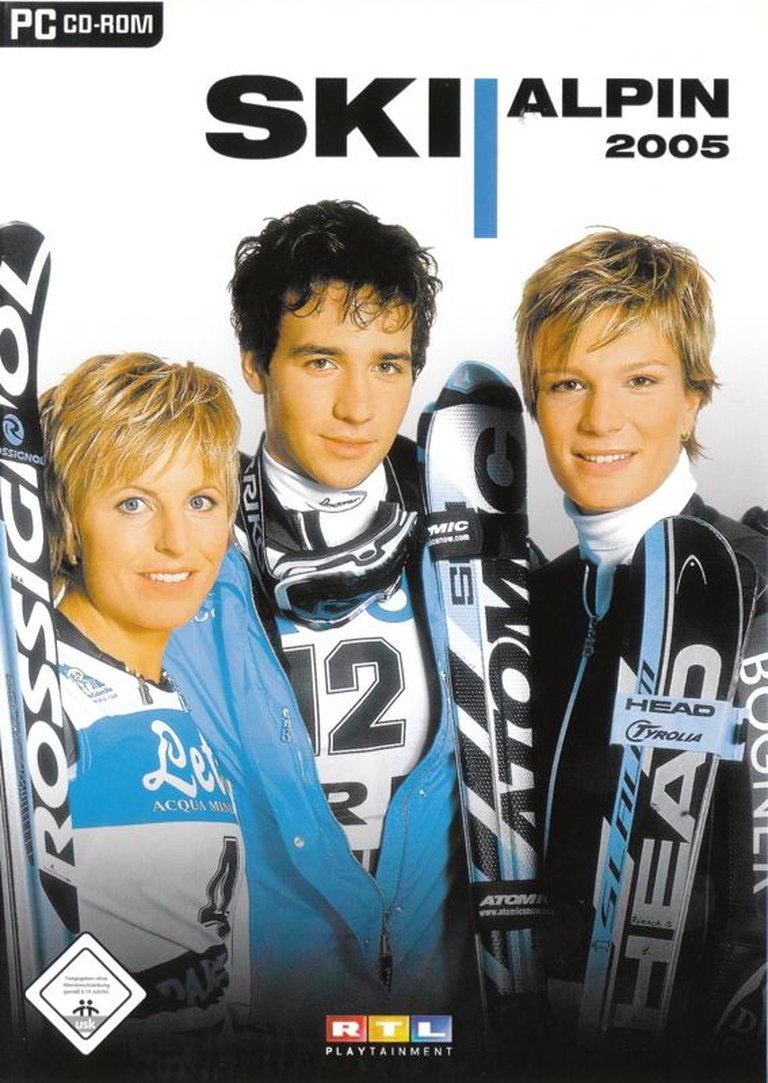
Description
Alpine Skiing 2005 is a sports simulation game that immerses players in the world of competitive alpine skiing, featuring disciplines such as downhill, slalom, giant slalom, and super giant slalom. Set across 12 European locations with 48 courses, the game focuses on keyboard-controlled action, emphasizing movement, acceleration, and jumps while simplifying courses for accessibility. Players can create a custom athlete and progress through a career mode, starting in the lowest league and aiming for world dominance by earning experience points to enhance skiing skills and prize money to upgrade equipment. The game balances arcade-style action with light simulation elements, offering adjustable difficulty settings that allow missed gates for casual play.
Gameplay Videos
Alpine Skiing 2005 Cracks & Fixes
Alpine Skiing 2005 Patches & Updates
Alpine Skiing 2005 Mods
Alpine Skiing 2005 Reviews & Reception
retro-replay.com : Controls are delightfully straightforward: you move, accelerate, and jump using only the keyboard, making it easy to pick up for newcomers while still offering nuance for seasoned players.
Alpine Skiing 2005 Cheats & Codes
RTL Ski Alpine 2005 [trainer +1]
Unzip/Unrar trainer into your game directory, then start trainer with “pztrain.exe”, and finally start the game. During gameplay toggle trainer options by pressing the following key combinations: Enable Infinite Money with “1”, Disable with “0”.
| Code | Effect |
|---|---|
| 1 | Infinite Money |
Alpine Skiing 2005: Review
Introduction
In the pantheon of sports simulation games, “Alpine Skiing 2005” stands as a testament to the era’s technological prowess and the developers’ ambition to capture the thrill of downhill skiing. Released in 2004, this game was developed by 49Games GmbH and published by RTL Enterprises GmbH and Midas Interactive Entertainment Ltd. It was a time when the gaming landscape was rapidly evolving, and developers were pushing the boundaries of what was possible with the hardware of the day. “Alpine Skiing 2005” aimed to deliver an authentic skiing experience, blending arcade-style fun with a touch of realism. This review will delve into the game’s development history, narrative depth, gameplay mechanics, world-building, reception, and legacy, ultimately providing a definitive verdict on its place in video game history.
Development History & Context
The Studio and Creators’ Vision
49Games GmbH, the studio behind “Alpine Skiing 2005,” was known for its sports simulations, particularly in the skiing genre. The game was part of the RTL Ski series, which included titles like “RTL Ski Jumping 2005” and “Bode Miller Alpine Skiing.” The team at 49Games was led by Jan-Hendrik Ohl, with key contributions from Florian Knappe, Peter Cukierski, and Dierk Ohlerich. Their vision was to create a game that was accessible to newcomers while offering depth for seasoned players, a balance that would become a hallmark of the title.
Technological Constraints and Gaming Landscape
The early 2000s were a transitional period in gaming. Consoles like the PlayStation 2 and PCs were becoming more powerful, allowing for more detailed graphics and complex gameplay mechanics. However, developers still had to work within certain constraints. “Alpine Skiing 2005” was released on both PC and PlayStation 2, and the team had to ensure that the game ran smoothly on both platforms. The use of keyboard controls for the PC version was a nod to the era’s limitations, but it also added a layer of simplicity that made the game more approachable.
The gaming landscape at the time was dominated by a mix of arcade-style sports games and more simulation-heavy titles. Games like “FIFA Soccer 2005” and “LMA Professional Manager 2005” were popular, and “Alpine Skiing 2005” had to carve out its own niche in this competitive market. The developers achieved this by focusing on the thrill of skiing and the strategic elements of career progression.
Narrative & Thematic Deep Dive
Plot and Characters
“Alpine Skiing 2005” does not have a traditional narrative with a plot and characters in the conventional sense. Instead, it focuses on the player’s journey from a rookie skier to a world-class athlete. The game’s narrative is more about personal growth and achievement than a linear story. The player creates their own athlete and navigates through various leagues, earning experience points and prize money along the way.
The absence of a traditional plot is compensated by the game’s thematic depth. The themes of perseverance, skill development, and the pursuit of excellence are woven into the gameplay. The player’s progress is marked by milestones and achievements, each one a testament to their dedication and hard work.
Dialogue and Commentary
The game features commentary that adds a layer of immersion. The commentators provide real-time feedback during races, offering tips and encouragement. Their dialogue is designed to be engaging and informative, helping players improve their skills while enjoying the game. The commentary is a crucial element that enhances the overall experience, making the player feel like they are part of a real skiing event.
Gameplay Mechanics & Systems
Core Gameplay Loops
The core gameplay loop of “Alpine Skiing 2005” revolves around racing downhill, navigating through gates, and executing jumps. The game supports four types of skiing events: downhill, slalom, giant slalom, and super giant slalom. Each event has its own set of challenges and requires different skills, keeping the gameplay varied and engaging.
The controls are designed to be intuitive, with the player using the keyboard to move, accelerate, and jump. This simplicity allows players to focus on strategy and timing rather than struggling with complex controls. The game’s physics engine ensures that the skiing feels realistic, with the skier’s movements and the terrain’s impact on the race being accurately simulated.
Career Mode
One of the standout features of “Alpine Skiing 2005” is its career mode. The player starts as a rookie in the lowest league and works their way up through regional circuits to the world stage. Each race awards experience points that improve the player’s skiing skills and prize money that can be used to upgrade equipment. This progression system adds a layer of strategy, as players must balance skill development with smart gear investments.
The career mode is designed to be rewarding, with each milestone feeling like a significant achievement. The sense of progression is a key element that keeps players engaged and motivated to improve.
UI and Innovative Systems
The user interface of “Alpine Skiing 2005” is clean and intuitive, providing all the necessary information without cluttering the screen. The UI is designed to be unobtrusive, allowing players to focus on the gameplay. The game also features a robust multiplayer mode, supporting up to 12 players online and 8 players offline. This adds replayability and allows players to compete against friends and other players worldwide.
World-Building, Art & Sound
Setting and Atmosphere
The game is set in various European locations, each with its own unique characteristics. The mountain backdrops are richly detailed, with pine forests, rocky outcrops, and snowbanks rendered in crisp textures. The lighting effects simulate sunlight glinting off fresh snow and shifting cloud cover, helping convey the ever-changing conditions of real alpine courses.
The attention to detail in the world-building is impressive, with each location feeling distinct and authentic. The game’s atmosphere is enhanced by the sound design, which includes the rush of wind, the crunch of snow under skis, and the cheers of the crowd. These elements combine to create an immersive experience that transports the player to the slopes.
Visual Direction
The visual direction of “Alpine Skiing 2005” is a highlight of the game. The skier animations are fluid, capturing the dynamic motions of carving, tucking, and jumping. The game’s graphics, while not cutting-edge by today’s standards, were impressive for their time. The use of textures and lighting effects adds depth and realism to the game world, making it a visual treat.
Sound Design
The sound design of “Alpine Skiing 2005” is integral to the overall experience. The game features a dynamic soundtrack that adapts to the intensity of the race, with upbeat music during high-speed sections and more subdued tunes during slower parts. The sound effects, such as the whoosh of the wind and the crunch of snow, are realistic and immersive. The commentary adds a layer of engagement, providing real-time feedback and encouragement.
Reception & Legacy
Critical and Commercial Reception
“Alpine Skiing 2005” received a mixed but generally positive reception upon its release. Critics praised the game’s accessibility, intuitive controls, and engaging career mode. The game’s visuals and sound design were also highlighted as strengths. However, some critics noted that the game lacked the depth and realism of more simulation-heavy titles.
The game’s commercial performance was modest, with a dedicated fan base that appreciated its blend of arcade-style fun and strategic depth. The game’s legacy lies in its influence on subsequent skiing simulations and its role in shaping the genre.
Influence on Subsequent Games and the Industry
“Alpine Skiing 2005” had a significant impact on the skiing simulation genre. Its focus on accessibility and strategic depth influenced future titles, which sought to balance arcade-style fun with realistic gameplay. The game’s career mode and progression system became a template for other sports simulations, emphasizing personal growth and achievement.
The game’s legacy is also evident in the continued popularity of skiing simulations. Titles like “Alpine Ski Racing 2007: Bode Miller vs. Hermann Maier” and “Bode Miller Alpine Skiing” built on the foundation laid by “Alpine Skiing 2005,” expanding the genre and pushing the boundaries of what was possible in sports simulations.
Conclusion
“Alpine Skiing 2005” is a testament to the developers’ ambition and the technological prowess of the early 2000s. The game’s blend of arcade-style fun and strategic depth, coupled with its immersive world-building and sound design, makes it a standout title in the skiing simulation genre. Its legacy lies in its influence on subsequent games and its role in shaping the genre. Despite its modest commercial success, “Alpine Skiing 2005” remains a beloved title among fans of skiing simulations, a testament to its enduring appeal and the developers’ vision.