
- Release Year: 2015
- Platforms: Linux, Macintosh, Windows
- Publisher: Crashable Studios
- Developer: Crashable Studios
- Genre: Adventure
- Perspective: 3rd-person
- Game Mode: Single-player
- Gameplay: Graphic adventure, Point and select, Puzzle elements, RPG elements
- Average Score: 78/100
Description
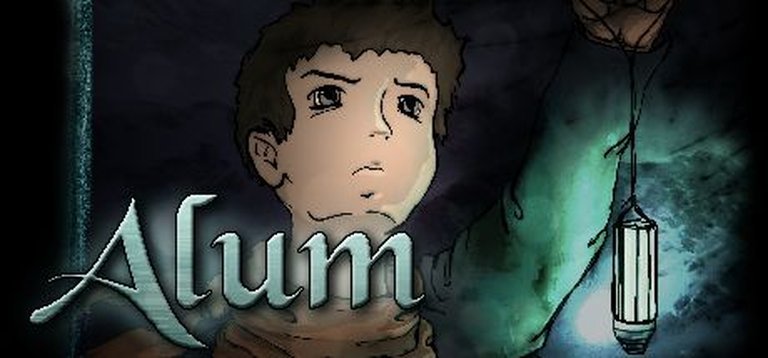
Alum is a retro-style point-and-click adventure game set in the futuristic city of Kosmos, where a mysterious virus called The Vague spreads despair among its citizens. Players follow Alum Descry, a delivery boy whose wife falls victim to the illness, as he embarks on a quest to find a cure. The game blends science fiction and fantasy elements, featuring puzzles, RPG mechanics, and a narrative that explores themes of hope and faith, though its heavy-handed allegory has drawn mixed reviews.
Where to Buy Alum
PC
Alum Free Download
Alum Cracks & Fixes
Alum Patches & Updates
Alum Mods
Alum Guides & Walkthroughs
Alum Reviews & Reception
metacritic.com (80/100): It’s a great graphic adventure, one that puts the narrative at the center of the stage, and does so successfully.
justadventure.com (85/100): I enjoyed my time with Alum. The strong puzzle design is a high point and makes this a game worth checking out.
steambase.io (71/100): Alum has earned a Player Score of 71 / 100.
steamcommunity.com : The puzzles. Definitely a success – the puzzles feel both challenging and old-school, without being too frustrating.
Alum: A Flawed Gem of Nostalgia and Faith
Introduction: The Promise and Pitfalls of a Retro Revival
Alum (2015), developed by Crashable Studios, is a game that wears its influences on its sleeve. From its 320×200 pixel art to its Sierra-style point-and-click mechanics, it is a love letter to the golden age of adventure gaming. Yet, beneath its retro aesthetic lies a narrative ambition that both elevates and undermines the experience. Alum is a game of contradictions: a technical triumph marred by tonal mismanagement, a puzzle masterpiece bogged down by heavy-handed allegory, and a visual delight hampered by amateurish voice acting.
At its core, Alum is a Christian allegory wrapped in the trappings of a dystopian sci-fi adventure. Players guide the titular Alum through the frozen wasteland of the “Land of Tide,” uncovering the truth behind a mysterious plague called “The Vague” while grappling with themes of faith, redemption, and spiritual warfare. The game’s opening chapters are a masterclass in world-building and puzzle design, evoking the best of Beneath a Steel Sky and Quest for Glory. However, as the story progresses, the subtlety of its early narrative gives way to overt proselytizing, leaving players either inspired or alienated depending on their personal beliefs.
This review will dissect Alum in its entirety—its development history, narrative structure, gameplay mechanics, artistic direction, and legacy—to determine whether it stands as a worthy homage to classic adventures or a cautionary tale about the dangers of mixing dogma with interactive storytelling.
Development History & Context: A Labor of Love and Crowdfunding Struggles
The Birth of Crashable Studios
Crashable Studios, founded by brothers Micah and Luke Orsie, emerged from the indie adventure game renaissance of the early 2010s, a period marked by Kickstarter successes like Broken Age and Thimbleweed Park. The Orsie brothers, inspired by the classics of Sierra and LucasArts, sought to create a game that blended retro aesthetics with modern sensibilities. Their vision was clear: Alum would be a point-and-click adventure with the depth of Quest for Glory and the sci-fi intrigue of Beneath a Steel Sky, all rendered in the nostalgic 320×200 resolution that defined the early ’90s.
A Rocky Crowdfunding Journey
The development of Alum was not without its challenges. The game’s initial Kickstarter campaign failed to meet its funding goal, a setback that could have spelled the end for many indie projects. Undeterred, the Orsie brothers launched a second crowdfunding effort, this time successfully raising $10,000—just enough to keep the project alive. The development cycle that followed was arduous, spanning 22 months with sparse updates that left backers anxious. Miscommunication about the release date further strained relations with the community, raising concerns about whether Alum would ever see the light of day.
Yet, against the odds, Crashable Studios delivered a polished, bug-free experience upon release—a rarity for crowdfunded indie games. The final product was a testament to the brothers’ dedication, even if its narrative choices would later divide players.
Technological Constraints and Design Philosophy
Alum was built using Adventure Game Studio (AGS), a tool beloved by indie developers for its accessibility and flexibility. The choice of AGS allowed the Orsie brothers to focus on what they did best: crafting intricate puzzles and a visually striking world. The game’s retro resolution was not merely an aesthetic choice but a deliberate homage to the era that inspired it. However, this decision also imposed limitations, particularly in terms of animation fluidity and environmental detail.
The interface, too, is a throwback to Sierra’s heyday, featuring a verb-based system (Walk, Look, Use, Inventory) that will feel familiar to veterans of King’s Quest or Space Quest. While this design choice enhances the nostalgic appeal, it also feels somewhat clunky by modern standards, as later adventure games like those from Wadjet Eye Games have streamlined interactions to a simple left-click (use) and right-click (look) system.
The Gaming Landscape in 2015
Alum arrived at a time when the adventure game genre was experiencing a resurgence. Titles like The Book of Unwritten Tales 2, Life is Strange, and Her Story were redefining what the genre could be, blending traditional mechanics with innovative storytelling. In this context, Alum’s adherence to classic design principles was both a strength and a weakness. It offered a pure, unadulterated adventure experience for purists but risked feeling outdated to players accustomed to more modern conveniences.
Moreover, the game’s overt religious themes set it apart from its contemporaries. While games like The Witcher 3 and Undertale explored moral ambiguity and philosophical questions, Alum presented a black-and-white worldview, aligning itself more closely with allegorical works like Pilgrim’s Progress or The Chronicles of Narnia. This bold creative choice would ultimately define the game’s reception.
Narrative & Thematic Deep Dive: A Tale of Two Halves
Plot Summary: From Dystopian Sci-Fi to Spiritual Allegory
Alum begins in the city of Kosmos, a dystopian metropolis kept warm by towering “heat pillars” and patrolled by robotic enforcers known as E-bots. The city is ruled by Mr. Glym, a benevolent-seeming leader who has declared war on the Invidious Umbra, a malevolent force that manifests as shadowy creatures and a psychological plague called The Vague. The Vague is a metaphor for depression, sapping its victims of hope and leaving them catatonic. Alum’s wife, Esther, is one such victim, and her suffering serves as the catalyst for the protagonist’s journey.
The first chapter is a masterclass in slow-burn storytelling. Alum, a humble delivery boy, stumbles upon a note hinting at a cure for The Vague. His quest leads him to the Rogations, a rebel group fighting against Glym’s regime. Along the way, he encounters Symmetry, an enigmatic old man who introduces him to the Rushlight, a glowing liquid that represents faith in the Unfeigned Altruist—a benevolent deity who offers salvation from The Vague.
Here, the game’s narrative takes a sharp turn. What begins as a sci-fi adventure about resisting oppression quickly morphs into a Christian allegory. The Rushlight is a stand-in for divine grace, the Unfeigned Altruist for God, and The Vague for sin. The Rogations become evangelists, spreading the word of the Altruist to the afflicted. The shift is jarring, not because of its religious content, but because of its lack of subtlety.
Character Analysis: Alum, Esther, and the Cast of Symbols
-
Alum: The protagonist is a well-intentioned but ultimately passive figure. His motivations are clear—save his wife—but his character arc is undermined by the game’s heavy-handed messaging. By the end, his transformation from a desperate husband to a zealous believer feels unearned, as the player has little agency in his spiritual journey.
-
Esther: Alum’s wife is the emotional core of the story, yet she is woefully underdeveloped. Players never witness her pre-Vague personality, making her suffering feel abstract rather than personal. Her eventual “cure” lacks emotional weight because the game fails to establish a meaningful connection between her and the player.
-
Mr. Glym: The primary antagonist is a fascinating figure—a tyrant who believes he is saving Kosmos from the Umbra. His relationship with the Invidious Umbra (a stand-in for Satan) adds depth to his character, but the game’s black-and-white morality prevents him from being truly compelling.
-
Dashu: The leader of the Rogations serves as a secondary protagonist in later chapters. His role as a fellow believer in the Altruist is pivotal, but like Esther, he lacks depth. His interactions with Alum could have been a powerful exploration of faith and doubt, but the game opts for didactic dialogue instead.
-
The Unfeigned Altruist: The game’s deity is an omnipresent but invisible force, communicating with Alum through visions and inner monologues. The Altruist’s dialogue is where the game’s writing falters most, with lines like “Help me lay my heart in the cooling water of your love” feeling more like cheesy evangelical propaganda than genuine spiritual reflection.
Themes: Faith, Depression, and the Perils of Allegory
Alum grapples with three major themes:
-
The Nature of Faith: The game presents faith as the sole antidote to despair (The Vague). However, its portrayal is dogmatic rather than exploratory. Characters either accept the Altruist’s grace or remain lost, with no room for nuance.
-
Depression as a Metaphor: The Vague is a clever stand-in for depression, but the game’s solution—spiritual salvation—feels reductive. While faith can be a source of comfort for some, Alum presents it as the only cure, which may alienate players who view depression as a medical rather than spiritual issue.
-
The Battle Between Good and Evil: The conflict between the Altruist and the Invidious Umbra is a classic struggle, but the game’s refusal to explore moral ambiguity weakens its impact. Glym, for instance, could have been a tragic figure, but he is ultimately reduced to a one-dimensional villain.
The Problem with Heavy-Handed Allegory
The most significant flaw in Alum’s narrative is its lack of subtlety. Unlike The Chronicles of Narnia, which weaves Christian themes into a rich fantasy tapestry, Alum beats players over the head with its message. Dialogue that should feel earnest and emotional instead comes across as preachy and artificial, particularly in the latter chapters where characters engage in prolonged, exposition-heavy conversations about the nature of the Altruist.
This heavy-handedness is compounded by the game’s linear storytelling. Players have no meaningful choices; Alum’s spiritual journey is predetermined, and any deviation from the intended path results in immediate failure. This lack of agency makes the narrative feel more like a sermon than an interactive experience.
Gameplay Mechanics & Systems: A Puzzle Masterpiece with Flawed Execution
Core Gameplay Loop: Classic Adventure with a Modern Twist
Alum adheres closely to the traditional point-and-click adventure formula:
– Inventory-based puzzles that require combining items in logical (but sometimes obscure) ways.
– Dialogue trees that advance the plot and provide hints.
– Environmental interaction, including examining objects and manipulating the world.
The game’s puzzles are its greatest strength. Early chapters feature some of the most intuitive and satisfying puzzle design in modern adventure gaming. For example:
– The E-bot Distraction: Alum must lure a robotic guard away by triggering a false alarm, a puzzle that requires observation and timing.
– The Heat Pillar Repair: A multi-step sequence involving finding replacement parts and bypassing security systems.
These puzzles are challenging but fair, rewarding players for careful exploration without resorting to moon logic.
Combat and Action Sequences: A Misstep in Design
Where Alum stumbles is in its forced action sequences, a holdover from Sierra’s infamous “death around every corner” design philosophy. These include:
– A Sniper Mini-Game: A clumsy shooting sequence that feels out of place in a point-and-click adventure.
– A Falling Sequence: Alum must grab a potion mid-fall to avoid death, a trial-and-error segment that frustrates more than it entertains.
– A Sword Fight: A poorly implemented combat section that relies on quick-time events.
While these sequences are skippable after a few failures, their inclusion feels like an unnecessary nod to retro frustrations rather than a meaningful addition to gameplay.
Character Progression and the Rushlight Mechanic
The Rushlight is the game’s most innovative mechanic, serving multiple purposes:
– A Source of Light: Illuminates dark areas, revealing hidden paths.
– A Weapon Against Shadows: Repels the creatures spawned by the Invidious Umbra.
– A Spiritual Tool: Allows Alum to commune with the Unfeigned Altruist, providing hints and advancing the plot.
However, the Rushlight’s spiritual function is where the game’s narrative and gameplay clash. Using the Rushlight to “save” NPCs from The Vague is a powerful moment, but the lack of player choice in these interactions makes them feel more like cutscenes than meaningful decisions.
UI and Quality of Life: A Mixed Bag
The game’s verb-based interface is a double-edged sword:
– Pros: It enhances the retro feel and provides clarity in interactions.
– Cons: It feels clunky compared to modern adventure games, which often streamline interactions to a single click.
Other UI issues include:
– Unskippable Cutscenes: Some transitions cannot be skipped, which becomes tedious on replay.
– Auto-Save System: While frequent, the system is opaque, making it difficult to track progress.
– Death Sequences: Some deaths are instant and unfair, harkening back to Sierra’s worst design choices.
Difficulty and Pacing
Alum strikes a near-perfect balance in puzzle difficulty for most of its runtime. However, the final chapters introduce a few frustrating outliers, such as:
– The Color Tile Puzzle: A tedious sequence that requires memorization rather than logic.
– The Mimic Puzzle: A trial-and-error segment that feels out of place in an otherwise well-designed game.
The game’s 7-10 hour runtime is well-paced, though the narrative shift in the latter half may cause some players to lose interest.
World-Building, Art & Sound: A Retro Masterpiece with Flawed Execution
Setting and Atmosphere: The Land of Tide
The Land of Tide is a visually stunning dystopian world, blending steampunk aesthetics with fantasy elements. Key locations include:
– Kosmos: A city of towering heat pillars and oppressive surveillance, evoking Blade Runner meets 1984.
– Slip Town: A vertical city of suspended walkways, showcasing the game’s impressive use of depth and perspective.
– The Vivit Oak: A mystical tree housing the Fallows, giant green heads that serve as puzzle-solving aids.
– The Outer Tide: A frozen wasteland filled with ruins and hidden secrets.
The world is richly detailed, with each location feeling distinct and purposeful. The snow-covered mountains and glowing heat towers create a hauntingly beautiful atmosphere that immerses players in Alum’s struggle.
Visual Design: A Love Letter to Pixel Art
Alum’s 320×200 resolution is not just a gimmick—it’s a deliberate artistic choice that pays homage to the golden age of adventure gaming. The pixel art is meticulously crafted, with:
– Vibrant colors that pop despite the low resolution.
– Detailed animations, particularly in character movements and environmental effects.
– Creative creature designs, such as the Fallows and the shadow creatures.
The game’s visuals are consistently impressive, though some may find the retro aesthetic limiting in terms of expressiveness.
Sound Design and Music: A Mixed Bag
The soundtrack is a highlight, blending live instruments with electronic elements to create a moody, atmospheric score. Tracks like the Kosmos theme and the Rushlight melody enhance the game’s emotional beats.
However, the voice acting is Alum’s weakest link. While some performances (such as Alum himself) are serviceable, others are painfully amateurish:
– Female characters often sound unnatural, with poor enunciation and lack of emotional range.
– Supporting characters deliver lines with little conviction, undermining key dramatic moments.
The decision to use family and friends for voice acting is understandable given the limited budget, but it ultimately detracts from the experience.
Atmosphere and Immersion
Despite its flaws, Alum excels in creating a sense of place. The oppressive cold of the Land of Tide, the hum of the heat pillars, and the eerie whispers of the Umbra all contribute to a world that feels alive. The game’s sound design reinforces this, with ambient noises that make Kosmos feel like a living, breathing city.
Reception & Legacy: A Divisive Game with a Cult Following
Critical Reception: Praise for Puzzles, Criticism for Preaching
Alum received mixed reviews upon release, with critics praising its puzzle design and visuals while criticizing its narrative heavy-handedness.
- Adventure Gamers (60/100): “It’s a bummer that a game that looks as good, and is as well-designed and polished as Alum, misses the boat on story so badly.”
- GameBoomers (B-): “If you have strong feelings about religion being mixed with your games, Alum is probably not the game for you.”
- Just Adventure (B+): “The strong puzzle design is a high point and makes this a game worth checking out.”
The Steam user reviews are similarly divided, with a 69% positive rating (as of 2025). Players who enjoyed the game praised its:
– Nostalgic visuals
– Challenging but fair puzzles
– Unique blend of sci-fi and fantasy
Detractors criticized:
– The heavy-handed religious themes
– Poor voice acting
– Frustrating action sequences
Commercial Performance and Community Response
Alum was not a commercial blockbuster, but it found a niche audience among:
– Retro adventure game enthusiasts
– Christian gamers who appreciated its faith-based narrative
– Indie game supporters who admired its crowdfunded origins
The game’s Steam forums reveal a polarized fanbase:
– Some players loved the story, seeing it as a bold exploration of faith.
– Others felt alienated by the evangelical tone, particularly in the latter chapters.
Influence and Legacy
Alum’s legacy is complex:
– It proved that retro-style adventures could still find an audience in the modern era.
– It demonstrated the risks of blending dogma with interactive storytelling, serving as a cautionary tale for future narrative-driven games.
– It inspired other indie developers to explore allegorical storytelling, though few have embraced religious themes as overtly.
Crashable Studios has since moved on to other projects, but Alum remains a cult classic—a game that divides players but leaves a lasting impression.
Conclusion: A Flawed but Fascinating Experiment
Alum is a game of stark contrasts:
– Brilliant puzzle design vs. clumsy action sequences
– Gorgeous pixel art vs. amateurish voice acting
– A compelling dystopian setup vs. a heavy-handed religious allegory
The Verdict
For:
– Fans of classic Sierra/LucasArts adventures
– Players who enjoy challenging but fair puzzles
– Those who appreciate retro aesthetics and atmospheric world-building
Against:
– Players who dislike overt religious themes in games
– Those who prefer modern UI conveniences
– Gamers who hate trial-and-error action sequences
Final Score: 7/10 – A Qualified Success
Alum is not a perfect game, but it is a fascinating one. Its technical polish and puzzle mastery make it a worthy addition to the adventure game canon, even if its narrative missteps prevent it from reaching greatness. It stands as a testament to the power of indie development and a reminder of the challenges of blending faith with interactive storytelling.
If you can overlook its flaws, Alum offers a unique, memorable experience—one that lingers in the mind long after the credits roll.
Final Thought:
Alum is a game that dares to be different, for better or worse. It may not be for everyone, but for those who connect with its vision, it is unforgettable.